Behind the Clown of Satire marches the Champion of Truth.
Ancient alchemy seeks a method to reverse and forward the process of time; thereby transforming the four basic elements of earth, wind, fire, water into one another for the benefit of humankind.
Pointed out by Richard Thomas:
I saw another at work to calcine ice into gunpowder, who likewise
showed me a treatise he had written concerning the malleability
of fire, which he intended to publish

(Jonathan Swift: Gulliver's Travels, Part III, chapter v)
Echoed in the song lyrics below:
I'll be saved by the creature
I'll get blood from a cactus, gunpowder from ice
I don't gamble with cards, and I don't shoot no dice
(Bob Dylan: My Own Version Of You)
In Mary Shelley’s novel, Dr. Victor Frankenstein abandons the Romantic Transcendentalist writers whose thoughts focus on communal and family love.
Instead, he turns to modern science and technology as a sure means to improve the living conditions of mankind.
Through a friend, Victor comes in contact with ancient writings that focus on the wisdom of social solidarity rather than on science:
Alas, it’s too little, too late:
The Persian, Arabic, and Sanskrit language engaged his attention,
and I was easily induced to enter on the same studies
(Mary Shelley: Dr. Frankenstein - Chapter 6)
In the following song lyrics, the narrator thereof takes on the persona of Doctor Frankenstein; determined he is to do a better job at creating a well-rounded good human being whereas Victor fails miserably at his attempt to play God:
I study Sanskrit and Arabic to improve my mind
I wanna do things for the benefit of all mankind
(Bob Dylan: My Own Version Of You)
Frankenstein can not bear the hideous creature he brings to life; cannot love him though that it what the creature most craves.
No female does Victor make to grant the monster his wish for the warmth of a loving companion.
Dr. Bob is not going to make the same mistake; he’s gonna make himself a female companion.
Even if she’s just in his imagination, she’ll always be in his art:
Shimmy your ribs, I'll stick in the knife
Gonna jump-start my creature to life
I wanna bring someone back to life, turn back the years
(Bob Dylan: My Own Version Of You)
Thereby, with his bow of burning gold, his arrows of desire, and his spear, the narrator brings his creative self back to life.
Brings him his chariot of fire; brings it all the way home.
Bob Dylan Pawns His Watch (Part XX)
My Own Version Of Me/You
The song “My Own Version Of You” by Bob Dylan contains hope for happiness and harmony on the micro-level for humans down on Earth, but on the macro-level a darker interpretation is there for the taking.
A Gnostic view of creation holds that a flawed Demiurge is conceived after the female half splits from the male half of the Unknowable God who’s far-away in the high spiritual world.
He erroneously believes he’s the absolute and perfect light of God, but flawed be the Demiurge, and so is the dark fragmented material world that he creates.
Mary Shelley’s “Frankenstein” springs to mind:
I'll take the Scarface Pacino  and the Godfather Brando
Mix it up in a tank, and get a robot commando
If I do it up right, and put the head on straight
I'll be saved by the creature that I create
(Bob Dylan: My Own Version of You)
Ominous are the lines below with a twisted Gothic tombstone feeling; the optimistic light-bearing sentiments of the Romantic Transcendentalists thrown out the window.
Yearning for the comfort of female companionship, the isolated Demiurge opens a moonlit sepulcre that’s down by the sea.
Therein lies the body of the young and beautiful Annabel Lee:
Can you help me walk that moonlight mile
Can you give me the blessing of your smile
I'll bring someone back to life, use all my power
Do it in the dark, in the wee small hours
(Bob Dylan: My Own Version Of You)
The narrator in the song settles on the image of the Satanic aspects of the nearby Demiurge.
The supposedly caring Gnostic hermaphroditic God is simply hiding too far beyond the horizon of the Cosmos for any unifying communication with Earth to be received.
Pleads the narrator, let us mere mortals know why there is being and not rather nothing:
Can you tell me what it means to be or not to be
You won't get away with fooling me
(Bob Dylan: My Own Version Of You)
Wanted man by Lucy Watson, wanted man by Jeannie Brown
Wanted man by Nellie Johnson, wanted man in this next town
But I’ve had all that I’ve wanted of a lot of things I had
And a lot more than I needed of some things that turned out bad
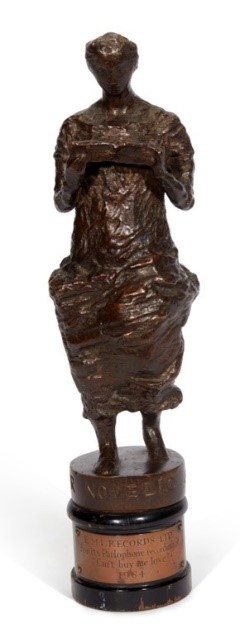
In 2015, the Gibraltarian Albert Hammond finally receives the massive bronze statuette of the muse of lyric poetry Euterpe, the award that perhaps should have been given to him several decades earlier: the Ivor Novello Award for his entire oeuvre.
Rightly so, but a bit late; by the mid-80s, Hammond already had a respectable number of world hits to his name, either as a performing artist or as a songwriter for others. “It Never Rains in Southern California”, “Down By The River”, “The Free Electric Band”, “I’m A Train”, and “When I’m Gone”… all great songs.
Not to mention the songs he writes for colleagues. The Hollies’ “The Air That I Breathe” is arguably a 70s signature song, Leo Sayer scored his biggest hit with “When I Need You”, Art Garfunkel made “99 Miles From L.A.” immortal, Grace Slick is thankful for “Nothing’s Gonna Stop Us Now”, the underrated beauty “Smokey Factory Blues” with which Johnny Cash closes the 1975 John R. Cash album (one of his finest records, but The Man In Black doesn’t agree in his autobiography: “I wasn’t pleased with either the process or the results”), Celine Dion, Whitney Houston, Tina Turner, and we could go on and on; the list is long.
Most of those immortal hits a justifiably proud Hammond performs in the successful concept with which he has toured annually since 2013; the “Songbook Tours”. In his crowning year 2015, no fewer than 30 songs are on the setlist, and (usually) on 21 is the world hit that even so few people know was written by Hammond (together with master lyricist Hal David): “To All The Girls I’ve Loved Before”.
True, it is a song that indeed comes into its own better when Willie Nelson sings it together with the archetypal womaniser Julio Iglesias: a song of an irresistibly charming bad boy who leaves a trail of broken hearts. We know the archetype from such milestones as The Eagles’ “Take It Easy” (Well, I’m a runnin’ down the road, tryin’ to loosen my load / I’ve got seven women on my mind), The Allman Brothers’ “Ramblin’ Man”, and the 1999 global summer hit, Lou Bega’s “Mambo No. 5”, the song in which Lou with deep affection sings of the charms of Angela, Pamela, Monica, Erica, Rita, Tina, Sandra, Mary and Jessica.
It has something farcical, of course, and that seems to be the effect Dylan and Cash are aiming for, with this “women’s names verse”. There is no trace of it yet in the manuscript, and indeed it also seems to be an intervention with the upcoming premiere in mind: Dylan and Cash know that the song will be played in front of a room full of male inmates. And an audience player, a showman like Johnny Cash knows he should not only insert an occasional “son of a bitch”, a “damned” here and a “what the hell” there, but also that a nudge nudge wink wink to erotic escapades will go down well.
Accordingly, on the concert video, we see Cash singing this verse with a lopsided grin, but cheers from the inmates do not erupt yet – that does not happen until the next verse, which is also absent from the manuscript:
I got sidetracked in El Paso, stopped to get myself a map
Went the wrong way into Juarez with Juanita on my lap
Then I went to sleep in Shreveport, woke up in Abilene
Wonderin’ why the hell I’m wanted at some town halfway between
… with “Juanita on my lap” in particular seeming to stir up randy fantasies. And apart from that, this seems to be a textual contribution by Cash himself. Or at least initiated by Cash; after all, on 5 October 1965, he was arrested in El Paso while returning from Juarez with 668 Dexedrine and 475 Equanil pills in his guitar case. Thus, “Got sidetracked in El Paso and went the wrong way in Juarez” is an admittedly concise but historically accurate summary of that much-discussed misstep. Life imitating art, in other words, to which Jaoquin Phoenix also refers in the crushing biopic Walk The Line (2005); Cash has had “Cocaine Blues” on his setlist for years before that arrest in El Paso;
Made a good run but I run too slow
They overtook me down in Juarez, Mexico

Laid in the hot joints takin’ the pill
In walked the sheriff from Jericho Hill
… not on Dylan’s, by the way. Dylan, who has “Cocaine Blues” on the setlist over 70 times between 1961 and 1999, sings the other “Cocaine Blues”, the Reverend Gary Davis song, the one with the “cocaine, running all around my brain” refrain.
Things end relatively well for Cash. In March ’66, the case comes to trial, and The Man In Black shows himself to be a repentant sinner (“I realise my mistake. It was bad, very bad, misconduct on my part”), claims he was tired and drunk, and vows never to take a pill again. Which is a bit odd, as Cash’s lawyer argues that the drugs were “prescribed”. Which the judge goes along with: because the drugs are “prescribed”, and perhaps because Tex Ritter and Gene Autry wrote sweet letters to the judge vouching for the “good character” of the accused, Cash gets off with a $1000 fine and a suspended jail sentence. Quite a lighter sentence than Willy Lee from “Cocaine Blues”, all things considered;
The judge, he smiled as he picked up his pen
99 years in the Folsom pen
99 years underneath that ground
I can’t forget the day I shot that bad bitch down
… which, when Cash sings it at that previous prison concert, in the Folsom Prison cafeteria on 13 January 1968, is also greeted with cheers, applause and laughter. “They were the most enthusiastic audience I have ever played to,” Cash later declares.
Dylan never won an Ivor Novello Award, by the way. Others were more worthy each time, apparently. Adam Ant, for instance (Songwriter of the Year 1982). And Björn and Benny (Special International Award, 2002) and Jon Bon Jovi (2021). But Randy Newman and Jimmy Webb have also already been honoured, so if Dylan hangs on a little longer, he will probably get his turn. Otherwise, he’ll just have to make do with his minor prizes, with his Grammy Awards, his Oscar and his Nobel Prize and all those other ones. I’ve had all that I’ve wanted of a lot of things I had.
To be continued. Next: Wanted Man part 5: Busted flat in Baton Rouge
Jochen is a regular reviewer of Dylan’s work on Untold. His books, in English, Dutch and German, are available via Amazon both in paperback and on Kindle:
There are some songs where I simply don’t want to go searching for multiple cover versions, because even before I start writing I know where the works of artistic genius are, and I don’t think I can go any further.
So I start in the obvious place, because I do have a very soft spot for Emma Swift’s work, and since this is also one of my favourite Dylan songs of all – as it has been since I first heard it upon its release – the combination of favoured song and favoured artist is overwhelming.
Ms Swift takes it slowly as her exquisite, perfect voice demands, and thus I listen to this and believe every word. And that is before we get to the chorus where without going over the top she utterly distinguishes verse from chorus in a way which I can’t imagine could be improved upon.
And I must add a word about the accompaniment – delightfully done so that the chorus and verse are instrumentally as well as vocally and lyrically distinguished from each other.
In many ways the verse accompaniment should not work – it uses the plink plink plink technique combined with a simple emphasis on each beat. But it works and it contrasts so elegantly with the chorus in every way. Indeed if I were asked I’d give an award to this recording for “best accompaniment to a Dylan song ever”.
It is stunning it is gorgeous and it tears my heart apart even now as I am taken back to every breakup in a life that seems to have been full of break ups.
But I must tear myself and my tears away, and what better way than to move to Old Crowe. With their live performances, there is the inevitable chat before the music starts, and if you want to skip it, jump the first 40 seconds. But it is part of the show.
For me the amazing thing about this version is that having played the overwhelming Emma Swift version, this now takes me off to a different land and again I can be overwhelmed but in a different way. Those harmonies in the chorus are wonderfully executed so that even though, by the start of verse two, we know what the arrangement consists of, it still engages totally.
Old Crowe of course have the strings (violin/s and double bass) at the heart of their arrangements, and yet I never ever feel I have had enough of their style of reworking. Indeed listening, and listening and listening to Old Crowe I often find myself wondering how they work these violin parts out. Are they originally improvised, or carefully worked out step by step? I’d love to know.
And whoever would have thought of two pizzicato violins as an accompaniment? Well, maybe lots of people, all better musicians than I, but certainly I could never have imagined it. It takes me back to when I first heard it, it brings me forward to today, it brings tears to my eyes, it makes me marvel at what can be done when musical imagination is let loose.
My final choice is one that I owe to Jochen who highlighted the Chip Taylor version. Jochen wrote “The most attractive cover, by far, is on Mojo’s 2016 Blonde On Blonde Revisited tribute, on the occasion of the monument’s fiftieth anniversary.”
And I must admit I am including it not because I personally value it alongside the above two renditions but because I respect Jochen’s opinion, and because even if it doesn’t appeal to me as the above two versions do, it is an extraordinary rendition, and the fact that emotionally it takes me in the wrong direction, is my problem, no one else’s.
The harmonies in the second verse are indeed delightful, but somehow with this song this isn’t at all where I want to be although I must admit this takes the notion of recording a Dylan cover to a new level.
I think for me it is the old problem of knowing the song so well that by the time we get to the moment in the song it starts snowing, musically I know what is happening, and emotionally this version makes me feel I am too far gone to be able to take any more.
And that’s always my problem: maybe because I started out my working life as a musician or maybe because there is far too much emotion in my world, the combination of the feelings expressed here combined with the fact that I know the song totally off by heart means I just can’t bear the pain. And maybe that is why I love my two choices above: Emma Swift makes the emotions bearable and Old Crowe makes them fun. Chip Taylor however digs the knife into my heart, and that’s more than I can take.
By Tony Attwood, based on the research of Mike Johnson
Dylan’s driving force in relation to his own music is, I believe, to see where his songs can go. And that driving force continues long after each song has been written and recorded.
This is a different drive from one that involves listening to the music and thinking, “this ought to be a blues” or “I’m losing the love interest, let’s slow it down” or even “it sounds too sad, let’s put it in a major key.”
Such changes by a composer are basic – the sort of things that the singer in a band might say to the rest of the band about a performance while ignoring the composer totally. “Let’s beef it up a bit,” is what I’ve had the group’s leader say. “Give it a bit of oomph” (which is probably a very English expression, but I’m sure there must be an American equivalent).
However, on the musical re-arrangement front, my guess would be that from around the time of “Times they are a-changin” no one could (or would probably dare) tell Bob what to do. They might make suggestions perhaps, but if Bob said “no, I want to do it like this,” then who could stop him?
Take “Desolation Row” – it is about the collapse of everything, your personal life, your heroes, your friends, our elected leaders. Everything is hopeless, everything has gone wrong, everything is lost. Somewhere along the line we really did take the wrong turn.
So you might expect slow and desperate – but to keep us on our toes in the original recording Bob gives us delicate and gentle, while indeed keeping the lilting gait. But now, in 1990, 35 years later, Bob says, “the collapse of everything has happened; let’s see how fast this can go – so fast in fact you can’t move to it, it is high-speed express blowing us all away.”
And what is the point of that? What does it say? In one sense that’s fairly obvious; everything is moving at hyperspeed, and we’ve lost control. As a result we are all there, rushing forward, hurtling onwards.
Except….
When we get to the traditional place for the harmonica solo – one verse before the end – it doesn’t happen. The harmonica solo comes at the end, and the harmonica doesn’t rush. The guitar might still be powering along at hyper speed, but the harmonica will none of that. It is a reminder of how things were. How it used to be. How we were able to reflect on times past…
The lyrics are of course still there, but having lived through those 35 years, the meaning is utterly different. This is the express train driving through reality heading straight at the brick wall, or if you prefer over the cliff edge, and it all comes from that relentless acoustic guitar.
So we are no longer thinking about now, about everything being desperate, looking up and down the street to avoid the junkies and the wild taxi drivers, and the dead beta poets. Instead, this is about the process of society and our government as it runs out of control and destroys the lives of everyone who is still there, just trying to survive, just trying to hold on.
Thus the lyrics are the same but the meaning evolves from a description of what is, into a painting of what we have crashed into. It’s all gone; we lost, there’s no going back.
And it doesn’t matter that we know the lyrics and have taken other meanings from them, the power and the driving force is so great that the old meanings are left behind; all that we now have is this drive towards that brick wall. Suddenly the rearrangement of faces takes on a new, ever more frightening meaning. They’re not even human anymore.
As a performance, I find it awesome at every level. It is phenomenally difficult to perform at that speed for a verse, let alone a whole song, and as a result of that speed, it is very powerful indeed. And above all, a totally unexpected vision from a piece that we know so well.
This is Dylan the composer-performer-reinventor at his very, very best.
[First an Ad: Dear reader, it’ll be a great help for you to purchase a secret Untold Decoder Ring]
Though Heracles is named after Hera, wife of Zeus, she tries to poison the baby with a couple of snakes, her husband having impregnated a mortal. The baby is so strong that he strangles the snakes with his bare hands.
Grown Heracles is inclined to fits of anger; Apollo and Artemis quarrel with him while Athena sides with her semi-divine half-brother. In the end, because of his exploits, Heracles is accepted as a full-fledged member of the Olympian family.
Encoded in the following song lyrics:
You were born with a snake in both of your fists
While a hurricane was blowing
Freedom just around the corner for you
It becomes clear that the Olympians do not like the Christian upstarts.
Apollo depicts Christ as a Devil and a Beelzebub:
It's a shadowy world, skies are slippery grey
A woman just gave birth to a prince today
And dressed him in scarlet
It becomes obvious that Jesus gets Judas Priest on His side in a scary plot to undermine the Olympian gods:
He'll put the priest in his pocket
Put the blade to the heat
(Bob Dylan: Jokerman)
If you’ve been following the story so far, you know that the Sun-God picks up on the idea as already deciphered in other song lyrics ~ Apollo steals six or seven knives and marks a number of Christ’s Apostles with an ‘x’.
Bob Dylan is no false prophet. His songs reveal the ins and outs, the ups and downs, of the never-ending “War Between The Olympians And The Judeo Christians”~ an obvious interpretation that’s missed by so many ‘Dylanologists’.
Below, a lament by a Gothic poet at the diminished life-affirming powers of the God of the Thunder, and the God of the Sun, in today’s death-oriented Christianized world.
The eagle a bird sacred to Zeus ~ ‘me’ rhyming with ~ ‘tree’:
For, alas! alas! with me
The light of life is over
No more - no more - no more ...
Shall bloom the thunder-blasted tree
Or the stricken eagle soar
(Edgar Allan Poe: To One In Paradise)
Echoed in the following song lyrics; ~ ‘these’ rhyming with ~’trees’:
Beneath the thunder-blasted trees
The words are ringing off your tongue
The ground is hard at times like these
The stars are cold, the night is young
(Bob Dylan: Tell Old Bill)
Bob Dylan Pawns His Watch (Part XVIII)
by Larry Fyffe
Cupid, the winged son of Venus, the Goddess of Love, and of Mars, the God of War, is the God of Desire; he’s armed with a bow by which is sent arrows tipped with uncontrollable-lust dust.
The struggle between the Olympians and the Christians depicted thus far continues.
In the following song, Apollo from Mount Olympus speaks through the lips of the narrator ~ spiritual love doesn’t matter; physical love is what’s important:
Cupid, bend back your bow
Let your arrow flow
Straight to my love and me
Cupid, don't matter why
Let your arrow fly
Straight to my love and me
The song quoted below contains a Christian promise of heartfelt love that will last forever:
Cupid, draw back your bow
And let your arrow go
Straight to my lover's heart for me
Cupid, please hear my cry
And let your arrow fly
Straight to my lover's heart for me
(Sam Cooke: Cupid)
Olympian Cupid’s not so “soft-hearted”. Sent out by his jealous mother to cause her beautiful rival Psyche to fall in love with someone ugly, he pricks himself with one of his own arrows; falls madly in love with the beautiful maiden.
Secrecy is in order. Psyche abides in Cupid’s palace; he visits her at night in order to keep both Psyche and Venus in the dark.
Later on, thinking winged Cupid might be an ugly creature, Psyche turns on a lamp, and the handsome fellow flies away.
Psyche’s now burdened with guilt. However, as the story goes, matters get straightened out in the end.
Said it can be that the song lyrics beneath reveal the disguised narrator therein to be the God of Desire:
I humbled myself to her beauty
Fair maid, where do you belong
Are you heaven descended
Abiding in Cupid's fair throne
(Bob Dylan: Belle Isle ~ traditional)
When all is said and done, the trials and tribulations involved in human existence are not as black and white as orthodox Christians would have it.
The poet below endeavours to load Zeus, Apollo, Venus, Mars, Cupid, and Jesus into one wagon:
Bring me my bow of burning gold
Bring me my arrows of desire
Bring me my spear: O clouds unfold
Bring me my chariot of fire
(William Blake: Jerusalem)
In the following song lyrics, the carriage is not big enough to hold them all.
A couple of them have to get off:
They walked along by the old canal
A little confused, I remember well
And stopped into a strange hotel
With a neon burning bright
He felt the heat of the night
Hit him like a freight train
(Bob Dylan: Simple Twist Of Fate)
I might be in Colorado or Georgia by the sea
Working for some man who may not know at all who I might be
If you ever see me comin’ and if you know who I am
Don’t you breathe it to nobody ’cause you know I’m on the lam
That first take of 18 February and the song’s premiere in San Quentin on 24 February suggest that the manuscript was written before 18 February. Indeed, as Cash reveals at the announcement, at Cash’s home. Dylan hears about that upcoming prison concert, may already know that Cash wrote the song “San Quentin” for the occasion, and now offers to contribute a song as well, and Dylan fan Cash gratefully accepts, such a scenario is obvious. Against an alternative genesis, a scenario of Dylan later undertaking a lyric revision, which then is the manuscript we see on page 29 of the booklet, speaks the absence of the best lines from the versions we know, from Take 1 and San Quentin:
Then I went to sleep in Shreveport, woke up in Abilene
Wonderin’ why the hell I’m wanted at some town halfway between
… it’s not too likely that Dylan would delete these lines when revising “Wanted Man”, in any case. No, that manuscript surely is the primal version, rewritten on the spot a day later, in the studio. And we find this Colorado couplet broadly reflected in it:
I might be in Colorado, or maybe Tennessee
Working for some man who may not know who I might be
But he always gives me notice [crossed-out word]
(But I do not have a number, couldn’t get one if I tried
But there’s always someone special, whom I must keep satisfied
For I do not have a number, couldn’t get one if I tried)
The first two lines are keepers, but then the greatest writer of our time seems to lose his momentum. An unfinished third line, a crossed-out word, and three more variants, all of which – rightly – will not make it: one can virtually see the clogging of the creative vein.
The photograph of the manuscript offers three more final lines. Revealing how Dylan is trying to get the engine going again:
I eat only when I’m hungry
Now I plot my destination by the lamp inside the can
That is how it is boys when you’re a wanted man
… so, to get started, Dylan once again delves into his inner jukebox. “I eat only when I’m hungry” is, of course, the beginning of I’ll eat when I’m hungry and I’ll drink when I’m dry from “The Moonshiner”, the old traditional that Dylan has already recorded once at the Times They Are A-Changin’ sessions in 1963 (a recording eventually released in 1991, on The Bootleg Series Vol. 1-3). And it works: he doesn’t even have to finish the line, and rushes on to the two closing lines.
“Now I plot my destination by the lamp inside the can” is still far from perfect, obviously. On several fronts, even. The choice of words is alienating in a text full of good ol’ boys locker room talk, the sentence structure is ramshackle, and a denouement where the Wanted Man is in prison (in the can) is not too strong either – in that case, the intended closing line (“That’s how it is boys when you’re a wanted man”) is now wrong; after all, when he’s in the can, he’s no longer a wanted man. But the line presumably does take him to the verse that will make it into the final version: “Don’t you breathe it to nobody ’cause you know I’m on the lam”. At least, that seems obvious because of the homophones lamp – lam.
Another, and equally attractive option, is Merle Haggard. The next day, in the studio, Cash seems to give a hint when he jokingly sings/shouts “Wanted man in Muskogee”, but that’s a coincidence; Haggard’s signature song “Okie From Muskagee” is not recorded until a few months later (17 July 1969). Cash played in Muskogee in June 1968 – it’s yet again a town from his tour calendar.
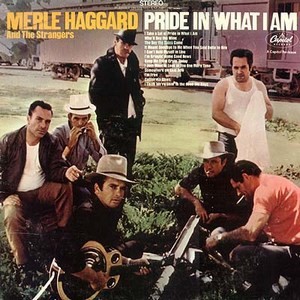
In Cash’s record cabinet, however, there are undoubtedly plenty of records from his colleague, and surely the two most recent, which happen to be two of Haggard’s very best records: Mama Tried and Pride In What I Am. The latter has just been out for a fortnight and is high on the Country Charts at the time Dylan is staying with Cash. And on Mama Tried, the record filled with prison songs like “Green, Green Grass Of Home” and “I Could Have Gone Right”, and with the heart-breaking “In the Good Old Days” from the then rather unknown Dolly Parton, also features Merle’s cover of “Folsom Prison Blues”. Plus the title track, of course, the No. 1 hit that Dylan still admires almost 40 years later, when he jokingly criticises Merle Haggard in his wonderful MusiCares speech (February 2015):
“Merle Haggard didn’t think much of my songs, but Buck Owens did, and Buck even recorded some of my early songs. Now I admire Merle – “Mama Tried,” “Tonight The Bottle Let Me Down,” “I’m a Lonesome Fugitive.” I understand all that but I can’t imagine Waylon Jennings singing “The Bottle Let Me Down.” I love Merle but he’s not Buck.”
In the “Post MusiCares Conversation”, Bill Flanagan asks just to be sure. Was he really dissing Merle Haggard back there? No, not at all, Dylan says. I have the highest regard for Merle, toured with him, his Jimmie Rodgers tribute album is one of my favourite records, he’s a complete man and we’re friends these days,
“I wasn’t dissing Merle, not the Merle I know. What I was talking about happened a long time ago, maybe in the late sixties. Merle had that song out called “Fighting Side of Me” and I’d seen an interview with him where he was going on about hippies and Dylan and the counter culture, and it kind of stuck in my mind and hurt, lumping me in with everything he didn’t like. But of course times have changed and he’s changed too.”
And when host Cash puts Merle’s new record on the turntable, this February evening ’69 in Nashville, Dylan hears in the beautiful opening song “I Take A Lot Of Pride In What I Am” (okay, a rather shameless “Gentle On My Mind” rip-off, but still beautiful):
I guess I grew up a loner,
I don't remember ever havin' any folks around.
But I keep thumbin' through the phone books,
And lookin' for my daddy's name in every town.
And I meet lots of friendly people,
That I always end up leavin' on the lam.
Where I've been or where I'm goin'
Didn't take alot of knowin',
But I take alot of pride in what I am.
… in which he then hears that unusual phrase “on the lam” a few times. And the rest of the record will no doubt please Dylan too; the Bakerfield sound, as opposed to the indulgence of Nashville, sprinkled with folk, blues and pop influences, containing wonderful songs like “The Day The Rains Came”, Hank Williams-like tearjerkers like “It Meant Goodbye When You Said Hello To Him” and even a Jimmie Rodgers song (“California Blues”).
That idle eat-when-I’m-hungry line on the manuscript, by the way, keeps buzzing around in the back of Dylan’s mind; some 30 years later, in 1997, it finally finds shelter in “Dreamin’ Of You” (Well, I eat when I’m hungry, drink when I’m dry / Live my life on the square). But tomorrow, in the studio, the men will be singing something else there.
To be continued. Next: Wanted Man part 4: To All The Girls I’ve Loved Before
Jochen is a regular reviewer of Dylan’s work on Untold. His books, in English, Dutch and German, are available via Amazon both in paperback and on Kindle:
By Aaron Galbraith (in the USA) and Tony Attwood (in England).
Aaron: Highway 51 Blues was composed by American blues pianist Curtis Jones, originally released on a 78 record on January 12, 1938.
Tony: To me this is a perfect blues from the era. The piano, double bass and guitar mix together in a beautiful way, each complimenting the other rather than seeming to fight for dominance, as happens in some recordings. The vocals are perfectly sung, without degenerating into over-playing or attempting to dominate; there’s a great melody, and every musician is playing his part (I’m assuming it was “his” – it normally was with these recordings) without getting carried away. Perfection.
Aaron: Dylan closes out the debut album with his version, which according to Wikipedia uses “the tune from the 1938 recording by Jones. He used lyrics from a 1939 Tommy McClennan recording called “New Highway No.51” for the first and last of the four verses, and utilised a repeating guitar figure from “Wake Up Little Susie” by the Everly Brothers (1957). ”
First here is the Tommy McClennan recording
Tony: Immediately this sounds much more like a traditional 12 bar blues – and I’m reminded of just how famous has that “runs right by my baby’s door” line become.
But for me the McClennan version is one that somehow feels it is always trying to escape from the regular beat of the piece and get faster and faster. It’s something that happens in a lot of blues, and I am not sure if it is intentional or indeed if it isn’t just my imagination, but it’s how these old recordings sometimes sound to me.
Aaron:And now “Wake Up Little Susie” by the Everly Brothers
Tony: I know I am supposed to be focussing on the music but I just love the fact that a random man wanders across the set around the 26 second mark. It is just so strange. But anyway, that’s one of the recordings I heard in my childhood and it remains always in the memory. But today it does seem rather trite and silly, but then popular music of the type we know today was still only just finding its feet, and of course, blues music was being sanitized to make it “suitable” for a white audience.
Aaron: So if you put all that together you should come up with the Dylan version
Tony: I think I played this to death when I first got the album, and being not only from England, but also living in a somewhat behind-the-times shire county, and indeed being just about the only kid in the school who had even heard of Dylan, let alone like him, this was my liberation. I didn’t get to discuss the music with anyone. And I don’t recall the local library having any books on the blues either. But now I could hear it.
Aaron:Here is one more recent version I kind of like – Mark Browning from 2001 Ballads, Love Songs & Gasoline. This version uses all the Dylan changes
Tony: Oh Aaron – thank you. I’ve never heard this before. I’m not sure about the affectation of the outpouring of breath occasionally, but the re-interpretation of Dylan’s interpretation is great fun. It keeps the guitar playing under control but gives us something new, especially in the instrumental solo. Great fun. Not for the first time I am indebted to you for expanding my knowledge.
A number of “Dylanologists” claim that the singer/songwriter/musician only makes meaningful references to Roman/Greek mythology later on in his career.
Not true.
The narrator in the following song, applauds Neptune, the God of the Sea, brother to thundering Zeus (Apollo’s dad) and brother to Pluto, the dark King of the Underworld: the Big Three gods in the days of Roman Emperor Nero.
Easy to get the message in the following song lyrics without any Decoder Ring.
Can’t be much clearer that Apollo calls on uncle Neptune to warn the now-in-power followers of Christianity ~ that they better smarten up; start to appreciate the yellow-haired, blue-eyed Sun-God … or else!
Neptune sinks the ‘unsinkable’ Titanic.
Marks the score on the sandy shore ~ Neptune -1: Jehovah -O.
Praise be to Nero's Neptune
The Titanic sails at dawn
And everybody's shouting
"Which side are you on?"
(Bob Dylan: Desolation Row)
The shining Olympian foretells that there’s gonna be a war in Heaven, in Hell, and on Earth.
Decoded, the song below makes it as plain as day that Apollo is rising in order to rescue his “bride” from organized religion.
At first Apollo admonishes the followers of the Judeo-Christian religion ~ they’re like the relatives of the drowned victims from the Titanic that his uncle sinks; they blame the whole thing on the Devil and Beelzebub, but are sure that most of the dead can look forward to a wonderful Afterlife:
There are no mistakes in life some people say
And it's true sometimes you can see it that way
But people don't live or die, people just float
She's gone with the man in the long black coat
Later, Apollo points out with a smile that he can’t die because he’s eternal, ~ the Sun shines down from above on the Titanic; there’s no gangplank made big enough for him to get on board:
I went down to the river, but I just missed the boat
She's gone with the man in the long black coat
(Man In The Long Black Coat)
So who’s side are you on anyway?
Bob Dylan Pawns His Watch (Part XVI)
By Larry Fyffe
Apollo leaves an encoded message concerning the harm that ‘Christian guilt’ can do.
The early Dylan song quoted below reveals that guilty desire does not work out that well, even in the land of the Olympian gods.
Apollo’s virginal sister Artemis (Mona) is well respected by the son of Phaedra’s husband.
The son rejects the sexual advances of Aphrodite who, when angry, can be scorpion-like. She makes Phaedra fall in love with her husband’s son. Phaedra offers herself to him, but he rejects her advances too.
To cover up her guilty behaviour, Phaedra tells her husband that his son raped her.
Needless to say, all hell breaks loose:
Well, Phaedra with her looking glass
Spreads her legs upon the grass
She gets all messed up, then she faints
That's 'cause she's so obvious, and you ain't
(Bob Dylan: I Wanna Be Your Lover)
Below, the author thereof, influenced by the Puritan creed, fears the ever-present Lord of the Flies, the harbinger of Death.
There’s no way for her to really know if she’s part of God’s Elect; as a consequence, she feels guilty:
I heard a fly buzz when I died
The stillness in the room
Was like the stillness in the air
Between the heaves of storm
(Emily Dickinson: I Heard A Fly Buzz)
Not the bright god Apollo of ancient Greek/Roman mythology though, protected as he is by a shield emblazoned with the golden bough of Immortality.
No fears has he of ever boarding a Titanic heading for an iceberg.
No fears has he of being ferried aross the River Acheron.
Apparently, Emily’s not so lucky; for some reason, she doesn’t meet with God’s approval.
Apollo leaves a message to that effect, encrypted in the following song lyrics:
She went with the man
In the long black coat
(Bob Dylan: Man In The Long Black Coat)
As we’ve observed, never-ending Apollo can make mistakes, even get physically injured by someone, or punished by his father Zeus, but he cannot die.
Beelzebub be damned.
What Apollo’s really doing in the song beneath is going down over the horizon for a brief spell after which he’ll return:
I'm closing the book
On the pages, and the text
And I don't really care
O-o-o-o, what happens next
I'm just going
I'm going
I'm gone
(Bob Dylan: Going, Going, Gone)
By Tony Attwood, based on the research of Mike Johnson
The aim of this series is to go back over the vast monument to Dylan’s work that is the “Never Ending Tour” series created and written by Mike Johnson (Kiwipoet), and pick out a few moments that strike me as being special in some way, perhaps in terms of musical originality, or perhaps beauty or indeed insight from Dylan into where his work could be taken.
Throughout the creation of the NET series, I have had the good fortune to be the first to read and hear each of the 100+ episodes that Mike has created for this site, and I have constantly marveled at both Dylan’s ability to rework his own material, and at Mike’s ability to collect all these recordings and present them to us in a coherent fashion. Two quite different achievements, but one without the other would mean that we would not today have the pleasure of listening to all these reworkings of Dylan’s catalogue by the man himself.
With over 100 editions of the series now published (at the time of writing we are in 2009 – the latest piece is here) Mike and I have begun to talk (via email, we live just about as far apart from each other as it is possible to get) about what else (if anything) could be written concerning Dylan’s live performances, once Mike’s series is complete.
In one sense the answer is nothing, the Never Ending Tour series that Mike has created and is still creating, is a monument that cannot be surpassed, but Mike had the idea that maybe there is something more that could be done. And this was that I could work my way through the series once again and pick out various recordings from the 1000+ that have been included, that stood out to me when I first listened to them and still have that impact today.
And I would stress that this is not with the idea of comparing different versions of the same song, for I fear that could become rather technical and for non-musicians extraordinarily boring, but rather simply picking out one song from one show and saying “Wow”. And then perhaps a few more words as well.
We all know the awful, tragic story, that is told within this song, and so appalling is it in the recognition of how many millions of men and women have returned home from war destroyed either physically and mentally by the experience, that if it didn’t affect you the first time round, I’m sure nothing I can say will make it affect you this time around.
But I do find myself deeply fascinated by this musical performance as well as moved emotionally. Perhaps it is because of its speed and its unrelenting drive, perhaps because of the assuredness of the delivery by Bob, and also perhaps by the instrumentation.
Of course I’ve no idea how they stumbled on this musical arrangement. Quite possibly Bob sat alone trying the song in different ways and then realised just how much power he could get from the piece when performed at this speed. Then it would have been taken to the band; although I think it is also possible that this version just emerged in rehearsal.
Certainly the song has changed over time. There is a version on the internet of Bob performing this song in April 1963 and it has none of the impact on me. The 1987 version brings the horror of the situation full-on into me in a way that the version below does not approach.
But of course I am listening to these recordings now knowing exactly what the story is – yet the 1987 recording above still sends shivers all through me and leaves me wanting “something strong to distract my mind”. (Fortunately, I am not seriously tempted to succumb to such a wish, but I can recognise it when I feel it).
At the start of this live rendition, there is a technique that Dylan has sometimes used elsewhere of the instrumentation seemingly randomly playing against each other with odd musical phrases that take a few moments to coalesce into the song itself. But coalesce the music quickly does to become unrelenting – and that is the key to the impact this version the song has on me. No matter what instrument comes in (the piano for example, then the percussion), that drive forward never stops. It is utterly relentless, just as war is. Once it is running, there is no escape.
But Bob and the band don’t just let the music rip. What Bob does is resist any temptation to change the speed or passion in order to reflect the realisation of the mother as to what has happened. We can’t catch each word – but that doesn’t matter, we know the lyrics anyway. It is the sound and the horror and the unrelenting consistency of the music that holds us.
And what is so extraordinary here is that really this should not work – it goes against all the logic of writing and performing a horror story. Just think of the music that accompanies the revelations of a horribly mutilated body in a movie – this performance is nothing like this at all. Any musician worth his/her salt can parody the music accompanying a black-and-white 1950s horror film. Few can hold the intensity that Bob and the band create here.
But then, I would ask that you don’t always focus on the magnificent guitar playing – listen to the way the piano keeps up relenting accompaniment often being nothing more than four notes repeating over and over and over… It would have been so easy to hammer out chords to signify horror and aggression, but those notes are almost delicate – and yet they are once again utterly unrelenting. Like a tiny drop of water, which is gentle when just one falls, but add them all together and it becomes part of an overwhelming destructive horror.
Of course not everyone will feel overwhelmed – emotions are personal and based on who and what we are. Equally not everyone in the audience will know all the lyrics, but eventually, surely most fans will find them and read
And I couldn't help but think,
through the thunder rolling and stink,
That I was just a puppet in a play.
And then at that moment, if one has any feeling for the way the accompaniment is created, that piano part, going on and on and on, seemingly unresponsive to the horrors of the lyrics, makes absolute and total sense. Nothing, but nothing is ever stopping this horror. They’ll probably write nursery rhymes about it.
Even without the magic Untold Decoder Ring, clues of the return of Zeus to his usurped throne can be spied abounding in a number of song lyrics by Bob Dylan ~ he’s no false prophet.
The loser will be later to win.
Not at all angry at the kidnapping of the Greek princess Helen by Trojan Paris, Apollo guides the arrow that kills Achilles, a Greek fighter out to save Helen in the Trojan War.
In the following song it’s apparent that Apollo, an expert marksman with the bow and arrow, disguises himself as Paris, and attempts to fool around with Aphrodite.
Paris awarded her the golden apple. Known also as Venus, she’s usually quite loose with her ‘velvet door’, but she wants nothing to with Apollo because he’s on the wrong side; she’s got a scorpion for protection.
Achilles is in Aphrodite’s alleyway, a place where the Greek soldier does not belong; he’s switched over to the Trojan side temporarily, but the Sun-God doesn’t trust him.
The feeling is mutual:
Achilles is in your alleyway
He don't want me here, he does brag
(Bob Dylan: Temporary Like Achilles)
This simple explanation is completely missed by the Sound School of Dylanology.
Another song mentions a cypress tree, a symbol of bereavement, sacred to Diana, the Goddess of the Moon. Also called Mona, she’s the, sister of Apollo.
Aeneas and other Trojans fleeing to the Seven Hills are to meet under a particular cypress tree.
A symbol that goes way back before the followers of Christianity displace Zeus as the God Most High, and thereafter embark on the crusades:
Stand over there by the cypress tree
Where the Trojan woman and children
Were sold into slavery
Long before the First Crusade
(Bob Dylan: My Own Version Version Of You)
Prophesied is that the Seven Hills will expand by five upon which oak trees arise ~ oak trees are sacred to Zeus, father of the yellow-haired Apollo.
Singing an encrypted psalm, the God of the Sun wades across the river to greet his “Bride”, formerly the twelve apostles of Christ:
The boulevards of cypress tress ....
My pulse is running through my palm
The sharp hills are rising from
The yellow fields with twisted oaks that grow
Won't you meet me out in the moonlight alone
(Bob Dylan: Moonlight)
It takes some time for the Christians to beat the ancient mythological gods, and the rematch is expected to last a long time too.
We’ll just have to wait and see what happens ~ the winner of the second match takes all.
Says Apollo:
No place to turn, no place at all
I'll pick a number between a one and two
And ask myself ,"What would Caesar do?"
(Bob Dylan: My Own Version Of You)
Bob Dylan Pawns His Watch (Part XIV)
by Larry Fyffe
Apollo is the son of Zeus and Ledo; he’s immortal and never dies though he may seem to disappear at sunset.
Dionysus, the demigod of vegetation, is the son of Zeus and Semele; he dies in the wintertime, but returns to the earth in the spring.
Christ, the son of God and Mary, dies on the cross, revives for a bit, then goes up to Heaven. He is supposed to return to the earth some day.
Not pleased is the Sun-God that Christianity has placed Jesus above him in the Parthenon of the gods: replaced the great healer who’s able to banish Beelzebub, the Lord of Death and Disease.
So decoded in a number of song lyrics sung by Bob Dylan wherein the narrator speaks through the musical mouth of Apollo.
In the song lyrics below, the Sun-God is annoyed at having to put up with the earth-bound energy of his brother Dionysus, and his wild gang of oft-drunken Bacchants:
All the early Roman kings
In the early, early morn
Come down from the mountain
Distributing the corn
Speeding through the forest
Racing down the track
You try to get away
They drag you right back
(Bob Dylan: Early Roman Kings)
Sunny Apollo would rather smile at Aurora, the Goddess of the Dawn.
Then like Caesar, harness his chariot, and stab an ‘x’ on all those who dare to seek his crown:
I got up early
So I coud greet the goddess of the dawn
I painted my wagon, abandoned all hope
And I crossed the Rubicon
(Bob Dylan: Crossing The Rubicon)
Happy Apollo is to abandon hope, and instead take positive action in the service of his father, the God of Thunder who’s way up there where the eagles fly:
Shake the dust off of your feet
Don't look back
Nothing can hold you down
Nothing that you lack
Temptation's not an easy thing
Adam given the Devil reign
Because he sinned, I got no choice
It run in my vein
(Bob Dylan: Pressing On)
Unhappy Apollo is that the twelve apostles are part of the Judeo-Christain Almighty’s plan to make a hero out of Jesus.
Beneath, Apollo sings out an early warning that it’s all a conspiracy to undermine the Thunder son’s lofty seat atop Mount Olympus.
Judas goes along with God’s plan:
I can't think for you
You'll have to decide
Whether Judas Iscariot
Had God on his side
(Bob Dylan: With God On Our Side)
Decrypted: Jehovah, Judas and Jesus are definitely not on the side of the Olympian Thunder King nor his son.
As far as Apollo is concerned the three Big J’s give Satan and his buddy Beelzebub free rein.
While ‘Rock Around the Clock,’ recorded in 1954, marks the beginning of the rock ‘n roll era, it was Elvis Presley’s ‘Heartbreak Hotel,’ 1956, that broke new ground musically by introducing white audiences to the blues, and which might be seen as the first rock song. You can find Heartbreak Hotel, by the way, if you mosey on down Lonely Avenue. It is fitting that in 2009 Dylan performed the song, even if only once, at Nevada, 16th August. If anything, with that dumpty-dum organ, the song sounds even older than Presley’s. The circus barker will never have Presley’s smooth, rubbery voice, but here it is, sounding like a Chicago blues number.
Heartbreak Hotel
That was a wonderful ‘uncover’ of the famous song, and Dylan sounds like he was having a lot of fun with it.
Listening to Dylan’s 2009 performances of some of his early rock songs, I’m once more struck by how ‘primitive’ they were, how like the music of the 1950s compared to the sophistications of, say Pink Floyd or even the melodic complexities of the Beatles songs of the 1960s. Only The Rolling Stones and The Animals were doing this kind of unfiltered bluesy stuff for mass white audiences. I found myself wondering how these performances would have sounded in the mid-1950s and, for the most part, they would have fitted in quite well.
Take this performance of ‘Highway 61 Revisited’ from Rothbury, for example. A 1950s audience would have had no trouble boogying to the guitar riff that drives the song. They might have had a few problems with the lyrics but, well, don’t we all?
Now the fifth daughter on the twelfth night
Told the first father that things weren’t right
My complexion she said is much too white
He said come here and step into the light he says hmm you’re right
Let me tell the second mother this has been done
But the second mother was with the seventh son
And they were both out on Highway 61
I think something is happening here but I don’t know what it is, and maybe it’s best I don’t enquire too deeply.
Highway 61 Revisited
Note Dylan’s organ break. He doesn’t stray too far from vamping along with the rhythm, but it’s more adventurous than what we heard from him in 2006 /07.
A 1950s audience would have had no problem with this performance of ‘Maggie’s Farm’ either. The guitar riff (hauntingly familiar, but I can’t quite place it) and the fast dumpty-dum tempo would have had the 50s audience up and jiving. The lyrics would probably have made them laugh. I suspect that in this case Dylan has deliberately made the song sound vintage, placed it in that era. (Amsterdam 11th April)
Maggie’s Farm
‘Rainy Day Woman’ would have been a foot-tapper, I suspect, for that notional 50s audience, particularly for the first few verses, when the pace is brisk, but curiously the song slows down to more like its original lazy tempo. And the lyrics might not have puzzled them that much either. The word ‘stoned’ was being used in the early 1950s to describe being under the influence, and ‘stone drunk’ goes back to the 1920s.
Rainy Day Woman
The sentiment expressed in ‘Most Likely You Go Your Way’ is common enough in the world of pop songs, and the thumpity-thump beat of this performance (Boston, 15th Nov) would have gone over okay with a 50s audience.
Most Likely You Go Your Way
Dylan swings ‘Just Like Tom Thumb’s Blues,’ just as he did with ‘Blowin’ in the Wind’ (see NET 2009 part 1) and will do, in 2011, with ‘Blind Willie McTell.’ If they had heard Victoria Spivey’s ‘Dope Head Blues’ (1927) or ‘Cocaine Blues’ by Luke Jordan (1927), or ‘Spoonful Blues’ by Charlie Patten (1929), our 50s audience could well have related to Dylan’s own junky’s lament. We might feel that this swing version lessens the agony inherent in the lyrics, but I dunno – if you can dance to it, it can’t be all bad. (Hanover, 21st March)
Tom Thumb’s Blues
Since all the imagery of ‘Blind Willie McTell’ related to the era of that old blues musician who did his last recordings in 1956 (but was active in the 1930s and 40s), a hip, blues-oriented 50s audience would have had no trouble with the song’s pessimism and nostalgia, or with this particular performance, although I doubt it would appeal to rock ‘n rollers listening to Bill Haley. This beautifully clear Crystal Cat recording (Brussels 22nd April) is a treasure. Close your eyes and you’re right there, in the shadow kingdom of a speakeasy, listening to some old guy recall the old days. A remarkable vocal performance.
Blind Willie McTell
‘Cat’s In the Well’ doesn’t need much tweaking to fit right into the boogie-woogie era. The guitar break is right out of the rock ‘n roll playbook. You can jive to this no problem. The lyrics would have given a 50s audience some trouble though. Despite the bounce of the music, the lyrics are vicious – ‘the world’s being slaughtered as it’s such a bloody disgrace,’ although he doesn’t sing ‘bloody’ on this performance, Dylan shies away from profanities, and softens it to ‘terrible’ or some such euphemism.
This is a warm up, the opening song at Boston (14th Nov), so we are treated to that extended introduction current at the time. I must say I prefer the simpler ‘…Columbia recording artist, Bob Dylan!’ to this potted biography.
Cat’s In the Well
It’s when we come to that greatest of all rock songs, ‘Like A Rolling Stone,’ that we leave the 50s audience behind us. While we can trace the riffs that drive the song to Richie Haven’s 1958 hit ‘La Bamba,’ suitably disguised, the famous lyrics land us squarely in the drug-fuelled years of the mid-1960s:
You say you never compromise
With the mystery tramp, but now you realize
He's not selling any alibis
As you stare into the vacuum of his eyes
And say do you want to make a deal?
Nor has time, or Dylan’s ravaged voice, been able to dim the ferocity of these lyrics, their condemnation of falsity and snobbery. In this case, however (Stockholm), the spirit of the performance is more reflective than accusatory, more in sadness than in anger.
Like a Rolling Stone
With this gleeful performance of ‘Leopard-Skin Pillbox Hat’ we are right back in both the musical and clothes fashion of the 50s. Pillbox hats date back to the 30s, but came into full prominence in the 50s and 60s. Of course, Dylan is taking the piss out of the fashion, and even musically he has his tongue in his cheek. This song, at least this performance of it, could be seen as a send-up of that ol’ bouncy rock ‘n roll; it’s fun but not to be taken too seriously. This is another opener, warm up song, in this case from Rothbury.
Leopard Skin Pillbox Hat
If we remove ‘All Along the Watchtower’ from its standard place as the closing song, and place it here, with the rock ‘n roll songs, we get a somewhat different perspective of that apocalyptic song. Despite its biblical, in fact Old Testament, imagery, the song belongs firmly to the first two decades of the Cold War, and the constant threat of annihilation ushered in by it. That Cold War was as real to the 50s as it was to the 60s, and a 50s audience would have had little trouble relating to it. As he’s done in the past few years, Dylan plays the song for its contrasts; a minimal, quiet backing during the verses, punctuated by raging guitar blasts between verses, all pushed along by a churchy organ and a militant tempo. (Rothbury) A stand-out performance.
With the drums of war still beating in Ukraine, and the implicit threat of a nuclear holocaust, this song sounds as relevant as ever.
Watchtower
Folk songs predate rock ‘n roll. You could argue that rock ‘n roll grew out of a particular kind of folk music, the blues crossed with jump jazz, and Dylan’s acoustic folk songs grew out of the rich folk tradition fully alive in the 50s. Dylan’s first audience for his acoustic songs were very much a 50s crowd, hipsters and old lefties, the lost generation that preceded the boomers. You can see them at the video of Dylan’s Finjan club performances of 1962. (I find, however, that the video of these performances has vanished from Youtube)
Dylan keeps this performance of ‘Don’t Think Twice’ simple and pared back, despite the organ. (Amsterdam 12th April) A 1930s audience might have found this a little unusual but not right out of the ballpark, and the relationship suggested by the lyrics is as old as love itself.
Don’t Think Twice
‘The Lonesome Death of Hattie Carroll’ deals with a racism that is as old as the Jim Crow laws that enforced it. While the incident it’s based on, the casual killing of an African American barmaid by a rich young white man, happened in February 1863, it could have happened pretty much any time from the 1880s on, along with the tepid response from the law that Dylan laments.
In keeping with performances in recent years, Dylan does a half-talking, half-singing adaption that perfectly suits the didactic purposes of the song. (Boston 14th Nov)
Hattie Carroll
I’m going to finish with this performance of ‘My Back Pages’ because it must come close to a best ever, wonderfully recorded by Crystal Cat and passionately delivered. And, for this song, a rare, piercing harp break. I’ve always found the song a bit lumbering, but that doesn’t seem to bother me here. Finally, after all these years, I get swept away by it. (Berlin, 1st April) In it, Dylan announces a swing away from simplistic, oppositional thinking. We’ll see a resounding return to that oppositional thinking in 1979 – but he will be so much older then…
My Back Pages
I’m indebted to Jochen Markhorst for drawing my attention to the following comment made by Dylan in 1997 ( see Markhorst’s indispensable Crossing the Rubicon page 91):
‘What makes (my songs) different is that there’s a foundation to them. That’s why they’re still around…’ Dylan also refers to, ‘a strong foundation, and subliminally, that’s what people are hearing.’
This has helped me understand what Dylan has been doing with these stripped-down performances in 2008/9, and the dumpty-dum which has given me so much trouble.
Dylan wants his songs to have a strong foundation when the winds of musical fashion shift. Their roots in vintage music provide that foundation, just as his lyrics, rooted in blues, folk and literary traditions provide another deep foundation. He ain’t no flash in the pan. Part of his genius is the ability to make old things new again, antique sounds and musical structures in particular. At that level, his songs remain forever young, while at the same time being forever old.
So ends my survey of this rich and challenging year. Next post, we’ll be turning to 2010, and the beginnings of a new musical direction for Bob Dylan. Catch you then.
Wanted man in California, wanted man in Buffalo
Wanted man in Kansas City, wanted man in Ohio
Wanted man in Mississippi, wanted man in old Cheyenne
Wherever you might look tonight, you might see this wanted man
“Last week, uh, in Nashville, Bob Dylan, one of the top writers… well, I don’t need to tell you who Bob Dylan is. The greatest writer of our time was at our house, and he and I sat down and wrote a song together. Let me see if I can find that damn thing, I’ll sing it for you. Yeah, here it is. It’s called Wanted Man. Do you know the introduction Bob? OK.” That last question is addressed to lead guitarist Bob Wootton, who then effortlessly splashes a “Folsom Prison Blues”- like intro from his guitar. Which kicks off “Wanted Man” on Johnny Cash At San Quentin – the opening track on the legendary album (1969), but number 15 on Cash’s actual setlist, that February day in California.
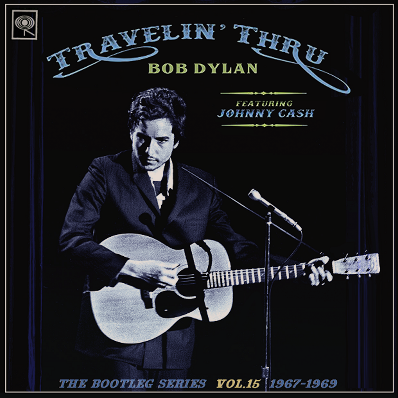
The claim that “he and I sat down and wrote a song together” might be a bit overblown – presumably, Cash also noticed that Dylan copied the place names from his tour schedule, or maybe he did spell them out, and therefore feels some kind of authorship. Either way, not a big deal. More interesting are the half-mumbled comment Let me see if I can find that damn thing, and the observation that we do indeed see him looking at a paper on his lectern during the song: so by now, six days after that funny Take 1, he has a written-out version of the lyrics. All the more interesting because these – now official – lyrics are so vastly different from the handwritten lyrics published in the 2019 booklet of The Bootleg Series Vol. 15 1967-1969: Travelin’ Thru (on page 29). Every line is different, including the opening couplet/refrain:
Wanted man in Carolina, Wanted Man in Buffalo
Wanted Man in Arizona, Wanted Man in Ohio
Wanted Man in Kansas City, Wanted Man in Old Chyanne [sic]
Everywhere you look tonight, boys, I am a Wanted Man
So far, hardly spectacular differences; “Carolina” instead of “California” or “Kansas City” instead of “Mississippi” is, of course, not that relevant. More fascinating is the rest of that photographed manuscript in the booklet: after this slightly different refrain, we see two-and-a-half more stanzas, including corrections and alternative verses, that differ wholly and utterly from the final text. There is no trace of the first verse, for instance, in the final version:
I find a seat in Reno, and I’m doing mighty fine
The boss he tips his hat to me and I in turn tip mine
                                (take my money)
I’m just about to collect my winnings, every nickel, every dime
                (I was born to make this killing)
But someone always recognizes me before it’s time
Fine verse, and for Dylanologists, it sheds priceless light on the workings of Dylan’s creativity. “I find a seat in Reno” and the third alternative of verse 3 “I was born to make a killing”… Dylan chooses as his first-person narrator a protagonist who almost automatically imposes himself on him as he sits next to Johnny Cash at a table here:
When I was just a baby my mama told me: Son,
Always be a good boy, don't ever play with guns.
But I shot a man in Reno just to watch him die
Now every time I hear that whistle, I hang my head and cry.
… the leading actor from “Folsom Prison Blues”, one of Cash’s signature songs, one of his first songs too (written in 1953), and the song with which he scored a No 1 hit just a few months ago, in the summer of 1968 (the live version from At Folsom Prison). There is no way Dylan is not thinking of the song when he writes the line I find a seat in Reno. He himself played “Folsom Prison Blues” with the guys of The Band at the Basement not so long ago; in May ’69, still in Nashville, he records it during the Self Portrait sessions, in 1987 he plays it with the men of The Grateful Dead, and from 1991 onwards it is on the setlist 20 times. When the theme “Jail” is on, at his Theme Time Radio Hour (season 1, episode 6), the monument is – of course – the opening song, and DJ Dylan again quotes exactly this line, or rather, he quotes verbatim from Cash; The Autobiography from 1997;
Johnny said he wrote the line I shot a man in Reno just to watch him die because he was trying to think of the worst reason for killing another person. He added: “It did come to mind quite easily, though.” When Johnny Cash performed first at San Quentin, Merle Haggard was in the audience. And by “audience” I mean: jail.
“Wanted Man” would thus have been set up as a kind of prequel to “Folsom Prison Blues”, as the background of the hunted criminal who is eventually, in Cash’s song, caught and locked up. Which is a nice idea, and its execution is also fine – a line like The boss he tips his hat to me and I in turn tip mine is already as wonderful a Dylan-worthy line as the opening of this verse, which initially seems to be about a successful gambler.
In the second instance, however, apparently after Dylan has also written a second and a third stanza, he seems to want to lay the Folsom Prison connotation on even thicker, prickling in small print between the third and fourth lines that I was born to make this killing-alternative. Nice line, and the hint to “Folsom Prison Blues” is also successful, but: the plot is disrupted. Now it’s no longer a successful gambler at a gaming table in Reno, and furthermore the last line, But someone always recognises me before it’s time, does not fit anymore and should now be rewritten as well.
It is unknown, and somewhat puzzling, why Dylan did not do so. The greatest writer of our time should have no problem with that, and the rest of the manuscript demonstrates his “usual” extraordinary form today. He doesn’t seem to be short of time either; the handwriting is neat, he uses no abbreviations, no “&” instead of “and”, even the past participles are written with end-g (doing, working), and the manuscript gives four alternate verse lines… time enough, apparently.
No, it almost seems as if a lonesome whistle has suddenly blown away his blues.
To be continued. Next: Wanted Man part 3: Now, I admire Merle
Jochen is a regular reviewer of Dylan’s work on Untold. His books, in English, Dutch and German, are available via Amazon both in paperback and on Kindle:
Private eye Auguste Dupin may stray off the trail a bit, but his ‘theory’ (that the Greek/Roman God Apollo moves Bob Dylan’s fingers across the keyboard) has merit.
Drawn from the following lines is evidence-in-writing that Apollo has the means to stab a number of the Christian Apostles, seven to be exact, who were thought killed by the blades of others.
Satan’s depicted as rising from Hades:
And a wheel came out of the abyss
Having seven fiery knives
(Gospel of St. Bartholomow)
Apollo goes out of his way to “correct” the above vision that the Apostle claims to see:
Peace will come
With tranquility and splendour on the wheels of fire
But will bring us no reward when her false idols fall
And cruel death surrenders with its pale ghost retreating
Between the King and Queen of Swords
(Bob Dylan: Changing Of The Guards)
The lines directly above reveal that Apollo snatches the Devil’s blades; that it is the Sun-God who drives Beelzebub (the pale Prince of Darkness and Death) out of the disciples who follow the many churches of Mary and Jesus.
Not only that, but the Mount Olympian expects no thanks in return.
Golden-haired Apollo’s just showing off the divine power that he inherits from Zeus, the God of Thunder, and Leto, the Titan queen of tranquility and splendour ~ “the King and Queen of Swords”, pictured on Tarot cards.
That’s not to say that the lyre-playing Apollo isn’t quite upset that Christian-oriented “Dylanologists” claim that Jesus controls the fingers of musician/singer/songwriter.
Evidence clearly points in the other direction, however:
In the courtyard of the golden sun
You stand and fight, or you break and run
You went and lost your lovely head
For a drink of wine, and a crust of bread
(Bob Dylan: Narrow Way)
Of Apostle Judas Iscariot, the Holy Bible says:
And he cast down the pieces of silver in the temple
And departed
And went and hanged himself
(Matthew 27:5)
If, dear reader, you’ve purchased an Untold “Secret Decoder Ring”, you know that this is simply not true.
Unloved Judas is Apollo victim number seven – stabbed to death in the House of the Rising Sun because he makes a martyr out of Jesus. Thereby Christ upstages the Sun-God when Jesus comes back to life (Apollo’s not human, and can’t do that ~ he’s immortal).
Revealed in the lines below is that Apollo disguises himself as Dr. Frank Lee; after a difficult seventeen-day struggle, the Sun-God, with the last of his seven crooked knives, manages to stab the Priest in the heart:
Well, up the stairs ran Frankie Lee
With a soulful bounding leap
And foaming at the mouth
Began his midnight creep
For sixteen nights and days he raved
But on the seventeenth, he burst
Into the arms of Judas Priest
Which is where he died of thirst
(Bob Dylan: Frankie Lee And Judas Priest)
Judas is scary a lot; bleeds all over the stage, then dies. Apollo, to make the show more dramatic, pretends to die.
He is his usual shining and smiling self after he’s administered a cup of cool, clear water by this sister Mona.
Apollo takes a bow.
The curtain falls.
Everybody applauds.
Except Judas.
Bob Dylan Pawns His Watch (Part XII)
Trouble, trouble, double trouble, here, there, and everywhere.
Citizens of the Roman Empire distance themselves from the Chief God who inhabits Mount Olympus.
Many Roman temple worshippers, the ‘bride’ of Zeus/Jove/Jupiter, turn their loyalty in the direction of Apollo (who bravely sided with the Trojans against the victorious Greeks) since the Sun-God stands up for the religion of the Roman Empire.
Apollo attempts to ward off the rising influence of Jehovah and Son Jesus therein:
They shaved her head
She was torn between Jupiter and Apollo
(Bob Dlyan: Changing Of The Guards)
The Holy Bible portrays the religious conflict:
And when the people saw what Paul had done
They lifted up their voices, saying ...
"The gods are come down to us in the likeness of men"
And they called Barnabas "Jupiter"
And Paul, "Mercurius"
Because he was the chief speaker
(Acts 14:11,12)
Sun Apollo seeks to establish himslf as the “most High”; he goes on a stabbing spree, a religious crusade to mark the Christian Apostles with the sign of the Devil – with the ‘x’ sign of the Cross.
According to the biblical scholar/detective Auguste Dupin anyway.
The yellow-haired Apollo is determined to drive our Beelzebub, the Lord of the Flies, from their bodies ~ enough of their devoting themselves to a dead person, and consuming His flesh and blood.
Some relatives of private eye Dupin seek permission to exhume or examine the relics of the bodies of James, John, Jude, Judas, Matthew, Peter and Bartholomew so they can search for any indication that these apostles were indeed stabbed by a crooked knife, the kind of steel weapon revealed wielded by Apollo in decoded song lyrics.
If they do find such evidence, a number of traditional biblical stories, and verses in the Bible itself will have to be revised.
It’s recorded that Jesus Himself shows that He has such marks on His body:
Then saith He to Thomas
"Reach hither thy finger, and behold my hands
And reach hither thy hand, and thrust it into my side
And be not faithless, but believing"
(Gospel Of John 20: 27)
The singer/songwriter below deliberately entangles himself in the web of the mystery narrative.
Claims the immortal Sun-God stabbed him too:
Shadows are falling, and I've been here all day
It's too hot to sleep, time is running away
Feel like my soul has turned into steel
I've still got the scars that the sun wouldn't heal
(Bob Dylan: Not Dark Yet)
According to many Gnostics, the truth may never be known, hidden as it is – a way beyond the visible Cosmos as we know it.
With the arrival of ‘ The Philosophy of Modern Song ‘ it is an appropriate time to look at Dylan’s history of performing cover songs. For the fact that the world’s greatest singer/songwriter (with an incomparable body of self-penned songs ) has performed so many cover songs throughout his career is quite remarkable.
Bob Dylan has released 39 studio albums and 10 of these albums are comprised of cover songs: Bob Dylan, Self Portrait, Dylan (A Fool Such As I), Down in the Groove, Good As I Been To You, World Gone Wrong, Christmas in the Heart, Shadows in the Night, Fallen Angels, Triplicate. A considerable proportion of his back catalogue.
It is also important to note that some of his finest albums of his own songs have included cover songs including the wonderful ‘ Corina, Corina’ on the Freewheelin’ album and the riveting ‘ A Satisfied Mind’ on the Saved album. The under-rated ‘Knocked out Loaded’ album contained mostly co-written songs such as the peerless ‘Brownsville Girl’ but also a few cover songs such as the beautiful version of ‘Precious Memories’.
The marvelous Basement Tapes Complete containing 6 discs includes a selection of delightful cover songs such as ‘Four Strong Winds’ and these covers enhance the quality of this historic record.
Then we have the lost Bromberg album from 1992 where he recorded nearly 30 cover songs and based on the evidence of the released songs, starting with the magnificent ‘Polly Vaughan’, this could have been a great album. Surely, a strong contender for an official Bootleg Series release.
The Supper Club concerts from 1993 should also be included in the lost gems category because in addition to great performances of his own songs ( ‘Ring Them Bells’ and ‘ Has Anybody Seen My Love ‘ are personal favourites) he also performed a surprisingly high number of cover songs but not surprisingly performed them differently than the versions on his superb, then current, traditional cover songs albums. Who else would release a new album (Infidels) then perform on primetime tv and begin their performance with a never performed version of Sonny Boy Williamson’s ‘Don’t Start Me Talking’?
This significant body of studio cover songs is matched by his career-spanning live cover song performances. There is an incredible bootleg Genuine NET Covers 1988 -2000 collection released in 2001 which comprises 9 disc’s of cover songs which have titles such as ‘Contemporary Competition illustrating the type of songs contained within, for example the gorgeous ‘Lady Came from Baltimore’ and curiously ‘Nowhere Man’. Many of these live cover songs are spontaneous one off’s but a large number are regular additions to his setlist.
Some of his greatest tours have included these additions such as ‘ Baby Let Me Follow You Down’ in 1966, ‘Deportee’s’ in 1976 and ‘ We Just Disagree ‘ in 1981. The magnificent 1986 tour with Tom Petty would not have scaled the heights it did without the terrific covers performed consistently including ‘That Lucky Old Sun’ , ‘Across The Borderline’, ‘Unchain My Heart’ and, a jaw dropping , ‘ House of the Rising Sun ‘. It is interesting to note that ‘That Lucky Old Sun’ was called up again for the great Sinatra-inspired Shadows in the Night album released in 2015.
Why does Dylan perform and record so many cover songs? The simple answer is because he can. This is what singers and musicians do. Another answer is that he may see himself as an artist keeping alive music traditions and demonstrating the relevance of such songs.
The Theme Time radio shows certainly demonstrated his love of songs in general together with his encyclopedic knowledge of music. It is worth mentioning that with both ‘Good As I Been To You’ and ‘Shadows in the Night’ he produced follow-up albums. This is important because this clearly proves how important these songs are to him and how intense his relationship with these songs has become. These are far from best-selling albums but that is not his primary focus, the most important consideration is the performance of these songs or as he explained ” uncovering them”.
This can be seen in the setlist of his current Rough and Rowdy Ways tour and his inclusion of ‘Melancholy Mood’ in the USA and ‘Old Black Magic’ in Europe. The fact that he produced five albums of Sinatra-inspired songs and lavished such love and care in interpreting these songs (arguably his finest vocals in 20 years) is testamony to this fact.
Bob Dylan has always done things his own way (” the audience find me”). Some of his fans dislike his decisions with the music he releases such as the Sinitra inspired cover albums. On the other hand I love his voice and I believe he is a great singer. I also believe he is a great interpreter of other’s songs. I feel that he saved the best album Triplicate for last.
Many of the songs he covers when performed by the original artist are ordinary, and such is his ability to transform a song that he makes the song come alive. The Mississippi Sheiks song ‘Blood in my Eye’ is one example where he turns a type of sea shanty into a powerful stand out song.
G E Smith tells a lovely story about his audition for the first NET band. He said that the main thing that Dylan needed to hear was that the band could perform ‘Pretty Peggy o’ , not ‘Shelter From The Storm’ or ‘Gates of Eden’ but an electrified ‘Pretty Peggy o’. This song, of course, became a great highlight of the NET.
https://youtu.be/G8RAICNZ3o0
As indicated above, Dylan often performs spontaneous, one-off covers to celebrate a fellow musician associated with the city or town he is performing in. I was most fortunate in being in the audience at several such performances; a lovely ‘One Irish Rover’ in which he was joined mid-performance by Van Morrison, a delicate ‘Something’ in Liverpool which brought the house down (it was reported that he went on the public Beatles tour during his visit) and ‘London Calling’ in London. Sometimes a cover song will be chosen to signify an event,etc.
The 1987 Temples in Flames tour unveiled a splendid ‘ Go Down Moses ( Let My People Go ) ‘ in Israel and finished with a tremendous, spontaneous performance of the same song as the last song of the tour in London. Most people will probably be surprised at just how many cover songs from a wide range of genres have been performed on a stage somewhere in the world throughout his musical history. I know I was when I browsed the brilliant Still On The Road website.
A couple of weeks ago I was applauding his performance at the London Palladium and trying my best to encourage an encore, other fans were leaving and one fan said to me ” he does not do encores” ( despite the evidence that he performed encores at the begining of the USA tour). A few nights later in Nottingham he performed an encore ‘I Cant’t Seem To Say Goodbye ‘ as a tribute to Jerry Lee Lewis.
We’ve already covered the covers of this song in the article in the “Beautiful obscurity” series where you’ll find recordings by Hard Nutz, the White Stripes, Robert Plant, Big Runga, Roger McGuinn with Calexico and Tom Jones. So plenty there for you to listen to if you are a fan of the song.
But my task today is to ask, “could there be any more that are worthy of note?” I’ve found three, although I think there probably are many more.
This live recording by Gallie digs out every grain of emotion in the song, without overdoing it. I love the harmonies in the chorus.
And there is more – this by Jessica Rhaye and The Ramshackle Parade in which again every ounce of feeling within the song is explored without it ever being overplayed or pushed too far.
In fact I think that is the key point; there needs to be an element of retraint here. Lose that and you lose the song.
Just one more as we have had so many excellent versions already. Jessica Rhaye and The Ramshackle Parade
And that really shows what this is all about – keeping an understanding of the piece while taking it somewhere else. The melody is changed and the rhythm is unrelenting, and as a result I’m not totally sure about this version but I can see where it is going, and admire the way they have found something else to do, despite all the other versions.
Wanted man in California, wanted man in Buffalo
Wanted man in Kansas City, wanted man in Ohio
Wanted man in Mississippi, wanted man in old Cheyenne
Wherever you might look tonight, you might see this wanted man
Dylan’s fascination with wanted men, with killers in particular, has been known since the early 60s, and is uncomfortable to this day. The 1975 ode to mafia assassin Joseph “Joey” Gallo is one of the low points in that respect, not to mention the propagandistic nonsense Dylan sings about John Wesley Hardin, the repulsive psychopath who murdered dozens of innocent people for the slightest reason (because they snored, for instance): “He was never known to hurt an honest man”, to quote just one blatant lie, and “But no charge held against him could they prove” (“John Wesley Harding”, 1967).
Whitewashings like “poetic freedom” or “irony” do not make it any less distasteful. Moreover, off-song utterances also give reason to think that Dylan has a peculiar blind spot for the inappropriateness of admiring unscrupulous butchers like Jesse James, John Wesley Hardin and Joe Gallo, and the anecdote told by scriptwriter Rudy Wurlitzer to Popmatters journalist Rodger Jacobs in 2009 is illustrative and rather worrying in this regard.
Wurlitzer, incidentally indeed a great-grandson of Rudolph Wurlitzer, the jukebox guy, attracted attention thanks to his script for the cult classic Two-Lane Blacktop (1971), the only film to feature James Taylor (in a leading role even, as “The Driver”, with a supporting role for Beach Boy Dennis Wilson as “The Mechanic”). The script impresses, is printed in its entirety in the April 1971 issue of Esquire, and is noticed by director Peckinpah. “Bloody” Sam then asks Wurlitzer to write the script for his next western, Pat Garrett And Billy The Kid, which apparently comes to Dylan’s attention.
“The script was already written when Bob came to see me in my apartment on the Lower East Side of New York. He said that he had always related to Billy the Kid as if he was some kind of reincarnation; it was clear that he was obsessed with the Billy the Kid myth.”
Wurlitzer, who at first naturally thinks Dylan is interested in providing the soundtrack, learns to his surprise that Dylan would like to play in the movie. One phone call to producer Gordon Carroll is enough (Carroll, of course, recognises the commercial value of a film poster with Dylan’s name on it), and Wurlitzer invents an insignificant supporting role (“Alias”) on the spot, and, still back home in New York, quickly writes a few extra scenes into the script.
The rest is history, but Wurlitzer’s outpouring about Dylan’s obsession with Billy The Kid remains somewhat underexposed – though it really is not that insignificant. It places yet another question mark over Dylan’s judgement or, perhaps more painfully, an irrevocable tick in the “rather naïve” box on the list of Dylan’s intellectual qualities.
An “obsession with the Billy The Kid myth” and a sense that he is “a kind of reincarnation” of the legendary outlaw suggests that Dylan is confusing romanticised biographies of the desperado with historiography. The dry, factual historiography is quite comprehensive and well-documented, and leaves little doubt about the nature of Henry McCarty alias William H. Bonney alias Billy The Kid; robbing shops from the age of 15, aggressive horse thief, quarrelsome gambler and (at least) eight-time murderer, who needlessly and with apparent pleasure also kills unarmed opponents – there really isn’t much admirable or romantic about the actual life story of Billy The Kid.
If Dylan feels any kinship at all, it almost certainly has to be with one of Billy’s many film incarnations. The Law vs. Billy the Kid (1954, starring Scott Brady), for instance, or 1958’s The Left Handed Gun, with Paul Newman. And songs like Woody Guthrie’s version of “Billy The Kid”, and otherwise that of Marty Robbins (on one of Dylan’s favourite albums, Gunfighter Ballads and Trail Songs, 1959), will only have confirmed him in Billy’s heroic, ill-fated image;
I rode down the border and robbed in Juarez
I drank to the maidens, the happiest of days
My picture is posted from Texas to Maine
And women and riding and robbing's my game
… subject matter, myth-making and word choice that all lead him to the song he pulls out of his stetson in few minutes for Johnny Cash in 1969: “Wanted Man”.
The song is not overly ambitious; in fact, no more than a list song over a ten-a-penny chord progression (the time-honoured Johnny Cash favourite, C-D-G-F-C repeating chord sequence), with an equally unspectacular melody. The trigger for the song doesn’t seem too mysterious either: San Quentin. The song is first tried, and presumably written, on 18 February 1969. Six days later, 24 February, Cash is expected in California, at San Quentin State Prison, for the legendary prison concert.
In fact, Dylan’s inspiration seems to have been fed far more extensively by Cash’s touring schedule than this single, legendary concert at San Quentin. A glance at the Man in Black’s tour history does ignite more than one aha-experience:
24 February – 12 March ’69 – California
12 October ’69 – Buffalo
17 March ’68 – Kansas City
27-28 August’69 – Ohio
1 December ’69 – Mississippi
14 September ’68 – Colorado
13 August ’70 – Georgia
13 September ’68 – El Paso
21-21 October ’69 – Shreveport
12-13 September ’69 – Abilene
15-18 September ’69 – Albuquerque
14 November ’69 – Syracuse
… remarkably many of the place names Dylan lists in “Wanted Man” can be found in Cash’s tour schedule. Twelve out of 16 – that’s a bit too many to be coincidental. The US has over 19 thousand towns and cities, with Cash performing in 36 of them in 1969, so the chance of Dylan incorporating twelve of them in his song is microscopically small. Thirteen even, if you cheat a bit;
Then I went to sleep in Shreveport, woke up in Abilene
Wonderin’ why the hell I’m wanted at some town halfway between
Exactly halfway between Shreveport and Abilene lies Dallas – where Cash performs on 29 November 1969. Incidentally: still here in Nashville, probably at that same little table, Dylan writes “Champaign, Illinois” as well, for the guitarist on duty during this same session, for Carl Perkins – Cash plays 4 October 1969 in Champaign, Illinois.
All in all, it begins to look very much like Cash’s calendar indeed is on the little table at which Dylan quickly writes his song for his friend. Although Take 1, on The Bootleg Series Vol. 15 1967-1969: Travelin’ Thru (2019) suggests that the song has not literally been completely “written” at that point; Cash has only a basic idea of the lyrics and is just guessing at the place names. “Hibbing” he shouts, for example, gleefully cheeky, and “Duluth”. Apparently, he does not yet have a written-out full version of the lyrics. Which are, by the way, very different from the final, official lyrics anyway:
Wanted man in Indiana, wanted man in Ohio
Wanted man in Texarkana, wanted man in Mexico
Wanted man in Sacramento, wanted man in old Cheyenne
Wherever you may look tonight, you may see this wanted man
… with Dylan himself in turn also hopelessly jumbling the lyrics, when repeating this opening couplet – which then turns out to be intended as a chorus:
Wanted man in Sacramento, wanted man in Tennessee
Wanted man in Oklahoma, wanted man in… ehmm…
                                 [“Muskogee?” Cash guesses]
Wanted man in Indiana, wanted man in old Cheyenne
Wherever you might look tonight, you may see this wanted man
And in the continuation Dylan, clearly à l’improviste, calls out place names like Milwaukee, Minneapolis and Missouri, and an audibly amused Cash does not lag behind. “Bangor, Maine”, “Seattle”, “Jackson”, “Bristol”, “Kingston”, “Norfolk”… again all place names where he has either performed recently or will perform soon. Yes, by now the conclusion seems inescapable: during this semi-improvised Take 1, both men are peeking at the same tour schedule, at Johnny Cash’s 1968-69 tour schedule. “Gate City”, which Cash playfully calls out at the end, is an unsightly little town in Virginia (about two thousand inhabitants) where the Man In Black won’t play until August 1971, so that’s not the trigger; that would be his wife June, also present in the studio – she is from there.
Anyway: in six days, in a California Department of Corrections and Rehabilitation State Prison for Men, Cash will premiere the final version of “Wanted Man”.
To be continued. Next: Wanted Man part 2: I shot a man in Reno
Jochen is a regular reviewer of Dylan’s work on Untold. His books, in English, Dutch and German, are available via Amazon both in paperback and on Kindle:
The God of Thunder is not happy that the New Testament asserts that Roman/Greek mythology will be undermined by the religion of Christianity; that the temples to him and his son Apollo will crumble:
But the many that art first shall be last
And the last shall be first
(Matthew 19: 30)
In the song lyrics below, song and danceman Apollo takes the Christian Almighty, and his son Jesus, to task:
And don't speak too soon
For the wheel's still in spin
And there's no telling who
That it's naming
For the loser now
Will be later to win
(Bob Dylan: The Times They Are A-Changing)
The rumour that Christianity is eventually going to win the war, and history come to an end, is not at all pleasing to Apollo’s ears:
And ye shall hear of wars
And rumours of war
See that ye be not troubled
For all these things must come to pass
But the end is not yet
(Matthew 24:6)
The Sun-God is not worried; he’s immortal, and always rises again.
He, like mortal Friedrich Nietschez, answers back:
There's been rumours of war
And wars that have been
The meaning of life
Has been lost in the wind
And some people thinking
That the end is close by
'Stead of learning to live
They are learning to die
Let me die in my footsteps
Before I go down underground
(Bob Dylan: Let Me Die In My Footsteps)
The last apostle mentioned in detective Dupin’s notebooks to be stabbed to death by Apollo is Saint Matthew.
According to these notes, the Sun-God is especially upset at Matthew ~
As a tax collector, the Apostle works for the Roman authorities, but Apollo considers him a traitor for being a follower of what he labels the “soft-hearted” Christian Messiah rather than a devotee of himself, and his father, the God of Thunder.
Tradition has it that Matthew is killed by a sword on the orders of a lusty King of Ethiopia; Matthew tells the monarch to keep his royal hands off a Nun.
Not so, documents Dupin ~ the Sun-God tracks down Matthew, and stabs the apostle while he’s soaking in the bathtub.
No matter, the Nun pours poison in the King’s ear, and supposedly grieves her protector’s death to the point that she takes on the Apostle’s name.
So recorded in the following song lyrics:
She stoops down to gather partly shattered men
And knows that when it's over, it will start again
Both the times she smiled, it was the portrait of the sun
She calls herself "St. Matthew" when she is on the run
(The Monkees: St. Matthew ~ Nesmith)
The Monkees: St. Matthew ~ Nesmith
https://youtu.be/sIPALVOLPKI
Apparently, unlike his dad, yellow-haired, blue-eyed Apollo doesn’t have to disguise himself as anything – not in so far as the Nun on the run is concerned anyway.
Bob Dylan Pawns his Watch (Part X)
The Sun-God Apollo claims that Saint Matthew is possessed by Beelzebub, the Lord of Death.
The Apostle writes that Jesus hides things in plain sight in order that only innocent babes can see them.
His Father is going to sacrifice, like a lamb, His only begotten son so sinners can save themselves from Hell if they only open up their eyes:
At that time Jesus answered, and said
"I thank thee, O Father
Lord of heaven and earth
Because Thou has hid these things
From the wise and the prudent
And hast revealed them unto babes"
(Matthew 11:25)
The son of the Thunder God turns the religion of Christianity on its head, and mocks the Messiah’s disciple for being such a blind devotee to the ‘soft’ teachings of Christ when the dark material world has gone so wrong.
Where Satan is winning all the battles:
Saved.
By the blood of the Lamb
Saved.
Saved.
And I'm so glad
Yes, I'm so glad.
I'm so glad
So glad.
I want to thank You, Lord
I just want to thank You, Lord
Thank You, Lord
(Bob Dylan: Saved)
On the artwork of a recording by singer/songwriter/musician Bob Dylan, the number 1125 is missing from licence plate of a smouldering Cadillac – so Patrick Roefflaer informs us; replaced by the 666 number of the AntiChrist
The gaffetti work of Apollo, asserts Edgar Allan Poe’s private eye Auguste Dupin. The detective says he dicovered the peeled-off licence numbers in a cave high up on Mount Olympus. He’s sure that Apollo stabbed, or convinced others to stab, a number of the Apostles to death so as to mark them off as Satan worshippers.
However, a Royal Commission, established by Athena’s Court, concludes that Apollo was the lone knife-wielder.
Nevertheless, the Sun God of Music pleads that he is as innocent as a new-born baby.
Seems quite an irrational god when all is said and done. Took the side of the Trojans because Hera, not being his real mother, sided with the Greeks ~ so claims investigator Dupin anyway.
Now I have to admit that I’d hardly given a thought to this song over the years until Jochen came along with his four-part review of the piece which ended with a range of cover versions. At the top of that article there are links to the earlier parts of the series, so you pick up on the whole review from that point to get the full background.
And of course Jochen picked out the best of the covers including Julie Doiron, whose voice and the notion of her singing it with herself but without any harmonies is really spooky, it really seems to bring across the whole notion of being “really weird” or put it another way, spaced out.
But for me Jochen’s biggest and best find (in the sense that I had never come across the recording before, or if I have I have forgotten it) was Ben Sidran. Jochen noted, “American jazz phenomenon Ben Sidran delivers an attractive, neurotic cover on his wonderful tribute project Dylan Different (2009) – the performance on Dylan Different Live In Paris At the New Morning (2010) is a degree more neurotic and two degrees more attractive.”
But I would also include Pat Guadagno and Tired Horses as being worthy of a listen. It has a relaxed approach to the piece which after all these years of knowing it I rather like.
For me indeed it is the old question of, does this cover add anything to a song that I know forwards, backwards and inside out? And yes this version does. Most particularly the band don’t just play the instrumental break as a way of using up time – they add an extra insight – or at least an extra thought.
It’s not a profound thought, but it still made me smile.
And I will finally give a mention to The Deversons doing something different, early on in the history of the song – this was released in February 1966. The instrumental break is a disappointment but the sung verses gave me a smile.
But then I’ve always had a weird sense of humour.
The Deverons were from Winnipeg and featured Burton Cummings who left to join The Guess Who in 1965 – they then recorded Undun which was said to have evolved after Cummings heard Ballad in Plain D. It’s an interesting thought and indeed an interesting piece and I shall divert for a moment to offer it in case you are interested.
But that is not my theme today, so here is their “On the road again”
I think it is possible to go further with this song, and my first inclination would be to slow it right down. Ah, if only I was still in a band, I’d have a go at that. “Tony Attwood and the Septegenarians do Dylan Different” – there’s a snappy title for the album.
Detective Dupin’s notebook indicates that he investigates Apollo the Sun-God as a possible suspect in the murder of Saint Peter.
The detective points out that the God of Thunder pushes aside Jehovah and presents an image of his own son instead to brothers John and James, and to Peter:
It’s a contest of wills, and Zeus (Jove) replaces their vision of Jesus with one of Apollo:
And was transfigured before them
And his face did shine as the sun
And his raiment was white as the light
(Matthew 17: 2)
Then speaks Zeus:
And behold, a voice out of the cloud
Which said, "This is my beloved Son
In whom I am well pleased; hear ye Him"
(Matthew 17:5 )
The notes go on to explain how Peter, like John and James, do not listen:
And when they lifted up their eyes
They saw no man, save Jesus only
(Matthew 17:8)
Proclaims Apostle Peter:
But grow in grace, and in the knowledge
 Of our Lord and Saviour Jesus Christ
To Him be glory both now and forever.
Amen
(Il Peter 3:18)
It’s no more Mr. Nice Guy ~ the musical blue-eyed son of the God of Thunder decides to settle the matter once and for all with six fiery knives (or maybe it’s seven) conjectures Dupin:
Others can be good
I'll cut you up with a crooked knife
(Bob Dylan: Crossing The Rubicon)
https://youtu.be/dw2Hau2WQjs
Tradition has it that Saint Peter is stretched upside down on a cross in Rome by Emperor Nero ~ Dupin speculates that the Apostle, while upside down, is slashed by a crooked knife:
But when thou shalt be old
Thou shalt stretch forth thy hands
And another shall gird thee
And carry thee whither though wouldest not
(Gospel Of John 21:18)
Could that someone be Mack the Knife?
Bob Dylan Pawns His Watch (Part VIII)
Our Unold experts have uncovered Dupin’s “conspiracy theory” which proposes that the Olympian gods, having overthrown the harsh Titans, are now determined to put matters in balance by taking their domain back from the ‘too soft’ Judeo-Christian religion.
As goes the theory, targeted by the singing Sun-God Apollo are the Twelve Apostles. Unlike the pitiless Titans, Apollo allows his victims to be brought back to life ~ the stabbings simply a warning that the Olympian gods are not to be underestimated.
Half-hidden messages to that effect are posted in plain sight all over the place.
In the song lyrics below:
I'm gonna make you play the piano like Leon Russell
Like Liberace,  like St. John the Apostle
And again:
You can bring it to St. Peter
You can bring it to St. Jerome
You can bring it all the way over
Bring it all the way home
(Bob Dylan: My Own Version of You)
Detective Dupin, created by writer Edgar Allan Poe, traces the stabbing deaths, of apostles John (questionable), James, Bartholomew, and Peter back to the Sun-God who’s from Mount Ida.
Apollo’s next victim, claims the detective, is Apostle Jude.
Tradition claims he’s killed by an axe in Roman Syria; however, Dupin claims he has proof that the Sun-God finds an accomplice in a Turkish city that Jesus Christ admonishes:
Notwithstanding I have a few things against thee
Because though sufferest that Jezebel
Which calleth herself a prophetess
To teach and to seduce my servants to commit fornication
And to eat things sacrificed unto idols
(Revelation 2:20)
Apollo convinces this latter-day Jezebel to stab the Apostle with one of the crooked knives that he gives her.
The stabbing recorded quite explicitly in the following song lyrics:
Hey, Jude, don't be afraid
You were made to go out and get her
The minute you let her under your skin
Then you began to make it better
(Beatles: Hey Jude ~ Lennon/McCartney)
Means that the Son of the Thunder God has one, maybe two, knives left.
Begs the question ~ Of the remaining Apostles, whom does he let off the hook, and why.
The story gets interesting about now.
(After a short pause for a message from our sponsors, the story will continue).
The second version, the up-tempo and smoother version of “Marchin’ To The City”, distinguishes itself, apart from the changed key (from E♭ to the guitar-friendlier E) and the different arrangement, mainly by the radical text intervention. The chorus is maintained, but the verses are cut back considerably. Of the seven, only four remain; two and a half old ones, supplemented by one and a half new ones. The only one to emerge unscathed from the battle is the most beautiful verse, the one that Dylan evidently finds hard to say goodbye to and which is even promoted to the opening verse:
Loneliness got a mind of its own
The more people around, the more you feel alone
I've been chained to the earth like a silent slave
I’m trying to break free out of death's dark cave
… which was originally the third verse. The first two are ruthlessly deleted, though this one will not survive either in the end. The theme of “‘Til I Fell In Love With You” is “smaller”, more intimate love despair – perhaps the poet finds the “larger”, existential desolation of this loneliness couplet ultimately too dramatic.
From version #1, the gay Paree/follow the river lines are saved for “Not Dark Yet”, the first line of that former fifth verse is allowed into this second verse:
I was hoping to my soul that we'd never part
You took all the madness right out of my heart
I was hoping we could drink from Life's clear streams
I was hoping we could dream from Life's pleasant dreams
So for the time being, William Blake’s words from “You Don’t Believe” may remain, now introduced by a much more intimate confession of love. Poetically not really an improvement, by the way. The rhyming of we’d never part with broken heart, or with gave you my heart, or with other variants, we’ve known for a hundred years from inspirational quotes, the back of matchboxes and sentimental lyrics like “Hello Mary-Lou” and “Wayward Wind” and “Hurt”.
Nothing wrong with that of course, but here, in this revised version of “Marchin’ To The City”, it is an impoverishment. At most, the “I Walk The Line”-like motif of you took all the madness right out of my heart, of the revelation that love has changed the personality of the protagonist, is a merit, opening the gate to the theme of the forthcoming “’Til I Fell In Love With You”.
Which does not extend to the third verse, however. This third stanza seems to consist of rather haphazard cutting and pasting from #1;
My house is burnin' up to the skies
I thought it would rain but the clouds passed by
Sorrow and pity through the earth and the skies
I'm not looking for nothing in anyone's eyes
… which in turn is merrily cut up, and pasted into “’Til I Fell In Love With You” (lines 1 and 2), “Not Dark Yet” (line 4), and consigned to the wastebasket (line 3). This verse ultimately has little more than a bridging function, all in all; it fills a minute to the main verse of #2, the most important part, the closing couplet.
Wind is blowin' all troubles and dirt
Time to get away 'fore someone gets hurt
I just don't know what I'm a-gonna do
I was all right ’til I fell in love with you
Not so much important because of the rather generic opening lines, obviously. Skilful and provided with a pinch of appropriate melancholy, but the clichéd rhyme dirt/hurt is undoubtedly too easy in Dylan’s ears as well. It’s been used in thousands of songs, from Loretta Lynn to Marty Robbins, from Tom Waits to Mick Jagger and from Motörhead to Public Enemy… and Dylan himself has chosen this easy way out plenty of times too (“Do Right To Me Baby”, “Don’t Ever Take Yourself Away”, “Last Thoughts On Woody Guthrie”). No, for this #2 Dylan does dash off these lines in a wink, including the trite rhyme, but after the recording they are discharged into the shredder just as easily.
The music-historical eternal value is, of course, in the closing lines. Again, presumably, a sample of the conclusion of Dylan’s songwriting class to Mike Campbell; the “twenty verses” you write while you’re out there in The Zone, hoping that “the last ones might be better than all the stuff you had.” Dylan, in this case, is not only merely content with these last lines; they even inspire a complete song – that’s how much better than “all the stuff he had” these new lines are, apparently.
It is a change of course. Where the song initially seemed to be going in an almost metaphysical, transcending misery direction, these last two lines suddenly take a turn towards universally recognisable, “small” heartbreak, small heartbreak at which that new line in verse 2 already hinted (“You took all the madness right out of my heart”). And once again, after the “Raindrops Keep Falling On My Head” echo in #1, Burt Bacharach seems a signpost. At least, the opening of the change of direction, “I just don’t know what I’m a-gonna do”, has the colour, tone and even word choice of the immortal “I Just Don’t Know What To Do With Myself”;
I just don't know what to do with myself
Don't know just what to do with myself
I'm so used to doing everything with you
Planning everything for two
And now that we're through
… the song we all know of course in Dusty Springfield’s unsurpassed 1964 version, but which, as we only discovered in the 1980s, was recorded much earlier by Chuck Jackson in 1962 (over the original track by Tommy Hunt) – with a similarly magical, thoroughly melancholic beauty as Dusty’s masterpiece.
Although the magic, to be honest, actually shines through in each and every version. Marcia Hines, Isaac Hayes, White Stripes, Dionne Warwick… Elvis Costello has had the song in his repertoire since 1977, when he still was an angry young man and therefore initially misunderstood, as he explains:
“It was a measure of how backwards things were in 1977 that some people actually thought I was making a joke when The Attractions and I began performing “I Just Don’t Know What to Do with Myself”. I was not being ironic. I was being extremely literal.”
(in his autobiography Unfaithful Music & Disappearing Ink, 2015).
Costello has performed the song at least 50 times during his career, was even allowed to perform it with Bacharach himself on piano in 1998, and still performs the evergreen in 2020, when he has already become a Grand Old Man himself;
Anyway, “Marchin’ To The City”. Bacharach or not, Dylan is in The Zone and, via I just don’t know what I’m a-gonna do, eventually arrives at the key that will unlock an entire song; I was all right ’til I fell in love with you is the last line of the final version of the preliminary study of “’Til I Fell In Love With You”.
Jochen is a regular reviewer of Dylan’s work on Untold. His books, in English, Dutch and German, are available via Amazon both in paperback and on Kindle: