We have already had one Warren Zevon song in this list of Dylan favourites: ‘Desperado Under the Eaves’, And now it is time for a second: ‘Lawyers, Guns, and Money’. And we do have several recordings of this song to contemplate
Now I want to make something clear: most of these songs that Bob has chosen I don’t know – or at best don’t know very well. And so I am listening to them for the first time (or at least the first time in many years) as I come to write each review. And indeed having developed the habit of writing reviews while listening (as opposed to listening in silence and then contemplating for a while) when co-authoring the articles I write with Aaron, I carry on that format here.
So this is my first interaction with this song (my excuse being that in 1989 I had three daughters all under 10 years old and that rather takes up a lot of time – although it was certainly worth it; they are all three of them, now my best friends).
Anyway back to the song. The lyrics are quite something.
I went home with the waitress, the way I always do
How was I to know, she was with the Russians, too?

I was gambling in Havana, I took a little risk
Send lawyers, guns and money, dad, get me out of this, ha

I'm the innocent bystander
Somehow I got stuck
between the rock and a hard place
And I'm down on my luck, yes I'm down on my luck
Well, I'm down on my luck

And I'm hiding in Honduras
I'm a desperate man
Send lawyers, guns, and money
The shit has hit the fan

Alright, send lawyers, guns, and money
So looking at the song’s lyrics it is simple: exactly the opposite of Dylan’s work, and yet it is equally stunningly brilliant. My guess (as a person who has written several hundred songs across a lifetime, but without any commercial success) is that the title came first, and then the song evolved around it. The title phrase indeed demands that two-chord accompaniment (musicians would write it as IV, I) and then the third chord is added at the end. From that emerges everything else. I suspect the notion of introducing the Russians, Havana and Honduras just arose as he played the chords in that rhythm on the piano.
Interestingly (to me if no one else) for this live recording, they’ve changed key. And I do love the way an extra bar is added in places.
In fact I love all of it. Especially the notion of going through all this and claiming to be an innocent by-stander. Fabulous.
I did however know Warren Zevon, because of “Werewolves of London”, but nothing more, so learning about him really is learning for me. He was, it seems, born in the same year as me but died of cancer 20 years ago. (And that is quite an unsettling thought: how come I, just a regular guy who enjoys all this music, managed to survive? Beats me.)
Here’s another live version recorded for TV.
So here we have another song that is a million miles from anything Bob would ever write or perform, which he names in his favourite song list, and I am immediately taken by.
You know, I am really enjoying this idea for a series.
An index to all 111 previous episodes in this definitive series on the Never Ending Tour can be found here.
By Mike Johnson (Kiwipoet)
Some songs seem to have their peak years in terms of their live performances. Those are years in which all the elements of the performance come together to produce ‘best ever’ performances before fading into business-as-usual presentations or fading from the setlists altogether.
‘Forgetful Heart,’ that elegiac, haunting Dylan/Hunter song from Together Through Life (2009) is a case in point. First played in 2009, the song would last through to 2015 and yet, it seems to me, it was never played better or more expressively than in 2011. Played acoustically, with Tony Garnier on double bass and Donnie Herron on the viola (sometimes the violin), the song was, from the start, a stand-out performance piece, creating a brooding, sad and self-reflecting mood, and yet the 2011 performances seem to have magic it’s hard to find before or afterwards.
While planning this post, I culled the recordings down to ten marvellous renditions. Since putting all ten into one post would be excessive, and probably overkill, I whittled them down to five that I considered to be necessary performances. I trust you, my dear reader, will forgive me this indulgence, but there are nuances in vocal delivery and harp playing I believe justify the repetition and can only hope my editor agrees with me.
I’m not going to follow these chronologically, although that’s a tempting approach, as I feel that, even within this narrow field of superlative performances, there is one that stands out as being the best of the best. I will however begin with that excellent first concert of the year, Taipei (April 3rd).
Forgetful Heart (A)
There is softness in the recording, a gentle feel to it, and Dylan’s vocal stays sensitive to the lyrics without breaking into falsetto too noticeably. There is also, albeit not too obviously, an echo to Dylan’s voice which gives the song an other-worldly quality. The song comes across as a gentler ‘Lovesick,’ a soliloquy of loneliness. (Herron is on the violin here.)
If we are looking for vocal excellence, we can’t go past the Tel Aviv performance (June 20th). The vocal is more upfront than Taipei, and a touch more emphatic, while Herron’s move to the viola creates a darker, more sombre sound. It’s hard to tell to what extent some of these differences are due to the accident of an audience recording, or a deliberate re-balancing of the song by Dylan, and we’ll come back to that issue shortly when considering the Crystal Cat recording from London at the end of the year. Depending on my mood, I can equally enjoy both the Taipei version and the Tel Aviv version.
Forgetful Heart (B)
The recording at the Odense (June 27th) is certainly sharper, and more hard-edged than the previous two performances. The song comes out of the shadows and is right in our faces. I don’t know if that is better than the softer, Taipei performance, but it does, in effect, shift the mood from a tender melancholy to pungent self-accusation.
Forgetful Heart (C)
The superiority of the Crystal Cat recordings can be instantly recognised in this London performance. Dylan performed the song twice in London, in the second concert (Nov 20th) and in the third (Nov 21st). I’ve chosen the version from the second concert. I have to say, however, that despite the evident excellence of the recording, and the performance, I find myself harking back to the softer Taipei and Tel Aviv performances. Is this because of the recording or has Dylan adopted a harsher tone in his soliloquy? Or am I getting soft?
These are only quibbles in the face of an emotionally compelling performance in which we find both the old circus barker and the emerging crooner at work to stunning effect. Wonderful the way Herron complements Dylan’s voice and harp with those dark, sustained viola notes.
Forgetful Heart (D)
The opening sombre strings set the mood, which is sustained right to the end, but this song is not just about the backing and the vocals but the harp. Those lonely, piercing gull-like cries Dylan wrenches from that little instrument stand in counterpoint to the low rumble of the viola and double bass, and give the song a bluesy, anguished edge. Nowhere is that more evident than in the following performance.
I haven’t been able to track the date of this performance, it has proved elusive, but to my ear it is the finest of them all, and that’s largely due to the extended second harp break which runs into a second chorus. The harp delivers a series of emotional jabs which push the song to another level. It’s an astonishing performance, the jewel in the crown. Best ever? I have to say so.
Forgetful Heart (E)
Later, when Dylan started singing Frank Sinatra songs, some commentators traced the origin of his crooning to ‘Forgetful Heart.’ I think that’s an oversimplification. Dylan had been trying out his silky voiced Bing Crosbyish vibrato for some time, and the style can be traced back to his collaborations with Johnny Cash back in the late 1960s.
For the remainder of this post, I have tried to select songs which are in harmony with the mood of ‘Forgetful Heart,’ songs which have a similar elegiac bent and in which sadness rules. I believe that’s the case with ‘It’s All Over Now, Baby Blue.’ Oddly, this song will be dropped after 2012 for a four-year break, emerging again in 2016 when it would complement Dylan’s Sinatra performances.
While the song urges forgetfulness, striking another match, it is a love song (somewhere I described it as love’s last song) and is haunted by sadness and the anguish of saying goodbye.
Since the mid-1990s Dylan has had trouble finding the right arrangement to carry the complex emotions of this song, and I’m not sure that the medium-paced versions of 2011 do the trick. However, I have two offerings, one from Tel Aviv and one from London (1st concert). Putting these two together also furthers my enquiry into the virtues or otherwise of the Crystal Cat recordings, and brings something of my unease with the latter, despite their brilliance, into focus.
First, Tel Aviv:
It’s All Over Now Baby Blue (A)
That’s a convincing and emotionally satisfying performance. Once more the circus barker gives way to the emergent balladeer and the harp sharpens the feelings that drive the song.
Now London (1st concert):
It’s All Over Now Baby Blue (B)
I can understand why some might prefer that centre stage performance, with Dylan on guitar, but I find it less engaging than the Tel Aviv performance. I find the sound a little too brash for the song, but this is a purely personal reaction. Perhaps I like Tel Aviv because I prefer Dylan’s harp playing to his electric guitar, and I am just imagining that that performance is more subtle than London. Over to you, dear reader.
Another song soaked in sadness is ‘Working Man’s Blues # 2.’ Of course this song is more political than the two songs we’ve considered so far, and it’s a longer, more ambitious song, but no less sombre
In the dark I hear the night birds call
I can hear a lover's breath
I sleep in the kitchen with my feet in the hall
Sleep is like a temporary death
In this case the heart does not forget:
Where the place I love best is a sweet memory
It's a new path that we trod
Memories, however, bring their own tribulations, and personal melancholy mixes with the sense of political struggle. This slow-paced song has a certain grandeur, is carried well in this performance which my fact sheet tell me was performed at Rotterdam on Oct 10th, but is not listed by the official website as being played on that date. Whenever, it has the feel of a Crystal Cat recording to me. It is ably sung, but there’s just a hint too much of dumpty-dum in the organ notes to be fully satisfying.
Workingman’s Blues # 2
‘Boots of Spanish Leather’ is a plea to be not forgotten by someone else’s forgetful heart when they go travelling, and has long been recognised as a masterful piece of dialogue – it’s all too easy to forget the love you leave behind once you’re on the road. Since Dylan is usually the one moving on, this song is something of a reversal; he’s the one left behind this time.
This Odense performance features Herron on violin and Dylan on guitar. To me it lacks the heart-rending pathos of the original studio recording way back in 1964, and I could have done with a bit less barking and more crooning, but it’s a fine, committed performance in its own right.
Boots of Spanish Leather
We’ll stay in Odense to catch ‘Every Grain of Sand,’ another elegiac song in which the ‘dying voice within me,’ reaches out for the verities of faith and spiritual love. For my ear, this song reached its performance peak in 2009, with a brilliant centre-stage duet between voice and harp (See NET 2009 part 2), a performance full of bleak insistence. However, this Odense performance is powerfully presented and sung with precision and passion and there is some trenchant harp work. You do have to deal with a pretty dominant organ riff and the tendency is still strong in Dylan to become too barkingly emphatic on some of the lyrics.
Every Grain of Sand
As I’ve commented before, ‘To Make You Feel My Love’ might be the saddest of all Dylan’s love songs, with the pathos running high. It’s heartbreakingly beautiful, more so sung in Dylan’s cracked, broken-hearted voice. This gorgeous rendition is from the 1st London performance. Crystal Cat strikes again with the clarity of the recording, every instrument can be clearly heard. It’s got that vamping organ again, but in this case, it works better than in ‘Every Grain of Sand,’ a bit more complex and sensitive to the mood of the song.
To Make You Feel My Love
I’m going to finish with this Milan (22nd June) performance of ‘Visions of Johanna,’ the greatest 3 a.m. song ever written, filled with yearning, sadness and pathos. Here, memory has been taken over by all-consuming ‘visions’ of ‘Johanna,’ a lost love or the end of the world, depending on how much you read into the name. Many times in these posts I’ve commented that this song has never achieved the burned-out grandeur of the Perth performance of 1966, or the spooky grandeur of the Manchester performance of the same year, but I’d rather have it this way, a little too bouncy for me, than not at all.
Visions of Johanna
I’ve done four posts on 2011 now, and it still feels as if I have barely scratched the surface. I’ll be back shortly, therefore, with another post to hopefully wrap the year up.
“I don’t know what it’s about,” said Bob, and that’s good enough for me. I like poems and songs and abstract works of art that are not about anything. After all why does art have to be about something?
In terms of Bob Dylan there are hundreds of thousands of commentators out there who believe that Bob’s work must be about something – and wow! this particular writer has an insight that is real and true and well, insightful. Except it probably isn’t.
My view (oft-expressed on these pages) is that Dylan, like many other poets before and since, like the sounds of words and phrases, and has always done so. And indeed this is how much of the world is. I look out from where I write each day in rural England, across the grass, beyond the small windmill to four trees at the end of my garden stretching up to the sky. Does that mean anything? Not especially, but I have chosen this room and this house, because I love this view, and it helps me write on the various subjects I’m paid to write about or want to write about. That’s it. I watch the seasons pass, I write stuff, people pay, I go dancing.
And that’s not to compare myself in any way at all with the genius that is Bob, or any genius, as obviously I’m not in that league, but rather to say, from a lifetime of being involved with the arts, in the theatre, in music and in writing, I’m utterly sure art does not have to be about anything. And certainly, for me, that is the case with Quinn the Eskimo. So the question for me with this song is, how do different performers deal with a song that means nothing?
Adding harmonies at the start and then keeping the rest of the song as it always has been, is a good way of handling a piece that we all have heard many times before. Indeed the song is so well known, it is hard to do much with the music without destroying the essence of the song, so harmonies are great.
And then they add an interesting backing. The harmonica, what sounds to me like a violin being plucked at one point, the jaunty bowed violin in the background elsewhere before it gets its jolly solo near the end… It’s all fun. What’s not to like?
Lots of heavy metal (and similar) bands have had a bash at the song, and then have found they have to compromise a bit to make the chorus work. I’m not a heavy metal fan at all, but I can appreciate the short instrumental break… but beyond this I think it is a case of liking the genre or not. Mind you I do like the subheading “Executing the classics”. Yes indeed. I wish I’d thought of that.
Oh yes and that break around 1 minute 45 – it gets carried away with itself in my view, but I do like the way it starts.
The opening of Joan Osborne’s version doesn’t really give much hope for something different, but she does deliver fine harmonies, and someone on the team has decided to change the chord structure at the start of “Come on without” with the bass holding its note, to imply something quite different from the norm for the words “Come on within”.
As a result, for me, suddenly “come on within” is no longer a fairly meaningless reply to “come on without”. With that held bass note it takes on a totally different concept. It gives a notion of slow-growing progress that is not part of the song otherwise.
This Manfred Mann realisation of the song is the version that Jochen chose for his article: Quinn the Eskimo: one semitone is all it takes, which of course I do recommend if you want to know about the song itself. It (this version) mixes genres although I am not sure that now, all these years on, it still gives me much to think about. Although the change at around 2.20 really is unexpected and most certainly musically very interesting.
Trouble is, “interesting” doesn’t mean that one necessarily wants to go back and listen to it again and again. Yes, being able to play fast and do the unexpected is good, and entertaining – and I most certainly was not expecting what happens at 3.30. It is fun thereafter, but on my “do I want to play this again?” chart it doesn’t score. They do get back to the song in the end, however – and there’s a lovely fun effect at the end which is worth waiting for.
I suppose I have included London Pops as an antidote to Manfred Mann, and although it is fun, it is clear that at moments they struggled to think of enough variations to keep going, so not one of my favourites. But it leads me to….
This takes me back to the origins, and I love it. The song is a bit of nonsense. It is fun, and somehow listening to all the takes above I get to feel that some of these performers are taking themselves awfully seriously with a song that was never meant to be taken that way in the slightest. These guys are just doing their thing and enjoying themselves, and enjoying the nonsense that the song is.
Being gentle with this song is like being gentle with an old friend, unexpectedly met once more – an old friend who perhaps hasn’t had the best of times across the years, but is your old friend and so needs respect and courtesy and maybe some encouragement and help.
Which is why I not only had to include this version, but also include it at the end. It is, for me, how the song should be played.
“Gorgeous, limpid and brushed by drowsy steel drums,” writes Mark Beaumont in the New Musical Express of 15 June 2020, in his review of Rough And Rowdy Ways. Paul Haney, in his assessment for Glide Magazine, also in June 2020, hears the same thing: “A brushed snare along with subtle steel drums lend the song a celestial feel.” “The whisper of steel drums echoes the song’s sentiment,” thinks his colleague Doug Colette. Flood Magazine’s Ad Amorosi goes a step further: “Brushed snare and marimba-filled.” Someone on Tumblr analyses “chiming bells and schoolyard xylophones intersect with steel drums”, “meandering on sultry waves of marimba and ooh’s and aah’s in the background,” says Cis van Looy admiringly in Written In Music, and Uncut‘s Richard Williams gets all sultry:
“I’ve Made Up My Mind to Give Myself To You may be the most cumbersome title of his career, but the track is also one of his loveliest creations. A Neapolitan mandolin and a half-hidden marimba conjure the image of a lone figure sitting in a waterside café on a warm evening, while male voices hum a four-note melody behind him.”
Very evocative, really. But a marimba it is not. Nor a steel drum or xylophone.
Shortly after the release of Rough And Rowdy Ways, June 2020, Blake Mills posts seven short videos on his Instagram account. The clips last no longer than a minute (except for “Black Rider” lasting 1’35”) and are visually unspectacular: a static camera films the guitar-playing Mills, who, sitting on a chair, hunched over his electric guitar, does not look into the camera once.
But the content, especially for Dylan fans, is indeed spectacular: in each clip, Mills demonstrates the guitar part he played on seven songs from Rough And Rowdy Ways: “I Contain Multitudes”, “False Prophet”, “Mother Of Muses”, “My Own Version Of You”, “Crossing The Rubicon”, “Black Rider” and “I’ve Made Up My Mind To Give Myself To You”. They are partly overwhelming demonstrations of creativity and craftsmanship, they are mood- and colour-defining guitar parts, and one might suspect that Mills is sharing these remarkable clips with the world out of some sort of assertiveness. On the LP cover, he is merely listed under “additional musicians” – judging by this Instagram demonstration, that is indeed a somewhat too economical qualification of Mills’ contributions.
He himself prudently dodges confrontational questions about why he did the Instagram action, limiting himself in later posts to safe, grateful and humble words about his work for Dylan. But when interviewed by Belgian magazine Knack a year later, he is a little less restrained – Belgium is on the other side of the ocean, the interview is only published in Dutch… safe and far, so to speak;
Knack:“It has been suggested that you wanted to delicately point out with those videos that your role was bigger than the credit as additional musician you got.” Mills: “To a certain extent that’s true, yes. See, as a fan of his music, I also understand how Bob makes his records come about in a mysterious way. There is nothing clearly outlined about it, there is no plan. That’s his art. So I do understand that his camp protects that mystery as much as possible, to put it that way.”
Interviewer Kurt Blondeel is an experienced journalist with an understanding of the music business, and knows how to drill down further. He knows that Mills is one of the house producers at Sound City, the studio where Rough And Rowdy Ways was recorded, that Mills is also a producer for top acts like Alabama Shakes and John Legend, apart from his own music, and thus assumes that Mills must also have interfered with the fantastic sound of Dylan’s album. But either Mills really wasn’t an “additional producer”, or he displays modesty very well:
“Let me say this clearly: I owe some of my fondest studio memories to that record. Why? Because he’s Bob Dylan [laughs]. I only now realise how profound that experience was for me. […] On the other hand, you shouldn’t make more out of it than it is. You are there to make a business succeed by doing your best yourself. You are generous because you are playing for an imagined audience that you know will appreciate what you are doing. At the same time, you are creating something that you would enjoy as a listener yourself.”
… with which he keeps the focus on his guitar contributions. Which, by the way, he has to find on his own. That’s what Dylan expects you to do, Mills explains:
“The most important thing remains that you put yourself at the service of the song, the story or the mood. But of course you may also follow your instinct. Dylan doesn’t tell you exactly what to play. He does expect you to play what needs to be played. That may seem the same, but it’s a world of difference.”
(Knack, 9 March 2021)
The accents with the slide on “False Prophet”, the subdued echo-simulation on “My Own Version of You”, the all-around 50s-Chicago blues sound… it’s clear why Dylan is so enamoured with Mills, incidentally practically a neighbourhood kid of Dylan’s in Malibu. In the “I’ve Made Up My Mind” clip Mills then demonstrates that supposed “marimba” (or steel drums, or xylophone): it’s his old Telecaster, a damping thumb on the bass strings and lightning-fast triplets with the fingers of the right hand on the lower strings.
https://youtu.be/ae77IGXOYnA
The exceptionally talented boy next door has been noticed, inside and outside Dylan circles, more than once before. In a 2014 Rolling Stone interview, he is lauded by none other than Clapton: “The last guitarist I heard that I thought was phenomenal.” Longtime Dylan drummer Jim Keltner, who met him at a Jakob Dylan session, is a fan, and seems to feel a kind of paternal pride when talking about Blake (Washington Post, 12 June 2020): “He’s so good that you can’t forget what it would be like to be his age and be one of his peers – you either have to love the guy, or be very jealous.” At the 2015 Newport Festival, Blake plays a stunning “When I Paint My Masterpiece” on Dylan’s old 1965 guitar. And there he explains what fascinates him so much:
“He is a torch. And an example of a lot of bravery. People are afraid that he’s gonna do something and they’re not gonna like it. What a weird position to be placed. I just marvel it. You know, his strength.”
The sympathy of Dylan fans Mills had won long before Newport. With his wonderful cover of “Heart Of Mine” on the Amnesty project Chimes of Freedom, 2012, and especially with its superlative on national television with Conan O’Brien, also in January 2012 – catapulting himself to the level of a Derek Trucks or Ry Cooder with his guitar playing.
The Dylan love doesn’t extinguish, not after Chimes Of Freedom and not after Newport, and his name as a Dylan interpreter seems to be established; when Diana Krall, Mrs Elvis Costello, records her beautiful covers album Wallflower, she calls Mills to contribute to the only Dylan cover on the album – “Wallflower”, indeed – with a heartbreaking, tasteful guitar part and ditto solo. In 2016, Blake is mainly responsible for one of the very best “Not Dark Yet” covers at all, when he provides the guitar parts for his cousin Jon Peter Lewis, the American Idol finalist.
It must have been a godsend to be asked by Dylan for session work. And still reeling from the experience, Mills recounts what we have heard so many times from Dylan’s session musicians. You don’t get time:
“Everything that we did was happening in the room and performed as it sounds. So in that sense, it’s quick, almost like a live show. There are certain people who definitely construct records in layers, but for Rough And Rowdy Ways – I think for most of Bob’s records – you get the sense that it’s more performance-based and live. You don’t sit around with Bob and he explains the song to you – either you get it right away or you don’t.”
(Guitar.com, 7 April 2021)
No one ever told me, it’s just something I knew. I’ve made up my mind to give myself to you.
To be continued. Next up I’ve Made Up My Mind To Give Myself To You part 11 (final): Things aren’t what they were
Jochen is a regular reviewer of Dylan’s work on Untold. His books, in English, Dutch and German, are available via Amazon both in paperback and on Kindle:
The Travelling Tarantula Show carries biblical allusions and allegories, often dark humorous ones, on its ink-stained back.
Claudette, the sandman's pupil
wounded in her fifth year in the business
& she's only fifteen
& go and ask her what she thinks of married men
& governors & shriner conventions ...
(Bob Dylan: Tarantula)
Biblically speaking, with the benefit of far-stretching hindsight, Claudette’s easily conflated with Aholibah, a female symbol for Judah, historically the southern region of mighty Israel.
Informed are its inhabitants (the sons of man) that, though the country is at the time like a two-horned stick, the southern part will get re-united with the northern region of Samaria (symbolized by sister Aholah):
Moreover, thou son of man
Take one stick, and write upon it
"For Judah, and the children of Israel ..."
(Ezekiel 37:16)
Both Aholibah and Aholah are accused of being guilty of idolatry; that is, they are unfaithful to Yahweh ~ the Hebrew God – construed as the aforementioned ‘Sandman’:
Don't know what I can say about Claudette
That wouldn't come back to haunt me
Finally had to give her up
About the time she began to want me
(Bob Dylan: The Groom's Still Waiting At The Altar)
Supposedly, in those days of old, Aholah consorts with Assyrians, and “Claudette”, she’s a worse sinner – Aholibah also has sex with the Babylonians; and she’s rather fond of Egyptian soldiers with penises as large as those of donkeys.
Needless to say, Claudette’s not like the innocent, loyal, and faithful Ruth, the youthful gleaner-of-grain mentioned in the Bible.
She’s alluded to below:
(N)ow Ruthy - she was different
- she always wanted to see a cock fight
& went to Mexico City when she was 17
(Bob Dylan: Tarantula)
Also alluded to beneath, but Ruth’s less worldly in the Romantic Transcendentalist’s poem:
No nightingale did ever chant
More welcome notes to weary bands
Of travellers in some shady haunt
Among Arabian sands
(William Wordsworth: The Solitary Reaper)
Meanwhile, the always-patient groom Yahweh waits for Claudette at the altar … wondering what the hell the little whore is up to:
What can I say about Claudette
Ain't seen her since January
(She could be in the mountains or the prairies)
She could be respectfully married
Or running a whorehouse in Buenos Aires
(Bob Dylan: The Groom's Still Waiting At The Altar)
Anyway, not to worry ~ Christianized apostle Paul’s a-gonna see to it that all them naughty boys and girls receive their just punishments:
Now the works of the flesh are manifest
Which are these -
Adultery, fornication, uncleanness, lasciviousness
Idolatry, witchcraft, hatred, variance, emulations
Wrath, strife, seditions, heresies
Envyings,  murders, drunkenness, revellings, and such like
(Galatians 5: 19,20, 21)
39: Peoria, Illinois
George Custer IV, third bachelor, weary from trying to
chew up a stork, takes out his harmonica
(Bob Dylan: Tarantula)
In ‘Tarantula’, singer/writer/musician Bob Dylan tosses out some fishy tails behind his travelling salvation medicine show to throw bloodhounds off the trail.
Likely, it’s George Hamilton IV, an American guitar-picker to whom Dylan refers above; a rockabilly singer who becomes popular in Canada.
Sings ‘Abilene’, a song based on a Randolph Scott western film; therein lawman Dan convinces the folks of a small town in Kansas to stand up to rough and rowdy cattlemen; Scott shoots the boss of the cattle drivers
Says the TS Eliot-influenced marshal at the end of the movie, “This is how a tough street dies, not with a roar but with a whine”:
Prettiest town I've ever seen
Women there don't treat you mean
In Abilene, my Abilene
(George Hamilton IV: Abilene -  Gibson,  et.al.)
Apparently, George IV is able to sidestep a shootout with a notorious gunslinger from Illinois – known as the Peoria Kid:
& men going outside with Maurice
Who ain't the Peoria Kid
(Bob Dylan: Tarantula)
Also avoids a fight against Crazy Horse and Sitting Bull, a battle that takes place along the banks of the Little Bighorn River in Montana Territory:
Offers up the following ditty:
May your heart always be righteous
May your heart always be true
May you always know the truth
And see the lights surrounding you ...
May you stay forever young
(George Hamilton IV: Forever Young ~ Dylan)
In the lyrics beneath, the li’l Illinois town of Peoria gets burlesqued:
Oh how I wish I was in Peoria, Peoria tonight
Oh how I miss those gals in Peoria, Peoria tonight
Why did I ever roam with those sailor boys
I should-a stayed back home in Illinois
(Smothers Brothers: I Wish I Was In Peoria ~ Rose/Dixon/Woods)
The song harks back to the Zulu War in South Africa:
& the fellow next door
- he must be a Zulu
- the doctors cant stand him
& he gets no visitors
((Bob Dylan: Tarantula)
Thus go the song lyrics:
We are marching to Pretoria, Pretoria, Pretoria
We are marching to Pretoria, Pretoria, hoorah ...
Dance with me, I'll dance with you
And so we will dance together
(The Weavers: We Are Marching To Pretoria ~ traditional)
The songs that we have covered so far in this series are listed at the end of this piece, and if you’ve played through the songs, or indeed already know them, I rather suspect you might have noted just how complex they tend to be both musically and lyrically.
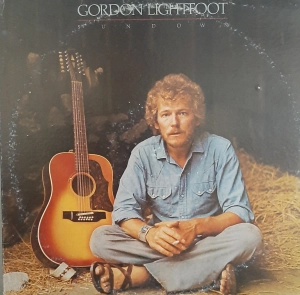
However the second Gordon Lightfoot song Bob chose (and to be clear, this is a song written and recorded by Gordon Lightfoot) is a song of utterly elegant simplicity in its musical construction but (if press reports are true) is a song that tells a story much more complex than appears on the surface.
But before I dig further into the origins, here’s the original version of the song…
And just in case you don’t feel that simplicity by listening to the music, just play the song again and follow the lyrics
I can see her lying back in her satin dress
In a room where you do what you don't confess

Sundown, you better take care
If I find you been creeping 'round my back stairs
Sundown, you better take care
If I find you been creeping 'round my back stairs

She's been looking like a queen in a sailor's dream
And she don't always say what she really means

Sometimes I think it's a shame
When I get feeling better, when I'm feeling no pain
Sometimes I think it's a shame
When I get feeling better, when I'm feeling no pain

I can picture every move that a man could make
Getting lost in her loving is your first mistake

Sundown, you better take care
If I find you been creeping 'round my back stairs
Sometimes I think it's a sin
When I feel like I'm winning, when I'm losing again

I can see her looking fast in her faded jeans
She's a hard-loving woman, got me feeling mean

Sometimes I think it's a shame
When I get feeling better, when I'm feeling no pain
Sundown, you better take care
If I find you been creeping 'round my back stairs

Sundown, you better take care
If I find you been creeping 'round my back stairs
Sometimes I think it's a sin
When I feel like I'm winning, when I'm losing again
There are four two-line verses and five choruses with tiny variants in them – in effect there are three choruses, but even then the variations are very small.
So when we compare this beautiful, elegant piece with Dylan’s master works the contrasts could not be different. Dylan, the songwriter who uses words to create a complexity of images and this piece which makes a song that we (or at least I) can never play just once but need to play over and over.
Here the opening tells us all: acoustic guitar, bass and gentle percussion. The only surprise we get is the second line of the chorus with the harmonies. And the music itself is so simple – the verse consists of only three different notes repeated in varying ways and turned into an elegant melody. The percussion is simple, as is the guitar part.
Plus to emphasise this while the bass has an interesting part to play in the introduction now is mostly reduced to playing the fundamental note of each chord.
So what makes this such a remarkable piece of music?
First, simplicity can be elegant, and second the simplicity of the music contrasts with the essence of the lyrics
Sometimes I think it's a sin
When I feel like I'm winning, when I'm losing again
Second the song, in its simplicity incorporates the essence of heartache. Just ignore the chorus for a moment and consider those lyrics
I can see her lying back in her satin dress
In a room where you do what you don't confess

She's been looking like a queen in a sailor's dream
And she don't always say what she really means

I can picture every move that a man could make
Getting lost in her loving is your first mistake

I can see her looking fast in her faded jeans
She's a hard-loving woman, got me feeling mean
This is every man’s angst when he finds himself in love with a beautiful sexy woman who has a mind of her own. And the lyrics really are exquisite – just consider
Sometimes I think it's a sin
When I feel like I'm winning, when I'm losing again
It is that contradiction that a man can feel if he falls in love with the adventurousness of a woman, and then worries she is that adventurous when he’s not there.
So yes it is a brilliant and remarkable song. It reached number 1 on the Billboard charts – Gordon Lightfoot’s only number one single. In a 2008 interview, Lightfoot said: “I think my girlfriend was out with her friends one night at a bar while I was at home writing songs. I thought, ‘I wonder what she’s doing with her friends at that bar!’ It’s that kind of a feeling. ‘Where is my true love tonight? What is my true love doing?'”
However there might be more to it, and such is the story that it is hard to imagine that the composer could actually forget the details. Either there was no link with what follows, or else he was deliberately misleading the journalist. (Whoever heard of such a thing – a songwriter not revealing his sources! Whatever next!)
So, in Deadline.com (and various other places) the story is told that Cathy Smith, Lightfoot’s girlfriend, was the inspiration of the song. Their article says, “Smith, who had been a backup singer (and occasional drug supplier) to the rockers who later would become The Band (she claimed “The Weight” was inspired by her)… In a 1986 deal with prosecutors, she pleaded no contest to involuntary manslaughter and several drug charges and served a 15-month prison sentence at California Institution for Women. Upon release, she was deported to her native Canada, where she reportedly took a job in Toronto as a legal secretary.
“Lightfoot wrote the No. 1 1974 hit “Sundown” about his tumultuous, extramarital and occasionally violent relationship with Smith.”
Maybe, maybe not, but either way it is a stunning and remarkable composition.
The song is obviously a song of leaving, a song that says the relationship is over, but don’t worry about it, we had a good time, and all things come to an end.
Which is unusual for generally leaving songs are either songs of great regret and sadness or rather unpleasant bitterness. One of the two people in the relationship needs to break it up, and more than likely the other doesn’t. And yes I have a special feeling for these songs for it’s something that I have rather too much experience of, with me being the party that is left – which is perhaps why I have always been fascinated by this song. How does one break up a relationship without someone getting hurt?
And there is that contradiction, that he wishes she would do or say something to make him stay, and the fact that she is not doing or saying anything, and that she is just continuing to criticise him or complain about something, or not spend enough time with him or whatever… that is the problem and the heart of the wistfulness of the song.
That wistfulness: that is what Bob captures here more than in other versions. He really wanted it to work but it isn’t working and she won’t change so he’s off without saying goodbye. And that is what this rendition captures utterly and totally. That contradiction of feelings and emotions.
So we have gone through two verses, and it sounds as if we are going to get an instrumental break, but no, it is cut short and in comes “It ain’t no use in calling out…”
The essence here is in the famous lines
I'm a-thinking and a-wonderin' walking down the road
I once loved a woman, a child, I'm told
I give her my heart but she wanted my soul
But don't think twice, it's all right
And speaking of wistfulness just listen to that line, “I once loved a woman, a child, I’m told”. Is there a more wistful line within popular music? Probably, but at the moment I can’t think of it.
The issue in the song is, is this a line delivered to the woman he is leaving or it is just ruminating on his past which is why he’s moving on – the past has meant he finds it hard to have relationships?
Obviously, none of us really know, and any hints that are found in the lyrics can be accepted or disregarded on the grounds that Dylan is never that clear anyway.
But why this version?
Because it does something that is obvious when one looks at it and hears it, but it has never been done before in the multiple performances by Bob and by millions of others (at least not as far as I’ve heard).
First, the piece has a jaunty beat, which reflects the positive thoughts of the man walking away – he’s finally done it and left her, and there’s no point in looking and thinking about it. That’s how the song starts, and this version captures that thought perfectly. It’s gentle, because yes even if he didn’t love her he was fond of her.
So he tells her she won’t find him even if she looks with that wonderful “dark side of the road” image – something which I find many people just hear but don’t consider. Being “on the dark side of the road” doesn’t just mean he’s left in the night, it means so much more. He’s hiding from her, he’s doing something illegal, he’s mixing with a bad set… we are not sure what, but there’s something there.
And it is, “I give her my heart but she wanted my soul, But don’t think twice, it’s all right” which in this version is the key to the change of the music. Bob places an emphasis on “she wanted my soul” and the instrumental break continues the musical treatment much as before: he’s creeping out.
Now here I want to divert slightly and point out that this version has two very different instrumental breaks. The first one continues the theme set in the music thus far, and we can just hear the notes from the acoustic guitar reflecting on the situation, but over the two verses of break there is a sense of greater liberation as the guitar almost reflects that the man leaving the woman is speeding up (which is clever given that the music doesn’t do that at all).
Yet we are gentle again for the “long and lonesome road” verse, and we get to that sudden upturn with that sudden, unexpected “get out of my way” line “You could’ve done better but I don’t mind You just kinda wasted my precious time” which changes the whole perspective on the song.
It is a line that deserves a change of music, although keeping the music the same, as normally happens, emphasises the fact that he is creeping out. But with that version of the music he becomes cowardly, just walking away, not liberated from the fact that they are just a couple but not really together. He’s run away but his mind is not free.
But now in this version, that changes.
At first, this is just another instrumental break although with a little bit more of a beat, but listen carefully to the guitar – there is more bounce just before the harmonica comes in. Then suddenly it is quiet – he is creeping out, but there is fun and joyfulness in the harmonica and as he gets further away there’s more fun and expression until the band ups the volume. He’s out on the open road where he wants to be. And that sudden change of pace at the centre – he is swaggering his way along the open road. Yes he really is good about his newfound liberty. It was an experience, it’s over, it’s done, this is better.
In a sense, this musical interpretation is somewhat obvious, but on the other hand I don’t think anyone did this before, and it is one of those musical moments that only becomes obvious after it has been done. It wasn’t something anyone thought of in the previous 37 years of the song’s life – at least not as far as I know.
And there’s one more thing: changing the pace of a tune within the performance is incredibly rare for Dylan. I’m sure there are other instances, but I don’t think there are many. He’s given us a treat here, and I love it.
I’ve Made Up My Mind To Give Myself To You (2020) part 9
by Jochen Markhorst
IX “Yes” is the answer to your question
I traveled from the mountains to the sea
I hope that the gods go easy with me
I knew you’d say yes, I’m saying it too
I’ve made up my mind to give myself to you
“Yes” is the first word of the film, and is spoken off-screen. By an invisible something – even protagonist Bill Parrish (Anthony Hopkins) cannot see the speaker. He can feel him, though: he wakes up in pain, grabs his upper arm, his face contorted with pain. The pain subsides, and Bill goes to the bathroom. There he hears, for the second time, “yes,” heavy, unearthly, somehow distant and yet – close. It is unmistakably a voice, not the wind or anything. Troubled and not understanding, he goes back to bed. He tries to sleep on, but is then startled anew a third time; again that unearthly “Yes”.
During the following day, “the voice” repeatedly revisits Parrish. In the lift. In the office. And the third time, the voice says:
VOICE: ‘Yes’ is the answer to your question.
PARRISH: I didn’t ask any question.
VOICE: I believe you did.
It is Death, who will manifest himself in human form (Brad Pitt) this evening, in Bill’s home library, in Meet Joe Black (1998). And then Bill is also ready to admit that he indeed has been asking the question: “Am I going to die?”
It has to be said, Hollywood tells it more dramatically and definitely more poetically than the format does: Alberto Casella’s 1923 play La morte in vacanza. In the play, Death presents himself to Duke Lambert as a shadow, and likewise takes a long run-up before putting an end to all doubts (“You see, I am… or I was until I crossed your threshold… Death”), a run-up that is similar to the way Death, or The Devil, or other supernatural entities usually present themselves in narratives: lots of cryptic hints and poetic obfuscations before the word finally is out:
“I am… how shall I describe it? A sort of… vagabond of space. Think, if you can, of infinity. That may help. Think of limitless reaches of light, and limitless reaches of darkness. Think of sound that goes whispering on forever. You see, if you are to grasp this you will have to discard your usual formulas. For instance, at one moment I am touching the evening star with my shadow and plucking some mortal on the earth by the sleeve… Do I make myself clear?”
The scriptwriters of Meet Joe Black cannot quite resist that temptation either: “Just think of millenniums multiplied by aeons compounded by infinity, I’ve been around that long, but it’s only recently that your affairs here have piqued my interest,” says Joe Black, just before he reveals himself. And then lets the dismayed host fill it in himself:
PARRISH: You are –?
VOICE: ‘…Yes –‘ (gently) Who am I?
PARRISH: …Death. You’re Death?
VOICE: Yes.
The plot is broadly, obviously, the same: for once, Death wants to experience what it is like to be alive, and gives himself, and his host, a few days to learn about life, emotions, being human. After those days, the party is over – then both Death and his host will have to say “yes”. It is time. The river has arrived at its endpoint.
It is like, for instance, “twilight” in “Not Dark Yet”, or “threshold” in “One Too Many Mornings” and “Standing In The Doorway” an image of imperishable, classic beauty and elegance: the way of the river, the way from the mountains to the sea. Usually a life road metaphor – from its origin to its endpoint, from birth to death, after all. Something like that in Johnny Hallyday’s überpathetic, but still poetic, “Poème sur la 7ème” from 1970, the chanson in which he recites a life path poem over the Allegretto from Beethoven’s 7th – looking back on his life, starting at the sea, following the river back to the mountains.
As in songs like “Sweet Memories”, “Year Of The Cat” and U2’s “One Tree Hill”; song lyrics using “like a river”, “from the mountains to the sea” and variants thereof as a life path metaphor we can find in every corner of the record shop. Or else as “anywhere”, as in Waylon Jennings’ chauvinistic hit “America” and in Dylan’s own “Boots Of Spanish Leather” (Either from the mountains of Madrid / Or from the coast of Barcelona). A third function of metaphor is even more philosophical. Hermann Hesse’s Siddharta demonstrates the other, but no less gripping quality;
“The river is everywhere at once, at its source and at its mouth, at the waterfall, at the ferry, at the rapids, in the sea, in the mountains, everywhere at once, and only the present exists for it, and not the shadow of the future.”
… that time does not really exist, that is – another concept Dylan is receptive to. Especially here on Rough And Rowdy Ways: “Everything’s flowing all at the same time” says the narrator right away in the opening song “I Contain Multitudes”, after which denial of linear time remains a motif on the rest of the album.
Still, here in this “I’ve Made Up My Mind” the songwriter chugs closer to “Not Dark Yet” than to “I Contain Multitudes”, closer to I followed the river and got to the sea than to Today and tomorrow and yesterday too. And, moreover, closer to the great, mercurial songs of the Sixties, songs like “Desolation Row”, “Tombstone Blues” and “Just Like Tom Thumb’s Blues”; songs in which the last verse tilts the previous ones.
It does seem to be Joe Black now, Death, at this point. After that classic life metaphor by which the narrator articulates that he has now gone all the way, from the source to the mouth, from birth to the end, he utters the wish I hope the gods go easy with me. In doing so, the poet does force the setting to the gates of heaven. Hank Williams’ “They’ll Never Take Her Love From Me” (1950), Cole Porter’s Great American Songbook standard “Ev’ry Time We Say Goodbye” (1944), Jim Reeves’ “The Gods Were Angry With Me”: in the songs in Dylan’s inner jukebox in which “gods” are introduced, the narrator stands at heaven’s gate, the gods have taken away a loved one, the narrator ascends the golden stairs with his beloved… a life is, in short, brought to an end.
And apart from those deadly gods, the musician Dylan also takes to heart Cole Porter’s soundtrack directions:
There's no love song finer
But how strange the change
From major to minor
Ev'ry time we say goodbye
… the excerpt where Porter does indeed have the key shifted neatly from major to minor. Dylan paid attention; at the bridge, on I’m giving myself to you, I am and on Take me on travelling, you’re a travelling man, the band, after the major of the verses, switches briefly to minor.
Fitting, following the newly acquired insight that we may understand the you from “I’ve Made Up My Mind To Give Myself To You” as the vagabond of space who has been around millennia multiplied by aeons compounded by infinity, as the travelling man who was already there at the first fall of snow, who is a nothing here or there, a nothing near or far, who will lay down beside you when everyone’s gone, and to whom the narrator will now give himself.
And who is the answer “yes” to the question.
To be continued. Next up I’ve Made Up My Mind To Give Myself To You part 10: A Neapolitan mandolin and a half-hidden marimba
Jochen is a regular reviewer of Dylan’s work on Untold. His books, in English, Dutch and German, are available via Amazon both in paperback and on Kindle:
Aaron:The song is best known from its 1939 recording by Harry James and his Orchestra, with Frank Sinatra on vocals.
Tony: It was very common in the music of the first half of the 20th century for there to be an orchestral introduction of a minute of more – as here. My assumption is that what ended the approach was the arrival of rock n roll, where the singer became much more of a personality than was the case before. But that’s just an assumption on my part – all thoughts on what caused that move away from the instrumental introduction are very welcome.
But to be exact there were examples of the change happening before rock music, for there is another 1939 recording which doesn’t use that device. I’m sure you’re right about which came first Aaron, but it is interesting that there were two very different versions released in the same year. So around 85 years ago there were “cover versions” just as now.
Aaron: Bob’s version appears on his 2016 album Fallen Angels. The Big Issue listed the song as #56 on a list of the “80 best Bob Dylan songs – that aren’t the greatest hits”.
Jay Lustig noted that, there is “something to be said for resurrecting a forgotten gem such as ‘Melancholy Mood'”, which he cited as his favorite track on the album.
Indeed it is the 69th most performed live by Dylan with 248 performances, the most for a cover. More than Just Like Tom Thumb’s Blues (243), One Too Many Mornings (237) and even Blind Willie McTell (226)
Tony: I think the success of Dylan’s version is that he retains that notion of an instrumental introduction as per the Kenny Baker version above. And most of all Bob doesn’t pretend to be he’s a natural crooner – he just sings it as Bob Dylan. Which in turn allows him to put more emotion into the recording, which singers in earlier eras couldn’t do, simply because it was not done. I’m not always a huge fan of Bob’s reworking of ealier classics, but this one I do enjoy.
Aaron:Here are two recent versions I like a lot. First, Satin Ragdoll & The Misfit Toys
Tony:That is a sublime performance and I do like the fact that we see the four musicians all the way through – I wish more recordings were captured in this way. And a neat idea to give two of the band woolly hats so that their headphones would fit. (Well either that or the studio was too cold for them.) Great performance; excellent video. Thanks for that, Aaron.
Aaron:Hashfinger
Tony:So back to the original concept of a one minute musical introduction, except I rather feel they’ve gone too much into the zone of music as a direct representation of the mood, which quite often seems a bit false to me. And indeed that feeling increases as the piece continues. There is some really good orchestration within this piece, but the crackles and sound effects seem to dominate. Not really right for me – especially when I’ve got the Dylan version and the Satin Ragdoll & The Misfit Toys approach.
Hashfinger to me is one of those pieces of music which comes about because someone has said, “hey why don’t we….” and everyone nods and they do it, and no one comes back and says, “did that really work?”
Links to the previous articles in this series are provided at the end.
By Larry Fyffe
Nadine
& Nadine who comes running
& says 'Where's Gus?'
& she's salty about the bread he's
been making off her worms ...
(Bob Dylan: Tarantula)
The oblique and slangy diction above suggests the Blakean negative aspects of sexual activity along with the negative Freudian and Christian depictions of sex observed in Salvador Dali’s surrealistic paintings.
Influenced be the word-images created by the author of “Tarantula”:
O Rose though art sick
The invisible worm ...
Has found out thy bed
Of crimson joy
And his dark secret love
Does thy life destroy
(William Blake: The Sick Rose)
Discarded, however, by Dylan, be the ‘ little stick’ of Saint Dada Dali that’s bends towards general franco’s fascism.
Only some of the Spaniard’s bodily images that walk on the vile side of the street are replicated in words of the American singer/writer/musician, and then apparently only for humorous or shock value.
Listen and be silent ~ known Salvador Dali is by the anagram “Avida Dollars”.
Below, Dali’s political bent pun-ish-ing-ly blasted away with words:
No quiero tu sabiduria
(I don't want your wisdom)
(Bob Dylan: Tarantula)
For the most part, Bobby, the spider-writer, wraps Spanish letters around the pretty bodies of his female inspirations ~ letters that in English read “I want you”; and
“I love your eyes”:
Te quiero ....
Quiero tus ojos
(Bob Dylan: Tarantula)
In the song lyrics beneath, Nadine represents the flexible spirit that guides Chuck Berry’s rocknroll style that contrasts with the more rigid rhythmical style of, say for example, Bo Diddley:
Ah, Nadine, baby, is that you
Seems like every time I catch up with you
You got something else to do
(Bob Dylan: Nadine ~ Chuck Berry)
https://youtu.be/rVXlyjk4Lwo
Nadine, a Muse of Music whose heir springs from the depth of the ‘blues’:
The Censor
The minibook “Tarantula” at first sight appears to be nothing but a mixed-up mess of confusion, a Surealistic dream sequence put down on paper:
But no, it’s a tangled-up narrative “organized” in a word-playful fashion based on matters, real and fancied, of which the author is aware.
Post-Modernistic, the book might be described.
Filled with word associations:
(H)e's a congressional one
& carries the snapshots
& his name is Tapanga Red
(Bob Dylan: Tarantula)
Referenced obliquely is a real Chicago bluesman who’s known for his recording of the song lyrics beneath.
Rendered by Bob Dylan as well:
When things go wrong
Go wrong with you
It hurts me too
(Tampa Red: It Hurts Me Too ~ Hudson/Whittaker)
Below, an actual TV host mixed in with a real painter from days gone by – Hieronymus Borch – and seemingly offered up as a ‘zonk’ on the comical “Let’s Make A Deal” TV show:
(D)own these narrow alleys of owls and flamenco guitar players
jack paar an other sex symbols are your prize
- check into bathrooms where bird lives
for when be comes flying out with a saber in his wing
(Bob Dylan: Tarantula)
The times, they are a-changing.
Not for his being more homophobic than John Wayne, Jack Paar’s mad as hell for being censored by network executives when he tells an innocuous joke about the initials ‘WC’ (water closet) getting mistaken by foreigners as a reference to a ‘Chapel’.
A bit later, singer/writer/musician Bob Dylan walks away from the the Ed Sullivan Show because he’s told by the powers-that-be not to perform a certain song that makes fun of an extremist right-wing political organization.
Seems Soviet ‘Commies’ are here, there, and everywhere in America; they’re even escaping down people’s toilet bowls:
Well, I finally started thinking straight
When I ran out of things to investigate
Couldn't imagine nothing else
So I'm home investigating myself
(Bob Dylan: Talking John Birch Blues)
To make matters worse, there’s really no place for a poor Lacky to turn ~ if the political right-leaning, sword-swinging word-censors don’t get you, then the left ones will:
(B)oth swords above the door fall down
- one sticks in the floor
- the other slices him in half
(Bob Dylan: Tarantula)
Turns out it’s these hypocritical blacklisters are here, there, and everywhere too:
The censor in the twelve wheel drive semi
stopping in for donuts
& pinching the waitress
he likes his women raw and with syrup
(Bob Dylan: Tarantula)
However, Dylan’s ink-splattered tarantulas are seldom as mean-spirited as those released by Lucien Ducasse:
"(Z)ippers of truth!" says Chang Chung
 "there is no truth!"
(Bob Dylan: Tarantula)
Could be there are no snippets of truth outside those locked gates that are guarded by the flaming sword of the Lord:
At times I think there are no words
But these to tell what's true
And there are no truths outside
The Gates of Eden
(Bob Dylan: Gates Of Eden)
The question is always: why is this artist or this band covering this particular Dylan song? And sadly the answer is too often “because it is a Dylan song and people like Dylan songs”. What that then often means is either “do it pretty much as Dylan did” or “take the song and make it sound like one of ours”.
The problem is that the former will obviously add nothing to the song, and the latter is often just a case of wedging a valuable piece of art into the wrong frame.
For me, a decent cover version of a song will always add something more to the song and our understanding of what it offers and so with Queen Jane (which has had a surprisingly large number of cover versions) I’ve looked, as ever, for the successfully different. But it has been a bit of a struggle.
And of course Jochen has got in before me, nominating his favourite as the version Jimmy LaFave. I’ll leave you to read Jochen’s exposition and listen to his choice, because I can’t add anything to it, and besides, I think I’ve found a few other covers that are at the very least, worthy of a mention. Although by the end, whether they go much beyond that “worth a mention” group I’m not too sure.
Surprisingly delicate is the Grateful Dead version, which I so like from its careful introduction followed by a gentle build up. Although there is one issue that this version makes me aware of from the start – how does one (as a performer) cope with that repeated “Won’t you come and see me” line. Are we just going to get it twice, or can something else be done with it? I mean it is not the most profound Dylan line ever, and the music is always the same, and well, we’ve heard it before, so… what’s new?
But that’s everyone’s problem – what this version particularly gives us is a super instrumental verse which most certainly is worthy of a listen.
Punk is not my favourite type of music – somehow for me it is almost anti-music, as all the delicacy is removed and replaced by that pounding inevitable beat. What’s interesting is that the song is about asking the lady to come back when her grand adventure is over because he will still be there, still thinking of her, still patiently waiting. But here one verse becomes just like another…. except for the instrumental verse which I really do rather like. But delicacy? No, it’s punk.
And so to a total contrast, Muscle & Bone: a way of playing with the melody and finding the delicate harmonies which are appropriate to the lyrics. And that harmony over the chorus line suddenly gives it a reason for that line to be there twice, after each verse.
There’s also a superb harmonica part added for the instrumental voice, which is Dylanesque, but not quite – a sort of haunting reminder to us of where this song came from. And its return at the end offers a perfect haunting conclusion.
But of course a new version of a song does not have to be different, it can just be beautiful – and if one has a beautiful voice then why not. Emma Swift has it all, and so can just deliver the lyrics while doing very little to change the song. It simply is there, that’s it. There is nothing else one needs to do but perform with gentle feeling. And this version, yes, I could listen to over and again.
I am going to finish with something I would never have thought of doing: an instrumental version of the song. And I wouldn’t have even imagined it as possible, because there is not enough variation in the music to make me think this could work.
So does this work out? Actually I am not sure, for the simple reason that the essence of the song is the lyrics and melody, and taking the lyrics out, leaves us with something that charming, but for me not much more than that.
In the end it just stops, which I guess is what I have to do with a conclusion that in the end, despite all these valiant efforts, once a beautiful voice has tackled the song, there is not that much more anyone can do.
Well my heart’s like a river, a river that sings
Just takes me a while to realize things
I’ll see you at sunrise, I’ll see you at dawn
I’ll lay down beside you when everyone’s gone
“That’s just my hang up, you know, trains,” Dylan says in 1991, in the radio interview with Eliot Mintz. It is true, but “rivers” might have been a better candidate. At that point in his career, Dylan has had some 50 trains rumble by, both metaphorically (Train wheels runnin’ through the back of my memory, “When I Paint My Masterpiece”, 1971), symbolically (There’s a slow, slow train comin’, “Slow Train”, 1979) and literally (While riding on a train goin’ west, “Bob Dylan’s Dream”, 1963). But even more than trains, Dylan sings of rivers. Rivers that his protagonists have to cross, that freeze over, along which people walk, from which stones are taken, where rendezvous takes place, rivers that mirror and in which people stare. Almost ninety by now; on Rough And Rowdy Ways alone six rivers flow.
This particular river, the river from this most lyrical verse of “I’ve Made Up My Mind To Give Myself To You”, we’ve seen before. It is unmistakably the river from one of Dylan’s most beautiful love songs:
There’s beauty in the silver, singin’ river
There’s beauty in the sunrise in the sky
But none of these and nothing else can touch the beauty
That I remember in my true love’s eyes
Yes, and only if my own true love was waitin’
Yes, and if I could hear her heart a-softly poundin’
Only if she was lyin’ by me
Then I’d lie in my bed once again
… a singin’ river, sunrise, the desire to lay down beside you… yep, this is the narrator from “Tomorrow Is A Long Time”. A song that holds a special place in Dylan’s heart, of course, as we have known since the Rolling Stone interview with Jann Wenner in 1969;
JW: Are there any particular artists that you like to see do your songs?
BD: Yeah, Elvis Presley. I liked Elvis Presley… Elvis Presley recorded a song of mine. That’s the one recording I treasure the most… It was called Tomorrow Is A Long Time. I wrote it but never recorded it.
JW: Which album is that on?
BD: Kismet.
JW: I’m not familiar with it at all.
BD: He did it with just guitar.
Well documented the confession is not. Dylan reveals that Elvis’ cover of his song can be found on the album Kismet. That LP does not exist. The song “Kismet” does exist, and can be found on Harum Scarum (1965), but “Tomorrow Is A Long Time” is on the LP Spinout (1966) – and he did it with just guitar isn’t right either; apart from two guitars, we hear Bob Moore on double bass and a lazy tambourine. Dylan wrote the song in 1963, by the way – Just takes me a while to realise things.
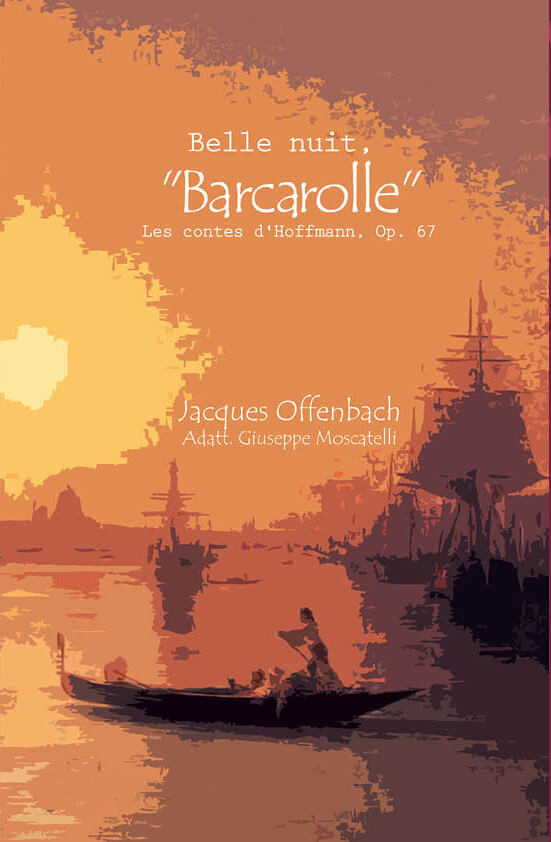
Anyway, back to my heart’s like a river, a river that sings from the penultimate verse of “I’ve Made Up My Mind “. Although Dylan will have been aware, though perhaps only on a second listen, of the identical setting and word choice as in “Tomorrow Is A Long Time”, it will not have been chosen as a deliberate reference. It is more likely that an artist like Dylan is naturally, associatively, led here. After all, he is writing a barcarolle, a song with the same cadence and melody as the most famous gondola song in music history (granted, gondoliers prefer to sing “O Sole Mio”, but that is not a barcarolle). Dylan is no doubt familiar with the setting of Offenbach’s barcarolle “Belle nuit, ô nuit d’amour” from Les Contes d’Hoffmann (1881): the arrival of Giulietta and Nicklausse in Venice by gondola over the Grand Canal… the step to a verse fragment like a river that sings should come to mind quite automatically.
We can also see this in the figures of style. The image of a river, of the eternal rippling of waves coming and going, pushes the poet’s pen naturally towards repetitio. The repetitions in line 1, My heart’s like a river, a river that sings, and in line 3, I’ll see you at sunrise, I’ll see you at dawn, which sound out the monotonous rippling, the poet Dylan can hardly resist. We’ve heard it in “When The Night Comes Falling From The Sky”; in the long lyric, Dylan reaches for repetitio only twice – once when tears flow, and the other time after I can hear your trembling heart beat like a river. In “Dignity”, I’m on the rollin’ river is preceded by the repetitio Got no place to fade, got no coat and in “Tryin’ to Get to Heaven”, too, there is only one repetition: I’m going down the river / Down to New Orleans.
And well, actually all great songwriters do succumb to the lure of “repetitio” as soon as they let a river flow through their song. Like Joni Mitchell in the Queen of all river songs, “River” (1971);
Oh, I wish I had a river
I could skate away on
I wish I had a river so long
I would teach my feet to fly
Oh, I wish I had a river
I could skate away on
I made my baby say goodbye
John Fogerty (rolling, rolling, rolling, rolling on the river, “Proud Mary”), “Take Me To The River”, “Orinoco Flow”, “Ballad Of Easy Rider”, “Ol’ Man River”… repetitio is apparently inevitable as soon as the song poet sees the bank. Even the most beautiful river song of the 20th century demonstrates this mechanism:
Going to see the river man
Going to tell him all I can
About the plan
For lilac time
… Nick Drake’s “River Man” (1969). In which, as in Dylan’s song, the river is evoked in a perfect symbiosis of lyrics and music.
Incidentally, the figure of speech does not only impose itself on the song poet Dylan. We also see it with the essayist Dylan, in The Philosophy of Modern Song. “On the grand river, the big river, river of tears,” he writes there, for instance, in Chapter 24 (Nelly was a lady), or with the automatic writer Dylan; “my mind is running down the river – i’d sell my soul to the elephant – i’d cheat the sphinx – i’d lie to the conqueror” (Tarantula, p. 109).
Which river seems to be no question with Dylan, thus revealing which river must be on his mind in “I’ve Made Up My Mind ” as well: “Any time you mention a river in America you are thinking about the Mississippi. A beautiful, wide-flowing body of water that rolls down the middle of America. And everything that that conjures up.” But when our English friends Nick Drake or The Clash sing about a river, the essayist graciously allows us to see the Thames. No matter; the poetic power is identical:
“The guy is still living by the river, which gives him some type of hope, and a way to escape from any difficulty.”
From Chapter 33, London Calling. About the song in which Joe Strummer reaches for repetitio only one single time: “And I… I live by the river!”
To be continued. Next up I’ve Made Up My Mind To Give Myself To You part 9: “Yes” is the answer to your question
Jochen is a regular reviewer of Dylan’s work on Untold. His books, in English, Dutch and German, are available via Amazon both in paperback and on Kindle:
There is an index of other articles from this series at the end of the article.
By Tony Attwood
I started this series with the Sam Stone song (“Death of an Unpopular Poet“) and if you want it, there is a little about Sam Stone in that article. Now I come to the second Sam Stone song on the list of Dylan’s favourite songs.
The accompaniment is simple and delicate, the melody is beautiful, the lyrics evocative in every line and the story is heart-breaking. I might wish for a different between-verses accompaniment on 1 minute 30 seconds, but then I’ve never been a fan of slide guitars, and besides I have no idea at all how I could possibly have introduced the following verse. For at that point the entire song takes a course that you know it must take, if you know the work of Jimmy Buffett.
Like all Buffet songs, this one speaks for itself and his delivery is so clear and calm it is of course easy to follow it line by line. But I’ll put the whole set of lyrics at the end just in case that is helpful…
My problem with this song is a totally personal one. I can recognise brilliant writing and a wonderful musical performance when I hear it, but I don’t like songs of tragedy, and I’m unhappy with the notion (obviously true, but that doesn’t stop me being unhappy about it) that a lot of our lives are controlled by pure chance. The good guys can be hurt; the bad guys can often come out on top; shit happens.
I only know of one cover of the song, and in a way that is not surprising, for the problem with doing a cover of a song like this is that the lyrics have such a clear meaning that nothing can be re-interpreted by developing a new accompaniment, changing the speed or otherwise exploring unseen elements within the song.
Thus in a very real way the song is the antithesis of Dylan songs; there is no chance of ambiguity. Life is what it is, and there is nothing you can do about it. And I suppose that is the message I don’t like.
But of course, as an artistic expression, the song is magnificent.
He went to Paris
Looking for answers
To questions that bothered him so

He was impressive,
Young and aggressive,
Saving the world on his own
Warm summer breezes
And french wines and cheeses
Put his ambitions at bay

Summers and winters
Scattered like splinters
And four or five years slipped away

He went to England
Played the piano
And married an actress named Kim
They had a fine life
She was a good wife
And bore him a young son named Jim

And all of the answers
To all of the questions
Locked in his attic one day
He liked the quiet
Clean country living
And twenty more years slipped away

Well, the war took his baby
Bombs killed his lady
And left him with only one eye
His body was battered
His whole world was shattered
And all he could do was just cry

While the tears were a' fallin'
He was recallin'
The answers he never found
So he hopped on a freighter
Skidded the ocean
And left England without a sound

Now he lives in the islands
Fishes the pylons
And drinks his green label each day
He's writing his memoirs
And losing his hearing
But he don't care what most people say

"Through eighty six years
Of perpetual motion, "
If he likes you, he'll smile and he'll say,
"Some of it's magic,
And some of it's tragic,
But I had a good life all the way"

He went to Paris
Looking for answers
To questions that bothered him so
Aaron: Looking back through previous episodes, it would appear that this is the last track to look at from the debut album.
The song is a traditional African American spiritual. The earliest recording is from 1930 under the title of “Keep Yo’ Hand on the Plow.”
Tony:As far as I know the song has also emerged as “Hold On” and “Gospel Plow” but some of the versions I have found on the internet as I have tried to find out some more background on the song, don’t sound anything like the version below.
Certainly, it was a Civil Rights song in the 1950s and recorded then by Alice Wine with changed lyrics to fit the new situation.
The Secondhandsongs website says for the version below “Lyrics written by: Alice Wine; Originally written by: [Traditional]; Language: English; Adapted from: Keep Your Hand on the Plow written by [Traditional]”
So, Traditional it is.
https://youtu.be/B1E0_jO_DXI
Aaron:As it was adapted from an old spiritual song about continuing despite adversity, the lyrics of “Keep Your Eyes on the Prize” allude to many passages from the Bible. The lyrics are about transcending oppression and persevering despite any struggle or obstacles that may arise in one’s path. (from About.com Folk Music)
Here is Mahalia Jackson
Tony:I love the bounce in this version – it’s impossible to sit still when that is playing. Wonderful!
Aaron: Now Bob’s version
Tony: I wonder if Bob chose this to show off what he could do with the harmonica! As I think I’ve mentioned before, I haven’t played this album for ages, but the LP (which I think is still in the collection somewhere) has been played to death across the decades so once the music began I knew exactly where it was going. But before it started I couldn’t call to mind how Bob had treated the song. Oh for a memory that doesn’t fade (although actually come to think of it, I think I have lost quite a few memories which I am glad to lose – only I don’t know because I can’t remember).
But I don’t think I ever realised until now just how short that Dylan version is.
Aaron: Perennial favorites The Old Crow Medicine Show included their version on their 2000 debut album Greetings from Wawa.
Tony:Oh I do so love this band. It must be such an amazing experience to play with them. Certainly even just watching the videos of them perform live is extraordinary. Mind you I could do without the flashes on the video – but I suspect that is just old age catching up with me. I think this recording is from a Grand Ol Opry show.
Aaron:Here are 3 more versions to show the diversity of the piece:
Hackensaw Boys
Tony: It is a song that contains within it such joy and hope that I guess everyone who has tried it wants to put even more and more energy into the performance. And amazingly for each of these performances that desire produces more and more fun. But I wonder what on earth anyone taking the song on today could do with it. Surely no one can go any faster than this, and no one can get more fun out of it than these guys.
Aaron: Screaming Trees
Tony:I should add perhaps, for you, our reader, if you have not come across any of these articles created by Aaron and myself, that Aaron selects the songs and emails them to me and I try and write a commentary as I listen. I don’t get any choice in what music is selected and Aaron has no control over what I say – or any extra recordings I might occasionally add.
Thus I have no idea what is coming up. And the opening to this version took me by surprise, and indeed I was really enjoying the music with its constant bass line and cross rhythms with a new melody, but then it all vanished and we got what was for me just another piece of rock, albeit with the cross rhythms kept – and admittedly some interesting harmonies a bit later. But I can’t see the connection between the opening minute or so, and the rock version.
So a bit of relief when the rock interpretation stopped and we went back to a more Indian influenced version. This part I like, but quite why both are integrated into one recording I can’t tell. The two seem unrelated and atmospherically incompatible.
And it’s a shame because that musical coda is delightful. Had there not been the rock in the middle I’d have played it again.
Aaron: CheckDEMout
Tony: I’ve never asked you Aaron, but do you give me the songs in the order you find them, or do you re-order them as you would if you were creating an album? Indeed as you and I did some years back in creating our own album of Dylan works (which I notice the wretched record companies have still not taken up as an idea).
I think this is a suitable ending to the collection if you planned it that way. It takes us back to the roots of the song, but with a contemporary interpretation. A suitable way to bring me back down to earth and go through the boring bit of trying to proof read my own work. I think while I do that, I’ll play this beautiful final version again.
But I’m glad to have been reminded of those series we did which created albums of their own.
And of course you may have some more articles in mind, having taken us through the debut album. And you may not know it, but this is article 50 from this series…
Oh the new sheriff send a letter
Go out and get me Lazarus
Dead or alive, dead or alive ...
Oh Lazarus, Lazarus, his little sister
She come to the funeral
Lord, didn't have no shoes, didn't have no shoes
(Bob Dylan: Poor Lazarus)
In the biblical verses below, Jesus Christ is joined by Lazarus, Martha’s brother, at a supper served in Bethany. Lazarus is not noticed as being there in the other three gospels. For Apostle John, bringing Lazarus back from the dead is surely a sign that Jesus be no ordinary human being, but the supernatural Son of God.
A miracle performed by Jesus that’s worthy of mention indeed:
Then Jesus six days before the Passover came to Bethany
Where Lazarus was which had been dead
Whom He raised from the dead
There they made Him a supper
And Martha served; but Lazarus was one of them
That sat at the table with Him
(Gospel Of John 12: 1, 2)
Having Lazarus die a second time crosses the mind of some of those who consider the revival of Martha’s brother a threat to the orthodox religious beliefs of the day:
But the chief priests consulted
That they might put Lazarus also to death
(Gospel Of John 12:10)
The book of Tarantula, by Bob Dylan, from the Third Testament, informs its readers that a sickly “Mark Twain” Zimmerman disguises himself as Jesus; he too orders Martha’s dead brother to come out of the cave in which Lazarus has been buried for four days.
Usually quite calm, Christ gets really upset when he sees nothing move within the tomb.
And he shows it ~ like Yosemite Sam, the supposed Jesus jumps up and down all by himself on the leper’s mummified stomach shouting at the top of his voice “Wake up! Wake up!”
So it seems to state in the lines beneath:
Who after he being refused by Lazarus
jumped on him
in solitude
(Bob Dylan: Tarantula)
As matters transpire, the Almighty Father is convinced to permit the smart-ass-look-alike to be crucified instead of His Son.
Jesus smiles, and nails the following sign on the old rugged cross that blames Apostle Judas for what happens:
(H)ere lies bob dylan
murdered
from behind
by trembling flesh
(Bob Dylan: Tarantula)
Wouldn’t you know it, Bobby turns things around, and tricks an innocent Libyan into taking his place hanging on the cross.
Quick-as-lightning, before he even knows it himself, Zimmy shape-shifts into a streetcar driven down the tracks by engineer Tennessee Williams:
(B)ut was amazed to discover
that he was already a streetcar
& that was exactly the end of bob dylan
(Bob Dylan: Tarantula)
The streetcar which is named ‘Dylan’ then crashes into Mrs Actually’s funeral home that’s owned and operated by undertaker Edgar Allan Poe:
(H)e now lies in Mrs Actually's beauty parlor
God rest his soul & his rudeness
two brothers & a naked mama's boy who looks like Jesus Christ
can now share the remains of his sickness
(Bob Dylan: Tarantula)
Clytia be a water spirit who is madly in love with Apollo (the name by which the Sun-God from ancient Greek/Roman mythology is usually now known).
The god, he’s okay with the affair, but ‘Fatty’ Aphrodite (Venus) is angry at Clytia because the pretty nymph tells Vulcan (Hephaestus) that his lusty wife’s been running around with Mars (Ares), the God of War.
Venus, Vulcan’s oft-wayward wife, shoots a Cupid dart into the heart of the golden-haired fellow in the sky that causes him to focus all his attention on a virginal Persian princess; there’s just no time left for the airy-fairy Clytia.
The Sun-God tangles up day-time with night-time by hanging around too long, doting on the earth-bound princess.
King Daddy does not like his mortal daughter’s disgraceful conduct with Apollo, and commands that she be buried in the dark cold ground to die.
But, just in time, Apollo retains the soul of his beloved maiden along with her sweet smell by transforming the almost-dirt-covered princess into a frankincense tree.
Meanwhile, tell-tale Clytia gets her due punishment by being fragmented into purple flowers that are required to keep their eyes turned toward the sun all day long.
The mythological story above is somewhat akin to the ambiguous Clytia theme that’s entangled in the song lyrics below:
She's begging to know what measures he now will be taking
He's pulling her down, and she's clutching on to his long golden locks
(Bob Dylan: Changing Of The Guards)
What goes around, comes around.
Goddess Aphrodite falls in lust with the ever-so-handsome mortal Adonis; he goes off hunting in the woods by himself, and is fatally wounded by a wild boar. Though her captain’s now down and out in the underworld, the oh-so-sad, wound-licking Venus has drops of his blood apparently appear each spring in fields splattered with red anemone flowers.
Just then Edgar Poe’s mind-reading detective arrives on the front doorsteps of the three-story house on the hillside … the house is on fire!
Explains Auguste to the Jamaican Edward:
(T)o find out why Bertha shouldnt push the man off the flying trapeze
you dont find out by thinking about it - you find out by being Bertha
- thats how you find out
(Bob Dylan: Tarantula)
Dupin’s obviously speaking to the house-owner concerning Bertha who Ed locked up in the attic. Bertha’s the long-gone-mad, now-burnt-to-a-crisp Victorian housewife of the dark friend of little orphan Eyre.
Presently blind and left with only one hand, Edward’s now the-one-and-only true love interest of Undertaker Jane (Jamaican Ed calls her his Shirley Temple).
It’s all crammed into a novel by Charlotte Bronte.
At least it is, according to the big black hairy, story-telling Tarantula.
Anyway, in conclusion:
Bertha Mason shook it, broke it
Then she hung it on the wall
(Bob Dylan: High Water)
There’s a happy ending to the story though.
Hungarian Justine, she finally finds his phone number, and makes it with Bo Diddley.
I traveled the long road of despair
I met no other traveler there
A lot of people gone, a lot of people I knew
I’ve made up my mind to give myself to you
Granted, Graham Chapman contributed more to Hegel’s popularity in a three-minute skit than Dylan did in half a century of songs and writing.
In Monty Phyton’s Philosophers’ Football Match (1972), Archimedes has his Eureka moment in the very last minute, runs off with the ball, passes to Socrates, who with a falling header leaves German goalkeeper Gottfried Leibniz without a chance. It is the winning goal. Referee Confucius blows the full-time whistle moments later: end result 1-0 for the Greek philosophers.
The German protests, however, do make sense. Karl Marx is indeed right: in the replay, we see Socrates clearly offside. But alas; in 1972, we do not yet have VAR. And so the protest by captain Georg “Nobby” Hegel is brushed aside, despite its profound truth (“Hegel is arguing that reality is merely an a priori adjunct of non-naturalistic ethics,” according to commentator Michael Palin). He could also have further argued that Archimedes is not a philosopher at all, and thus wrongly plays on the Greek philosophy team. On the other hand: Wittgenstein plays with the Germans, and Ol’ Ludwig is an Austrian – so Nobby Hegel perhaps wisely does not raise that point.
But Dylan’s spreading of Hegel’s wisdom is, whether consciously or subconsciously, at least somewhat more substantive than that of John Cleese and his pals. In the 1960s, Dylan shares Hegel’s insights about the unattainability of true freedom with us, in more accessible images than the gruff German does in his Grundlinien der Philosophie des Rechts (Elements of the Philosophy of Right, 1821), anyway.
Are birds free from the chains of the skyway?, the concluding, rhetorical question of the vicious “Ballad In Plain D”, for example, or it is not he or she or them or it/That you belong to (“It’s Alright Ma”) relatively insightfully summarise Hegel’s laborious attempts to explain what “negative freedom” is – and Dylan’s conclusion from “Just Like Tom Thumb’s Blues” negativity don’t pull you through is also quite catchier than the endless paragraphs in which Georg Wilhelm Friedrich actually asserts the same thing.
The same goes for Hegel’s reflections on self-awareness and the essence of an individual, on Truth and Morality. In poetic one-liners such as I can only think in terms of me (“Love Is Just A Four-Letter Word”) or in “I Shall Be Released” or How does it feel to be on your own or It’s only me (“Every Grain Of Sand”): here the Phänomenologie des Geistes (The Phenomenology of Spirit, 1807) resounds, there echoes The Philosophy of the Objective Spirit… Dylan and old Hegel are definitely kindred spirits.
In the twenty-first century, Dylan then seems to take it a step further. Dylan never mentions the name “Hegel”, but the very title of his The Philosophy Of Modern Song (2022) seems at least to nod firmly to Hegel’s The Philosophy of Fine Art, and also promises a similar message. Which is indeed there.
At the very end of the exhaustive, four-volume Philosophy of Fine Art, Hegel reveals his insight, the insight for which Dylan needs far fewer words: Art, says Hegel, is not only “the most generous reward for the severe labours of our contact with objective reality and the grievous pains of knowledge,” but above all bestows on us “a revelation of truth”. Which is almost a refrain in Dylan The Philosophy Of Modern Song.
“What is it about lapsing into narration in a song that makes you think the singer is suddenly revealing the truth?” asks Dylan as early as Chapter 1, Detroit City – Bobby Bare. “El Paso” presents “truth that needs no proof,” and Dylan’s analysis of the oeuvre of Norman Whitfield and Barrett Strong is entirely Hegelian:
“Everything they wrote is meaningful and true to life. It’s the way things really are. They saw it and told it, relentlessly. They look into the darkness and shine the light.”
(Chapter 17, Ball Of Confusion – The Temptations)
Just a few examples demonstrating affiliation. There are dozens, and in fact the whole book is a demonstration of Hegel’s Phänomenologie des Geistes.
The congeniality even seems to run so deep that Dylan unwittingly quotes him verbatim, one might suspect at the seventh verse of “I’ve Made Up My Mind To Give Myself To You”. The long road of despair is an image every philosophy student encounters with Hegel as he struggles through the interminable introduction to Phänomenologie des Geistes. Hegel warns that the road to true knowledge inevitably leads to the loss of what we experience as truth. Which is not easy. “Er kann deswegen als der Weg des Zweifels angesehen werden, oder eigentlicher als Weg der Verzweiflung – It can therefore be seen as the road of doubt, or more accurately as the road of despair.”
Coincidence, probably. The kindred spiritness is a given, but this particular choice of words can presumably be traced to the creative ambition to avoid clichés. After all, the metaphor has been fairly milked since Al Dubin’s ″Boulevard Of Broken Dreams″ (1933). Hank Williams varies thereon with “Lost Highway”, the Stanley Brothers claim “Highway Of Regret”, Elvis walks to his Heartbreak Hotel along Lonely Street, which Kitty Wells tries to hijack (“Lonely Street”, 1958), Doc Pomus then renames that to “Lonely Avenue”, and for Dylan that leaves only “Desolation Row” in 1965. All variations, of course, on Hegel’s original, on Weg der Verzweiflung, Road of Despair.
And on that road, Dylan’s narrator experiences exactly that, what Hegel demands of the seeker of Truth: das pureFür-sich-sein, as the old philosopher calls it, “the pure being-for-itself”. Self-consciousness “ist wohl seiner selbst gewiß, aber nicht des Andern – is aware of himself, but not of the other.” Or, as Dylan puts it a lot more poetically: I met no other traveler there.
Georg “Nobby” Hegel will have nodded approvingly.
To be continued. Next up I’ve Made Up My Mind To Give Myself To You part 8: There’s beauty in the silver, singin’ river
Jochen is a regular reviewer of Dylan’s work on Untold. His books, in English, Dutch and German, are available via Amazon both in paperback and on Kindle:
An index to all the previous articles from this series can be found here.
By Mike Johnson (Kiwipoet)
‘Dylan moved around the stage all night, the ‘retreats’ behind the keyboards now had a part to play in an overall context of ever-changing focal points and goodness gracious great balls of fire, he was animated there too. A tremendous amount was going on to keep the audience’s interest high, and all the while Dylan kept eye contact with them as he orchestrated the on-stage drama like an energetic circus master.’ (One More Night, Andrew Muir, page 363)
In the last post we noted how a rejuvenated Dylan, now seventy, hit the stage with a number of innovations including a renewed sense of a concert as a performance, a new snazzy outfit, and a stage backdrop featuring a version of the Eye Of Horus that became known as the Eye of Dylan.
‘Bob was slim, wiry and fighting fit,’ Andrew Muir comments (One More Night, page 363). This was not the first time Dylan had appeared younger and fitter. Back in 2003, Muir, commenting on the Shepard’s Bush concert, said ‘Suddenly, a miraculously younger and fitter looking Dylan was delivering a show of vigour and fire.’ (p308)
Thinking of this, and the fact that right now, as I write, an eighty-one year old Dylan is still wowing the crowds, I’m put in mind of these lyrics from ‘I Believe in You’ (1979, last performed in 2009)
Don’t let me drift too far
Keep me where you are
Where I will always be renewed
I don’t know if there is some secret elixir of life that Dylan keeps toking, but it sure is clear in 2011 that Dylan is again delivering shows ‘of vigour and fire.’
You may recall how, in 2005, Dylan finished off the year with a triumphant five-night gig at the Brixton Academy in London, almost putting the rest of the year’s performances in the shade. In 2011 he does the same thing with a three night gig at Hammersmith in London, 19th – 21st November. There are other great concerts in 2011, including Tel Aviv and Manchester, but I find, in trying to choose the best performances for these posts, that it’s hard to get away from the Hammersmith concerts. I’ll be drawing heavily, but not exclusively, on those concerts for the next two posts.
In the last post I commented that in 2011, Dylan transformed the musical style I called the ‘dumpty-dum’ into swing. The dumpty-dum was rigid and stilted, was distinctly primitive, driven by some repetitive organ riffs, and most probably was one of the major reasons why NET fans, like Muir, deserted Dylan’s concerts from 2005 – 2010.
‘Swing music is a style of jazz that developed in the United States during the late 1920s and early 1930s. It became nationally popular from the mid-1930s. The name derived from its emphasis on the off-beat, or nominally weaker beat.’
Swing reached its peak in the big band era, 1935 – 46, and was marvellous dance music made famous by Benny Goodman and others. Interestingly it had a cross-over effect on country music, for example, Jimmy Rogers, and equally interesting, was revived in the mid-1950s by Frank Sinatra and picked up by pop singer Bobby Darin. We can only speculate that by 2011, Frank Sinatra, whose songs Dylan would start to sing in 2015, was already influencing Dylan.
For example, how might Sinatra have sung ‘Blind Willie McTell’? Well, maybe a little like this, from Oberhausen, Oct 23rd.
Blind Willie McTell
This song started its stage life in 1997 as a slow, heavy rocker. Look at it now! It’s become a catchy swing number with those wonderful two false endings and jazzy harp work? Does it work, those dark lyrics with this bouncy music? That’s over to you. I can’t resist it.
As early as 2009 Dylan was trying out a swinging version of ‘Blowing in the Wind.’ Again the question arises, does this happy sounding arrangement work with these sombre, reflective lyrics that question war and racism, the song you could say pretty much launched ‘protest music’ in 1963? (Munich, 26th Oct) Is this how Sinatra might have sung ‘Blowing in the Wind’?
Blowing in the Wind
The same question arises for ‘Man in the Long Black Coat’ whose spooky lyrics have the devil kidnapping a young woman at a dance. Swing is naturally upbeat, even when slowed down, but I guess we can imagine the devil sweeping around the dance floor to this one, the hapless girl (willing victim?) in his arms, ‘his face like a mask.’ (Hammersmith, 3rd concert)
Man in the Long Black Coat (A)
I think that’s the best recording (Crystal Cat strikes again) but lovers of Mark Knopfler’s inimitable guitar style might enjoy this one from Hamburg 31st Oct. Knopfler joined Dylan on the European leg of the tour, appearing with Dylan onstage for three or four songs each night.
Man in the Long Black Coat (B)
(If you like watching these 2011 shows you can find a great performance of this song from Glasgow on YouTube. Beware, however, the video of the Hammersmith performance has poor sound quality.)
While these are swinging adaptions of older material, some of the songs from Together Through Life (2009) were written to swing. They feel as if they might have sprung from the big band era, so hardly need any adaption. Here’s Jolene from the first Hammersmith show.
Jolene
And here’s ‘My Wife’s Home Town’ from Kowloon, Hong Kong, 12th April, the second to last performance ever of this song. The last was the night after, also in Kowloon. Enjoy it while you can; it’s a bit of malicious fun.
My Wife’s Home Town
And here’s ‘If You Ever Go to Houston,’ the last performance ever, also from that second Kowloon concert, 13th April. Again, enjoy it while you can. It may sound kind of throw-away, but it’s full of violence and grief, not a happy song at all.
If you ever go to Austin
Fort Worth or San Antone
Find the bar rooms I got lost in
And send my memories home
Put my tears in a bottle
Screw the top on tight
If you ever go to Houston
You better walk right
If you ever go to Houston
So far so good. I can’t, however, feel quite so sure about the swinging version of the wonderful ‘Mississippi,’ arguably the stand-out track from Love and Theft. This one from the first Hammersmith concert is a fine performance, and Dylan is in great form, but maybe this arrangement just doesn’t suit the conception I have of the song. Too bad for me. Perhaps the manic edge to the vocal saves it. If I was okay with the swing in ‘Blind Willie’ and ‘Blowing in the Wind,’ why not for ‘Mississippi?’ I don’t have a good answer to that.
Mississippi
Perhaps, as with ‘Jolene,’ the songs best suited to swing are those which always had a swing to them, even the early ones. Like ‘To Ramona.’ Waltzes are a sedate form of swing. This is a centre-stage performance with Bob on guitar. There is an underlying pathos in this song well suited to Dylan’s crusty voice. 4th November, Stockholm.
To Ramona
‘I’ll Be Your Baby Tonight’ is another early song that leans towards swing, a countrified form. This enticement to love is, like ‘To Ramona,’ another of those songs that has not changed much over the years, either the lyrics or the arrangements. This is another centre-stage performance with Bob on guitar. It’s good to sit back and relax with one of the happiest songs in his oeuvre – ‘You don’t have to worry anymore.’ This one’s from Bournemouth, Oct 14th.
I’ll Be Your Baby Tonight
It’s a bit more of an innovation however to give that great anti-war drama ‘John Brown’ a bit of country swing by adding the mandolin. It has a Celtic lilt in the melody line that has its own swing. I can’t choose between the many moving versions of this song we’ve heard over the years, but this one from 25th Oct, Mannheim, stands out because of the guitar work of Mark Knopfler, which lifts it into something special. It’s wonderfully barked out by Dylan, and the unexpected harp blast at end, rare for this song, polishes it off nicely. Beautiful, minimal arrangement. No matter how often I hear this song, I’m always caught up in the unfolding drama of the story. This song casts a powerful spell.
John Brown
If that was a happy melding of rock, Celtic folk and swing, I can’t quite say the same for that other great protest song, ‘Hard Rain’ (Hammersmith, 1st night). Dylan was able to swirl this song along in the Rolling Thunder years, but while there is plenty of sass and verve here, there’s not enough to compensate for the musical rigidity of it, despite a fully committed vocal from Dylan, at least not for me. It didn’t make it from the dumpty-dum into swing. Maybe it’s the way he handles the last verse, lifting his voice up with each line, or the obsessive little circus riff of the organ that puts me off. In this case I have to agree with Muir’s comment on the Glasgow performance of the song, ‘The nadir (of the night) was for me “Hard Rain”, where the three-note-fairground-organ-cum-nursery-jingle just sounded inane.’ (p 365)
The imagery of the song of course remains timeless and eternal and resonates through to our present day.
Hard Rain
When it comes to ‘Ballad of a Thin Man’ we move from swing to swagger. We need no further evidence to prove that Dylan was enjoying himself in these 2011 performances. His use of a voice echo might be a bit gimmicky, but it works just fine for this song, especially for the line ‘Oh my God am I here all alone.’ Just me and my echo. It restores some of the trippy spookiness to the song. And how about that harp break, going from the tensely gentle to the triumphant? No complaints there! Add in some discreet guitar from Knopfler and you have a memorable performance. (Hammersmith, 1st concert)
Ballad of a Thin Man
That swings all right, but it’s also rock, and that gets me reflecting on the influence of swing on rock music. Some of the best rock songs do swing. Maybe it’s an unrecognised musical genre, that meld of rock and swing.
You can pick it up in this last song for the post, the familiar ‘Watching the River Flow.’ How does this sound to you? Country-rock-swing? Another centre stage performance with Dylan on guitar. A great way to go out. (13th Oct, Cardiff)
Among the innovations of 2011, Dylan’s new performance act and his banner, the Eye of Dylan, covered in the previous two posts, we also find him taking his songs to a new audience in the east: Hong Kong, Taipei, Ho Chi Minh City, and China – Shanghai and Beijing. This was the summer tour at the beginning of the year, and while the recordings from these concerts seem to be no match for the Crystal Cat recordings in Britain at the end of the year, there were some brilliant performances from that leg of the tour, particularly the first concert of the year in Taipei on March 4th.
Let’s start with a moving performance of ‘Forever Young’ from the second concert of the year in Beijing on March 6th. In 2011 Dylan largely abandoned the thunderous ‘All Along the Watchtower’ as the final song of the night in favour of the more elegiac ‘Forever Young,’ finishing the concerts on a nostalgic rather than apocalyptic note. I might hanker for a better recording, but hardly for a better performance.
Forever Young
The Chinese leg of the tour had its controversy, with The Washington Post accusing Dylan of caving into pressure from China to avoid certain songs, in short, allowing himself to be censored by the Chinese Government.
Dylan took the unusual step of issuing the lengthy rebuttal, entitled ‘To My Fans and Followers,’ concluding, ‘As far as censorship goes, the Chinese government had asked for the names of the songs that I would be playing. There’s no logical answer to that, so we sent them the set lists from the previous 3 months. If there were any songs, verses or lines censored, nobody ever told me about it and we played all the songs that we intended to play.’
Much was made of the fact that he didn’t play his famous protest songs ‘Blowing in the Wind’ and ‘The Times They are A-Changing,’ but anyone familiar with Dylan’s changing setlists would have known that he didn’t play these songs at every concert anyway. A media beat-up, it seems to me.
There are at least three songs from the Shanghai concert (March 8th) worth picking up on, and we can start with ‘Don’t Think Twice,’ a centre-stage performance with Dylan on acoustic guitar, one of the oldest of the songs on his setlists and a bittersweet number that never loses its appeal. Note the slow, bluesy ending.
Don’t Think Twice
One of the impressions we begin to get from listening to these Asian performances is that they are softer and more reflective than the rousing performances at the end of the year in London. I get that feeling from this Shanghai performance of ‘Tangled Up In Blue,’ and you might like to compare it to the more manic version from London I used to kick off the first post for 2011. Some of that more muted feeling may arise from very different recordings.
Tangled Up in Blue
Also from Shanghai we find this version of ‘Honest With Me’ in which the balance of the recording is weighed toward the vocal. It’s a fine, energetic performance with Dylan on organ.
Honest With Me (A)
It’s entirely understandable, however, if readers prefer this sharper London performance (3rd concert, the last of the year). This may be because of the Crystal Cat’s superior recording, every instrument sounds sharp and clear, or because Dylan here is playing the guitar, and effectively too. Joe Neanor, who wrote the liner notes for the bootlegged album of the concert, comments:
‘As the volume was cranked up it was harder to hear all the vocals but the sentiment expressed in the refrain was reflected in the intense delivery of the song. Having seen Bob do a kind of rain dance when performing this number last month I preferred tonight’s less manic version. I had a good look at his finger movement up and down the fret board and the contribution he was making to the band’s sound. He was playing strong guitar, not just going through the motions with a few chords.’
Honest With Me (B)
We have no such problem hearing the lyrics in the Shanghai performance.
Lastly from Shanghai, we get this reflective performance of ‘Desolation Row.’ The song builds up, as Dylan has been doing for some years now, but this is more restrained than many we have heard. This is one song for which Dylan’s curious circus organ sound is entirely appropriate, despite the echo of the old dumpty-dum; the song is full of circus characters and their antics. Pity there’s no harp break.
Desolation Row (A)
Good as that is, I think this one from Taipei is better. Again, it might be the recording, the Taipei recordings are particularly good, better than those from mainland China, and you can feel Dylan’s undiminished appetite for the song:
Desolation Row (B)
The Ho Chi Minh City concert (March 10) is notable for this rather cool and insouciant performance of ‘My Wife’s Home Town,’ a song that was never intended to be taken too seriously, a bluesy, big-band era sounding number only ever played eleven times. This is the third to last performance, and the last time we’ll be hearing it. Enjoy while you can. It’s fun. I regret seeing it go.
My Wife’s Home Town
‘Gonna Change My Way of Thinking,’ the updated version that, when first performed in 2009 heralded changes that were coming up in the next three years, was a popular concert opener all through the Asian tour and the subsequent ‘down under’ Australia and New Zealand leg of the tour, only to be dropped abruptly after the Costa Mesa (CA) performance (July 15th), never to be performed again. So this one from Hong Kong (March 13th) is another one we’re saying goodbye to.
I rather regret that. It’s not Dylan’s greatest song, and I never particularly liked the tub-thumping original from Slow Train Coming (1979) but this alternative version, with its affirmative bounce, conveys that feeling we can get when we are on top of ourselves, our old bad habits, bad influences and addictions, those moments perhaps too rare in which we feel we can make positive changes, take control of our destinies, in short ‘jump on the monkey’s back.’ Mix in a little crazy humour and you have an interesting concoction.
Gonna Change My Way of Thinking
‘Simple Twist of Fate’ is a song Dylan is still performing and performed steadily throughout 2011. We have some beautiful versions from Milan and Manchester we may revisit later, but here it is from Hong Kong. It’s a fine, emotional vocal, my only reservation being the simple guitar riff that carries it seems to be pretty intrusive and repetitive and maybe not necessary.
Simple Twist of Fate.
Listening to that reminds me of the line from ‘It’s Not Dark Yet,’ ‘Behind every beautiful thing there’s been some kind of pain.’ Even a perfect encounter with love can leave us with a kind of longing, a loneliness that cannot be assuaged.
Our final song from Hong Kong is ‘Spirit on the Water,’ and in this case I have no problem preferring it to the London version. Again it’s easier on the ears, but more than that, the harp solo at the end is more sensitive and jazzy than the harsh toots we get in London. This song needs to be disarmingly jaunty and casual sounding to give those wonderful, elusive, lovesick lyrics:
I’m pale as a ghost
Holding a blossom on a stem
Have you ever seen a ghost? No
But you have heard of them.
Those lines remind me of this line from ‘False Prophet’:
‘I’m nothing like my ghostly appearance would suggest.’
Spirit on the Water (A)
And, for comparison, here is the London version (third night):
Spirit on the Water (B)
The last four songs I have for you all come from that superlative Taipei concert, the first of the year. We find a magic mix of fine performances with nice clear recordings to rival the Crystal Cat recordings at the end of year. Those who enjoy ‘Jolene’ might like to compare this Taipei version to the London (first night) performance I covered in the last post. This Taipei performance rocks, and it’s a little easier on the ears than the sharp-edged Crystal Cat recording.
‘Jolene’ would last another year of occasional performances before fading out. I find it a compulsive foot-tapper and great dance song. It’s the swing that does it.
Jolene
Since 2009 we have been enjoying outstanding performances of the stripped back, driving version of ‘Cold Irons Bound,’ complete with slashing harp break. I highlighted both the 2009 and 2010 performances as being particularly compelling, and I can add this one from Taipei to make it three in a row. Shorn of the ghostly, swampy accompaniment we find on the Lanois arranged album versions, the song emerges as a stark, ferocious rocker, full of suppressed energy. It expresses a profound alienation from love and the world, but, like all the great tracks from Time Out of Mind, an intense spiritual state, a claustrophobic feeling that it is your soul that is in chains, ‘twenty miles out of town, cold irons bound.’
There’s an ambiguity in that refrain. We could be ‘cold irons bound’ in the sense that we are hurtling towards incarceration, not bound for glory but bound for prison, or it could mean that the ‘cold irons’ have already bound us – we are already incarcerated. The power of this refrain lies in that ambiguity.
Cold Irons Bound
I find it regrettable that 2011 was the last year in which that song would be performed, and the Taipei performance is probably the best of that crop. Another song we have to say goodbye to.
‘Sugar Baby’ from Love and Theft is another song on its way out. It will get a few performances in 2012 before disappearing after a mere 130 performances, and again this Taipei performance is probably the best of the 2011 crop, complete with rare, contemplative harp interludes. This may be best ever. It’s a slow song, and threatens to drag, but it’s more gentle and vulnerable than the refrain ‘sugar baby better get on down the line/ you ain’t got no brains no how’ would suggest. It’s not really an attack song at all, but one saturated in regret and despair.
Every moment of existence seems like some dirty trick
Happiness can come suddenly and leave just as quick
Any minute of the day the bubble could burst
Try to make things better for someone,
sometimes you just end up making it a thousand times worse
Sugar Baby
I’m going to finish with this triumphant performance of Dylan’s famous anthem, ‘Like A Rolling Stone.’ Rapturously received. Now there’s an attack song par excellence, but somehow by this time, some 45 years on, it doesn’t sound quite so full of spite and jeer. More like sadness and regret at the delusions of grandeur into which we can fall, delusions that soon shatter when your sense of superiority and entitlement are gone, you have nothing else – and you’re hanging out for a fix:
You said you’d never compromise
With the mystery tramp, but now you realize
He’s not selling any alibis
As you stare into the vacuum of his eyes
And ask him do you want to make a deal?
Dylan likes to pull this winner out of the hat late in a concert, as the second or third to last. At Taipei it comes as number 15 in the setlist, right before a final ‘Blowing in the Wind.’
Like a Rolling Stone
I haven’t quite finished with Taipei, or indeed 2011, and will be back soon with more.
Aaron: The song was first recorded as “Don’t Tear My Clothes” in January 1935 by the State Street Boys, a group that included Big Bill Broonzy and Jazz Gillum.
Tony:My father played piano and later sax in dance bands in the pre-war era, and we had 78 rpm records of this type of music in the house – complete with the scratches that can be heard in parts of this recording. I absolutely love this type of music.
So although it doesn’t have anything to do the song in question I want to add another Big Bill Broonzy recording from the same era – just in case anyone likes this music as much as I do. You’ll know the song, of course…
Aaron: Bob’s version appears on his debut album. He starts off the song with the introduction ” “I first heard this from Ric von Schmidt. He lives in Cambridge. Ric is a blues guitar player. I met him one day on the green pastures of the Harvard University.”
The song has been mistakenly credited to Eric Von Schmidt. However it was adapted from Mama Let Me Lay It on You written by Reverend Gary Davis. Here is Dave Van Ronk from 1964
Tony: The British Band, the Animals, played this at their gigs, along with “House of the Rising Sun” and admitted (at least to me, I don’t know if they made it public) that they got both songs from Dylan’s album. But I’d not heard this van Ronk version before, which is presumably where the arrangement came from.
Aaron: Bryan Ferry recorded the song on his 2007 album Dylanesque 2007.
Tony: Dylanesque is a superb album, and I do love Ferry’s comment in an interview after the album was released, when asked what he would say if he met Bob Dylan. He paused for a second and then said he would say, “I hope you don’t mind”.
And because there is no one here to stop me, I’m going to go off-piste and slip in another track from the Dylanesque album simply because I love this version of “Gates of Eden”. So if you are here just to read the background to “Baby Let Me Follow You Down”, do stop reading now. But if you would like to hear an exquisite version of “Gates” do play this – and do play it all the way through. Sorry Aaron, I’ve subverted the story, once again.