In Byron’s Baroque-like mock epic, adrift in a longboat, akin to those on the real raft of the Medusa, the name of Don Juan’s kindly tutor is drawn from a hat.
Bad luck he has, killed he is, and then eaten:
Part was divided, part thrown in the sea ....
The sailors ate the rest of poor Pedrillo
(George Byron: Don Juan, Canto II)
Juan abstains from the meal, and manages to survive while the others go mad. He gets cared for by a pirate’s daughter when washed up on shore.
She craves his body, but it’s not food she’s after.
Byron critiques the basic goodness of all humankind optimistically proposed by Romantic Transcendentalist writers like William Wordsworth.
So do the song lyrics below, but in a satirical manner that’s more in line with regards to the stage directions set down by the preachers of Judeo-Christian orthodoxy.
Everyone aboard the Titanic is punished no matter what the degree of the sins he or she commits – if any:
They lowered down the lifeboats
From the sinking wreck
There were traitors, there were turncoats
Broken backs, and broken necks
(Bob Dylan: Tempest)
Seems the likes of Puritan John Calvin and preRomantic poet William Blake will just have to wait until they’re in the promised Afterlife to find out whether their souls get saved or not:
Calvin, Blake and Wilson
Gambled in the dark
Not one of'em would ever live
To tell the tale of the disembark
(Bob Dylan: Tempest)
Maybe actor Richard Wilson is referenced above by Dylan.
The British actor had once sat down for a mock interview based on the following song lyrics (perhaps conducted in some madhouse on Castle Steet):
Well, after he had gone I thought of what he'd said
And all his funny actions they kept running through my head
And when I felt my mind was drowning in a sea of mud
It seemed his pint of beer had turned into a pint of blood
(Strawbs: The Man Who Called Himself Jesus~ Cousins)
In the poem below, painters and printmakers Edward Calvert, Richard Wilson, William Blake, and Claude Lorrain are said to present the possibility of an earthly paradise:
When the greater dream had gone
Calvert, Wilson, Blake, and Claude
Prepared a rest for the people of God
(William Yeats: Under Ben Bulpen)
“The song does actually not have any other music history fame; it is no longer performed by Dylan, there are hardly any covers and it does not appear on compilation albums or overview works either. Pity, still. Granted, it does not have the monumental quality of “Hallelujah”, but it deserves more than oblivion.”
And although it is true that Bob has not performed it since 2004 – 18 years ago as I write – we have been left with at least one monumental recording of the song which brings across its power.
But it is power without much meaning – at least not much that I can find. And I guess I thought of this recording and this song for this “Absolute Highlights” series because of that.
For as you may have noticed if you have been paying attention to my ramblings on this site, I don’t need songs to have meanings. Some of Dylan’s songs do have meanings of course, some of them seem to mean one thing but actually say something quite different (“Times they are a changing” is my favourite example), some have meanings that are deliberately obscure (“Tangled up in blue”, of course) and some are just, well, they just are.
And these are the songs that I think are the hardest to deliver, because there is no coherence. I mean what are we to make of
Outside of two men on a train platform there’s nobody in sight
They’re waiting for spring to come, smoking down the track
The world could come to an end tonight, but that’s all right
She should still be there sleepin’ when I get back
It is an abstract piece of music, and rather like abstract paintings, I love abstract songs. But abstract songs are hard to get right unless the musical accompaniment is perfect, and that is so hard to do. But that is what happens here.
Go back to the start and just listen to the way the guitar sets the scene, and then how Bob’s voice joins in – don’t worry about the lyrics just feel the sound. For here Bob’s croaking voice is perfect for this piece.
And all the way through I am just waiting for the band to break loose and build upon all that Bob has done through his singing. Then on two minutes the guitars play their first duet and suddenly I have the feeling this is not tangled up in blue but tangled up in the deepest black – not least as the guitars take it down again ready for the next verse.
For me this is a wonderful live version of an abstract song, which gathers up the idea that music can tell it like it is and be utterly abstract at the same time.
Someone else is speakin’ with my mouth,
                      but I’m listening only to my heart
I’ve made shoes for everyone, even you,
                      while I still go barefoot
Absolutely – and I really don’t want to say any more. If you have the chance, stop doing everything else, go somewhere totally quiet, close your eyes, and play the recording.
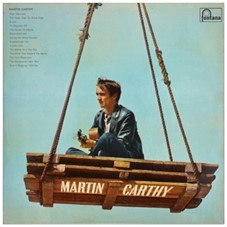
The sympathetic English folk giant Martin Carthy has an admirable talent for getting to the point with perfect metaphors. As to characterise an exceptional quality of young Dylan:
“He was a real magpie, but he had this wonderful creativity that went along with it. […] What he had was a memory like a piece of blotting paper. If somebody sang something that he thought was wonderful, he’d go back to his hotel and write down what he remembered. It might come out as a new song, but that’s where it would be from.”
(Tradfolk interview, 28 February 2018)
“He was a real magpie” is a wonderful, comprehensive image. Typifying not only the young troubadour with whom Carthy roams London from one folk club to another, but actually the old one as well. The magpie who picks up the shiny bits and takes them to his nest to build his own work of art. And Carthy illustrates his memories with familiar and less familiar examples. I heard him, he tells us, singing “Where have you been my blue-eyed son?”, and thought he was playing “Lord Randall” – until three seconds later I realised it was “A Hard Rain’s A-Gonna Fall”.
Dylan’s incredible memory for songs, as well as his lovingly copy/paste talent, has of course been spotted often enough as well, but rarely as evocatively as by Carthy: “What he had was a memory like a piece of blotting paper.” And reconstructing those memories, those quickly stored impressions, back in his hotel room, then become the basis for what “might come out as a new song”. In which he exposes a creative process, as it is described by the 62-year-old Dylan himself too, in the Robert Hilburn interview for the LA Times, November 2003 in Amsterdam:
“I’ll be playing Bob Nolan’s ‘Tumbling Tumbleweeds,’ for instance, in my head constantly — while I’m driving a car or talking to a person or sitting around or whatever. People will think they are talking to me and I’m talking back, but I’m not. I’m listening to the song in my head. At a certain point, some of the words will change and I’ll start writing a song.”
Incidentally, it is hard to find a song in Dylan’s oeuvre that features a “changed” “Tumbling Tumbleweeds”. “Rollin’ And Tumblin'” seems obvious, but doesn’t fit – in terms of atmosphere and pace, songs like “Life Is Hard” or “Moonlight” come closer, but presumably Dylan just mentions a song that comes to mind at this moment, during this interview.
However, there are plenty of songs in Dylan’s oeuvre where it is abundantly clear what the template is, of course. The old Irish drinking song “The Parting Glass” for “Restless Farewell”, for example, “Nottamun Town” becomes “Masters Of War”, or “No More Auction Block” for “Blowin’ In The Wind”; there are dozens of examples. And one of the most famous and celebrated is “Scarborough Fair”, from which Dylan sculpted one of his all-time greatest, “Girl From The Country”. According to lore, anyway.
“Scarborough Fair” was “my thing”, says Carthy. Every artist in that folk circle, in the late 50s, early 60s, had their own “signature song”, so to speak. Davey Graham had “Angi” (or “Anji” or “Angie”), Bert Jansch “Strolling Down The Highway” and Carthy had “Scarborough Fair”. He stopped playing it himself (“too much baggage”), but “I love the fact that Bob Dylan got ‘Girl From the North Country’ from it. It was very typical of him to do that – very him. In fact, he came back and he said [cue Bob Dylan impersonation], “I wanna sing you this!” And he started to sing it, and he was trying to do the guitar figure. He got halfway through the first verse and he said, “Oh man, I can’t do this!” [Laughs] He wasn’t really ready. He was just so excited about it.”
… and that “Scarborough Fair” was more or less taken away from him by Paul Simon doesn’t really bother him anymore either: “It was my signature piece, but it’s a traditional song, for god’s sake! Why shouldn’t he do it?” When Paul Simon performs in London in 1998, he apparently remembers a debt of honour, and invites Martin on stage to play the song together. The generous Carthy is happy to oblige.
Like Simon, Dylan is still aware of Carthy’s contribution decades after the fact, as evidenced by his words in the Rolling Stone interview in 1984:
“But I ran into some people in England who really knew those songs. Martin Carthy, another guy named Nigel Davenport. Martin Carthy’s incredible. I learned a lot of stuff from Martin. ‘Girl From The North Country’ is based on a song I heard him sing – that Scarborough Fair song, which Paul Simon, I guess, just took the whole thing.”
Which, by the way, contradicts his own quote in Nat Hentoff’s liner notes on The Freewheelin’. Hentoff writes there:
“Girl From The North Country was first conceived by Bob Dylan about three years before he finally wrote it down in December 1962.”
… and then quotes Dylan, who implicitly confirms this genesis: “That often happens. I carry a song in my head for a long time and then it comes bursting out.” Which is then rebutted by both Carthy and Dylan himself, and a first superficial song comparison indeed does demonstrate it; Dylan must have turned the old folk song into “Girl From The North Country” in the same days that he was introduced to Carthy’s version of “Scarborough Fair”, December ’62. That he would have walked around with it for “about three years” is one of the many fables peddled in those liner notes. And actually, the gravity of the template is somewhat overblown as well.
https://youtu.be/M32jmUmSZzU
The plot of “Scarborough Fair”, the dialogue about a love that can only be won if the other accomplishes impossible tasks (sewing a seamless cambric shirt, finding an acre of land between the salty seawater and the wet beach) evaporates, to be saved, in a way, for the equally stunningly beautiful sister of the girl from the North, for “Boots Of Spanish Leather”. A few phrases are taken verbatim – but not many; only Remember me to one who lives there / For once she was a true love of mine, in fact.
And the melody may be an echo, though not much more than that – the outline is recognisable, but the harmonic structure is really different. And so is the time signature – Scarborough is played in 6/8 or 3/4, Dylan plays an ordinary 4/4 metre. There are, in any case, plenty of songs in Dylan’s discography that are much more faithful to the template than “Girl From The North Country” is to “Scarborough Fair”. It is, in short, defensible that Dylan considers the song an own creation. Which, incidentally, Martin Carthy implicitly acknowledges when he says:
“He did actually annoy some people by being such an effective piece of blotting paper. I don’t understand that, personally. I think it’s fantastic. Somebody suggested that “Blowin’ In The Wind” was actually a reworking of a tune called “No More Auction Block”. I’ve no idea if that’s true. There’s only a limited number of notes in the scale, aren’t there? You gonna trip over each other at some point.”
(interview for Prism Films, 2013)
To be continued. Next up Girl From The North Country part 2: La Gazza Ladra
Jochen is a regular reviewer of Dylan’s work on Untold. His books, in English, Dutch and German, are available via Amazon both in paperback and on Kindle:
In reaction to the prudish Victorian establishment, symbolist-influenced Charles Swinburne puts a twist on the mythology of Phaedra who desires to have sex with her stepson, stung as she is by the poisonous scorpion of love set upon her by sea-shelled Aphrodite.
Swinburne expresses sympathy for the seemingly irrational passion Phaedra has for her stepson-prince, the son of Theseus, the heroic King of Athens.
The so-called ‘Decadents’ see no beautiful and caring world of Nature to be their guide in life in contrast to the more optimistic viewpoint held by the Romantic Transcendentalist writers.
Unlike the Sad-Eyed Lady of the Lowlands, the author depicts, in the lyrics below, an over-wrought Phaedra who is not prepared to face the trials and tribulations of life in a stoic manner.
Phaedra suffers greatly; craves to die because of her secret passion.
However, she’s not about to kill herself without first taking deceptive steps to clear her name after her stepson rejects her; she accuses him of rape.
For Swinburne, the use of sensual and symbolic language becomes the key to open the door into Phaedra’s secret and shadowy inner sanctum:
Yea, if my own blood ran upon my mouth
I would drink that. Nay, but be swift with me
Set the sword between the girdle and breast
For I shall grow a poison if I live
(Charles Swinburne: Phaedra)
The tragic mythological tale easily construed burlesqued into double-edged comedy in the following juiced-up song lyrics:
Well, Phaedra with her looking glass ...
She gets all messed up, then she faints
That's 'cause she's so obvious, and you ain't ...
I wanna be your lover, baby
I don't wanna be hers, I wanna be yours
 (Bob Dylan: I Wanna Be Your Lover)
Alluding to the Bard:
Look into thy glass, and tell the face thou viewest
Now is the time that face should form another
(William Shakespeare: Sonnet III)
Mad she may not be ~ could be that Phaedra comes up with her ill-fated schemes in an attempt to ensure that she has sons by the prince, as well as those by her husband King Theseus, in line for the throne; rather than any sons who might be sired by her biologically-unrelated stepson with someone else.
In this series Aaron collects examples of Bob Dylan recording songs that he didn’t writte and Tony notes a few immediate thoughts as he listens. This is episode 38 – details of all the previous episodes is given at the end of the article.
Aaron:
As with “Do You Hear What I Hear?”, The Little Drummer Boy was originally popularized by the Harry Simeone Chorale, in 1958.
The song was originally titled “Carol of the Drum”. Inspiration for “The Little Drummer Boy” came to songwriter Katherine Kennicott Davis in 1941. “when she was trying to take a nap, she was obsessed with this song that came into her head and it was supposed to have been inspired by a French song, ‘Patapan,’ and then ‘patapan’ translated in her mind to ‘pa-rum-pum-pum,’ and it took on a rhythm.” The result was “The Little Drummer Boy.”
Tony:This is one of those songs that seems to have been with me all my life – not a piece of music I particularly cared for but I must have heard it on the radio or TV as a child I guess, and my Dad would probably have played it to me on the piano. I have, from a very early age, had the ability to hear a piece of chord-based music (such as this, and most pop and rock) and be able to remember it, and play it back on piano or guitar, or recorder… As a party trick it impresses some people, but really it’s not that unusual in musicians.
So yes I remember it – another song from childhood days. But it doesn’t do much to me.
Aaron:Joan Baez included her version on her own Christmas album Noël, in 1966
Tony: Because of the title and the lyrics it is inevitable that a drum has to be in there playing away – although what’s rather nice here is that the song is speeded up. At least that is how it seems to me from a memory of other people’s versions of this. I can’t recall it going at this speed before.
And that really does give this recording an edge. And I like the way at the start of the verse there is a moment where it sounds as if the musicians have forgotten that they are doing the fast version, by stretching out the melody.
I was ready to be a miserable old man and criticise every version of this song, but this really is something else. And it brings back a memory. I’ve no idea how old I was at the time – maybe four years old but I was given a toy drum as a Christmas present and oh how my parents regretted that they did that!
Aaron:Here is Bob’s version – with the original official video
Tony: So what does this add which we didn’t have before? Before I first heard it I wondered what Bob would do, and it is a perfectly reasonable and decent version and the background chorus fits well. In fact, it all fits well. But I am not sure I want to play it again.
Aaron: There are literally hundreds of versions of the song, so I thought I would include two that I really like to finish off with. First Everyone’s favorite Little Drummer Boy, Ringo Starr.
Tony: If you are a regular reader you will know that we sometimes have a problem in that a video that will play for Aaron in the USA won’t play for me in the UK. That’s true here. I’m including Aaron’s video and a Ringo Starr version I have found that plays in the UK. I’ve hoping they are the same!
the UK playable video….
Tony: Now this one I like because it plays to Ringo’s strength and it is inventive and different. It is also bouncy and jolly, and after a not very jolly night last night that’s what I want. Love the introduction of the bagpipes at the end. And really this point seems to be an important one to me – much depends on one’s mood at the time. I write my pieces in the morning, sometimes before sometimes after breakfast. The site would probably look very different if I wrote everything in the evening.
Aaron: Johnny Cash with Neil Young and Ben Keith
Tony:Big contrast with the fun and buzz of Ringo’s version, and really, throwing in the bell chime as a prelude to each new line is a bit obvious, but I suppose when it is Christmas that is what everyone wants.
I think I’ll go back and play Ringo’s version again.
NET 2010 part 1 – in which Mr Guitar Man makes a startling comeback.
By Mike Johnson (Kiwipoet)
How you view 2010 depends very much on the narrative you construct around the NET. For Andrew Muir, author of One More Night, and others who share his narrative, the NET fell into a black hole from 2005 – 2009, and 2010 was the year of Dylan’s emergence. He entitles this chapter ‘2010 – 2011: In which your author is mysteriously saved.’ He begins by saying that guitarist Charlie Sexton’s rejoining of the band (which he left in 2002) ‘was the first step in a rejuvenation and transformation of my NET experience.’
Reading between the lines, what Muir really means is that Dylan underwent the rejuvenation and transformation, just as in his previous chapter “2005 – 2009: In which your author becomes lost” he really meant that Dylan became lost. He suggests that during these years Dylan fell into doing zombie concerts and lost his musical and moral bearings, cynically wrecking his old songs mostly by means of that ridiculous rinky-dink organ, known as the IOT (instrument of torture), turning up just for the sake of the paycheck.
There was a feeling around Dylan circles at the time that he should put his suitcase down before he lost his voice completely and trashed the NET, that he had become a parody of himself and had been on the job too long.
If you have been following this series you will know that I don’t buy into this narrative. Having listened to hundreds of concert recordings I simply don’t find it credible. During these so-called ‘lost years’ we find Dylan hard at work doing what he has always done, reconfiguring and reimagining his songs, adapting them to his changing voice, ‘making old things new again’ with the same passion and commitment he’s always had. Not only that, but by 2009 we discovered that he was pushing his evolving arrangements towards an ‘uncovering’ of the foundations of his songs, musical foundations that reached deep into the first half of the 20th Century. Rather than imitate himself, he stripped back these songs to their most basic, unadorned selves, often using a churchy, circus like organ and his circus barker voice to do it.
Oh, I had my problems with the ‘dumpty-dum’ as I called it, and didn’t always like these old/new arrangements, not all of which seemed to me to work, but I had no doubt that there was a method in Dylan’s madness. And, looking back over these years, you can find some astonishing performances.
What first struck me about 2010 is its continuity with 2009. I’m not sure I could do a blindfold test and distinguish some of these 2010 performances from 2008/9, not unless I listened for Sexton’s felicitous guitar licks. The same project, to strip these songs to their foundations, is at work, the same prominence of the harmonica, the same circus barker vocal delivery, the same vamping organ.
And yet, changes are talking place. We begin to move away from the dumpty-dum into arrangements more trenchant and gutsy, more bluesy in fact. And he begins to play the guitar more often, two or three songs per show. I can only speculate that Dylan recognized that his audiences were missing their guitar-playing troubadour. What this means for the theory that Dylan stopped playing the guitar because of arthritis I’m not too sure. Perhaps he just wanted to give his audiences a break from the IOT.
Vocally, he begins to break into falsetto more often, especially on the word ‘you,’ giving these performances the manic, almost demented edge he will carry through into 2011 and 2012.
I want to dedicate this post to those centre-stage performances in which Dylan came out from behind his IOT to front up with either his harp or, more often, his guitar.
The harp features on this performance of ‘This Wheel’s On Fire’ from Osaka, 16th March. Talk about trenchant and gutsy! Warning: best-ever performance coming up. Long gone are the queasy, psychedelic arrangements of the 1960’s, epitomized by Julie Driscoll’s marvellously wild rendition set to Brian Auger’s swirling organ…
In its place you find this stripped down, edgy, desperate performance which brings the mystery of the lyrics into sharp, bitter relief. We don’t know what ‘favours’ the singer has done for the person addressed, but it’s something that has to be hidden from us. There’s a druggy feel here. Things hidden, things forbidden. ‘You know that we shall meet again’ becomes more of a threat than a promise. Dylan’s harp work turns this performance into a tour-de-force.
This Wheel’s On Fire
The first leg of the tour, Japan and Korea, has gone down in NET history for its five-night run in Osaka and seven-night run in Tokyo. (For a review of Osaka see here.)
This centre stage performance of ‘Every Grain Of Sand’ is another best-ever performance in my books and comes from a two-night run in Nagoya (19th March). I’ve written about this performance in my Master Harpist series (see Master Harpist 4). There I describe it as one of Dylan’s greatest vocal/harmonica duets ever. We go beyond the idea of a harp ‘break’ or solo to what becomes, after the first verse, a duet for voice and harp, with the harp ‘talking’ back to the voice. Long gone is the sweeping, lush album version (Shot of Love, 1981) and we are back with trenchant and gutsy, a performance that brings us to the dividing line between doubt and faith. I would love to have been there.
Every Grain of Sand
Dylan’s superlative harp work is again featured on another centre stage performance, the moody ‘Forgetful Heart’ from Together Through Life, an ode to the bitterness of memory – was love ever even on the cards? Co-written with Robert Hunter, this song became one of the stand-out songs performed over 2009 – 2012. Driven by nostalgia and doubt, it’s a great dramatic monologue. In my imagination I see a man walking the streets in the early hours, lonely and despairing, interrogating his heart, his ever-forgetful heart.
Again, I’m not sure I could distinguish this performance from Billings (11th August), from similar 2009 performances.
Forgetful Heart
Dylan divided his centre-stage performances between the guitar and the harp. Always good for a change in mood from the edgy and desperate, ‘I’ll Be Your Baby Tonight’ remained a concert favourite, usually early in the show, and an opportunity to front up with guitar. This performance from Lintz, Austria (12th June), number 3 on the setlist, beautifully captures the careless mood of the original, fast tempo and upbeat. Very tasteful. I’ve heard better vocal performances, but few as exuberant.
I’ll Be Your Baby Tonight (A)
Lovers of this song might appreciate this version from Pardova, Italy (15th June) where it was number 4 on the setlist. It’s pretty much the same as Lintz, maybe the recording’s a bit clearer and sharper. This probably has the edge on the Lintz.
I’ll Be Your Baby Tonight (B)
At Lintz, Dylan stayed onstage to do a guitar-driven, acoustic ‘Tangled Up in Blue’ his great NET standby. His audience would have been happy to see their old Bob, still tangled up in everything, picking away as if their Mr Guitar Man had never abandoned them for the IOT.
Tangled Up in Blue
Number 3 on the Pardova setlist was his 1960s classic ‘It’s All Over Now Baby Blue.’ Just seeing Dylan centre stage with guitar had its own nostalgia value. Dylan had gone through many arrangements of this song, not all of them successful, but this upbeat performance, with a bit of swing to it, is as good as any we’ve heard in recent years. You can dance to it. It may not have the emotional intensity and drama of some of the great performances of the song (go back to 1995 and check out the Prague performance) but Dylan’s vocal is pleasingly suggestive.
It’s All Over Now Baby Blue
In Palma, Italy, 18th June, Dylan did four songs on the guitar, scattered across the setlist. While most of these centre stage performances are early songs from the acoustic era, here’s a rare performance of ‘Beyond Here Lies Nothing’ (another from Together Through Life) featuring Dylan on guitar. I still prefer the rowdier harp and trumpet performance from 2009, but appreciate the clean sound on this one.
Beyond Here Lies Nothing
Talking about nostalgia for the early, acoustic Dylan, at Palma we find ‘It Ain’t Me Babe’ at number 2 on the setlist. As with its sister song ‘It’s All Over Now,’ Dylan plays this upbeat with a hint of swing. With this arrangement, the song loses something of its acerbity and the passion of renunciation, but it works pretty well as a foot-tapper too.
It Ain’t Me Babe
In Dornbirn, Austria (19th June), he does something similar with ‘Don’t Think Twice’ at number 2 on the setlist. This is another survivor from his early period, and would last through to 2019. I’m glad. There’s nothing quite so bitter-sweet as this little gem, a reflection on a relationship that didn’t quite make it. In the moment of the song, it’s the ‘dark side of the road’ that claims him. A hushed, acoustic, undramatic performance. It’s him, babe!
Don’t Think Twice
At Dornbirn, Dylan follows ‘Don’t Think Twice’ by picking up his electric guitar for a rare version of ‘Just Like Tom Thumb’s Blues.’ We’ve grown accustomed to his keyboard and harp driven versions of this song, so this one comes as a refreshing change, although, again, it’s not as intense or desperate as some performances.
Tom Thumb’s Blues
In Kansas City (7th August) Dylan again picks up the electric guitar for a punchy performance of ‘My Wife’s Home Town’ from Together Through Life. Another ‘slight’ song from the Dylan/Hunter team, but it swings along like an old big-band number from the 1940s. This bluesy version is my favourite. Just the bare, minimal guitar suits the song admirably.
My Wife’s Home Town
Unexpectedly, Dylan plays the electric guitar again on ‘Tweedle Dum & Tweedle Dee’ putting a new slant on this Love and Theft song. Lyrically and musically it’s a busy number, and Dylan has never varied the arrangements much.
Tweedle Dum & Tweedle Dee
I’ve saved the best till last. First, this brooding, dark performance of ‘Can’t Wait’ from Lintz ranks as my best over, and you won’t hear me say different until we get to 2019, when we’ll meet another best ever. The Lintz performance has all the intensity of a tiger pacing in its cage. For brooding intensity this performance is unmatched. There are occasional, brief interjections from the harp, but it’s all in the vocal (Dylan’s not playing guitar). This is one to be savoured, folks.
Can’t Wait
Finally, also from Lintz, yet another best ever (again until 2019), ‘It’s Not Dark Yet.’ Spoiler: an outstanding harp solo, hard and insistent. Amazing what Dylan can do with just a few notes. As I’ve suggested before, this song grows more convincing as the years pass and Dylan, now on the verge of 70 years old, takes us deep into his mortality.
It’s not dark yet
Songs covered in this post give us the flavour of how Dylan sounded away from the organ. Next post we’ll look at some more outstanding songs from 2010. Until then,
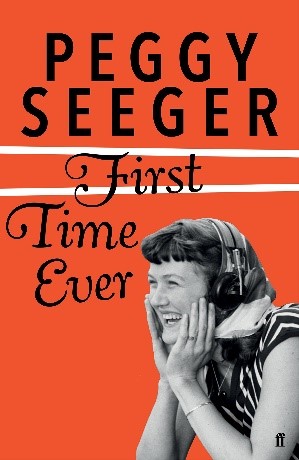
Peggy Seeger has many merits, obviously, and deserves to be knighted for her own contributions to music history as well, but surely her main claim to fame is and remains that she inspired Ewan MacColl to write “The First Time Ever I Saw Your Face”. Which is perhaps somewhat ironic, given her decades-long fight for women’s rights and her feminist fire, but presumably she herself would be at peace with that feat; Peggy, above all, has an unshakeable respect for songs. And “The First Time Ever I Saw Your Face” is, after all, an indestructible song from the stratosphere. Heck, she even named her own autobiography after the song. And she loved Ewan MacColl, let’s not forget that.
Her love for Dylan seems to run a little less deep. The story that both Joan Baez and Bob Dylan stalked her for an autograph in 1961 is amusing though not very watertight, and by now belongs to folklore. As is the story that both MacColl and Peggy, who may indeed both be labelled folksnobs, would have felt and expressed disdain for Dylan. In Howard Sounes’ Down The Highway (2001), she recalls Dylan’s visit in December ’62 to the club MacColl and she ran in London, The Singers Club in Holborn;
“He seemed lost without a microphone, as plenty of U.S.A. performers did in our nonwired clubs. Ewan and I were rather standoffish at that time and perhaps we were not welcoming enough.”
Twenty years later, in the magazine Uncut on the occasion of Dylan’s 80th birthday, she tries to nuance her unwelcoming attitude slightly, but is not too successful at that:
“Not long after, he came to the UK and performed at the Singers Club. But nobody could hear him because we didn’t have microphones and his voice wasn’t loud enough. Some people have since said that he was given the cold shoulder, but I don’t think that’s true. It was just that at that time we were singing pretty much folk songs or highly political songs in our club. Bob Dylan’s songs fell halfway in between. It was a new kind of song.”
However, other sources such as the also present Martin Carthy, A.L. Lloyd and Anthea Joseph could apparently hear it just fine and all recall, independently, that Dylan played “Masters Of War”, “Blowin’ In The Wind” and presumably an early version of “Ballad Of Hollis Brown”. It does look a bit as if Peggy, as the daughter of musicologist Charles and composer Ruth, sister of Mike Seeger and half-sister of Pete Seeger, and partner of Ewan MacColl, sixty years on still is having some trouble admitting that she at the time did not recognise the extraordinary, earth-shattering power of three of Dylan’s all-time greatest songs while she was standing next to them. Like in her autobiography First Time Ever (2017), where she makes no mention of the not insignificant music-historical fact of Dylan’s repeated visits to her club and the subsequent creation of songs like “Hard Rain” and “Girl Of The North Country”. Indeed, Dylan is not mentioned at all. Well alright, one time, quite indirectly though, when she recounts with slightly awkward smugness how she manages to get out from under a fine. In a rather implausibly embellished anecdote:
“A handsome young policeman sticks his head in the window and asks if I know how fast I was going. My Maggie could indeed gallop at full tilt. I admit that I only glanced at the speedometer when I saw the blue lights. 95 mph on a 65 mph road. No, officer, I’m a musician and I’m very sorry and I was writing a song in my head and I wasn’t paying attention and his face lights up. I write songs too! What’s your song about? Off we went, commiserating on the difficulties of putting thoughts and emotions into verse and melody. You play folk music? Do you know Bobby Dylan and Joanie Baez? He was impressed that before they were Bobby and Joanie they’d both asked for my autograph, but he zipped back to our songs. He just wanted some tips. He let me off with a warning.”
Yes, the Realm of Fantasy is a very nice place to dwell, filled with Things That Never Happened. Unfortunately, Peggy Seeger’s memoir is larded with this kind of blatantly pumped up reveries.
Anyway, vice versa, there has always been respect and admiration. In interviews and in his autobiography Chronicles, Dylan usually mentions her among names like Bill Monroe and Jean Ritchie, artists he enjoyed listening to. Indeed, songs that are in Peggy’s repertoire in the early 1960s can be heard throughout Dylan’s oeuvre. “The Wagoner’s Lad”, “Pretty Saro”, “Girl Of Constant Sorrow”, “The Death Of Queen Jane”, “Railroad Bill”… and again in this third verse of “Western Road”;
Have you seen, have you seen, have you seen Miss Mary Anne?
Have you seen, have you seen, have you seen Miss Mary Anne?
Well I want to tell you that's one kind of woman,
                                     who is missing her man
The engine falters, by the sound of it. On the spot, Dylan decides to start the third stanza with “Have you seen…” but then his improvisational skills let him down for a moment. In haste, he fills the bars with a double repeat of have you seen, and then the associations lead him via “Baltimore” from both previous stanzas to “Miss Mary Anne”, which must have been prompted by Peggy Seeger:
Ridin’ in a buggy, Miss Mary Jane, Miss Mary Jane
I’ve got a house in Baltimore, in Baltimore, in Baltimore
I’ve got a house in Baltimore, and it's full of chicken pie
… “Ridin’ In A Buggy”, the old folksong/nursery rhyme that has been in Seeger’s repertoire since the 1950s. The purist Peggy would presumably raise her finger at Dylan’s name change (from “Miss Mary Jane” to “Miss Mary Anne”), but then probably accept Dylan’s obvious excuse – after all, during the 1960s, “Mary Jane” has become an insider’s wink at marijuana. Or actually already no longer an “insider’s wink”, but almost colloquial language; even The Everly Brothers sing it on their under-appreciated 1967 flop The Everly Brothers Sing:
Clouds so sweet, cloud my mind girl
And I don't know, what way I'll go girl
But I don't care no more
I've got my Mary Jane
And I'm secure once more
I've got my Mary Jane
“Mary Jane”, the trippy opening of Side B, and like most songs on the record an admittedly overproduced (it’s 1967, after all), but otherwise fine song. The decision to release it on single, hoping to attract a new, hipper audience is defensible (but sadly failed miserably).
Dylan, incidentally, would quote Peggy’s “Ridin’ In A Buggy” more correctly and respectfully some 30 years later, on Time Out Of Mind, in “Tryin’ To Get To Heaven”; I was riding in a buggy with Miss Mary-Jane / Miss Mary-Jane got a house in Baltimore.
Anyway, today, on this late Thursday evening 13 February 1969 in Nashville, it seems more than likely that Dylan’s feverishly meandering brain arrives at “Miss Mary Anne” via Baltimore – although the proximity of Johnny Cash could also be a trigger, of course. And that his “The Blizzard” from Sings The Ballads Of The True West (1965) bubbles up, the tragic countdown song of the traveller who is seven miles, five miles, three miles, one mile away from his beloved Mary Anne, only to be found frozen to death the next morning… He was just a hundred yards from Mary Anne. On the other hand: that’s no “Miss”.
Either way, she is not a keeper. Either a tired Dylan loses concentration, or he regrets the name choice after just one verse, as she has been renamed already in the next, last verse of this improvised trifle:
Look down the street on Friday and found out she was gone
I looked for her on Thursday but she has moved along
Miss Maggie Anne, has anybody seen Miss Maggie Anne?
Well let me tell you that's one woman
One woman who's sure missing her man
The well is starting to dry up. Half-heartedly, Dylan seems to want to quickly improvise a countdown song, or at least a countdown couplet, one of those that count down the weekdays. An easy way out, though often enough it makes for wonderful songs. “Re-Enlistment Blues” by Merle Travis from 1953, for instance, Etta James’s irresistible “Seven Day Fool” (1961), “Stormy Monday” and “Friday On My Mind”. And “I Got Stripes”, of course, by the inevitable Johnny Cash, lovingly stolen from Lead Belly’s upbeat prison song “On A Monday” from ’39.
But Dylan seems to have exhausted his resources. After one line he has already lost count (going from Friday to Thursday), after the second line Mary Anne has changed to Maggie Anne, and after three lines Dylan has lost the storyline: the untraceable Maggie/Mary Anne who has just run off to the dismay of the abandoned narrator, suddenly is the abandoned one herself in the last line: that’s one woman who’s sure missing her man.
Yeah well, who cares. “Western Road” is just an unserious throwaway anyway. But 50 years later it does give Dylanologists a nice, fleeting glimpse into the inner jukebox of a Nobel Prize-winning grandmaster. Which in itself is a merit, still.
Jochen is a regular reviewer of Dylan’s work on Untold. His books, in English, Dutch and German, are available via Amazon both in paperback and on Kindle:
Some versions of Greek/Roman pre-Trojan War narratives assert that goddess Aphrodite curses Phaedra, the wife of Theseus, to lust after her stepson while Hera, the wife of Zeus, curses Heracules to suffer fits of uncontrollable rage.
Claimed too is that Theseus and Hercules are both partially divine within.
Heracules be a strong fellow indeed:
Distant ships are sailing into the mist
You were born with a snake in both of your fists
While a hurricane was blowing
(Bob Dylan: Jokerman)
Theseus befriends Heracules since the King of Athens realizes that the strongman at times is not knowingly responsible for the deaths he inflicts, and at others times does not intend that death be the result – rather it’s due to his overwhelming strength.
Regardless, Heracules, not the brightest torch on the castle walls, and prone to drunkedness and merriment, tries to make amends for any sorrows that he causes, and attempts to reciprocate any favours received.
All too often, Heracules ends up messing things up.
For example, Apollo asks the Fates to delay the death of the hospitable Admetus should the death-bound appointee find them a substitute; his wife volunteers, and off she goes to the Underworld.
Not aware of the deal, Hercules, having been kindly invited to stay at Admetus’ home, uses his great strength to rescue the wife from the Underworld. Heracules brings her back home to the husband that she’s tried to save from sure death by going to Hades in the first place.
Similar to the following story ~ according to some early Christian authorities, God makes a deal with Satan whereby the Almighty agrees to sacrifice His Son Jesus in order to save humankind from the ordeals suffered by its members as a result of their sinful behaviour.
Supposedly in an intermediate stage between heaven and hell, Jesus travels to the Underworld in order to attempt to resolve issues outstanding between God and the Devil; there He’s to settle matters “mano a mano”, so to speak.
However, on second thoughts, Christ is called back from Hell, and sent to Heaven.
So interpreted by some are the biblical lines below:
He that descended
Is the same also that ascended
Up far beyond the heavens
That He might fill all things
(Esphesians 4:10)
That is, Jesus leaves Hades before the possible wrestling contest with Satan gets to take place.
The unintended consequences of doing so are unforeseen, but thankfully not so subtly encrypted within the song lyrics quoted beneath.
The Devil’s given a win by default, and humankind keeps right on sinning:
Shake the dust off of your feet
Don't look back
Nothing can hold you down
Nothing that you lack
Temptation's not an easy thing
Adam given the Devil reign
Because he sinned I got no choice
It run in my vein
(Bob Dylan: Pressing On)
Fear lurks in the background ~ the fear that, unlike the match in which the powerful Heracules with little trouble smacks Death down on the canvas, the horned ruler of Hades might just beat demi-human Jesus to a pulp.
By Tony Attwood, based on recordings collected and presented by Mike Johnson (Kiwipoet) for the series The Never Ending Tour.
This 1998 recording of Tangled up in Blue is not an easy listen – it is gritty, edgy, unsettling, difficult, and musically with a set of clashes between two guitars which take us light years away from the original.
Indeed in the original album recording I always have the feeling that Bob was reflecting plaintively on the way that he and she had lives that had become tangled together and could not be separated. They are apart, they can’t happily co-exist in the same time and place but they can’t be apart from each other. Hence those exquisite lines at the end – for me the most perfect insightful wonderful exquisite couplet in the whole of the entire history of popular music…
We always did feel the same
We just saw it from a different point of view
And it is the contradiction within the unity of feeling the same that makes this piece of music open to so many interpretations, and here I’ve deliberately sought out one of the performances by Bob which emphasises the edginess of that relationship – that “can’t live with you can’t live without you” concept.
So while I could happily play the original recorded version of the song over and over, this version is not selected for its playability nor indeed one might say even for its enjoyment. It is selected for its challenges, and because it reminds me that no matter how well life might be going there is always something that is on the edge. If not, then it is not a full life. I don’t want to be on the edge, but if I don’t have those moments, how am I to value fully those times of utter perfection and happiness?
From the opening chord changes we know what this is all about… we settle back for a much-loved favourite… but Bob’s voice tells us there are extra challenges ahead.
And interestingly, this is clearly a highly rehearsed version, rather than something Bob came up with on spot or during the sound check – and that is interesting, because of the way he manages to get so much angst into his voice. Doing that once or twice takes a bit of thought and practice – doing it night after night in a song that is nine minutes long takes some doing. OK a lot of the nine minutes are instrumentals, but even so…
If there is something that I am not totally taken by it is the acoustic guitar solo – for me it is almost too edgy – the lyrics have all the edge we need. But what I do love is the fact that Bob has overcome his occasional tendency to sing the same notes for each line of the melody. And actually looking back to the performance once again, no – I think Bob has got it right. With what this song talks about there can’t be too much edge. It is all edge.
But as we get to the second instrumental break even the oddness of the two acoustic guitars fighting each other have made the point. And speaking of “point” just listen to Bob’s voice with the “started from a different point of view” line – it is choking with emotion – and by the next instrumental break the sheer chaos of the relationship is being relayed by the bucket load. It is as if those repeated notes and the two guitars are each a perfect symbolic representation of the loving and fighting between these two people – something that is amplified in the prolonged harmonica solo which adds to the co-existing horror show and the desperate love affair.
But above everything it is the ending that envelops me completely and draws me back to this performance. By the penultimate vocal verse Bob is getting fairly desperate, but for the last verse he has got more certainty and power. And more than in any other performance I find myself believing this is a real autobiographical moment.
If I want a Bob “telling it like it is” moment it is this.
Don't know how it all got started
I don't what they do with their lives
But me, I'm still on the road
Heading for another joint
We always did feel the same
We just saw it from a different point of view
Tangled up in blue
It is far from comfortable, and not something I choose to listen to daily or I must confess even monthly, but it is something that challenges, something that takes us to the edge of the cliff, has a look over at the 1000 feet drop, and then…. leaves on just standing there on the edge.
Bob doesn’t jump. She doesn’t jump. I don’t jump. But then neither of us takes a step back. We just stand there.
I They wanted to record everything in case Dylan said something profound
Well I'm going to Chicago, going on the Western Road
Yes I'm going to Chicago, going on the Western Road
There are good times in Baltimore
But I've packed this heavy load
It is clearly an improvised cooling down, the trifle “Western Road”, the “outtake” we received as an unexpected gift, just like that, on the release of The Bootleg Series Vol. 15 1967-1969: Travelin’ Thru (2019). The song bubbles up at the end of the second recording session for Nashville Skyline, 13 February 1969. From six p.m. to midnight, Dylan, bassist Charlie McCoy and drummer Kenny Buttrey, assisted by Bob Wilson on piano and four alternating guitarists, have been busy putting the final versions of “I Threw It All Away”, “To Be Alone With You” and “One More Night” on tape, plus four attempts to capture the beauty of “Lay, Lady, Lay”, and now we’re pretty much ready to call it a day. But then someone serves up another nightcap.
“Take 1 (Outtake)”, as it is somewhat overly ambitiously catalogued on CD1 of this episode of The Bootleg Series, begins abruptly, when the first bars have already been played. Remarkable, since producer Bob Johnston has a habit of always having a tape running when Dylan is in the studio (to which we also owe the invaluable The Bootleg Series 12 – The Cutting Edge 1965-1966). A quirk confirmed again in 2016 by one directly involved, by Bob Wilson, the pianist of the Nashville Skyline sessions, being interviewed on a panel with Charlie Daniels and Ron Cornelius, among others, on the occasion of the release of Cornelius’ book The Guitar Behind Dylan & Cohen:
“They rolled the tape constantly. And they’d run the tape machine on high speed, 30 ips instead of the usual, you know half of that speed. It’s a higher fidelity, but it also ate the tape up. They had stacks of tape lined up. I mean, they had the engineers moving them tapes in and out… ’cause they ate all that tape up, they recorded everything. All the time the machine was running, which was very, very unusual, very rare – they didn’t do it that way. So, consequently, the red light was on all the time. So what they wanted, what Bob Johnston wanted, if Dylan said something, they wanted to record everything in case Dylan said something profound [audience laughter].”
So those first bars of “Western Road” must also be on a tape somewhere. But for the official release, the first seconds have been cut out; presumably it took a little while before the originator was followed, whoever that might have been. That same pianist, Bob Wilson, would be an educated guess; “Western Road” is musically a copy of Wilson’s “After Hours”, the B-side of his not-very-successful single “Suzy’s Serenade”. It is, of course, only a run-of-the-mill 12-bar blues, so both “Western Road” and “After Hours” are copies of a billion other blues songs, but still – Wilson plays exactly the same runs with his right hand, the key is neighbourly (now C major, after the G major of “After Hours”), the groove is identical, albeit the tempo is slightly slower.
And it sort of ignites Dylan. “Unleashed” would be a somewhat overenthusiastic characterisation, but he does shake, with apparent ease, tolerable lyrics out of his immaculate white shirt sleeve. Very deeply he does not dive into his stream-of-consciousness, though. “Going to Chicago” bubbles up rather smoothly as (presumably) Bob Wilson deploys a Chicago blues. Any research hasn’t been done, evidently; if you take the Western Road from Baltimore, you’re heading northeast – away from Chicago, that is. Unwise, especially if you “packed this heavy load”. As such, it’s a dead end. Dylan sticks to Baltimore and Chicago for another verse, but his head is clearly already very much elsewhere, much further west:
Might take a train I might take a plane
But if I have to walk
I'll be going to Chicago just the same
I'm going to Chicago on the Western Road
There's bad times in Baltimore I can't take this load
Dylan has already sung “I’m going to…” twice, and now no longer resists the words that then inevitably impose themselves on a walking jukebox:
Well I might take a train I might take a plane,
But if I have to walk I'm going just the same
I'm going to Kansas City, Kansas City here I come
They got some crazy lil' women there
And I'm gonna get me one
… the third verse of one of the all-time great rock songs of the 20th century, Leiber and Stoller’s “Kansas City”. A song that apparently continues to bounce around in the creative part of Dylan’s brain through the decades. It is just short of “One For My Baby (And One More For The Road)”, the Sinatra song that echoes in at least seven Dylan songs, but “Kansas City” also comes a long way. It is the song from which Dylan lovingly steals in 1965 for “Just Like Tom Thumb’s Blues” (they got some hungry women there is a little disguised derivation of Wilbert Harrison’s they got some crazy women there), and in 2001 for “High Water” (He made it to Kansas City, Twelfth Street and Vine is literally copied). He himself plays it once in between, in – of course – Kansas City, when Tom Petty’s band is backing him, 24 July 1986. “Well. That’s the first time I’ve ever played that. Well anyway, we know where we are,” he says contentedly after the final chord. And as a DJ, in the twenty-first century on his radio show Theme Time Radio Hour, he can’t ignore the monument either, in Episode 20, “Musical Maps”:
“Here’s a chart-topping smash by Mr. Wilbert Harrison, recorded for Bobby Robinson in 1959, and features the barbed-wire guitar of Wild Jimmy Spruill. Y’all know this song, and it always sounds good. Wilbert Harrison. Kansas City.”
The song is, in short, unstoppable when an improvising Dylan accidentally sings “I’m going to…” over a spontaneous Chicago blues at the end of a recording day in Nashville.
But soon he will return to Baltimore…
To be continued. Next: Western Road part 2: Ridin’ in a buggy, Miss Mary Anne
Jochen is a regular reviewer of Dylan’s work on Untold. His books, in English, Dutch and German, are available via Amazon both in paperback and on Kindle:
Aaron: ‘tis the season to dust off the Christmas in the Heart album and give it its annual listen. The next few entries in the series will therefore concentrate on this album, don’t worry normal service will be resumed in the new year!
The first song we are going to look at will be Do You Hear What I Hear?
Wikipedia tells us this “is a song written in October 1962, with lyrics by Noël Regney and music by Gloria Shayne. The pair, married at the time, wrote it as a plea for peace during the Cuban Missile Crisis. Regney had been invited by a record producer to write a Christmas song, but he was hesitant due to the commercialism of Christmas. It has sold tens of millions of copies and has been covered by hundreds of artists.”
Regney said in a 1985 interview in The New York, “I wrote it as a clear and plaintive plea for peace at the time of the Cuban missile crisis, in October 1962.”
The song was originally recorded by the Harry Simeone Chorale, in 1962,
Bing Crosby made the song into a hit when he recorded his version of it on October 21, 1963.
Here is Bob’s version
Now a version from 2016 by American country a cappella group Home Free
Comments from Tony:
As you’ll know if you are a regular reader, Aaron selects the recordings and send the videos and his comments to me. Then I try and add my comments – writing them only for as long as the recording lasts, in order to stop me getting into some sort of deep theoretical musical analysis.
And for the opening two recordings here I was on the verge of hiding under my desk, wondering if I could find a way to say anything positive. I find those opening songs horribly over the top with no redeeming features whatsoever. The song may have been written about the Cuban crisis, but to me it so deeply imbued with sentimentalism that I can’t relate to it.
So my opening thought is that it is interesting that the composer of Masters of War should choose to record it. I don’t mean that as a criticism, but just what it says – it is interesting.
Of course it doesn’t help that I am an atheist who would love to see the separation of church and state in my country (the UK), and on listening to the first two versions of the song that thought dominated.
But I loved Dylan’s version, which I doubt that I have heard more than a couple of times before, simply because I have chosen not to play the songs. It’s the croak in the voice I think that transforms it. And the lead guitar between the verses marks it out.
Yet I still find it hard to appreciate Bob singing “mighty king” without any sense of irony, just as I find the awful modulation by jerking the key up a tone so very, very un-Dylan. That is awfully hackneyed. But ok, overall the recording is interesting.
However, everything was rescued by Home Free. I was helped by the fact this was the last of the versions of the song, and I guess I was used to the lyrics and knew what to expect. But more than that, this version is inventive… just take the way the lead singer holds back on “what I hear” on occasion. This, the rhythm, the harmonies… everything just makes the song beautiful as a piece of music so that I forget that it has become a piece of propaganda.
Of course to Christians, it is the truth rather than propaganda, and I’ve no problem with that at all. My only request is that people like me who do not believe in any religion get the same rights as people who do, in my country. But none of that stops me enjoying this last track, no more than my atheism stops me from enjoying the giving of presents to each other with my children and grandchildren at Christmas.
Metonymy, a hallmark of Post Modernism, is a figure of speech whereby a broader matter is represented by an associated part thereof.
Say, for example, when the picture of the King of Diamonds on a playing card stands-in for material wealth, and power.
Diamonds are associated with being rich, and the axe held by the King of Diamonds represents the power that comes with that richness.
What’s more, the monarch is depicted standing on his feet as well as standing on his head.
Karl Marx turns Friedrich Hegel, King of the spiritualistic Romantics, on his head, prophesizing that the material wealth and power held by the few will be turned upside down, and the axe placed into the hands of the members of the larger working class.
From the point of view of the rulers, and their supporters, the liberation of the working class from the woes of economic and religious establishment would be hell, not just for the capitalist rulers but for everybody, including the workers so lovingly cared for by the rulers and by the religious leaders of the status quo.
A heavenly circus run by Satan:
Step right into the burning hell
Where some of the best-known enemies of mankind dwell
Mr. Freud with his dreams, Mr. Marx with his axe
(Bob Dylan: My Own Version Of You)
On the other hand, Friedrich Nietzsche asserts that the powerless have a ‘slave mentality’ engendered by the Christian religion with the promise of happiness in the Afterlife for the workers if they obey their masters.
There’ll be no need for the ruling class to bring the axe down on the workers if they behave themselves.
A hellish circus run by God:
See the rawhide lash rip the skin off their backs
Got the right spirit, you can feel it, you can see it
(Bob Dylan: My Own Version Of You)
Which side are you on?
The narrator in the song above seeks to balance the scales for the benefit of all mankind, to tread a middle path between the two conflicting views.
The solution ~ sing some songs to soothe the passengers when the ship goes down:
I'm gonna make you play the piano like Leon Russell
Like Liberace, like St. John the Apostle
I'll play every number that I can play
I'll see you maybe on judgment day
(Bob Dylan: My Own Version Of You)
An option is to go and ask Alice ~
I think she can tell you what it means to be or not to be.
Then slowly, extending from his sleeve,
A cold, white, satin hand took mine.
Hey, I like what you do, he said to me.
I like what you do, too, I replied. I nearly died.
Then his hand retracted up his sleeve,
And Bob Dylan turned and took his leave,
Disappearing back into the rain.
                                                                (Nick Cave, The Sick Bag Song, 2015)
Cave’s poetic account of his encounter with Dylan at Glastonbury in 1998 is charming and moving, revealing a sympathetic kinship with Dylan himself: the ability to admire the artistry of colleagues without restraint. A superlative example of this is demonstrated by Cave in September 2013, when he reflects on the death of Johnny Cash, a day earlier, in The Guardian. Already the opening of that personal obituary is touching, thanks to Cave’s superior sense of dosed drama:
“I lost my innocence with Johnny Cash. I used to watch the Johnny Cash Show on television in Wangaratta when I was about 9 or 10 years old. At that stage I had really no idea about rock’n’roll. I watched him and from that point I saw that music could be an evil thing, a beautiful, evil thing.”
Cave talks about how Cash continues to fascinate him, that he covers several Cash songs throughout his career (as far back as his Australian punk days, such as “The Singer”, which he recorded with his band The Bad Seeds), and what a highlight it is when, in 2000, The Man In Black records his old underground hit, the terrifying “The Mercy Seat” from 1988. In a way, that one cover (on volume 3 of Cash’s magisterial American Recordings Series, American III: Solitary Man) definitively elevates Cave to the elite. Which he himself seems to realise, as that one cover comes up in almost every interview in the twenty-first century – where Cave always, with due pride, says something along the lines of “it doesn’t matter what anyone says, Johnny Cash recorded my song”. And in this eulogy in The Guardian, he mentions it again himself:
“He did a version of The Mercy Seat. I got a call from Rick Rubin that Johnny Cash wanted to record it and was that all right? That was pretty exciting. The version is so good. He just claims that song as he does with so many. There’s no one who can touch him. I wrote and recorded that when I was fairly young, but he has a wealth of experience which he can bring. He can sing a line and give that line both heaven and hell.”
The real highlight, however, is yet to come. In 2002, producer Rick Rubin records Cash’s last, and perhaps very best of the American Recordings, American IV: The Man Comes Around, when Cave just happens to be in Los Angeles. Rubin calls him and asks if he might want to record a song with Cash tomorrow. Cave has to depart the next day, but he still has a few hours before his plane leaves and is of course keen. He gets to choose a song himself and he chooses the old Hank Williams classic “I’m So Lonesome I Could Cry”, the song of which Elvis said “I’d like to sing a song that’s probably the saddest song I’ve ever heard” (Aloha From Hawaii, 1973).
He arrived, and this man with such extraordinary generosity, such an immense spirit made me feel so much at ease. I suggested this song, and he said: “Hey yeah, Nick, I know that one. Let’s do it.” And the band started up and we just did it.
The duet is one of the many highlights of that peerless swan song American IV: The Man Comes Around.
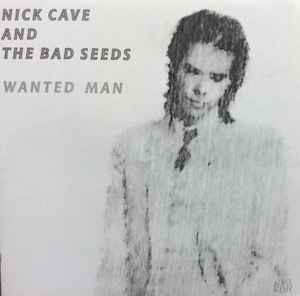
Dylan’s and Cash’s public acknowledgement of Cave’s talent and the admiration demonstrated, retroactively elevate the already unique cover of “Wanted Man”. In 1985, a year before Cave records Cash’s “The Singer” (actually: “The Folk Singer”) for the superb cover album Kicking Against the Pricks, he records “Wanted Man” with his Bad Seeds. Remarkably, by then he apparently has status enough to be allowed to change the lyrics; both Cash and Dylan reportedly gave permission.
Cave injects the song, of course, with suspense and drama. To begin with musically. First a hesitant, searching beginning of a lonely piano chord and a wavering guitar lick over which Cave gloomily sighs “I’m a wanted man”, and from 0’17” onwards a crescendo begins with theatrical claps on every beat: it promises to be a classic build-up to a devastating climax. Which just doesn’t come: the song keeps building and building and building… but the denouement just doesn’t come – capturing perfectly the neurotic, never-ending persecution mania of a wanted man.
Lyrically, there’s something going on as well; Cave boldly tinkers with the narrative. In the first three verses, he still remains fairly text proof. The wanted man is wanted in Buffalo and Old Cheyenne, in Albuquerque and Baton Rouge – we recognise the first twelve places from the Cash/Dylan original. Only at the end of the third verse does Cave allow himself a first, insignificant deviation;
Wanted man in Arizona, wanted man in Galveston
Wanted man in El Dorado, this wanted man's in great demand
… three locations coming of his own devising, announcing his first drastic text change:
If you ever catch me sleepin'
Just see the price flashin' 'bove my head
Well take a look again my friend
That's a gun pointed at your head
… the paranoia already suggested by the music is now also expressed more explicitly by the protagonist, compounded by the raw, gasping delivery. Lucy Watson and Nellie Johnson still want him, but now the “Boller Sisters” and “Kid Callahan” also join those bounty hunters, and Cave adds tragedy; I am
A wanted man who's lost his will to live
A wanted man who won't lay down
There's a woman kneelin' on my grave
Pushin' daisies in the ground
… unequivocally adding a deeper layer to the original. The following list of locations where he is wanted are all places with their own historical or discographical connotations: Windy City, Wounded Knee, Death Valley, El Paso, New York City, Laredo and Tupelo, after which the lyrics finally conclude with a tragic, heartbreaking denouement that is not offered by the music:
Wanted man in every cat house, wanted man in a many saloons
Wanted man is a ghost in hundred homes, a shadow in a thousand rooms
Wanted man down in St. Louis, wanted man in New Orleans
Wanted man in Mossel Bay, wanted man in Cripple Creek
Wanted man in Detroit City, wanted man in San Anton'
But there's one place I'm not wanted lord
It's the place that I call home
It is a plot twist with melodramatic overtones, but it brings The Other Man In Black lasting admiration of and acceptance by the two men at the top of Olympus, Johnny Cash and Bob Dylan.
——-
Jochen is a regular reviewer of Dylan’s work on Untold. His books, in English, Dutch and German, are available via Amazon both in paperback and on Kindle:
I have written about this song before, and it troubled me then. And it still troubles me now. It is a desperate reminder of the appallingness of aspects of our society, and yet cover versions of the song tend to treat it as a jaunty piece to be sung without any consideration of the lyrics.
But just consider them…
As I was out walking on a corner one day
I spied an old hobo, in a doorway he lay
His face was all grounded in the cold sidewalk floor
And I guess he’d been there for the whole night or more

Only a hobo, but one more is gone
Leaving nobody to sing his sad song
Leaving nobody to carry him home
Only a hobo, but one more is gone

A blanket of newspaper covered his head
As the curb was his pillow, the street was his bed
One look at his face showed the hard road he’d come
And a fistful of coins showed the money he bummed

Does it take much of a man to see his whole life go down
To look up on the world from a hole in the ground
To wait for your future like a horse that’s gone lame
To lie in the gutter and die with no name?
I’ve listened again to the recordings that there are available on the internet of other artists re-working this song, and I remain as appalled as ever as to how artists not lacking for talent can choose to take these lyrics and then deliver them without appearing to have any concern or interest in the story they tell. Why, if the lyrics mean nothing to you, would you record the piece? Just for self-aggrandisement?
How can anyone with any artistic integrity read that last verse and then perform it as a jaunty little piece that just fills a few minutes before the next number on the song sheet? It is quite beyond me.
In case you are interested I have written on this before and in an earlier article placed recordings of the songs that are the antecedents of “Only a Hobo” which I still think are worth hearing, if you have the time.
As for Dylan’s recording below however, it remains a clear statement of what he intended – if the lyrics were not enough to make this clear… And if you want another one, there is a second version available through the link above.
So as I have suggested, I really can’t bring myself to include other cover versions here because I think they show such total ignorance of what the song is about and such a lack of artistic integrity they make a mockery of the whole notion of doing a cover a Dylan song.
Except…
Except, as I have mentioned before there is one version that gets it. And it comes from a slightly unexpected source – but then the unexpected is what keeps me writing on this blog. And maybe it being unexpected is a reflection of my prejudice.
If you don’t know this recording I do hope you have time to listen. And if you do, I hope you’ll always have time to listen again.
Love and death be oft associated with each other in the poems and song lyrics by artists with a Romantic bent.
In the poem quoted beneath, no fear of death there be even with grave doubts about there being an Afterlife:
How well I knew the light before
I could not see it now
'Tis dying, I am dying
But I'm not afraid to know
(Emily Dickinson: I Am Dying)
Likewise expressed below, there’s scepticism about the existence of an ‘actual’ transcendental life after death:
Every nerve in my body is so naked and numb
I can't even remember what it was I came here to get away from
Don't even hear the murmur of a prayer
It's not dark yet, but it's getting there
(Bob Dylan: Not Dark Yet)
Below in the Gothic poem that’s “full of sorrow”, a person forsaken by the women he loves feels like he’s buried alive:
And haply the Queen-Moon is on her throne
Clustered around by all her starry Fays
But here there is no light
Save what from heaven is with the breezes blown
Through verdurous glooms, and winding mossy ways
(John Keats: Ode To A Nightingale)
In the following song, not so filled with sorrow, her leaving likened to a temporary death suffered by the one who loves her:
One more night, I will wait for the light
While the wind blows high above the trees
Oh, I miss my darling so
I didn't mean to see her go
But tonight no light will shine on me
(Bob Dylan: One More Night)
Far worse is getting blamed – falsely by others – for the death of a person (ie, Christ), and then consequently barred from an Afterlife should there be one:
I won't be with you in paradise
And it seems so unfair
I can't go to paradise, my love
I killed a man back there
(Bob Dylan: Spirit On The Water)
Nor is the poet quoted beneath concerned that the transcendental Afterlife isn’t like it’s depicted by orthodox Christianity:
Dead men naked they shall be one
With the man in the wind and the west moon
When their bones are picked clean, and the clean bones gone
They shall have stars at elbow and foot ....
And death shall have no dominion
No more may gulls cry at their ears
(Dylan Thomas: And Death Shall Have No Dominion)
Not only is it apparent the poet above steals from Bob Dylan’s name, but from the style and content of his song lyrics as well
As from:
Of war and peace, the truth just twists, it's curfew
gull it glides
(Bob Dylan: Gates Of Eden)
From this below too, Thomas thieves:
One day the man in the moon went home
and the river went dry
(Bob Dylan: Under The Red Sky)
Love and death, love and theft ~ that’s what it must be all about.
By Aaron Galbraith (in the USA) and Tony Attwood (in the UK)
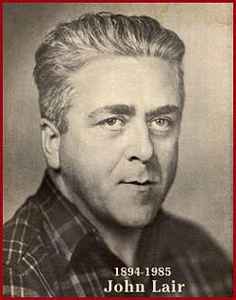
John Lair wrote this song for Red Foley, who recorded the song in 1934.
Lair is reputed to have written over 500 songs, as well as being a major player in promoting the music of Ohio and Kentucky.
He started collecting the music of his part of the United States in the 1930s and eventually became a music librarian, not least for his particular interest in relating the old songs to people’s way of life in earlier days, and the events that shapes the lives of individuals and communities.
The song was recorded by Roy Acuff in 1936 and 1947. Here is the 1947 version
Tony:John Lair was also well known for his harmonica work, although it is not heard on the recording at the top of the page. The effect of giving the feeling of the train moving along the tracks, which is very common in this type of music, works particularly well here.
And since I have done it before, I’m going to interject here with another freight train song – one that I heard along with Freight Train Blues, as a child. Not, I hasten to add, that I was brought up in Ohio or Kentucky – I was actually raised in Tottenham, north London, but still I heard music from all over, somehow.
Anyway, back to the script…
Aaron: Dylan later adapted it for his self-titled debut album (1962). The sleeve notes indicate that it was “was adapted from an old disk by Roy Acuff”. It features Dylan’s longest recorded note—over 25 seconds.
Tony: OK, my chance to add a bit more now, and that is Roy Acuff’s original version. This works in the UK, and I hope it is not blocked for copyright reasons in North America. I think it is worth a listen as it does give a clear indication of the basis from which Bob worked in generating his performance on that first album. The harmonica work in the instrumental break clearly leads onto Bob’s style of playing.
This recording was made in 1947. If you have a moment do play it all the way, if for no reason other than to hear the harmonica break before the final verse.
Aaron: Here are two recent versions I like a lot. First, The Local Honeys from 2015 album Little Girls Actin’ Like Men
Tony: What a hilarious title – “Little Girls, actin like men”. I love self-deprication like this, and especially in this case, as the recording combines the various elements of the traditional versions without simply going for speed. And the two voices in harmony for the chorus are absolutely perfect with the reference to the train’s whistle on “blues.” Especially as the singer doesn’t just hold one note but descends starting on the flattened 7th. It adds a feeling of the blues to a song that doesn’t really have too much blues in it. Fabulous harmonies too.
Aaron:The Peasall Sisters from 2014 album Home to You
Tony: And this time a really amusing cover. And what a sound with perfect harmonies and a racing accompaniment. My goodness, that is pure vocal talent to be able to do vocals like that. Just listen to what they do on “I got the freight train blues”. Most artists would just treat those words as just given reference to the title of the song, but these ladies do something else. I’m so glad you introduced me to this Aaron.
Wanted man in Albuquerque, wanted man in Syracuse
Wanted man in Tallahassee, wanted man in Baton Rouge
There’s somebody set to grab me anywhere that I might be
And wherever you might look tonight, you might get a glimpse of me
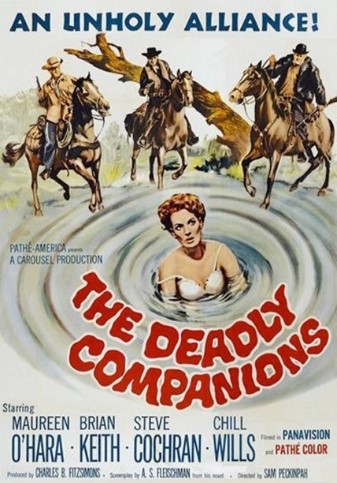
Peckinpah’s 1961 film debut, The Deadly Companions, was not a great success and would (rightly) have been long forgotten had “Bloody” Sam Peckinpah not become such a big name, later on. The second claim to fame is more impressive.
Despite the mediocre acting, clumsy editing and hideous soundtrack, Lowell George apparently endured the movie at least an hour: at two-thirds of the film we hear “Turk” (Chill Wills) say, “We’ll be able to burn a fire path through this country from Tucson to Tucumcari.” Lowell grabs his notepad and has a pillar for the song that will become one of his all-time greatest songs;
And I've been from Tucson to Tucumcari
Tehachapi to Tonopah
Driven every kind of rig that's ever been made
Driven the back roads so I wouldn't get weighed
And if you give me; weed, whites, and wine
And you show me a sign
I'll be willin', to be movin'
Back then, Lowell George is still a member of The Mothers Of Invention, but when Zappa hears the song, he knows he should say farewell and allow Lowell a career of his own. At least, that’s the romantic version. Other sources report that Lowell was fired for smoking marijuana. And on Little Feat Live at the Auditorium Theatre Rochester NY October 18, 1975, we hear Lowell tell us at the introduction, “I was in a group called The Mothers Of Invention and I got fired because I wrote a song about dope. How about that shit?”
Either way, it’s an out-of-category song, which is also recognised by the master; when DJ Dylan plays it in his Theme Time Radio Hour in 2008 (ep. 84, “Street Maps”), he appreciatively calls “Willin’” a “crowd pleaser that has grown to become a country classic”, and he puts his words where the money is: on stage, where Dylan plays the song ten times.
The pleasure with which Dylan sings the opening line of the chorus demonstrates his sensitivity to its magical euphony: I’ve been from Tucson to Tucumcari, Tehachapi to Tonopah. Place names that Lowell George may also have got from Hollywood, by the way; Tonopah is the setting for several episodes of the 60s series State Trooper, and in the classic The Maltese Falcon, Humphrey Bogart says: “Well, if you get a good break, you’ll be out of Tehachapi in twenty years and you can come back to me then.” A text adaptation that creates a full circle, coincidentally; in the source text, Dashiell Hammett’s book, the archetypal hard-boiled private detective Sam Spade says:
Spade said tenderly: “You angel! Well, if you get a good break you’ll be out of San Quentin in twenty years and you can come back to me then.”
It means nothing, of course. Lowell chooses the four city locations for their euphony – just as Cash and Dylan throw in two towns not on Cash’s tour schedule in the last stanza (all right, second-to-last, but the last is a repeat of the first stanza): Tallahassee and Baton Rouge.
Given its euphoniousness, it is a bit disappointing in how few songs Tallahassee is sung. Presumably, Dylan’s record cabinet still contains Bing Crosby’s “Tallahassee” (along with the Andrews Sisters, 1947), Nancy Sinatra’s “Sugar Town” naturally (I heard it also rained in Tallahassee), the rockabilly gem that by now does have a kind of evergreen status, Freddy Cannon’s “Tallahassee Lassie” from 1959, and Charlie Daniels’ “Cowboy Hat In Dallas”.
Yet another one of those city name-list songs, by the way, just like Tom Waits’ “Had Me A Girl” (And I had me a girl in Tallahassee), and also from the early 70s – list songs with place names are popular apparently, in those years. But “Tallahassee” has been confiscated, forever probably, by Bobbie Gentry, although she doesn’t actually sing it at all, of course; “Today, Billie Joe MacAllister jumped off the Tallahatchie Bridge” (“Ode To Billie Joe”, 1967)
“Baton Rouge” is even less fraught, despite similar euphony. Until 1969, when Cash and Dylan topographically fill “Wanted Man”, Louisiana’s picturesque capital was actually only mentioned in Chuck Berry’s “Back in the U.S.A.”;
New York, Los Angeles, oh, how I yearned for you
Detroit, Chicago, Chattanooga, Baton Rouge
Let alone just to be at my home back in ol' St. Lou
Did I miss the skyscrapers, did I miss the long freeway?
From the coast of California to the shores of Delaware Bay
You can bet your life I did, till I got back to the U.S.A.
… and in one of the Songs That Made Him Famous, the song Cash and Dylan play half an hour before “Wanted Man Take 1” at this same Columbia Studio A in Nashville, the song Dylan played with the men of The Band at The Basement two years before, and which will continue to appear on his setlist with some regularity well into the twenty-first century: Cash’s own “Big River” from 1958;
Now, won't you batter down by Baton Rouge, River Queen, roll it on
Take that woman on down to New Orleans, New Orleans
Go on, I've had enough, dump my blues down in the Gulf
She loves you, big river, more than me
It is a wonderful word combination with an irresistible rhythm and magical sheen of its own, batter down by Baton Rouge, and undoubtedly it still lingers in the studio air, when the men venture into the first take of “Wanted Man” half an hour later. After all, “All these songs are connected,” as Dylan says in his MusiCares speech in February 2015.
Kris Kristofferson hangs out there too, by the way, in Nashville, at Cash House and Columbia Studios. And that eloquent Baton Rouge seems to strike a chord with him as well – in these same days, Kristofferson writes his pièce de résistance “Me And Bobby McGee”:
Busted flat in Baton Rouge
Waitin' for the train
Feelin' nearly faded as my jeans
Bobby thumbed a diesel down
Just before it rained
Rode us all the way to New Orleans
… “Back In The U.S.A.”, “Big River”, “Wanted Man”, “Me And Bobby McGee”… Baton Rouge doesn’t unleash the worst, in the best songwriters of the 20th century.
To be continued. Next: Wanted Man part 6 (final): There’s one place I’m not wanted
Jochen is a regular reviewer of Dylan’s work on Untold. His books, in English, Dutch and German, are available via Amazon both in paperback and on Kindle:
Turn on your secret Untold Decoder Ring if you have been wise enough to purchase one.
While some Jewish authorities in the Holy Bible accuse Jesus of being possessed by Beelzebub, the mythological gods of the ancient Greeks and Romans are even more upset.
They accuse the Almighty God of the Hebrews and His Son of attempting to usurp the heavenly throne rightfully occupied by the immortal Zeus, the God of Thunder and Lightning, and his son Apollo.
That is, akin to Dionysus who is able to rise from the Underground each spring, the mortal human Christ is considered by these Judeo-Christian upstarts as eternal.
He’s able to exist both in and out of time; sired as He is by an immortal God Who covers Mary, the wife of Joseph.
Jesus Christ depicted as timeless in the Holy Bible:
His countenance was like the lightning
And His raiment white as snow
(Matthew 28:3)
Likewise thusly presented in the following song lyrics:
You were snow, you were rain
You were striped, you were plain
(Bob Dylan: Born In Time)
According to the Holy Bible, the crucified Christ comes back to life for a short time; then ascends to Heaven.
He promises to come back again to His earth-bound Bride soon.
However, according to the song above, things aren’t looking that good for her as she sits and waits anxiously for His Second Coming.
Expressed with a Poe-like dream-twist in the song lyrics beneath:
I feel alone in the hills of mystery
In the foggy web of destiny
You're still so deep inside of me
When we were born in time
(Bob Dylan: Born In Time)
https://youtu.be/JXjAfFYyymw
As below, the motif of the four basic transmutational elements of ancient alchemy
– earth, wind, fire and water –
appear often in many of the song lyrics by the singer/songwriter/musician:
And take me disappearing through
The smoke rings of my mind
Down the foggy ruins of time
Far past the frozen leaves
The haunted frightened trees
Out to the windy beach
(Mr. Tambourine Man)
Looking at just a handful of the many many cover versions of “One too many mornings” I am struck by the fact that I have inside me a notion of how this song should be performed. As a plaintive, calm, gentle piece – nothing more. And so attempts to add more to the song than this calm gentleness always leave me reaching for the off button. The song is about loss and sadness, and if the music doesn’t reflect that, then it takes the song to another place which really has nothing much to do with the lyrics.
After all the lines
When ev'rything I'm a-sayin'
You can say it just as good
are a stunningly overwhelming statement from the man who became the Nobel Prize winner as a result of this type of writing.
And of course my answer is “No Bob we can’t say it just as good, but I know what you mean”. And that response doesn’t leave much musical room for reinterpretation. It has to be calm, it has to be simple, it has to be reflective. It is just some people never quite got the message.
This first version I have chosen is not one that I like – but I have chosen it to try and show why. The arranger has changed the words, the chord sequence and the rhythm, to turn it into a bouncy country-ish song which takes away all the power from the original. This is only the same song in the sense that the lyrics are the same and so is some of the melody. As a result the power and force of Dylan’s original work has vanished. It has become trivia. And whatever the original is, it most certainly is not trivia.
And here again with Steve Howe we have another attempt to re-write the piece. Just listen to the descending four chords played in close proximity at the end of the verse, or the addition of the banjo part. These again have nothing to with the power and emotion portrayed by the simplicity of Dylan’s lyrics and the music in the original version of the song. As for the “woo woo” during the end of the instrumental, had this been a record I was playing rather than a recording from the internet, the disc would have gone out of the window, and the cracked remains left on the patio a floor below, as a testimony to what one should never do with a perfect song.
I could go on – including perhaps Abijah doing a reggae version but no, I have tormented my brain, and possibly yours, enough. Let us travel in a different direction.
This is what one should do if one wants to do a cover of this song – or at least it is one of many possibilities – in this case Siobhan Miller. The melody is changed slightly and of course so has the accompaniment. And yes there is an extra line added occasionally. Plus there are also additional instruments – but it all keeps the essence of the song. The reflection, the calmness, the sadness are still there. You’re alright on your side and I’m all right on mine, now once again means something. I love this.
Aaron wrote a really interesting review of the song and nominated a couple of performances to include. David Gray knows a lot about what songs actually mean and say, and this is no exception. He adds extras, but they are appropriate extras. OK I am not sure about the “Everybody knows” addition, but I’ll forgive him this as the rest really works because everything is kept under control.
But I want to finish with Stephen Inglis, and if all he had on offer was the introduction of this song, then that would be enough for me to include this version. Musically the opening minute is a complete calming statement which cools me down, and takes me back to the original lyrics, hearing them not as lyrics I know by heart but something I am listening to for the first time.
When ev'rything I'm a-sayin'
You can say it just as good
Well Bob, no that’s not quite true, as you well know. But thanks for the thought. On a bad day it is quite cheering to pretend it is 10% true.
She Belongs to Me is one of those songs to opens itself up to being performed in many ways at many speeds, with any sort of accompaniment one wants. Which is pretty amazing for such a simple song. Three chords, two lines of lyrics per verse, one of which is repeated and one can do so much with it.
And so given that functional description, it is easy to see why an arranger might be tempted to add violins, slow the whole thing down, and squeeze whatever one can out of the lyrics.
But not Bob. In this version, he not only takes it at speed but gives us two instrumental verses with the harmonica and then for good measure a strummed acoustic guitar solo, after which his voice changes and he appears to be in more reflective mood… before we have another instrumental break.
The whole re-working gives me new thoughts about the relationship described within the song: this is playful, joyful, adventurous and outgoing, rather than the reflective piece that “She Belongs to Me” had always been before hearing this.
And I find it interesting to contemplate how the title of the song changes its meaning in relation to the performance. The whole notion of the woman “belonging” to the man is not something I warm to; although from the very start the description of the free-thinking artist seems in utter contradiction to the relationship described or implied in the lyrics.
To me, what happens with this re-arrangement is that the vibrancy of the woman, her outgoing-ness, her artistry, her independence now come shining through in the music, making the “She Belongs to Me” title utterly contradictory.
What’s more the last verse highlighting the implication that she is a child now has much more power. I’m not really trying to suggest that this implication was not there before, but the joy and vigour in this approach makes it much clearer an implication than it was before.
The point I’m stumbling toward is that if the subject of the piece is a child then the joy of a child’s life and daily experience needs the vigour expressed in this rendition, rather than the original approach found on the album.