Nashville Skyline Rag (1969) part 3 (final): The long-haired hippies and their drugs


Nashville Skyline Rag

by Jochen Markhorst


III         The long-haired hippies and their drugs

 The Soggy Bottom Boys they call themselves, the unlikely folk sensation that breaks through like a bolt from the blue with “Man Of Constant Sorrow”, in the Coen Brothers’ enchanting love project, O Brother, Where Art Thou (2000). A band name, which, like many names and scenes in the film, kindly nods to a cultural phenomenon from twentieth-century America, in this case to the Foggy Mountain Boys, the backing band of legendary bluegrass duo Flatt & Scruggs.

Dylan is a passive but still destructive force in the duo’s career. After 20 highly successful years, during which traditionalist Lester Flatt’s resistance to his mate Earl Scruggs’ drive for experimentation and innovation continues to erode, something inside of Flatts dies, presumably during the recording of their last record together, 1968’s Nashville Airplane.

Scruggs and producer Johnston push through four Dylan covers: bluegrass versions of “Like A Rolling Stone”, “I’ll Be Your Baby Tonight”, “The Times They Are A-Changin'” and even “Rainy Day Women #12 & 35”. Meanwhile, the places of the former-familiar Foggy Mountain Boys have been taken by men who have just recorded Blonde On Blonde and John Wesley Hardin with Dylan, or will be heard shortly afterwards on Nashville Skyline and Self Portrait: Charlie Daniels, Bobby Moore, Henry Strzelecki and Kenny Buttrey. And in the producer’s chair these days is Dylan producer Bob Johnston. None of which Lester likes. In Bluegrass: A History (1985), the standard work by the eminently knowledgeable professor Neil V. Rosenberg, Flatt’s uneasiness is catchily, though not academically, articulated:

“Behind the scenes, Lester Flatt was very dissatisfied with their material; he didn’t like singing Bob Dylan and was disgusted by the long-haired hippies and their drugs. He refused to perform the new songs, and this became a source of contention between him and the Scruggses.”

… and the professor knows very well what he is talking about. In the liner notes of the compilation album Flatt & Scruggs (1982), he already incorporated excerpts from interviews with Flatt:

Lester Flatt felt uneasy with Bob Johnston: “He also cuts Bob Dylan and we would record what he would come up with, regardless of whether I liked it or not. I can’t sing Bob Dylan stuff, I mean. Columbia has got Bob Dylan, why did they want me?”

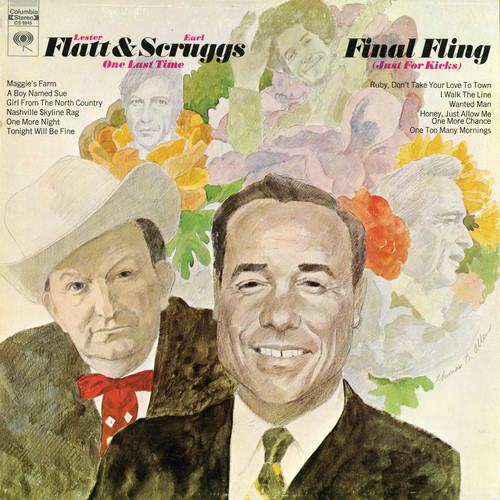
Scrolling back through the discography, however, we have to hand it to Lester: he has demonstrated a respectable amount of tolerance, he did put up with it for quite some time. From May 1966 to the last recordings with Earl in August 1969 (i.e. well after the release of Nashville Airplane, the recording sessions forming the second-to-last drop), he bowed his head no less than nineteen times, playing yet another one of those damn Dylan hippie songs. “Honey, Just Allow Me One More Chance” is, ironically, the very last one. Released on the album that hit shops after the irreparable break-up, as a kind of Let It Be: the aptly titled 1970’s Final Fling – One Last Time (Just For Kicks). With even more indirect Dylan input; SEVEN Dylan covers. And Dylan’s unofficial bandleader in Nashville, Supreme Nashville Cat Charlie McCoy, joined too (harmonica). It’s almost beginning to look like poor Lester Flatts was, in fact, bullied out.

You can kind of hear it too, with hindsight. From Lester’s vocals on “Girl From The North Country”, “Wanted Man”, “One Too Many Mornings” and “One More Night” drips dejection, some fatigue and reluctance, and only “Maggie’s Farm” seems to be able to light a flame. And, well alright, in the announcement of “Nashville Skyline Rag”, understandably the only Dylan song Lester really likes, we can actually hear a trace of enthusiasm:

Lester: “Earl, what’s the name of this tune”?
Earl: “The Nashville Skyline Rag.”

Earl, however, this much is clear, has long been a full-blooded Dylan fan. Which is also well illustrated in the 1972 documentary The Bluegrass Legend – Family & Friends. The recordings in that living room with Dylan and with Earl’s sons Gary and Randy are weirdly moving – not so much because of the music, which is fine, but because of the moments around it, because of the interaction of Dylan and Scruggs;

“Have you heard this latest version of your song Nashville Skyline Rag?” the meek Earl Scruggs asks, smiling shyly
“Yeah,” Dylan replies, appearing equally bashful.
“Could… could we just try that one?”
“Okay.”

Touching. As is Earl’s half-proud, half acknowledgement-seeking look and smile after the final chord.

https://youtu.be/crG4ZDRLVYE

Dylan & Scruggs – Nashville Skyline Rag (at 2’31”): 

The actually, by Dylan standards anyway, somewhat silly “Nashville Skyline Rag” remains quite popular with the peers – especially in country and bluegrass circles, of course. And surely this will be mostly due to the missionary work of giant Earl Scruggs. With Scruggs, the song remains on the repertoire, in his Earl Scruggs Revue, the band with his sons in which Dylan songs all remain a regular part of the setlist – the live album Live! From Austin City Limits from 1977 opens again with the Rag, for instance.

Banks & Shane (1975), J.D. Crowe & The New South (1976), Knoxville Grass (1977), Knoxville Grass (1978)… meanwhile, the next generation of bluegrass, alt-country , cowpunk and all its variants, long-haired potheads or not, keep “Nashville Skyline Rag” alive with recordings and live performances as if passing on a relay baton. Even into the generation after that; in the twenty-first century, it’s the children’s children, bands like Monroe Crossing, The Abrams Brothers and the David Grier Band, so that the song seems to be gradually becoming a kind of rite of passage; apparently, it belongs on your setlist if you want to count in bluegrass circles.

None of them add anything to the original. At most if the band happens not to have a banjo or mandolin, it sounds a nuance different (like Dan Whitaker & The Shinebenders, 2006), but otherwise, the dozens of covers in the twenty-first century are all equally enjoyable and utterly interchangeable. Which doesn’t bother anyone, of course.

———-

Jochen is a regular reviewer of Dylan’s work on Untold. His books, in English, Dutch and German, are available via Amazon both in paperback and on Kindle:


Posted in Uncategorized | Leave a comment

NET 2011 Part 5 – Quick man, I gotta run

An index to all the previous articles in this series can be found here.

By Mike Johnson

2011 is a stand-out year in the history of Dylan’s live performances. It is a fitting climax to a five-year movement that began in 2006 when Dylan moved from the piano to the organ, and is marked by some adventurous singing, not just his famous circus bark and growls but sustained notes with vibrato – Dylan the emerging baritone crooner. A singer preparing himself to take on Frank Sinatra.

The year also brings to fruition Dylan’s ongoing relationship with his other instrument, the harmonica. From 2012 on, that little instrument will begin to take a back seat as Dylan focuses his arrangements around his new love, the grand piano, and within a couple of years his harp playing will be mostly confined to a few bluesy blasts on a couple of songs per performance, mostly ‘She Belongs to Me’ and ‘Tangled Up in Blue.’

Perhaps the 2011 performance that best captures Dylan’s loving use of the harp is this remarkable, harp-driven performance of ‘Blind Willie McTell’ from Hong Kong (April 12th). I covered this song in NET 2011 Part 2, the Oberhausen performance, focusing on how he swung the song. That was a great rendition and I thoroughly recommend you to  check it out.

To my mind however, this Hong Kong performance must take the prize. It doesn’t swing with quite the same sassiness as Oberhausen but must be included as one of Dylan’s best ever harp performances.

Blind Willie McTell

‘Shooting Star’ is another song featuring the harp. This song had its heyday in 2005, was only performed twice in 2011 and would be last performed in 2013 after a single 2012 performance. It’s a song that powerfully yearns for love and salvation, an intensely emotional experience. This one is from Cardiff, October 13th.

Shooting Star

‘Till I Fell in Love with You’ has featured the harp since a remarkable performance in 2007 (See NET 2007 Part 1). It’s another song fading from the setlists. This one from Milan (June 22nd) is the sole 2011 performance, and we’ll see only two more performances in 2015. Pity, as it’s a great rocker. There’s a bit of harp work here, but it feels to me as if Dylan is losing interest in the song, at least in terms of providing scintillating harp breaks.

Till I Fell in Love with You

Sticking with the harp for the moment, we now have a final performance. ‘I Dreamed I Saw St Augustine’ had not been performed since 2005, and was only ever performed thirty-nine times. I can’t say what drew Dylan back to this song for this lone and last performance in Cork (June 16th), maybe the way it laments the darkness of a world without spiritual light.

I Dreamed I Saw St Augustine

In 2009 and 2010 we saw how Dylan stripped back some of his faster rock songs to their 1950’s style rock ‘n roll bones. While in 2011 Dylan was starting to build his arrangements back up again, we can still find some wonderful straight rock performances, like this version of the irreverent and mocking ‘Leopard Skin Pillbox Hat.’ (London,1st night) You can kick back to this one, do some foot-tapping, maybe even get up and dance. I’ll sound like an old fella and say they don’t make music like this anymore.

This is another song on its way out. It gets a fair hammering in 2012, but disappears after a single 2013 performance.

Leopard Skin Pillbox Hat

Let’s stay with that first London concert for what is perhaps one of Dylan’s most successful topical songs, ‘The Ballad of Hollis Brown,’ to be put alongside ‘The Ballad of Emmet Till’ and ‘Oxford Town’ as songs culled from newspaper items.

Maybe it’s the simple blues format that does the trick or that the ‘dust bowl’ feel of it means it could have come out of Woody Guthrie’s song book. It’s a pitiless portrait of poverty and a masterful narrative.

Dylan was to largely abandon topical songs, perhaps because they lose their relevance over time, but this bare-boned narrative achieves the kind of universality that transcends its immediate context. How many Hollis Browns are out there right now being pushed by poverty and desperation into violence? The song turns sixty this year, but it could have been written yesterday. It’s a pity that it’s on its way out, and won’t be performed after 2012. Donnie Herron’s banjo gives this performance a fittingly rural feel.

Hollis Brown

Thinking for a moment about the development of Dylan’s voice, his greatest instrument, this Milan performance of ‘When I Paint My Masterpiece’ is remarkable in the way it shows Dylan overcoming his circus barker voice with sustained notes and rich vocal tones.

There’s plenty of barking in here too, but the way forward is evident. To me the song reveals the struggle for artistic perfection in a messy, chaotic world. Fragments of memory and history vie with a surreal present. Dylan is on guitar here.

When I Paint my Masterpiece

Let’s pop over to Tel Aviv to hear this superlative performance of ‘Highway 61 Revisited.’ It’s a hard rock song, and is meant to be rough and rowdy and passionately disillusioned, however the more muted recording at Tel Aviv suits the song well. It pumps along in fine style, pulsing and throbbing, with just the right balance between recklessness and control. I don’t know about ‘best ever’ but I can’t think of a more compelling performance. It’s right on target when it comes to the immorality, madness and confusion of the world.

Highway 61 Revisited

Fast forward forty years from the writing of that song and we find another song, ‘The Levee’s Gonna Break’ that deals with the same immorality, madness and confusion of the world, and some climate disaster thrown in for good measure. When that levee breaks, chaos is let loose upon the world, the ‘levee’ being more than just river banks but a moral breakwater standing between us and mayhem. (Hamburg, 31st October).

Levee’s Gonna Break

We can draw a straight line from ‘Highway 61 Revisited’ through ‘Levee’s Gonna Break’ to ‘Thunder on the Mountain,’ although ‘Thunder’ is broader in scope. All three songs are lit with flashes of humour, a characteristic irreverence and mock posturing, flicking from the personal to the political to the cultural at dizzying speed. That dizzying speed is the point – the bedlam and tumult all goes by so fast you can’t grasp onto anything before it’s gone. (London, 2nd concert)

Thunder on the Mountain

Why stop there? We can continue that line through to ‘High Water’ (Odense 27th June) picking up on the uproar and turmoil as we go. Sounds like the levee’s already broken

high water risin', the shacks are slidin' down
folks lose their possessions and folks are leaving town

and there’s nothing or nobody to cling onto

Water pourin' into Vicksburg, don't know what I'm going to do
"Don't reach out for me, " she said "Can't you see I'm drownin' too?"

High Water

What a great performance, with that sharp, goading harmonica. Hard to beat.

We can keep drawing that same line right on through to ‘Summer Days.’ These lyrics could have come out of ‘Highway 61 Rev’:

Politician got on his jogging shoes
He must be running for office, got no time to lose
You been suckin’ the blood out of the genius of generosity
You been rolling your eyes—you been teasing me

As always with Dylan, the sunny side of love is hard to find.

Wedding bells ringin’, the choir is beginning to sing
Yes, the wedding bells are ringing 
                   and the choir is beginning to sing
What looks good in the day, at night is another thing

To my mind nothing betters the 2005 performances of ‘Summer Days’ and by 2011 the song sounds a bit muted, not quite as frenetic, but the band hits a fine jazzy groove in this Tel Aviv performance. The strength on the bass of Tony Garnier, the anchor of the band, stands out.

Summer Days (A)

Fans of the famous Crystal Cat recordings might prefer this one from the second London Concert.

Summer Days (B)

There’s a jauntiness to all five of these songs that belies their desperation. Jaunty desperation? There’s no rest along the way – quick man you gotta run. There’s crazy shit going down all over but you keep on keeping on, and you can always pick yourself up off the floor one more time.

It’s not pushing that line too far to extend it to ‘Rollin’ and Tumblin’’, another fast-paced kaleidoscopic rocker, although here the focus is more on the travails and tribulations of love than the larger pandemonium.

This one is from the 3rd London concert and is notable for its jazzy organ.

Rollin’ and Tumblin’

So what lies beyond the personal and political uproar we’ve encountered in the last six songs? Well…nothing. ‘Beyond Here Lies Nothin’’ might be the final realization. ‘Nothin’ done nothin’ said.’ I still hark back to the 2009 performance when Dylan went into a harp duo with a trumpet, and it sounded pretty wild. Here, in Odense, he’s on the guitar, but the message doesn’t change.

Beyond Here Lies Nothing

I’m going to finish in Odense with a change of pace and a last ever performance. ‘The Man in Me’ is hardly likely to feature in your best twenty Dylan songs list, but it is direct and heartfelt even though it doesn’t have the lyrical fireworks of the previous songs we’ve considered, and this is as good a performance as you’ll find. Like a lot of these NET songs, you don’t miss them till they’re gone.

The Man in Me

This ends my study of this powerhouse of a year, and Dylan’s adventures on the organ.

What to say about Dylan’s organ playing? Many fans hated it, there’s no doubt of that. Silly little dinky riffs ruined many songs, and the organ helped push the arrangements into the dumpty-dum. And yet… there are moments when the organ shimmers with that wild mercury sound or leaps about the keyboard with jazzy precision. Or pushes the rhythm along with solid vamping.

Right now, I gotta run, but I’ll be back soon with the beginning of new adventure in 2012, one that continues to this day – the grand piano man is about to be born.

Until then…


Kia Ora

Posted in Uncategorized | Leave a comment

NET: The absolute highlights – The Gates of Eden, (2000) how it should always have sounded

By Tony Attwood

When I first heard the recording of Gates of Eden I felt it was a great, great song, and I fully appreciated the performance on the album.  But I thereafter always had this feeling that it was, in reality, a much darker song than the one Dylan performed, lurking therein, held back, one day perhaps to be released.   I felt it would contain more gloom, with trails of smoke and fog drifting across the wreckage of the civilised world.

Just in case you can’t immediately call that original version to mind, here it is…  I am including it, not because I am suggesting that you should listen to it all (of course I can’t tell you what to do, any more than I know if you can conjure up a memory of what the original sounded like) but because I do feel it is helpful to hear it, at least in part, once again, before considering the presentation of a completely new “Gates of Eden”.

So here’s the one you’ll have heard a million times

And now I want to contrast this with “Gates of Eden” live, as performed in 2000.  In his first of several articles covering the Never Ending Tour for that year Mike wrote,

“We find some extraordinary and unparalleled performances in 2000, and I’m prepared to stick my neck out and say that some of these performances are Dylan’s best ever, and I’ll do my best to prove it.

“Take that mysterious song, ‘Gates of Eden’ which we have been following since the angry, electric version of 1988. (As a comparison, readers might like to check it out at NET, 1988, part 1 ). But no subsequent performance is as exquisitely spooky as this one. Whenever I want to hear this song, I play this.  It has a sense of spaciousness, and something very ancient…”

And yes I 100% agree with Mike.  In fact when I first put forward to Mike the idea of trying to write this series on my personal highlights from the tour, I almost began with this.  But then I thought, what on earth could I follow it with?

Gates of Eden

If there is one moment that symbolises the utter glory of this rendition it is the first instrumental break, followed by the return of Dylan’s voice in the “lonesome sparrow” verse.  Please make sure you are not doing anything else.  Turn off the lights, turn off the phone.  Just listen.

For this is not just a brilliant performance; it is the total reconstruction of the song in a way that says, “things were pretty bad when I first recorded ‘Gates’, by just look outside now – they are 10,000 times worse.

And more, for although I don’t ever believe that Dylan was a revolutionary trying to change the world, I think he is now saying – “We thought it was bad in 1965.   Well really, I  had no idea how awful it could get.  23 years later, and really is now all over.  There is nothing left.  There is nowhere to go.”

Utterly brilliantly, Dylan resists any temptation to take the song anywhere else.  When all is desolation beneath a seemingly uncaring God, or maybe other beings locked inside the Gates, there is nothing left to say.

On a more prosaic technical point, two verses are missing: the motorcycle black Madonna and the kingdoms of experience, replaced in effect by the extra harmonica solo.  I don’t think it matters, although I would have liked to have heard the whole set of verses, simply because I want this performance to go on and on.

I am left knowing that all of us on this earth are outside a paradise in which the gods take their ease, caring nothing for us or our disintegrating world.   And why should they – all we have is a life, and then a death.  That is all; for the likes of me, there is no paradise hereafter.  I live, I will die.

It is not a comforting vision, and not one that I particularly want to carry round with me – and fortunately for me I have activities I can get on with, that mean my mind goes elsewhere.   Yesterday I walked for six miles with friends across the windblown Northamptonshire countryside.   Tonight I shall be in Derbyshire dancing.   I pass my days writing, walking, dancing, and being with my friends, and I need all of that, because if I thought too much about this song, and this particular performance of this song, there would be nothing more to live for.

It is probably the most terrifying artistic performance I have ever come across.   Fortunately having now written this, I can move on, do some work, and welcome my pal who normally pops round on a Friday afternoon as we compare thoughts on what sort of a week it has been…. Hopefully by then I’ll have pulled myself back together.

Previously on “The Never Ending Tour, the absolute highlights…”

Posted in Uncategorized | 5 Comments

Other people’s songs: Early Morning Rain.

by Aaron Galbraith and Tony Attwood

Aaron: Early Morning Rain is a song by Canadian singer-songwriter Gordon Lightfoot. The song appears on his 1966 debut album Lightfoot!

Tony: It is amazing to hear the original version after all these years.  This must be one of the most recorded songs ever.   I’ve just looked it up on Wiki and it says

“Lightfoot wrote and composed the song in 1964, but its genesis took root during his 1960 sojourn in Westlake, Los Angeles. Throughout this time, Lightfoot sometimes became homesick and would go out to the Los Angeles International Airport on rainy days to watch the approaching aircraft.  The imagery of the flights taking off into the overcast sky was still with him when, in 1964, he was caring for his 5-month-old baby son and he thought, “I’ll put him over here in his crib, and I’ll write myself a tune.”  Early Morning Rain was the result.”

I love the restrained accompaniment – thank goodness the arranger didn’t try and milk the emotion by bringing the strings forward – it is restrained and utterly perfect as it is.  And yet although it is really well-known, it has never been a gigantic hit… just one of those songs that is always there.

Aaron: Dylan’s version came from 1970s Self Portrait

Tony: A totally different rhythm from Bob, and his voice is totally suited to this style, and the feelings of this song, although I think there is a little too much detail in the accompaniment; I could do with something simpler.  But as always that’s just me.

Indeed I am also not sure about the harmonica against the various other instruments playing… and I just get a feeling it could be a little slower.  Mind you as I get older I think almost everything could be played a little slower.

I’ve just gone back to the Gordon Lightfoot recording and replayed that and there is some extra freshness and directness in his recording which Bob doesn’t capture, I feel.

Aaron: Paul Weller included the track on his 2005 album Studio 150, the single reached No. 40 in the UK Singles Chart

Tony: Not sure of those quickfire notes at the very start, nor the change of second chord – and overall although it is a pleasant listen, it doesn’t deliver to me the intensity of the emotions that Gordon Lightfoot’s recording does.   But maybe this is unfair…. I hadn’t heard the song for a few years before I played the first version above, and now I’ve heard three versions in the space of 20 minutes.

But whoever added that sound effect after “might engines roar” should be taken out and shot.  Don’t even wait for dawn, do it now.  Sacrilege at this degree should be punishable…

Indeed I think the musical director must have thought the song was going on a bit and needed something to keep up the listener’s interest.   To which I can only reply, “Arghhhhh”.

However, these are just my immediate thoughts….

Aaron: Billy Bragg closed out his 2016 album Shine A Light: Field Recordings From The Great American Railroad with his version

Tony: Now this I like.   Oh yes I really, really do.   I like it because the singers and arranger have worked to take the song to another place – and it is a place that I think really works in keeping with this song.   The harmonies are very unusual, and very much in keeping with being stuck here on the ground where the cold winds blow.  Indeed I’ve never heard a version that gets inside the emotional meaning of the song in the way this does.

In fact I would say this is a truly remarkable arrangement and performance all the way through.  They carry the deep sadness of the lyrics throughout, in the way many others don’t bother to consider.

This old airport's got me down, it's no earthly good to meAnd I'm stuck here on the ground as cold and drunk as I can beYou can't jump a jet plane like you can a freight trainSo, I'd best be on my way in the early morning rain

I think I do tend to focus on songs more intently than most people, and I know I am a highly emotional person compared to many, and this last version of this song has totally taken me apart.   And maybe that is just me, but this final version of this wonderful song really is something to be treasured and played again and again.


Posted in Uncategorized | 5 Comments

Dylan: how the music and the lyrics make the song. 2: Desolation Row

Previously…

by Tony Attwood

Analyses of “Desolation Row” by and large focus on the lyrics.  And there are a lot of lyrics to analyse: 670 words or thereabouts.   And the key we have to understanding these lyrics is not just “Desolation Row” as a title, but also the music.

For this is a song about emptiness, loss, bleakness, grimness, loneliness, remoteness, isolation, hopelessness… accompanied by a rather jolly fairly simple tune with which, as the examples at the end hopefully show, one can do anything.

But the opening lines are a contrast to this music, they speak of selling postcards, the beauty parlour, and the circus, before we come to a the blind commissioner and the riot squad.  And meanwhile into these lyrics there creeps a madness in concepts such as “sniffing drainpipes and reciting the alphabet.”

Yet throughout all this the music is, well, fairly positive.  Negative emotions such as fear and sadness are normally expressed in minor keys or at least with minor chords, along with dramatic sounds from the band or orchestra, discordant noises rather than the jaunty tune we have here.

But jauntiness is what we get in Dylan’s original recording: it is a very pleasant melody based around the three major chords of the key, no minor chords, no discords, no feedback, no aggressive percussion, indeed nothing sudden at all.  It is gentle.  Unchanging.  And here’s a thing: just to emphasise this point, there is no percussion.

And for me, it is with listening to other people’s versions of the song, where for example sometimes one gets more energy with percussion, and extra accent on certain words, that I can more readily perceive what Dylan has done.    So that when we go back to the early acoustic versions we really can hear the essence of what Dylan was aiming for once he dropped the original notion of an electric version.  (I think the guitar is re-tuned to “open tuning” get the effect of depth that he delivers here, while in the album version this is not the case).


Wiki reports that “the song was initially recorded in an electric version. The first take was recorded during an evening session on July 29, 1965,[3] with Harvey Brooks on electric bass and Al Kooper on electric guitar. This version was eventually released in 2005 on The Bootleg Series Vol. 7: No Direction Home: The Soundtrack.”    And this adds quite a lot to my understanding of the song – for without this knowledge it could be argued that Dylan always saw it as a gentle non-electric song.   Instead, it appears that it was only on trying the song out he perhaps realised the vast contradiction between the lyrics and the music is greatly enhanced when the song is performed as an acoustic piece.

The impression I get is of society (in terms of co-operation, caring for each other etc) having ended, civilisation has broken down, and there is nothing left.  No electricity, no support, nothing.   It is reminiscent of post-doomsday science fiction stories of the 1950s where human kind is living in the wreckage of the past.

Wiki also reports that “When asked where “Desolation Row” was located, at a TV press conference in San Francisco on December 3, 1965, Dylan replied: “Oh, that’s some place in Mexico, it’s across the border.”   Apparently, Al Kookper suggested it was part of Eighth Avenue, others see it related to Kerouac, “Desolation Angels”.  I see it as nowhere and everywhere.

But just as there have been attempts to see Desolation Row as an actual place, so there have been multiple attempts to link the lyrics of the song to real events. Most powerfully, Polizzotti, and other critics, have connected this song with the lynching of three black men in Duluth.  The men were employed by a travelling circus and had been accused of raping a white woman. On the night of June 15, 1920, they were removed from custody and hanged on the corner of First Street and Second Avenue East. Photos of the lynching were sold as postcards.    Dylan’s father, Abram Zimmerman, was eight years old at the time of the lynchings and lived only two blocks from the scene. Abram Zimmerman passed the story on to his son.

And that may well be true – but my point here is that the meaning Dylan gives to the piece does not come just from those lyrics, it comes from the gentle, constant nature of the music which tells us that life goes on, and on, and it can be pretty horrifying, but somehow because it is always there, we get used to it.  Thus the line that “No one has to think too much about Desolation Row” takes on a powerful central meaning, when the music is taken into account with the lyrics.

And so as the characters slip in and out, but there is a constancy within the song as the music stays pretty much the same, while the horror show slips by in the lyrics.  We are made immune to what is happening out there because it is out there every day – but it is still there.  

In this view of the song there is thus no point shouting about the life that Dylan describes any more than it is worth my while shouting out about the three giant trees at the end of the my garden that I watch day after day as I sit and write.  The sun, the snow, the rain,  it all comes and goes and everything is pretty much the same.  In such a world one begins to accept everything that is here, and everything that happens.  Emotions and energy drift away.  The sun rises, the sun sets.  It rains, it snows.  We don’t particularly notice, because this is how it is.

Change the music however and the song becomes something quite different.   Which is to say that the meanings and emotions carried within the lyrics and not just based on the lyrics themselves but are also determined by the music that accompanies them.  And indeed it can be argued that the song is thus 11 minutes long in order to express the constancy of a world of horrors sited all around us.

For me the 1966 recording above is superb because the music does give us this contrast between the acceptance of life around, and the life itself.  The original album version does the same.    Being gentle and pretty much unchanging these two versions say, “there’s the horror show out there, it never changes.”

Which is rather a profound thought given that Dylan was seen as a protest singer, which as I have often argued before, he wasn’t.   Indeed as I’ve noted so often, “Times they are a changin'” is not a protest song, but a song that actually says, the world changes, it happens, it’s nothing to do with what people do – it just happens.   “Desolation Row” says life is awful, but somehow we just carry on.

Put the two messages together and we have a vision of humans just meandering through a world, letting everything just happen around them.  It gets better it gets worse, it’s not much to do with us.

All such meanings however are lost when the song is transformed and the original music is lost.  Just try these for size…


In the end Desolation Row is not a place, it is a state of mind, experienced within a disintegrating world.   And that is what the original music and the lyrics tells us.

Posted in Uncategorized | 6 Comments

Nashville Skyline Rag (1969) part 2: Some of the names just didn’t seem to fit


by Jochen Markhorst

II          Some of the names just didn’t seem to fit

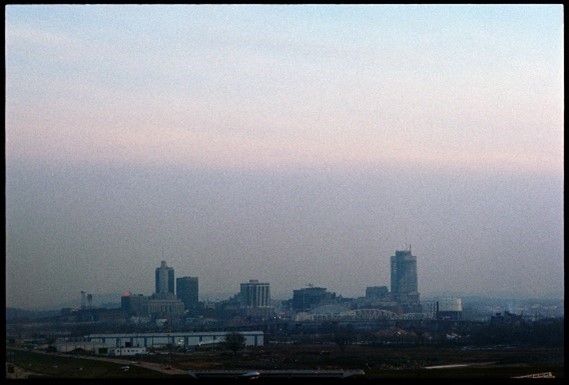
On 9 April 2019, the trustees of the Al Clayton Photography estate post on social media the photo that graces the back cover of Nashville Skyline. With explanatory text:

“50 years ago today the Nashville Skyline album was released. Al shot the back cover. Story: Al had heard Dylan wanted a certain “look” for the back cover. We have recently discovered all of the slides he shot while searching for “the” image. […]. When Al saw this one, he went to Johnny Cash’s home. There was a party going on. Dylan was there. Al walked up and placed this picture on the table and asked “Is this what you’re looking for?” The rest is history.”

Interesting enough, but it still leaves plenty of question marks. Clayton selects one of his photographs, in the apparent belief that this is “the certain look” Dylan is looking for – the famous photo with the Nashville skyline. Which suggests that Clayton already knew the album’s title. Which in turn suggests that the album was named after the song “Nashville Skyline Rag” (and not the other way around).

Dylan’s own statements about the title choice don’t clarify much either, but they do clarify something. In the lengthy 1969 Rolling Stone interview, Jann Wenner explicitly asks about it, shortly after Dylan reveals that an initial title was John Wesley Harding, Volume II, and that the record company wanted to call the LP Love Is All There Is. Which is killed by Dylan with the enigmatic, self-contradictory argument, “I didn’t see anything wrong with it, but it sounded a little spooky to me.” Yes, but where then did the final title Nashville Skyline come from, Wenner wants to know;

“Well, I always like to tie the name of the album in with some song. Or if not some song, some kind of general feeling. I think that just about fit because it was less in the way, and less specific than any of the other ones there. Certainly couldn’t call the album Lay Lady Lay. I wouldn’t have wanted to call it that, although that name was brought up. It didn’t get my vote, but it was brought up. Peggy Day – Lay Peggy Day, that was brought up. A lot of things were brought up. Tonight I’ll Be Staying Here With Peggy Day. That’s another one. Some of the names just didn’t seem to fit. Girl From The North Country. That was another title which didn’t really seem to fit. Picture me on the front holding a guitar and Girl From The North Country printed on top. [laughs] Tell Me That It Isn’t Peggy Day. I don’t know who thought of that one.”

It really looks like Dylan is sucking the second part out of his thumb on the spot here. At least, it seems very unlikely that all those Peggy Day variations were actually serious proposals. The first part of his answer, though, “I always like to tie the name of the album in with some song. Or if not some song, some kind of general feeling”, sounds very plausible. After the corniness of the trite, embarrassing album title Another Side Of Bob Dylan, so from Bringing It All Back Home onwards, Dylan reserves the right to name his own LPs. And indeed, the four albums since then do express a “general feeling”, or are “tied in with some song”, and in half the cases both at the same time (Highway 61 Revisited and John Wesley Harding). Just as Nashville Skyline both is “tied in with a song” and expressing a “general feeling”.

Fine choice of title, then. Which Dylan unfortunately undercuts a bit himself with the continuation of his motivation: “It was less in the way” – more or less dismissing the motivation for choosing Nashville Skyline as: the least bad of even worse options. Incidentally, he is of course right to disqualify candidate album titles like Lay Peggy Day or Girl From The North Country as “awkward, in the way”. But surely Nashville Skyline is an excellent, apt, original title. Better at least than other extremes like Planet Waves and Empire Burlesque, to name just two – after all, Dylan misses as often as he hits the mark, with his album titles.

The most likely scenario, all things considered, is that on Monday afternoon, 17 February 1969, producer Johnston asks: “What do you want to call it?” after recording the instrumental they had just improvised. He needs some title for the recording sheet. The inimitable Norman Blake just turned those few chords and “that little melody” into a splashy rag.

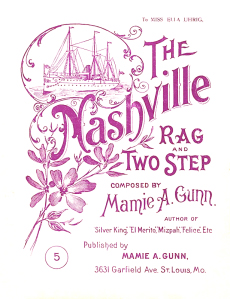
“Nashville Rag?” Dylan tries, not too imaginatively. “Already exists,” ragtime expert Norman Blake will presumably object (and he’s right; “Nashville Rag” was written by legendary female ragtime pioneer Mamie Gunn back in 1899). “Just make it Nashville Skyline Rag then,” says Dylan, after taking a quick glance outside, meanwhile trying to think of how the chords of the next song, “Tonight I’ll Be Staying Here With You”, went.


To be continued. Next up Nashville Skyline Rag part 3: The long-haired hippies and their drugs


Jochen is a regular reviewer of Dylan’s work on Untold. His books, in English, Dutch and German, are available via Amazon both in paperback and on Kindle:


Posted in Uncategorized | 2 Comments

Tarantula Files: Zevon and Rip Van Winkle


by Larry Fyffe

Warren Zevon, a singer/singwriter greatly influenced by Bob Dylan.

William Blakes’s “Marriage of Heaven and Hell” can be taken as a parody of Emanuel Swedenborg’s “Heaven And Hell”; in Blakean poetry, few are capable of escaping from their dark worldly beginnings into the pure light of spiritual heaven.

Bob Dylan’s “Tarantula” can be be taken as a parody of Existentialist writers ~ such as William Burroughs who authors ‘Naked Lunch”;  books wherein humankind’s stuck, like a buzzing fly, on the clueless pages of life and death ~ from which there is no escape.

Existence is depicted as a philosophical spider web –  a snare in which singer/songwriter/musician Bob Dylan refuses to get caught:

My existence led by confusion boats
Mutiny from stern to bow
Ah, but I was so much older then
I'm younger than that now
(Bob Dylan: My Back Pages)

That is, life’s more than mere existence upon a meaningless brink which all mortals sooner or later are doomed to flow over; down into a deep and dark abyss.

Though it might be construed as presented so in the lyrics beneath, life is not designed for those who are zealous hedonists:

Yo-ho-ho, and a bottle of rum
Hoist the mainsail here I come
Ain't no room on board for the insincere
You're my witness, I'm your mutineer
(Warren Zevon: Mutineer ~ Zevon/Aldrich)

Nor is life a comical absurdity, albeit it can be imagined filled with Gothic black humour, often involving horrible creatures such as headless ghosts:

And he would have passed a pleasant life of it ...
if his path had not been crossed by ... a woman

(Washington Irving: The Legend Of Sleepy Hollow)

The gothic story above akin to the one featured in following song lyrics.

About a paid-for “freedom fighter”:

They can still see his headless body
Stalking through the night
In the muzzle flash of
Roland's Thompson gun
(Warren Zevon: Roland The Headless Thompson Gunner ~ Zevon/Lindell)

Humorous irony abounds in such Postmodern laments ~ below, both George Orwell and the Committee of Un-American Activities chase after the Little Tramp who’s come down off the silent movie screen:

& you say "no i am a mute"
& he says "no no i've told the others 
you were Charlie Chaplin
& now you must live up to it 
- you must!"
(Bob Dylan: Tarantula)

Mysterious for sure the figurative winds of existence be, but, mamita mia, rather dangerous they are for those unwary of the driving force Friedrich Nietzsche calls “the will to power”.

That is, the iron wheels of freedom can just as easily spin in cycles rather than move progressively upward:

And them Caribbean winds still blow 
from Nassau to Mexico
Fanning the flames in the furnace of desire
And them distant ships of liberty
On them iron waves so bold and free
Bringing everything that's near to me 
Nearer to the fire
(Bob Dylan: Caribbean Wind)


Rip Van Winkle

Now the chimney is rotten
And the wallpaper is torn
The garden in back
Won't grow no more corn
The windows are boarded
With paper mache
And even the dog just ran away
(Was Brothers: Shirley Temple Doesn't Live Here Anymore ~ 
     Bob Dylan, et. al.)

Gloomy Washington Irving joins the parade of pilgrims marching to New York City:

(I)t couldnt've been more'n a few hours later
when I happened  to be passing by again
- in the spot where the tree was, a lightbulb factory now stood
- "did there used to be a guy up in the tree?"
I yelled up to one of the windows
(Bob Dylan: Tarantula)

Below, Irving’s sorrowful sentiment expressed headlong in the dust:

Where are the men that I used to sport with
What has become of my beautiful town
Wolf, my old friend, even you don't know me
This must be the end, my house is tumbled down
(Bob Dylan: Kaatskill Serenade ~ Bromberg)

Below be mentioned West Coast Hollywood; and the founder of the Beach Boys:

Play it for Carl Wilson, too
Looking far, far away down Gower Avenue
(Bob Dylan: Murder Most Foul)

The above quote alludes to the following –  lyrics darkly concerned with the passage of time:

Don't the sun look angry through the trees
Don't the trees look like crucified thieves ....
Look away
Look away down Gower Avenue
Look away
(Warren Zevon: Desperados Under The Eaves)

Which in turn draw upon the somewhat more uplifting lyrics beneath:

Don't the moon look good, mama
Shining through the trees ...
Don't the sun look good
Going down over the sea
(Bob Dylan: It Takes A Lot To Laugh, It Takes A Train To Cry)

Nevertheless, a horrible ghost, a symbol of death, haunts the land:

Roland aimed his Thompson gun
He didn't say a word
But he blew Van Owen's body
From here to Johannesburg
(Warren Zevon: Roland The Headless Thompson Gunner - Zevon/Lindell)

The ghost oft headless:

Just then he saw the goblin hurling his head at him ...
It encountered his cranium with a tremendous crash
- he was tumbled headlong into the dust ...
(Washington Irving: The Legend Of Sleepy Hollow)
Posted in Uncategorized | Leave a comment

How most analyses of Dylan’s songs mistake the essence of what the songs are

By Tony Attwood

From what we know about Bob Dylan’s creativity in relation to the world of song writing, for him, songs just happen – they emerge as songs, and then are, as often as not, subject to change, sometimes quite considerable change.

And a key point here is that they “emerge as songs”, not as poems to which music is added later.  Nor are they merely instrumental pieces to which lyrics are a secondary element.  For it seems that for the most part the various elements within the songs (melody, rhythm, chord sequence, tempo and lyrics) emerge together or in close proximity and then are varied as the song itself evolves both in the immediate writing stage, and then later as Dylan returns to the song in preparation for a new version offered on tour.

Of course Bob might start with a chord sequence and a rhythm, and then find a melody that fits over them, at which moment he might also find some lyrics, so in that sense there is a sequence in the writing.  But my point is that it is a sequence of events that happen in close proximity, as part of the complete evolution of the work as a whole.

Obvioulsy there can be exceptions – I am not saying every song is written in the same way, but by and large no matter how much I look into the subject, listening to all the recordings of songs that we have as they evolve before the final album version is delivered, and listening to them again as Dylan varies the works over time in performance, I always reach the same point: music and lyrics evolve together.  They are entwined and are of equal importance.  They evolve and develop as elements within the same work of art.

And yet when I come to read commentaries on Dylan’s work, despite the obviousness of what I have noted above, most of these commentaries focus almost 100% on the lyrics, maybe with just a note about which musicians are involved.

There are of course exceptions, and indeed there are notes about who is playing on the recorded tracks, and comments on verses missed out and lines changed, but for every 1000 words examining the lyrics and their supposed meaning, there is maybe one sentence on the evolution of the music or the music’s interaction with the lyrics, beyond noting changes in the personnel on stage or in the studio.

And yet Dylan writes songs, not poems, as is patently obvious.  Yet surely, if the lyrics were by far the most important thing to him, Dylan would write poems not songs.

Of course one could argue that the music is merely a vehicle to bring the poems to the audience’s attention, but if that is the case it seems strange that so much attention is paid to the “vehicle” by Dylan, with him re-writing the music regularly, changing the musical content of songs from one tour to another.  It’s not something that happens in a few moments – those re-writes need to be created and rehearsed, and it all takes time.

Now it could also be argued that as a songwriter Dylan can bring his verse to a broader audience than if he were just a poet, and that is the only function of the music.   And in the first regard that is undoubtedly true – Dylan as a poet would be less known than he is now as a songwriter.  But Dylan spends so much energy on his music, creating it and re-creating it over and over, I feel that any attempt to argue that his primary concern is the lyrics and that the music is just an add-on, really needs a lot of evidence to sustain it.

Indeed it seems to me much more likely that such an argument is simply an excuse for focussing on the lyrics.  For the obvious fact is that Dylan is a songwriter who gives us original music and original lyrics in equal measure.  It is the commentators who have chosen to focus on just part of what Dylan offers because of their lack of ability to comment on the music.

Thus I would argue that Bob Dylan writes songs in which music and the lyrics are of equal value.  It is the commentators who have chosen to ignore 50% of his work much of the time, focussing totally on the lyrics or the personnel in the band.  And I would argue that they do that either because that is because that’s what everyone else does, or because they don’t know much about music.

And thus I would suggest that these commentators have been kidding us, focussing only on the lyrics to hide their own profound lack of knowledge of music and their equal lack of ability to write about music as music.  In the end they are reduced to considering music as background, not because that is what it is, but either because that’s what everyone else has done, or because it is all they know how to write about.

Yet the obvious conclusion, in terms of considering what Dylan actually does, must be that in order to appreciate and understand Dylan’s work we need to consider both lyrics and music in equal measure.

My guess is that Bob Dylan, like so many creative people, has an inner need or drive to be creative, and that need is unrelated to fame, money, or wish to change the world.   Rather it is simply this overwhelming need to be creative – and for him that creativity is expressed primarily through the writing and performing of songs.  Not the writing of poetry.

This then is my starting point in understanding Dylan’s work, and it leads of course to a rejection of the validity of commentaries that focus on the lyrics alone.   For when one does this, one misses out on much of what is happening as Bob Dylan re-writes his songs.  For he often is re-writing both the music (changing melody, tempo, chord structure, and accompaniment at will) and the lyrics, (changing occasional lines, omitting verses, adding verses…)

As we know Dylan also engages in other art forms too – novels, physical constructions, paintings etc, and it is interesting that no one seems to feel that in discussing these art works, that the work can be considered properly by cutting the work of art into its constituent elements, focussing on one bit, and then drawing a conclusion from that.

And yet that is exactly what many writers do in considering Bob Dylan as a songwriter.  They focus on the lyrics, not on song.  A similar approach to Bob as a painter would be to focus on what he paints, or the colours he uses, rather than the paintings as complete entities.

From this starting point, I conclude that most commentators on the music of Dylan get it utterly wrong, because they consider one part of Dylan’s work (the lyrics) to be of primary importance where there is no evidence at all that this is how Dylan sees it.   As a result much of the commentary on Dylan’s work is in my view, utterly incomplete and because of that it misunderstands what Dylan is communicating.

In future articles, to illustrate my point, I’m going to have a go at writing reviews of Dylan’s songs which overcome this deficiency, and consider the music and the lyrics equally, and hopefully do so in a way which might be of interest to both musicians and non-musicians alike.

Posted in Uncategorized | 4 Comments

A Dylan cover a day: Quit your lowdown ways, backwards in time

By Tony Attwood

This first version is by Dave & The Biscuit Rollers, a band whose style is known as “high-powered bluegrass music.”   And yes it is.  It’s a really fun mix of harmonies, excellent harmonies and just plain fun.  I really love it.  In fact it makes it quite clear that you need quality musicians to make this work.

Also someone had fun finding pictures of dissolute behaviour throughout history – and a few other odds and ends.

And the great thing about the song is that it has so many possibilities.  Take this for example

And yet another variation – and what I really enjoy is the fact that each one of these interpretations works in its own way without feeling it has been forced out of the original.  Each could be, in fact, where the song started from.

For reasons that will not become clear at this time I’m working backwards in time with these covers.    I don’t particularly remember the Hollies with great affection – but really maybe I ought to be re-assessing them if there is much more in their back catalogue as good as this…

Which leads us all the way back to Peter Paul and Mary – and yes this too is great fun with the harmony and speed working together perfectly.

And actually going backwards in time has a purpose because unless you have a perfect memory for everything Dylan has done, it can come as a little bit of a surprise just what Bob himself did with the song.

Actually it makes me think – maybe going backwards through the covers is not at all a bad idea.


Posted in Uncategorized | Leave a comment

Nashville Skyline Rag (1969) part 1: “Do what you want to do”


A month ago, Jochen’s book on “Nashville Skyline” was released. In English, German and Dutch. It is available on Amazon: Nashville Skyline: Bob Dylan’s other type of music (The Songs Of Bob Dylan): Markhorst, Jochen: 9798377036241: Amazon.com: Books
Here on Untold, we publish the three-part series on “Nashville Skyline Rag” from it.


by Jochen Markhorst

I           “Do what you want to do”

“Nashville Skyline Rag,” Jann Wenner asks in the 1969 Rolling Stone interview, “was that a jam that took place in a studio or did you write the lyrics before?”

Which is a bit of a difficult question. After all, the song has no lyrics. Dylan is polite enough not to correct him: “Umm…. I had that little melody quite a while before I recorded it.” Still, Wenner’s curiosity is nonetheless not misplaced and in fact understandable; “Nashville Skyline Rag” does sound as if it was mainly improvised on the spot. Plus: Dylan has never released an instrumental song on record before; indeed, something is a bit odd about the song.

Civilised, likeable, a little awkward, intelligent and prone to well-dosed pinches of self-mockery, plus some mild irony at times – the image that rises from interviews with “Spider” John Koerner over the decades is pretty constant. Totally in line with this is also the answer he gives when asked for his opinion on all those particularly nice things Dylan says about him in Chronicles:

“Well, I’ve read the book,” says John, “and sometimes what I see is either he’s got a better memory than I have or he’s making stuff up. It could be either way. Because some of that I don’t remember all that well, but it doesn’t mean it didn’t happen. But the general sense of it is correct.”
(fRoots 325, July 2010)

… with which Koerner very civilly hints that Dylan is not too particular about factual matters. Incidentally, this will not so much concern the passages in which the autobiographer comments on his old friend’s character and appearance: “Koerner was tall and thin with a look of perpetual amusement on his face. We hit it off right away. When he spoke he was soft spoken, but when he sang he became a field holler shouter. Koerner was an exciting singer, and we began playing a lot together.” But presumably Koerner’s surprises included the songs he would have played to the young Dylan. “I learned a lot of songs off Koerner,” Dylan writes;

John played “Casey Jones,” “Golden Vanity” — he played a lot of ragtime style stuff, things like “Dallas Rag.”

Koerner does have a huge repertoire, that much is true. Both solo, and with Dylan’s mate Tony Glover, and as a member of the legendary trio Koerner, Ray & Glover recorded dozens of songs, all of which we find again on Dylan’s set and track list. Either one-on-one or re-worked or paraphrased.

“Delia”, “Froggie Went A-Courtin'”, “When First Unto This Country”, “The Days of ’49”, “St. James Infirmary”, “Danville Girl”, “Corrina”… and that’s just a fraction of the songs whose echoes we hear back with Dylan. I learned a lot of songs off Koerner doesn’t seem an overstatement, in any case. But that “Dallas Rag” was among them is unlikely – Koerner never recorded that song and it is not on any of his setlists. On guitar, it is played by men like Stefan Grossman and Mark Knopfler (with his charming occasional band The Notting Hillbillies, 1990) – a catchy performance really does require a technical skill slightly above the level of a good, but not towering guitarist like Koerner, in any case.

The song appears at 30:15 in the video below

Well within the capabilities of the guitarist who is one of them most illustrious pillars of Nashville Skyline‘s beauty, though: Norman Blake.

In 1969, Norman Blake has long made his mark at the top of rootsy country, bluegrass and blues, has been playing with Johnny Cash for years, and has everything that appeals to Dylan in these days: a deep love of traditionals, an encyclopaedic knowledge of the oeuvre of greats like Bill Monroe, Roy Acuff and The Carter family, and enviable skills on guitar, mandolin, dobro and fiddle. And an expressed, deep love for ragtime. Which is how it began for him, in his youth in the 1940s, as he explains to The Bluegrass Situation interviewer in February 2017:

“Sam McGee was playing guitar. He was on there. He was playing solo-type guitar, playing with his brother Kirk. So I heard him.”
Sam McGee? I’ve never heard of Sam McGee.
“You’ve never heard of Sam McGee!”
Well … [laughs] I’ve heard of a good number of guitar players from back then, I think, but I don’t know of him.
“Well, the McGee brothers. Sam and Kirk McGee, the boys from sunny Tennessee, they were billed. They played with Uncle Dave Macon. Sam played a lot with Uncle Dave, made records with him, and then he and his brother Kirk also made records. And then they played with Fiddlin’ Arthur Smith, band called The Dixieliners.”
What was his guitar style like?
“Sam was a finger-style guitar player, played guitar-banjo and played guitar, kind of a ragtime style. They were extremely good, some of my favorite people. I used to hear them on the Opry when I was a kid.”

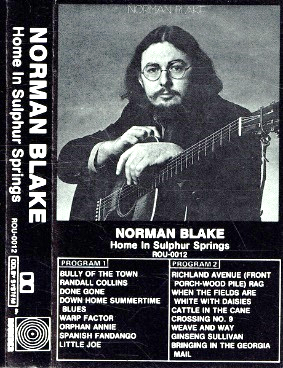
After his interlude with Dylan, Blake remains at the top. He is a regular in Johnny Cash’s band, helps Joan Baez to a hit with his contribution to “The Night They Drove Old Dixie Down”, plays dobro on the Nitty Gritty Dirt Band’s best-selling Will The Circle Be Unbroken, wins Grammys, including for his contribution to the O Brother Where Art Thou soundtrack (2000, Norman plays “You Are My Sunshine”, “Little Sadie” the instrumental version of “I Am A Man Of Constant Sorrow”, and “Big Rock Candy Mountain”), is a sound-determining member of John Hartford’s band and thus one of the founders of the so-called newgrass sound (Aereo-Plain, 1971), and ragtime remains a constant in Blake’s repertoire from his first solo album (Home in Sulphur Springs, 1972) to setlists deep into the 21st century.

The recording sessions for that landmark Newgrass record by John Hartford must have given Norman Blake a sense of déjà vu. “John let us play what we wanted to play. ‘Cause that’s one of the beautiful parts about it – he just let us get in there and pick,” says colleague Tut Taylor in the John Hartford essay in Ray Robertson’s Lives of the Poets (with Guitars), 2016, about working on Aereo-Plain. Exactly the same as what Blake experienced two years earlier with Bob Johnston and Dylan, as we know thanks to the Letterman interview with Charlie Daniels (“he wanted you to do what you wanted to do”).

The fruits of that freedom are effortlessly traceable: on Aereo-Plain, we hear Blake going all-out on side two, in “Symphony Hall Rag”, and no doubt we owe “Nashville Skyline Rag” to that same freedom. A year after the Nashville Skyline sessions the song is on John Hartford’s setlist, along with Norman Blake live (Turn Your Radio On, 1971), where Hartford introduces “Nashville Skyline Rag”:

“Uhmm, let’s see… I guess we should introduce Norman Blake next. I guess I can best introduce him by saying that people who read their liner notes closely, will know who he is. He plays on a lot of sessions. With people such as Johnny Cash and Joan Baez and Bob Dylan… I guess that’s one of my favorite Dylan albums, Nashville Skyline. Plays the definitive version on that.”

And again a year later Blake showcases the roots of “Nashville Skyline Rag” on his debut album, in “Richland Avenue Rag” – all recordings that demonstrate what happens when Bob Dylan gathers top country musicians around him on a Monday afternoon in Nashville, and then says: “These are the chords. This is the melody. Do what you want to do.”

——–

To be continued. Next up Nashville Skyline Rag part 2: Some of the names just didn’t seem to fit


Jochen is a regular reviewer of Dylan’s work on Untold. His books, in English, Dutch and German, are available via Amazon both in paperback and on Kindle:


Posted in Uncategorized | Leave a comment

NET: The absolute highlights: Silvio (1998)


Silvio is one of those songs Bob wrote with Robert Hunter, and performed with Grateful Dead – this recording comes from the year of the song’s release.  By my reckoning it is the 25th most played song by Dylan with getting on for 600 outings.  And why not, it is just a great piece of fun.

This performance comes from the early days, so is not the result of a reworking of an old favourite.  But it has already been re-worked from the album version.

And what I really love here is that Bob’s voice really is in keeping with the melody and lyrics – he is singing it rather than resorting to just saying the lyrics.  He’s playing, yes, but he is playing musically with the extended lines, and the simple but nevertheless very entertaining harmonies.

And then there is that guitar work which shines through what we realise is, musically, a very simple song with a complex instrumental arrangement.

Plus (and this is not something one can always say) it is perfectly rehearsed.   Everyone in the band knows exactly what Bob is going to do – and he remembers to do exactly what they did in rehearsal.  Quite often with a song like this which is based around just three chords repeated over and over, that is not the case.

Plus the two guitars playing together are indeed playing together and not fighting each other, or (just as bad) having each instrumentalist wondering what the other is going to do next.

And then three-quarters of the way through we get that pull back so we can have three guitars intertwining in one of the best instrumental breaks from the whole tour, which takes us to the end of the piece.

But that’s not all, for if one goes back to the start and to play the song again, we can appreciate there is a real contrast but also a perfect link between the start and the end of the song, which I really enjoy.

One more thing – if you have the time – go back to the opening, and play that again with the lyrics in front of you

Stake my future on a hell of a pastLooks like tomorrow is a coming on fastAin't complaining about what I gotSeen better times but who has not

Rarely, in my opinion, have lyrics and music in a Dylan performance with the full band, ever been so much in harmony.

My only regret is that one of my all-time favourite verses of Dylan when he is having fun and just messing about with the genre, is missing

I can snap my fingers and require the rainFrom a clear blue sky and turn it off againI can stroke your body and relieve your painAnd charm the whistle off an evening train

I just listen to that and think, “Is he really claiming to be God” and then, “What on earth does that last line actually mean?” and then I always have to smile because it fits in so much with the whole song.   And then, and then… I smile some more, because, well, most of these critics who analyse everything Bob does (which I know I do sometimes) don’t get round to smiling very much.   Which is a shame.

So we don’t get my favourite verse, but we get a lot of the original fun, with the band perfectly rehearsed having an absolutely great time.

It’s one of the best, for sure.

Posted in Uncategorized | Leave a comment

The Tarantula Tales: Oedipus and Agnes


by Larry Fyffe

Oedipus

“Tarantula” by Bob Dylan is a sludgy story that mixes fluid facts with flowing fictions.

Of possible interpretations, there are many.

Therein, for one example, be French Normans, led by William the Conqueror; their arrows a-flying, they defeat Harold, ruler of Anglo-Saxon England.

Fiendish William establishes feudalism.

The son of the Conqueror’s daughter – her name’s Matilda – becomes Henry II of England.

Harold dethroned – perhaps fated to be so because he can’t resist a pun:

We sat in a room where Harold, who called himself
'Lord of the dead animals", was climbing down from a ladder
& he said "friend or doe? friend or doe?"
(Bob Dylan: Tarantula)

Anyway, to make a long story short, actor Randolph Scott ends up giving Harold a big hug at President Eisenhower’s hometown saloon in Abilene, Kansas.

That is, after they sip a bit, and both reminisce about the good ole days they had fighting the Normans at the Battle of Hastings.

Randolf remarks, “Harold, I have the feeling we’re not in Kansas anymore”:

(A)nd says
it sure wasnt like this
in abilene
(Bob Dylan: Tarantula)

Of course, there are those who say that one’s Fate can be avoided ~ in Greek/Roman mythology, Laius, the father of Oedipus, gets rid of his son to prevent getting killed by Oedipus as foretold by Sun-God Apollo.

According to the  postmodernistic version below, Oedipus ends up once again unknowingly killing his own father – in this case, father be the young Bob Dylan, the creator and writer of “Tarantula”:

(B)ob dylan - killed by a 
discarded Oedipus
(Bob Dylan: Tarantula)

The careful reader might indeed conclude by the adages given beneath that it’s not a bad thing to sell one’s soul down the river during life’s journey.

And that for sure possessing a good memory is a good thing.

And that the answer to the riddle posed by the mythological man-eating she-sphinx is a good thing to know.

{The answer: mankind (as he or she grows older) has four legs in the morning, two in the afternoon, and one at night}

And seems we’re being told that it’s usually better not to tell the truth to those with the power to do us harm.

Thusly, albeit ambiguously, boasts the wise Tarantulaius:

(M)y mind is running down the river
- i'd sell my soul to the elephant
- i'd cheat the sphinx
- i'd lie to the conqueror
 (Bob Dylan: Tarantula)

Of course, too, it’s just dandy if you happen to possess a whole bunch of different lives as well.

Agnes

The Almighty Tarantula is determined to out-devil the Devil; he considers himself the better Deceiver and Riddler ~ on the spider’s watch, nobody’s getting to know who tells the truth, and who tells a lie:

(T)he fact is this: we must be willing
to die for freedom (end of fact)
now what I wanna know about the fact 
is this: "could hitler have said it? degaulle?
pinnocchio? lincoln? agnes moorehead?"
(Bob Dylan: Tarantula)

The names above postmodernly metonymic.

For example ~

Agnes Moorehead plays Rebecca Prescott, the mother of two daughters –  Eve (Carroll Baker), and younger Lilith (Debbie Reynolds) ~ in the previously-mentioned movie: “How The West Was Won”.

In the epic film,  loyal wife Anges reluctantly leaves the comfort of their eastern farm behind; with her husband and daughters, Rebecca heads out West.

She and her husband drown along the way.

Moorehead also appears in movie titled ‘The Conqueror’ that stars John Wayne; he plays the slow-talking, hard-riding Mongol Genghis Khan.

The film’s considered by many critics to be the worst ever made.

“The Conqueror” is shot near a former nuclear test site; the location of the film is thusly thought by some to be the cause of cancer that develops among many of those involved in making the movie:

(A)lso, john wayne mightve kicked cancer, but you oughta see his foot
- forget about those hollywood people telling you what to do
- they're all gonna get killed by the indians
(Bob Dylan: Tarantula)

In a biblical story, Rebecca, wife of Isaac, has Jacob deceive his nearly-blind father into blessing him as the next leader of the clan instead of twin Esau:

And Jacob said unto his father, I am Esau thy firstborn
I have done according as thou badest me ....
That thy soul may bless me
(Genesis 27: 19)

And it’ll never be known who shoots US President John Kennedy:

(L)ook, you know I don't wanna come on ungrateful, but that warren
report, you know as well as me, just didn't make it
(Bob Dylan: Tarantula)

Not ever will you learn the truth:

What is the truth, and where did it go
Ask Oswald and Ruby, they oughta know
Shut your mouth, says the wise old owl
Business is business, and it's murder most foul
(Bob Dylan: Murder Most Foul)

Posted in Uncategorized | 4 Comments

Other people’s songs: The Boxer and Big Yellow Taxi

by Aaron Galbraith and Tony Attwood

Aaron: As I am going to be busy next week with a medical procedure, I thought I would put together a quick “Other people’s songs” for Tony to look at.

So this time I thought I would do a  two-fer as these two songs are so iconic there is little point looking past the originals and Dylan’s versions.

Firstly then here is Simon and Garfunkel with The Boxer

Tony: There’s a line in this which has stayed with me ever since

Still a man hears what he wants to hearAnd disregards the rest

How true that is and rather relevant in terms of the second song in this article).   And listening to the original again, for the first time in decades, I am reminded how incredibly powerful the harmonies are.  And that is saying something when what one has here is a remarkable melody, beautiful accompaniment and extraordinarily powerful words.  Just listen to it all the way through with the sudden reduction of the massive build up of sound, with the “I love you” line only just audible.  It is extraordinary.

Aaron: Dylan’s version came from 1970s Self Portrait

Tony:  And here, for me (and for many commentators I have read) the harmonies just don’t work – they are the other end of the scale of success from Simon and Garfunkel.  I mean 10 out of 10 to Bob for trying, but given that what he is copying is an utter work of art, one of the most beautiful popular songs ever recorded, one wonders why.    Was it to show that he can sing harmonies?

And that all-important “I love you” tucked away as the last line of “Lie-la-lie-lie-lie-lie-lie, lie-lie-lie-lie-lie” runs through.

Still a man hears what he wants to hearAnd disregards the rest

How true that is.   But surely someone must have said to Bob, “Actually Bob, this doesn’t work….”   Although maybe it took a really long time to record and get those harmonies right by which time Bob couldn’t bear to throw it away.  Or maybe it is true, no one dares tell Bob what to do.

Indeed I wonder what Paul Simon thought.   Presumably, he didn’t mind because the two appeared together in 38 shows in 1988.

Aaron: Next we have Joni Mitchell with Big Yellow Taxi

Tony: Another of my much loved artists, and I always enjoyed this song which gave such great opportunities to show off her amazing vocal range reaching every part of its range with perfection.   The repeat of “bees” is just beyond belief.

So yes I do love the music of Joni Mitchell, and indeed appreciate many of her political / religious quotes, such as “Lord, there’s danger in this land, you get witch hunts and wars when church and state hold hands.”  (Tax free).

Aaron: Bob’s version appeared on his 1973 studio album, Dylan

Tony:   Oh.   I hate the twinky organ.  And virtually all of the recording, because the accompaniment has nothing to do with the lyrics although at the same time this version includes elements from the original.    The “Do bop” female chorus is taken from the original as is much of the rhythm.   But oh….. this is horrible.   Horrible horrible horrible.

The organ part is the key element that puts me off, but I am not at all sure about Bob’s singing here.  (Surely there must be a deserted part of the world where the organist can be put).   Just listen to where Bob sings “DDT” and the organ part that follows and ask, “what on earth has this organ part got to do with the lyrics?”

And maybe it was this recording that made Joni Mitchell say of Dylan, “Bob is not authentic at all.   He’s a plagiarist, and his name and voice are fake.”   Although most commentators I seem to recall, said the spat started in the Rolling Thunder years.

Anyway I need something strong to distract my mind after that.  So here it is.  Sorry Aaron, but I just couldn’t leave this article with Bob’s destruction of a song I really do like.   Get well soon, mate.

Previously in this series…

  1. Other people’s songs. How Dylan covers the work of other composers
  2. Other People’s songs: Bob and others perform “Froggie went a courtin”
  3. Other people’s songs: They killed him
  4. Other people’s songs: Frankie & Albert
  5. Other people’s songs: Tomorrow Night where the music is always everything
  6. Other people’s songs: from Stack a Lee to Stagger Lee and Hugh Laurie
  7. Other people’s songs: Love Henry
  8. Other people’s songs: Rank Stranger To Me
  9. Other people’s songs: Man of Constant Sorrow
  10. Other people’s songs: Satisfied Mind
  11. Other people’s songs: See that my grave is kept clean
  12. Other people’s songs: Precious moments and some extras
  13. Other people’s songs: You go to my head
  14. Other people’s songs: What’ll I do?
  15. Other people’s songs: Copper Kettle
  16. Other people’s songs: Belle Isle
  17. Other people’s songs: Fixing to Die
  18. Other people’s songs: When did you leave heaven?
  19. Other people’s songs: Sally Sue Brown
  20. Other people’s songs: Ninety miles an hour down a dead end street
  21. Other people’s songs: Step it up and Go
  22. Other people’s songs: Canadee-I-O
  23. Other people’s songs: Arthur McBride
  24. Other people’s songs: Little Sadie
  25. Other people’s songs: Blue Moon, and North London Forever
  26. Other people’s songs: Hard times come again no more
  27. Other people’s songs: You’re no good
  28. Other people’s songs: Lone Pilgrim (and more Crooked Still)
  29. Other people’s songs: Blood in my eyes
  30. Other people’s songs: I forgot more than you’ll ever know
  31.  Other people’s songs: Let’s stick (or maybe work) together.
  32. Other people’s songs: Highway 51
  33. Other people’s songs: Jim Jones
  34. Other people’s songs: Let’s stick (or maybe work) together.
  35. Other people’s songs: Jim Jones
  36. Other people’s songs: Highway 51 Blues
  37. Other people’s songs: Freight Train Blues
  38. Other People’s Songs: The Little Drummer Boy
  39. Other People’s Songs: Must be Santa
  40. Other People’s songs: The Christmas Song
  41. Other People’s songs: Corina Corina
  42. Other People’s Songs: Mr Bojangles
  43. Other People’s Songs: It hurts me too
  44. Other people’s songs: Take a message to Mary
  45. Other people’s songs: House of the Rising Sun
  46. Other people’s songs: “Days of 49”
  47. Other people’s songs: In my time of dying
  48. Other people’s songs: Pretty Peggy O
  49. Other people’s songs: Baby Let me Follow You Down
  50. Other people’s songs: Gospel Plow
  51. Other People’s Songs: Melancholy Mood
Posted in Uncategorized | 1 Comment

I’ve Made Up My Mind To Give Myself To You, part 11 (final): Things aren’t what they were


by Jochen Markhorst

XI         Things aren’t what they were

From the plains and the prairies - from the mountains to the sea
I hope that the gods go easy with me
I knew you’d say yes - I’m saying it too
I’ve made up my mind to give myself to you

 On 8 December 2019, Dylan is in Washington for the final concert of the US Fall Tour. Thirty-nine concerts with, from the fourth concert (17 October, Denver), pretty much the same setlist every night, and the same encore every night: “Ballad Of A Thin Man” and “It Takes A Lot To Laugh, It Takes A Train To Cry”.

In January and February 2020, Dylan is in Los Angeles, at Sunset Sound Recorders’ studio. On Sunset Boulevard, so about 45 minutes by car from home, from Malibu. No concert obligations March 2020, the whole month of April Dylan is expected to be in Japan (11 concerts in Tokyo, three in Osaka), May is me-time, and 4 June 2020 should then see the start of the US Summer Tour. But alas; in March 2020, the world goes on lockdown. The Covid pandemic wipes clean all agendas and all tour schedules.

In May 2021, the workless master then records the Corona surprise Shadow Kingdom, a sort of constructed concert film, unfortunately without any new songs. Mostly 60s songs. The most recent one is “What Was It You Wanted” from 1989 – so still 32 years young. For the live premieres of the Rough And Rowdy songs, we will have to wait until November, until the pandemic is over. But then we’ll get right down to business.

The first post-Corona concert will take place on 2 November 2021 in Milwaukee, Wisconsin. For two songs, some fans may still fear that Dylan wants to serve up a Shadow Kingdom Revisited. The concert opens with “When I Paint My Masterpiece” and “Most Likely You Go Your Way”; two songs we were also presented with on-line, last July.

But then relief follows; without further notice, the band launches into “I Contain Multitudes” – the first of eight Rough And Rowdy songs Dylan will play tonight, as he will for the rest of this tour. As was to be expected, of course: the tour is called “Rough And Rowdy Ways World Wide Tour 2021-2024” and at the top of the concert posters is written “Things aren’t what they were….” – a quote from “I’ve Made Up My Mind”.

“Murder Most Foul” will not be performed for understandable reasons (the song is, after all, very long), and the premiere of the last unplayed song, “Crossing The Rubicon”, will be pushed forward to the next tour, to the 2022 US Spring Tour (3 March 2022, Phoenix).

So on 2 November ’21 in Milwaukee is also the premiere of “I’ve Made Up My Mind To Give Myself To You”. Almost two years after Dylan recorded the song in Hollywood, about a year and a half after the world was introduced to it. At the end of the setlist. The first two nights at the fifteenth spot, then it moves to spot 13, and there “I’ve Made Up My Mind” will stay until the last gig in this year’s concert series, 2 December 2021 in Washington.

Musically, the live renditions are not much different from the studio version. Donnie Herron’s mandolin replaces the “marimba part” Blake Mills conjured from his guitar, Bob Britt plays a faithful copy of the short guitar solo, the understated background chorus has been dropped – for pragmatic reasons, presumably. The lyrics have been tinkered with a little. Not much, and not too drastic. It looks at nothing here or there, looks at nothing near or far, for example, has been reduced to It looks at nothing, neither near or far. Other interventions are even smaller. The only really noticeable one is in the last stanza: the first line.

At the premiere, Dylan is not yet completely text proof. He mixes up the second and fourth stanzas, forgets a word here and adds a word there. And the intended lyric adaptation of the last verse has apparently not yet fully crystallised. On the album, Dylan sings

I’ve traveled from the mountains to the sea,

at the Milwaukee premiere, it has been changed to

I’ve traveled from the plains and mountains to the sea,

and the next evening, 3 November in Chicago, Dylan finds the more or less final lyrics:

From the plains to the prairies, from the mountains to the sea

… more or less final; at the fourth performance (6 November, Columbus) he rehashes it once more to From the mountains to the prairies, from the plains to the seas, but hereafter, he will return to the words as they are also published officially, on the site:

From the plains and the prairies – from the mountains to the sea

It tells us two things. First, that the text change is not the result of lengthy and deliberate editing, writing and deleting – the three variations in the first four performances suggest that Dylan did not feel the need until these November days, probably still scribbling and erasing while in the tour bus. And secondly, that he attaches importance to it: Dylan has changed hundreds of fragments of lyrics in live performances of his oeuvre over the years, but only a very small minority of them lead to official publication in Lyrics or on the site.

It is a somewhat peculiar addition, though. The average listener’s association is forced almost naturally towards Irving Berlin’s patriotic “God Bless America”;

From the mountains to the prairies
To the oceans white with foam
God bless America, my home sweet home

… the song that made Woody Guthrie puke so much so, that he wrote “This Land Is Your Land” as an answer song. Dylan has sung the song himself on occasion (awkwardly; at the Kennedy Center Award ceremony in 1997, Dylan doesn’t escape it either), but here, in “I’ve Made Up My Mind”, a reference to “God Bless America” really does seem out of place – neither a patriotic salute nor an ironic wink fits here.

No, perhaps then, it is meant as yet another salute to Warren Zevon, the admired colleague who has received compliments from Dylan for decades, even before his death in 2003. And on Rough And Rowdy Ways, we also can hear a reverence again. The line Looking far, far away down Gower Avenue in “Murder Most Foul” is the last line of Zevon’s “Desperados Under the Eaves”, the 1976 song with the Dylanesque line Don’t the sun look angry through the trees and Carl Wilson’s heavenly backing vocals. Incidentally, the last verse of Zevon’s song opens with

I was sitting in the Hollywood Hawaiian Hotel
I was listening to the air conditioner hum

… which just might have been the template for

I’m sitting on my terrace lost in the stars
Listenin’ to the sounds of the sad guitars

… for the opening of “I’ve Made Up My Mind To Give Myself To You”, that is. And that late, seemingly hasty addition in the last verse of that From the plains and the prairies could then just be understood as a thank you or a salute to Warren Zevon, via a Zevon song at least as close to Dylan’s heart;

Frank and Jesse James
Keep on riding, riding, riding
'Til you clear your names
Keep on riding, riding, riding
Across the prairies and the plains
Keep on riding, riding, riding
Frank and Jesse James

… “Frank And Jesse James”, the opening song from the same Warren Zevon album (1976) on which “Desperados Under the Eaves” can be found (as a finale).

Zevon, to whom Dylan also devotes an honourable chapter in The Philosophy Of Modern Song (Chapter 39, “Dirty Life And Times”), as well as to the song “Jesse James” (Chapter 10); Zevon, who is also quoted again in the only interview Dylan gives in 2022 (“We’re in ‘Splendid Isolation,’ like in the Warren Zevon song; the world of self, like Georgia O’Keefe alone in the desert” – Wall Street Journal, 19 December 2022); like Dylan quotes just as reverently from that same “Dirty Life And Times” back in 2011, in the Elderfield interview:

“Sure, but everything in life, directly or indirectly, has a great degree of mystery. To paraphrase Warren Zevon, some days I feel like my shadow’s casting me. Persons, places, things … time itself is a mystery.”

… the song in which the narrator sighs: “She can’t seem to make up her mind.”

“This is a great record,” Dylan writes, continuing with effervescent praise of both this one song, one of the very last songs Zevon writes, and of Warren Zevon the artist at all.

“Being a writer is not something one chooses to do. It’s something you just do and sometimes people stop and notice. Warren was a writer till the very end.”

It’s almost as if Dylan is talking about himself; just before this, again admiringly, he describes the different sides of Zevon at different stages of his career, as well as “all the roles Zevon chose to play in his songs”.

Zevon dies of cancer, 7 September 2003. Just before his death, he manages to record one last record, The Wind, the album featuring “Dirty Life And Times”. And with a breathtaking, moving cover of Dylan’s “Knockin’ On Heaven’s Door”.

Let’s hope that the gods go easy with him.

————–

Editor’s note: In case you want to discover more of Warren Zevon, our previous post on this site was: Dylans favourite songs: Warren Zevon: ‘Lawyers, Guns, and Money’

————–

Jochen is a regular reviewer of Dylan’s work on Untold. His books, in English, Dutch and German, are available via Amazon both in paperback and on Kindle:


Posted in Uncategorized | 1 Comment

Dylans favourite songs: Warren Zevon: ‘Lawyers, Guns, and Money’

By Tony Attwood

We have already had one Warren Zevon song in this list of Dylan favourites: ‘Desperado Under the Eaves’,   And now it is time for a second: ‘Lawyers, Guns, and Money’.  And we do have several recordings of this song to contemplate

Now I want to make something clear: most of these songs that Bob has chosen I don’t know – or at best don’t know very well.  And so I am listening to them for the first time (or at least the first time in many years) as I come to write each review.  And indeed having developed the habit of writing reviews while listening (as opposed to listening in silence and then contemplating for a while) when co-authoring the articles I write with Aaron, I carry on that format here.

So this is my first interaction with this song (my excuse being that in 1989 I had three daughters all under 10 years old and that rather takes up a lot of time – although it was certainly worth it; they are all three of them, now my best friends).

Anyway back to the song.  The lyrics are quite something.

I went home with the waitress, the way I always do
How was I to know, she was with the Russians, too?

I was gambling in Havana, I took a little risk
Send lawyers, guns and money, dad, get me out of this, ha

I'm the innocent bystander
Somehow I got stuck 
between the rock and a hard place
And I'm down on my luck, yes I'm down on my luck
Well, I'm down on my luck

And I'm hiding in Honduras
I'm a desperate man
Send lawyers, guns, and money
The shit has hit the fan

Alright, send lawyers, guns, and money

So looking at the song’s lyrics it is simple: exactly the opposite of Dylan’s work, and yet it is equally stunningly brilliant.   My guess (as a person who has written several hundred songs across a lifetime, but without any commercial success) is that the title came first, and then the song evolved around it.   The title phrase indeed demands that two-chord accompaniment (musicians would write it as IV, I) and then the third chord is added at the end.  From that emerges everything else.  I suspect the notion of introducing the Russians, Havana and Honduras just arose as he played the chords in that rhythm on the piano.

Interestingly (to me if no one else) for this live recording, they’ve changed key.  And I do love the way an extra bar is added in places.

In fact I love all of it.   Especially the notion of going through all this and claiming to be an innocent by-stander.  Fabulous.

I did however know Warren Zevon, because of “Werewolves of London”, but nothing more, so learning about him really is learning for me.  He was, it seems, born in the same year as me but died of cancer 20 years ago.   (And that is quite an unsettling thought: how come I, just a regular guy who enjoys all this music, managed to survive?  Beats me.)

Here’s another live version recorded for TV.

So here we have another song that is a million miles from anything Bob would ever write or perform, which he names in his favourite song list, and I am immediately taken by.

You know, I am really enjoying this idea for a series.

Posted in Uncategorized | 3 Comments

NET 2011 Part 4 – Forgetful Hearts and the Crystal Cat Blues

An index to all 111 previous episodes in this definitive series on the Never Ending Tour can be found here.

By Mike Johnson (Kiwipoet)

Some songs seem to have their peak years in terms of their live performances. Those are years in which all the elements of the performance come together to produce ‘best ever’ performances before fading into business-as-usual presentations or fading from the setlists altogether.

‘Forgetful Heart,’ that elegiac, haunting Dylan/Hunter song from Together Through Life (2009) is a case in point. First played in 2009, the song would last through to 2015 and yet, it seems to me, it was never played better or more expressively than in 2011. Played acoustically, with Tony Garnier on double bass and Donnie Herron on the viola (sometimes the violin), the song was, from the start, a stand-out performance piece, creating a brooding, sad and self-reflecting mood, and yet the 2011 performances seem to have magic it’s hard to find before or afterwards.

While planning this post, I culled the recordings down to ten marvellous renditions. Since putting all ten into one post would be excessive, and probably overkill, I whittled them down to five that I considered to be necessary performances. I trust you, my dear reader, will forgive me this indulgence, but there are nuances in vocal delivery and harp playing I believe justify the repetition and can only hope my editor agrees with me.

I’m not going to follow these chronologically, although that’s a tempting approach, as I feel that, even within this narrow field of superlative performances, there is one that stands out as being the best of the best. I will however begin with that excellent first concert of the year, Taipei (April 3rd).

Forgetful Heart (A)

There is softness in the recording, a gentle feel to it, and Dylan’s vocal stays sensitive to the lyrics without breaking into falsetto too noticeably. There is also, albeit not too obviously, an echo to Dylan’s voice which gives the song an other-worldly quality. The song comes across as a gentler ‘Lovesick,’ a soliloquy of loneliness. (Herron is on the violin here.)

If we are looking for vocal excellence, we can’t go past the Tel Aviv performance (June 20th). The vocal is more upfront than Taipei, and a touch more emphatic, while Herron’s move to the viola creates a darker, more sombre sound. It’s hard to tell to what extent some of these differences are due to the accident of an audience recording, or a deliberate re-balancing of the song by Dylan, and we’ll come back to that issue shortly when considering the Crystal Cat recording from London at the end of the year. Depending on my mood, I can equally enjoy both the Taipei version and the Tel Aviv version.

Forgetful Heart (B)

The recording at the Odense (June 27th) is certainly sharper, and more hard-edged than the previous two performances. The song comes out of the shadows and is right in our faces. I don’t know if that is better than the softer, Taipei performance, but it does, in effect, shift the mood from a tender melancholy to pungent self-accusation.

Forgetful Heart (C)

The superiority of the Crystal Cat recordings can be instantly recognised in this London performance. Dylan performed the song twice in London, in the second concert (Nov 20th) and in the third (Nov 21st). I’ve chosen the version from the second concert. I have to say, however, that despite the evident excellence of the recording, and the performance, I find myself harking back to the softer Taipei and Tel Aviv performances. Is this because of the recording or has Dylan adopted a harsher tone in his soliloquy? Or am I getting soft?

These are only quibbles in the face of an emotionally compelling performance in which we find both the old circus barker and the emerging crooner at work to stunning effect. Wonderful the way Herron complements Dylan’s voice and harp with those dark, sustained viola notes.

Forgetful Heart (D)

The opening sombre strings set the mood, which is sustained right to the end, but this song is not just about the backing and the vocals but the harp. Those lonely, piercing gull-like cries Dylan wrenches from that little instrument stand in counterpoint to the low rumble of the viola and double bass, and give the song a bluesy, anguished edge. Nowhere is that more evident than in the following performance.

I haven’t been able to track the date of this performance, it has proved elusive, but to my ear it is the finest of them all, and that’s largely due to the extended second harp break which runs into a second chorus. The harp delivers a series of emotional jabs which push the  song to another level. It’s an astonishing performance, the jewel in the crown. Best ever? I have to say so.

Forgetful Heart (E)

Later, when Dylan started singing Frank Sinatra songs, some commentators traced the origin of his crooning to ‘Forgetful Heart.’ I think that’s an oversimplification. Dylan had been trying out his silky voiced Bing Crosbyish vibrato for some time, and the style can be traced back to his collaborations with Johnny Cash back in the late 1960s.

For the remainder of this post, I have tried to select songs which are in harmony with the mood of ‘Forgetful Heart,’ songs which have a similar elegiac bent and in which sadness rules. I believe that’s the case with ‘It’s All Over Now, Baby Blue.’ Oddly, this song will be dropped after 2012 for a four-year break, emerging again in 2016 when it would complement Dylan’s Sinatra performances.

While the song urges forgetfulness, striking another match, it is a love song (somewhere I described it as love’s last song) and is haunted by sadness and the anguish of saying goodbye.

Since the mid-1990s Dylan has had trouble finding the right arrangement to carry the complex emotions of this song, and I’m not sure that the medium-paced versions of 2011 do the trick. However, I have two offerings, one from Tel Aviv and one from London (1st concert). Putting these two together also furthers my enquiry into the virtues or otherwise of the Crystal Cat recordings, and brings something of my unease with the latter, despite their brilliance, into focus.

First, Tel Aviv:

It’s All Over Now Baby Blue (A)

That’s a convincing and emotionally satisfying performance. Once more the circus barker gives way to the emergent balladeer and the harp sharpens the feelings that drive the song.

Now London (1st concert):

It’s All Over Now Baby Blue (B)

I can understand why some might prefer that centre stage performance, with Dylan on guitar, but I find it less engaging than the Tel Aviv performance. I find the sound a little too brash for the song, but this is a purely personal reaction. Perhaps I like Tel Aviv because I prefer Dylan’s harp playing to his electric guitar, and I am just imagining that that performance is more subtle than London. Over to you, dear reader.

Another song soaked in sadness is ‘Working Man’s Blues # 2.’ Of course this song is more political than the two songs we’ve considered so far, and it’s a longer, more ambitious song, but no less sombre

In the dark I hear the night birds call
I can hear a lover's breath
I sleep in the kitchen with my feet in the hall
Sleep is like a temporary death

In this case the heart does not forget:

Where the place I love best is a sweet memory
It's a new path that we trod

Memories, however, bring their own tribulations, and personal melancholy mixes with the sense of political struggle. This slow-paced song has a certain grandeur, is carried well in this performance which my fact sheet tell me was performed at Rotterdam on Oct 10th, but is not listed by the official website as being played on that date. Whenever, it has the feel of a Crystal Cat recording to me. It is ably sung, but there’s just a hint too much of dumpty-dum in the organ notes to be fully satisfying.

Workingman’s Blues # 2

‘Boots of Spanish Leather’ is a plea to be not forgotten by someone else’s forgetful heart when they go travelling, and has long been recognised as a masterful piece of dialogue – it’s all too easy to forget the love you leave behind once you’re on the road. Since Dylan is usually the one moving on, this song is something of a reversal; he’s the one left behind this time.

This Odense performance features Herron on violin and Dylan on guitar. To me it lacks the heart-rending pathos of the original studio recording way back in 1964, and I could have done with a bit less barking and more crooning, but it’s a fine, committed performance in its own right.

Boots of Spanish Leather

We’ll stay in Odense to catch ‘Every Grain of Sand,’ another elegiac song in which the ‘dying voice within me,’ reaches out for the verities of faith and spiritual love. For my ear, this song reached its performance peak in 2009, with a brilliant centre-stage duet between voice and harp (See NET 2009 part 2), a performance full of bleak insistence. However, this Odense performance is powerfully presented and sung with precision and passion and there is some trenchant harp work. You do have to deal with a pretty dominant organ riff and the tendency is still strong in Dylan to become too barkingly emphatic on some of the lyrics.

 Every Grain of Sand

As I’ve commented before, ‘To Make You Feel My Love’ might be the saddest of all Dylan’s love songs, with the pathos running high. It’s heartbreakingly beautiful, more so sung in Dylan’s cracked, broken-hearted voice. This gorgeous rendition is from the 1st London performance. Crystal Cat strikes again with the clarity of the recording, every instrument can be clearly heard. It’s got that vamping organ again, but in this case, it works better than in ‘Every Grain of Sand,’ a bit more complex and sensitive to the mood of the song.

To Make You Feel My Love

I’m going to finish with this Milan (22nd June) performance of ‘Visions of Johanna,’ the greatest 3 a.m. song ever written, filled with yearning, sadness and pathos. Here, memory has been taken over by all-consuming ‘visions’ of ‘Johanna,’ a lost love or the end of the world, depending on how much you read into the name. Many times in these posts I’ve commented that this song has never achieved the burned-out grandeur of the Perth performance of 1966, or the spooky grandeur of the Manchester performance of the same year, but I’d rather have it this way, a little too bouncy for me, than not at all.

Visions of Johanna

I’ve done four posts on 2011 now, and it still feels as if I have barely scratched the surface. I’ll be back shortly, therefore, with another post to hopefully wrap the year up.

Until then

Kia Ora


Posted in Uncategorized | 2 Comments

A Dylan Cover a Day: the Quinn the Eskimo as it should be performed.

By Tony Attwood

“I don’t know what it’s about,” said Bob, and that’s good enough for me.  I like poems and songs and abstract works of art that are not about anything.   After all why does art have to be about something?

In terms of Bob Dylan there are hundreds of thousands of commentators out there who believe that Bob’s work must be about something – and wow! this particular writer has an insight that is real and true and well, insightful.   Except it probably isn’t.

My view (oft-expressed on these pages) is that Dylan, like many other poets before and since, like the sounds of words and phrases, and has always done so.  And indeed this is how much of the world is.  I look out from where I write each day in rural England, across the grass, beyond the small windmill to four trees at the end of my garden stretching up to the sky.   Does that mean anything?  Not especially, but I have chosen this room and this house, because I love this view, and it helps me write on the various subjects I’m paid to write about or want to write about.   That’s it.  I watch the seasons pass, I write stuff, people pay, I go dancing.

And that’s not to compare myself in any way at all with the genius that is Bob, or any genius, as obviously I’m not in that league, but rather to say, from a lifetime of being involved with the arts, in the theatre, in music and in writing, I’m utterly sure art does not have to be about anything.   And certainly, for me, that is the case with Quinn the Eskimo.   So the question for me with this song is, how do different performers deal with a song that means nothing?

Adding harmonies at the start and then keeping the rest of the song as it always has been, is a good way of handling a piece that we all have heard many times before.    Indeed the song is so well known, it is hard to do much with the music without destroying the essence of the song, so harmonies are great.

And then they add an interesting backing.  The harmonica, what sounds to me like a violin being plucked at one point, the jaunty bowed violin in the background elsewhere before it gets its jolly solo near the end…  It’s all fun.  What’s not to like?

Lots of heavy metal (and similar) bands have had a bash at the song, and then have found they have to compromise a bit to make the chorus work.   I’m not a heavy metal fan at all, but I can appreciate the short instrumental break… but beyond this I think it is a case of liking the genre or not.   Mind you I do like the subheading “Executing the classics”.   Yes indeed. I wish I’d thought of that.

Oh yes and that break around 1 minute 45 – it gets carried away with itself in my view, but I do like the way it starts.

The opening of Joan Osborne’s version doesn’t really give much hope for something different, but she does deliver fine harmonies, and someone on the team has decided to change the chord structure at the start of “Come on without” with the bass holding its note, to imply something quite different from the norm for the words “Come on within”.

As a result, for me, suddenly “come on within” is no longer a fairly meaningless reply to “come on without”.  With that held bass note it takes on a totally different concept.  It gives a notion of slow-growing progress that is not part of the song otherwise.

This Manfred Mann realisation of the song is the version that Jochen chose for his article: Quinn the Eskimo: one semitone is all it takes, which of course I do recommend if you want to know about the song itself.  It (this version) mixes genres although I am not sure that now, all these years on, it still gives me much to think about.   Although the change at around 2.20 really is unexpected and most certainly musically very interesting.

Trouble is, “interesting” doesn’t mean that one necessarily wants to go back and listen to it again and again.   Yes, being able to play fast and do the unexpected is good, and entertaining – and I most certainly was not expecting what happens at 3.30.   It is fun thereafter, but on my “do I want to play this again?” chart it doesn’t score.  They do get back to the song in the end, however – and there’s a lovely fun effect at the end which is worth waiting for.

I suppose I have included London Pops as an antidote to Manfred Mann, and although it is fun, it is clear that at moments they struggled to think of enough variations to keep going, so not one of my favourites.  But it leads me to….

This takes me back to the origins, and I love it.  The song is a bit of nonsense.  It is fun, and somehow listening to all the takes above I get to feel that some of these performers are taking themselves awfully seriously with a song that was never meant to be taken that way in the slightest.   These guys are just doing their thing and enjoying themselves, and enjoying the nonsense that the song is.

Being gentle with this song is like being gentle with an old friend, unexpectedly met once more – an old friend who perhaps hasn’t had the best of times across the years, but is your old friend and so needs respect and courtesy and maybe some encouragement and help.

Which is why I not only had to include this version, but also include it at the end.  It is, for me, how the song should be played.

Hello old friend.

The Dylan Cover a Day series

  1. The song with numbers in the title.
  2. Ain’t Talkin
  3. All I really want to do
  4.  Angelina
  5.  Apple Suckling and Are you Ready.
  6. As I went out one morning
  7.  Ballad for a Friend
  8. Ballad in Plain D
  9. Ballad of a thin man
  10.  Frankie Lee and Judas Priest
  11. The ballad of Hollis Brown
  12. Beyond here lies nothing
  13. Blind Willie McTell
  14.  Black Crow Blues (more fun than you might recall)
  15. An unexpected cover of “Black Diamond Bay”
  16. Blowin in the wind as never before
  17. Bob Dylan’s Dream
  18. You will not believe this… 115th Dream revisited
  19. Boots of Spanish leather
  20. Born in Time
  21. Buckets of Rain
  22. Can you please crawl out your window
  23. Can’t wait
  24. Changing of the Guard
  25. Chimes of Freedom
  26. Country Pie
  27.  Crash on the Levee
  28. Dark Eyes
  29. Dear Landlord
  30. Desolation Row as never ever before (twice)
  31. Dignity.
  32. Dirge
  33. Don’t fall apart on me tonight.
  34. Don’t think twice
  35.  Down along the cove
  36. Drifter’s Escape
  37. Duquesne Whistle
  38. Farewell Angelina
  39. Foot of Pride and Forever Young
  40. Fourth Time Around
  41. From a Buick 6
  42. Gates of Eden
  43. Gotta Serve Somebody
  44. Hard Rain’s a-gonna Fall.
  45. Heart of Mine
  46. High Water
  47. Highway 61
  48. Hurricane
  49. I am a lonesome hobo
  50. I believe in you
  51. I contain multitudes
  52. I don’t believe you.
  53. I love you too much
  54. I pity the poor immigrant. 
  55. I shall be released
  56. I threw it all away
  57. I want you
  58. I was young when I left home
  59. I’ll remember you
  60. Idiot Wind and  More idiot wind
  61. If not for you, and a rant against prosody
  62. If you Gotta Go, please go and do something different
  63. If you see her say hello
  64. Dylan cover a day: I’ll be your baby tonight
  65. I’m not there.
  66. In the Summertime, Is your love and an amazing Isis
  67. It ain’t me babe
  68. It takes a lot to laugh
  69. It’s all over now Baby Blue
  70. It’s all right ma
  71. Just Like a Woman
  72. Knocking on Heaven’s Door
  73. Lay down your weary tune
  74. Lay Lady Lay
  75. Lenny Bruce
  76. That brand new leopard skin pill box hat
  77. Lily, Rosemary and the Jack of Hearts
  78. License to kill
  79. Like a Rolling Stone
  80. Love is just a four letter word
  81. Love Sick
  82. Maggies Farm!
  83. Make you feel my love; a performance that made me cry.
  84. Mama you’ve been on my mind
  85. Man in a long black coat.
  86. Masters of War
  87. Meet me in the morning
  88. Million Miles. Listen, and marvel.
  89. Mississippi. Listen, and marvel (again)
  90. Most likely you go your way
  91. Most of the time and a rhythmic thing
  92. Motorpsycho Nitemare
  93. Mozambique
  94. Mr Tambourine Man
  95. My back pages, with a real treat at the end
  96. New Morning
  97. New Pony. Listen where and when appropriate
  98. Nobody Cept You
  99. North Country Blues
  100. No time to think
  101. Obviously Five Believers
  102. Oh Sister
  103. On the road again
  104. One more cup of coffee
  105. (Sooner or later) one of us must know
  106. One too many mornings
  107. Only a hobo
  108. Only a pawn in their game
  109. Outlaw Blues – prepare to be amazed
  110. Oxford Town
  111. Peggy Day and Pledging my time
  112. Please Mrs Henry
  113. Political world
  114. Positively 4th Street
  115. Precious Angel
  116. Property of Jesus
  117. Queen Jane Approximately
Posted in Uncategorized | 1 Comment

I’ve Made Up My Mind To Give Myself To You (2020) part 10

by Jochen Markhorst

X          A Neapolitan mandolin and a half-hidden marimba

“Gorgeous, limpid and brushed by drowsy steel drums,” writes Mark Beaumont in the New Musical Express of 15 June 2020, in his review of Rough And Rowdy Ways. Paul Haney, in his assessment for Glide Magazine, also in June 2020, hears the same thing: “A brushed snare along with subtle steel drums lend the song a celestial feel.” “The whisper of steel drums echoes the song’s sentiment,” thinks his colleague Doug Colette. Flood Magazine’s Ad Amorosi goes a step further: “Brushed snare and marimba-filled.” Someone on Tumblr analyses “chiming bells and schoolyard xylophones intersect with steel drums”, “meandering on sultry waves of marimba and ooh’s and aah’s in the background,” says Cis van Looy admiringly in Written In Music, and Uncut‘s Richard Williams gets all sultry:

I’ve Made Up My Mind to Give Myself To You may be the most cumbersome title of his career, but the track is also one of his loveliest creations. A Neapolitan mandolin and a half-hidden marimba conjure the image of a lone figure sitting in a waterside café on a warm evening, while male voices hum a four-note melody behind him.”

Very evocative, really. But a marimba it is not. Nor a steel drum or xylophone.

Shortly after the release of Rough And Rowdy Ways, June 2020, Blake Mills posts seven short videos on his Instagram account. The clips last no longer than a minute (except for “Black Rider” lasting 1’35”) and are visually unspectacular: a static camera films the guitar-playing Mills, who, sitting on a chair, hunched over his electric guitar, does not look into the camera once.

But the content, especially for Dylan fans, is indeed spectacular: in each clip, Mills demonstrates the guitar part he played on seven songs from Rough And Rowdy Ways: “I Contain Multitudes”, “False Prophet”, “Mother Of Muses”, “My Own Version Of You”, “Crossing The Rubicon”, “Black Rider” and “I’ve Made Up My Mind To Give Myself To You”. They are partly overwhelming demonstrations of creativity and craftsmanship, they are mood- and colour-defining guitar parts, and one might suspect that Mills is sharing these remarkable clips with the world out of some sort of assertiveness. On the LP cover, he is merely listed under “additional musicians” – judging by this Instagram demonstration, that is indeed a somewhat too economical qualification of Mills’ contributions.

He himself prudently dodges confrontational questions about why he did the Instagram action, limiting himself in later posts to safe, grateful and humble words about his work for Dylan. But when interviewed by Belgian magazine Knack a year later, he is a little less restrained – Belgium is on the other side of the ocean, the interview is only published in Dutch… safe and far, so to speak;

Knack: “It has been suggested that you wanted to delicately point out with those videos that your role was bigger than the credit as additional musician you got.”
Mills: “To a certain extent that’s true, yes. See, as a fan of his music, I also understand how Bob makes his records come about in a mysterious way. There is nothing clearly outlined about it, there is no plan. That’s his art. So I do understand that his camp protects that mystery as much as possible, to put it that way.”

Interviewer Kurt Blondeel is an experienced journalist with an understanding of the music business, and knows how to drill down further. He knows that Mills is one of the house producers at Sound City, the studio where Rough And Rowdy Ways was recorded, that Mills is also a producer for top acts like Alabama Shakes and John Legend, apart from his own music, and thus assumes that Mills must also have interfered with the fantastic sound of Dylan’s album. But either Mills really wasn’t an “additional producer”, or he displays modesty very well:

“Let me say this clearly: I owe some of my fondest studio memories to that record. Why? Because he’s Bob Dylan [laughs]. I only now realise how profound that experience was for me. […] On the other hand, you shouldn’t make more out of it than it is. You are there to make a business succeed by doing your best yourself. You are generous because you are playing for an imagined audience that you know will appreciate what you are doing. At the same time, you are creating something that you would enjoy as a listener yourself.”

… with which he keeps the focus on his guitar contributions. Which, by the way, he has to find on his own. That’s what Dylan expects you to do, Mills explains:

“The most important thing remains that you put yourself at the service of the song, the story or the mood. But of course you may also follow your instinct. Dylan doesn’t tell you exactly what to play. He does expect you to play what needs to be played. That may seem the same, but it’s a world of difference.”
(Knack, 9 March 2021)

The accents with the slide on “False Prophet”, the subdued echo-simulation on “My Own Version of You”, the all-around 50s-Chicago blues sound… it’s clear why Dylan is so enamoured with Mills, incidentally practically a neighbourhood kid of Dylan’s in Malibu. In the “I’ve Made Up My Mind” clip Mills then demonstrates that supposed “marimba” (or steel drums, or xylophone): it’s his old Telecaster, a damping thumb on the bass strings and lightning-fast triplets with the fingers of the right hand on the lower strings.

https://youtu.be/ae77IGXOYnA

The exceptionally talented boy next door has been noticed, inside and outside Dylan circles, more than once before. In a 2014 Rolling Stone interview, he is lauded by none other than Clapton: “The last guitarist I heard that I thought was phenomenal.” Longtime Dylan drummer Jim Keltner, who met him at a Jakob Dylan session, is a fan, and seems to feel a kind of paternal pride when talking about Blake (Washington Post, 12 June 2020): “He’s so good that you can’t forget what it would be like to be his age and be one of his peers – you either have to love the guy, or be very jealous.” At the 2015 Newport Festival, Blake plays a stunning “When I Paint My Masterpiece” on Dylan’s old 1965 guitar. And there he explains what fascinates him so much:

“He is a torch. And an example of a lot of bravery. People are afraid that he’s gonna do something and they’re not gonna like it. What a weird position to be placed. I just marvel it. You know, his strength.”

The sympathy of Dylan fans Mills had won long before Newport. With his wonderful cover of “Heart Of Mine” on the Amnesty project Chimes of Freedom, 2012, and especially with its superlative on national television with Conan O’Brien, also in January 2012 – catapulting himself to the level of a Derek Trucks or Ry Cooder with his guitar playing.

The Dylan love doesn’t extinguish, not after Chimes Of Freedom and not after Newport, and his name as a Dylan interpreter seems to be established; when Diana Krall, Mrs Elvis Costello, records her beautiful covers album Wallflower, she calls Mills to contribute to the only Dylan cover on the album – “Wallflower”, indeed – with a heartbreaking, tasteful guitar part and ditto solo. In 2016, Blake is mainly responsible for one of the very best “Not Dark Yet” covers at all, when he provides the guitar parts for his cousin Jon Peter Lewis, the American Idol finalist.

It must have been a godsend to be asked by Dylan for session work. And still reeling from the experience, Mills recounts what we have heard so many times from Dylan’s session musicians. You don’t get time:

“Everything that we did was happening in the room and performed as it sounds. So in that sense, it’s quick, almost like a live show. There are certain people who definitely construct records in layers, but for Rough And Rowdy Ways – I think for most of Bob’s records – you get the sense that it’s more performance-based and live. You don’t sit around with Bob and he explains the song to you – either you get it right away or you don’t.”
(Guitar.com, 7 April 2021)

No one ever told me, it’s just something I knew. I’ve made up my mind to give myself to you.

To be continued. Next up I’ve Made Up My Mind To Give Myself To You part 11 (final): Things aren’t what they were


Jochen is a regular reviewer of Dylan’s work on Untold. His books, in English, Dutch and German, are available via Amazon both in paperback and on Kindle:


Posted in Uncategorized | Leave a comment

Claudette and Peoria: The Tarantula Files (continued)

by Larry Fyffe

38: Claudette

The Travelling Tarantula Show carries biblical allusions and allegories, often dark humorous ones, on its ink-stained back.

Claudette, the sandman's pupil
wounded in her fifth year in the business
& she's only fifteen
& go and ask her what she thinks of married men
& governors & shriner conventions ...
(Bob Dylan: Tarantula)

Biblically speaking, with the benefit of far-stretching hindsight, Claudette’s easily conflated with Aholibah, a female symbol for Judah, historically the southern region of mighty Israel.

Informed are its inhabitants (the sons of man) that, though the country is at the time like a two-horned stick, the southern part will get re-united with the northern region of Samaria (symbolized by sister Aholah):

Moreover, thou son of man
Take one stick, and write upon it
"For Judah, and the children of Israel ..."
(Ezekiel 37:16)

Both Aholibah and Aholah are accused of being guilty of idolatry; that is, they are unfaithful to Yahweh ~ the Hebrew God – construed as the aforementioned ‘Sandman’:

Don't know what I can say about Claudette
That wouldn't come back to haunt me
Finally had to give her up
About the time she began to want me
(Bob Dylan: The Groom's Still Waiting At The Altar)

Supposedly, in those days of old, Aholah consorts with Assyrians, and “Claudette”, she’s a worse sinner – Aholibah also has sex with the Babylonians; and she’s rather fond of Egyptian soldiers with penises as large as those of donkeys.

Needless to say, Claudette’s not like the innocent, loyal, and faithful Ruth, the youthful gleaner-of-grain mentioned in the Bible.

She’s alluded to below:

(N)ow Ruthy - she was different
- she always wanted to see a cock fight
& went to Mexico City when she was 17
(Bob Dylan: Tarantula)

Also alluded to beneath, but Ruth’s less worldly in the Romantic Transcendentalist’s poem:

No nightingale did ever chant
More welcome notes to weary bands
Of travellers in some shady haunt
Among Arabian sands
(William Wordsworth: The Solitary Reaper)

Meanwhile, the always-patient groom Yahweh waits for Claudette at the altar … wondering what the hell the little whore is up to:

What can I say about Claudette
Ain't seen her since January
(She could be in the mountains or the prairies)
She could be respectfully married
Or running a whorehouse in Buenos Aires 
(Bob Dylan: The Groom's Still Waiting At The Altar)

Anyway, not to worry ~ Christianized apostle Paul’s a-gonna see to it that all them naughty boys and girls receive their just punishments:

Now the works of the flesh are manifest
Which are these -
Adultery, fornication, uncleanness, lasciviousness
Idolatry, witchcraft, hatred, variance, emulations
Wrath, strife, seditions, heresies
Envyings,  murders, drunkenness, revellings, and such like 
(Galatians 5: 19,20, 21)

39: Peoria, Illinois

George Custer IV, third bachelor, weary from trying to
chew up a stork, takes out his harmonica
(Bob Dylan: Tarantula)

In ‘Tarantula’, singer/writer/musician Bob Dylan tosses out some fishy tails behind his travelling salvation medicine show to throw bloodhounds off the trail.

Likely, it’s George Hamilton IV, an American guitar-picker to whom Dylan refers above; a rockabilly singer who becomes popular in Canada.

Sings ‘Abilene’, a song based on a Randolph Scott western film; therein lawman Dan convinces the folks of a small town in Kansas to stand up to rough and rowdy cattlemen; Scott shoots the boss of the cattle drivers

Says the TS Eliot-influenced marshal at the end of the movie, “This is how a tough street dies, not with a roar but with a whine”:

Prettiest town I've ever seen
Women there don't treat you mean
In Abilene, my Abilene
(George Hamilton IV: Abilene -  Gibson,  et.al.)

Apparently, George IV is able to sidestep a shootout with a notorious gunslinger from Illinois – known as the Peoria Kid:

& men going outside with Maurice
Who ain't the Peoria Kid
(Bob Dylan: Tarantula)

Also avoids a fight against Crazy Horse and Sitting Bull, a battle that takes place along the banks of the Little Bighorn River in Montana Territory:

Offers up the following ditty:

May your heart always be righteous
May your heart always be true
May you always know the truth
And see the lights surrounding you ...
May you stay forever young
(George Hamilton IV: Forever Young ~ Dylan)

In the lyrics beneath, the li’l Illinois town of Peoria gets burlesqued:

Oh how I wish I was in Peoria, Peoria tonight
Oh how I miss those gals in Peoria, Peoria tonight
Why did I ever roam with those sailor boys
I should-a stayed back home in Illinois
(Smothers Brothers: I Wish I Was In Peoria ~ Rose/Dixon/Woods)

The song harks back to the Zulu War in South Africa:

& the fellow next door
- he must be a Zulu
- the doctors cant stand him
& he gets no visitors
((Bob Dylan: Tarantula)

Thus go the song lyrics:

We are marching to Pretoria, Pretoria, Pretoria
We are marching to Pretoria, Pretoria, hoorah ...
Dance with me, I'll dance with you
And so we will dance together
(The Weavers: We Are Marching To Pretoria ~ traditional)

Posted in Uncategorized | Leave a comment

Bob Dylan’s favourite songs: Sundown (Gordon Lightfoot)

By Tony Attwood

The songs that we have covered so far in this series are listed at the end of this piece, and if you’ve played through the songs, or indeed already know them, I rather suspect you might have noted just how complex they tend to be both musically and lyrically.

However the second Gordon Lightfoot song Bob chose (and to be clear, this is a song written and recorded by Gordon Lightfoot) is a song of utterly elegant simplicity in its musical construction but (if press reports are true) is a song that tells a story much more complex than appears on the surface.

But before I dig further into the origins, here’s the original version of the song…

And just in case you don’t feel that simplicity by listening to the music, just play the song again and follow the lyrics

I can see her lying back in her satin dress
In a room where you do what you don't confess

Sundown, you better take care
If I find you been creeping 'round my back stairs
Sundown, you better take care
If I find you been creeping 'round my back stairs

She's been looking like a queen in a sailor's dream
And she don't always say what she really means

Sometimes I think it's a shame
When I get feeling better, when I'm feeling no pain
Sometimes I think it's a shame
When I get feeling better, when I'm feeling no pain

I can picture every move that a man could make
Getting lost in her loving is your first mistake

Sundown, you better take care
If I find you been creeping 'round my back stairs
Sometimes I think it's a sin
When I feel like I'm winning, when I'm losing again

I can see her looking fast in her faded jeans
She's a hard-loving woman, got me feeling mean

Sometimes I think it's a shame
When I get feeling better, when I'm feeling no pain
Sundown, you better take care
If I find you been creeping 'round my back stairs

Sundown, you better take care
If I find you been creeping 'round my back stairs
Sometimes I think it's a sin
When I feel like I'm winning, when I'm losing again

There are four two-line verses and five choruses with tiny variants in them – in effect there are three choruses, but even then the variations are very small.

So when we compare this beautiful, elegant piece with Dylan’s master works the contrasts could not be different.  Dylan, the songwriter who uses words to create a complexity of images and this piece which makes a song that we (or at least I) can never play just once but need to play over and over.

Here the opening tells us all: acoustic guitar, bass and gentle percussion.  The only surprise we get is the second line of the chorus with the harmonies.  And the music itself is so simple – the verse consists of only three different notes repeated in varying ways and turned into an elegant melody.  The percussion is simple, as is the guitar part.

Plus to emphasise this while the bass has an interesting part to play in the introduction now is mostly reduced to playing the fundamental note of each chord.

So what makes this such a remarkable piece of music?

First, simplicity can be elegant, and second the simplicity of the music contrasts with the essence of the lyrics

Sometimes I think it's a sin
When I feel like I'm winning, when I'm losing again

Second the song, in its simplicity incorporates the essence of heartache.  Just ignore the chorus for a moment and consider those lyrics

I can see her lying back in her satin dress
In a room where you do what you don't confess

She's been looking like a queen in a sailor's dream
And she don't always say what she really means

I can picture every move that a man could make
Getting lost in her loving is your first mistake

I can see her looking fast in her faded jeans
She's a hard-loving woman, got me feeling mean

This is every man’s angst when he finds himself in love with a beautiful sexy woman who has a mind of her own.   And the lyrics really are exquisite – just consider

Sometimes I think it's a sin
When I feel like I'm winning, when I'm losing again

It is that contradiction that a man can feel if he falls in love with the adventurousness of a woman, and then worries she is that adventurous when he’s not there.

So yes it is a brilliant and remarkable song.  It reached number 1 on the Billboard charts – Gordon Lightfoot’s only number one single.   In a 2008 interview, Lightfoot said:  “I think my girlfriend was out with her friends one night at a bar while I was at home writing songs. I thought, ‘I wonder what she’s doing with her friends at that bar!’ It’s that kind of a feeling. ‘Where is my true love tonight? What is my true love doing?'”

However there might be more to it, and such is the story that it is hard to imagine that the composer could actually forget the details.  Either there was no link with what follows, or else he was deliberately misleading the journalist.  (Whoever heard of such a thing – a songwriter not revealing his sources!  Whatever next!)

So, in Deadline.com (and various other places) the story is told that Cathy Smith, Lightfoot’s girlfriend, was the inspiration of the song.  Their article says, “Smith, who had been a backup singer (and occasional drug supplier) to the rockers who later would become The Band (she claimed “The Weight” was inspired by her)… In a 1986 deal with prosecutors, she pleaded no contest to involuntary manslaughter and several drug charges and served a 15-month prison sentence at California Institution for Women. Upon release, she was deported to her native Canada, where she reportedly took a job in Toronto as a legal secretary.

“Lightfoot wrote the No. 1 1974 hit “Sundown” about his tumultuous, extramarital and occasionally violent relationship with Smith.”

Maybe, maybe not, but either way it is a stunning and remarkable composition.

Previously in this series…

Posted in Uncategorized | Leave a comment