Comparing recordings of Dylan performing his own compositions, across the years.
In this series we look back at recordings presented by Mike Johnson in the Never Ending Tour series of articles (there is an index to that series here). Links to previous articles in this “Extended” series are given at the end. The selections and comments are by Tony Attwood.
It’s Alright Ma (I’m only bleeding) was performed 772 times between 1 September 1964 and 12 October 2013.
Of course everyone knows what song we are about to get from the opening guitar solo. There are a few variations with the melody (or indeed the lack of it), and there is percussion between each sung line, which to me sounds interesting at first but after a while gets a bit obvious and repetitive. And let us not forget that the audience very much did appreciate at this time that the President of the United States has to stand naked.
But I really do like what the guitars are doing, especially with the instrumental break after the six minute mark – although that’s where the entry of the drums each time seems a bit over done. Everything else is varied and inventive but the percussionist has nowhere else to go.
We benefit by a better recording here, and I was surprised by the way Dylan has really changed the way he sings here – but then equally depressed by the fact that the percussion seems to be emphasised once again. In fact at times even more.
It is now clear through the improved quality of the recording that the percussion (or maybe it is because of a change in the way the drums are being played) is indeed taking a dominant part in the interpretation all the way through. And hearing it this way it makes more sense, and if the percussionist had kept his volume down all the way through it would be ok – it would have made sense of the pounding inexorability of this being life and life only going on and on. But taking up and down – I just don’t get it.
But dragging myself away from that annoyance the rest of the instrumentation along with the changes in the way Dylan sings are superb. There is also a great instrumental break around 4 minutes 30 seconds, where the percussionist shows he really can do some interesting things as Bob finds more and more variations in how to sing the song. I love it. And don’t miss the instrumental break around six minutes 30 either.
There is by now a real vigour in Bob’s approach to this song, which I must admit I had forgotten across the years. And now just listen to what the percussionist is doing around the 1 minute mark and thereafter. Now that to me really fits.
And at the same time, please do listen to Bob’s voice (which I am sure you are doing without me saying). This is not a man going through the process of performance; he is still finding new ways of exploring his masterwork. Indeed it has a real bounce to it now – the emphasis is on the fact that it really is all right ma and this life is actually ok. It’s got bad stuff yes, but it also has vigour and vim and excitement – and come to that Bob Dylan concerts.
Also consider, if you will, the way the instrumental breaks have evolved – this really takes things forward.
Indeed I think this whole evolution of performance should be fully commemorated as something far beyond yet another set of repeated runs through of a famous old song (it was 36 years old by now). This is a song that has travelled a long distance and evolved its message through the way the music has changed. And that’s my point. The song is the song, but oh how the song has changed.
Now I am going to leave this here, rather than going on with more and more performances of this masterwork, because I really do want to emphasise what a triumph this 2001 version is. Bob is putting ever more vigour and interest into the way he sings, and the instrumentation has now ultimately been utterly sorted out.
Of course, we all know the song inside out, but with this performance, the notion that it is life and life only takes on an additional meaning. And if I haven’t convinced you yet, listen to the instrumental break at seven minutes. The guitars are utterly entangled: if that isn’t a musical symbol of life and life only, I really don’t know what could be.
Yes, this is a staggering rendition, and a suitable place to pause, until the next time.
The normal approach in this series is for me to find a number of cover versions of a particular song composed by Dylan and put up links to them with a few notes relating to my own feelings about the song, the covers and anything else that pops into my head while I am writing.
But this is different. For “Trouble” is a ten-minute track by Isabella Lundgrun in which the credits suggest the song is written by the performer. The piece opens with what one might call an avant-garde improvisation, which may or may not be to your taste.
But then at around 2 minutes 50 seconds we get
Trouble in the city, trouble in the farm
You got your rabbit’s foot, you got your good-luck charm
But they can’t help you none when there’s trouble
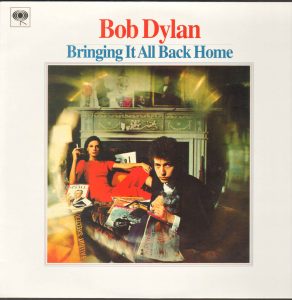
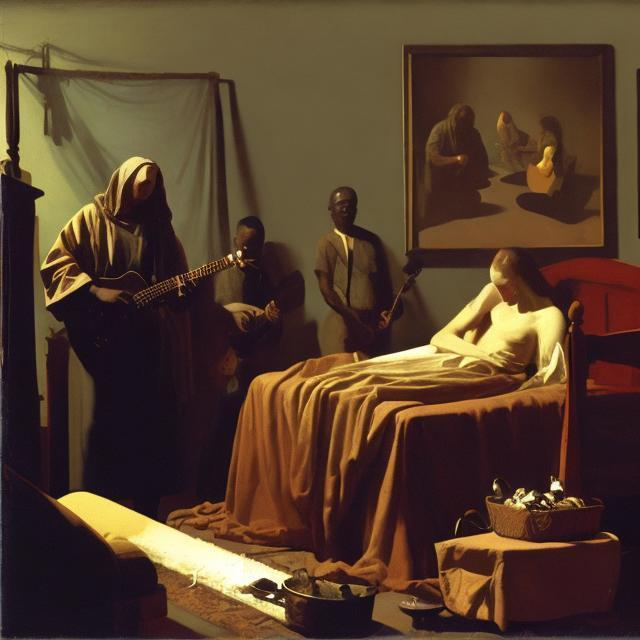
which of course are the lyrics from Bob Dylan’s “Trouble”. And meanwhile, I am sure you can’t have missed the link between the cover above and a certain album by Bob…
But back to the recording, in fact we get the first four verses of Bob’s song, before we return to the avant garde improvisation until at 7’45” we get the last verse followed by a coda.
Now I don’t have a copy of “Out of the bell jar” but looking it up it is clear that this is an album of reinterpretations of Dylan’s work, and of course there’s nothing wrong with that. Indeed this whole series is about exactly that. But I think this is the first time I have come across a complete musical re-write, and certainly the first re-write in an avant-garde form.
And as it happens in my 20s I did play in an avant-garde ensemble for a while – the Scratch Orchestra under the direction of Cornelius Cardew, before ultimately deciding this form of music was not for me (although I am sure the rest of the ensemble knew that long before I did). Interestingly Cardew, an infinitely superior musician to myself, made the same musical decision a little later about the music, although politically he remained committed to the very far very hard left, while I softened rather a lot.
But to get back to the music … no it’s not for me, and I don’t want to play it again, and I really can’t remember why I was drawn to it all those years ago.
Here, for me, the avant-garde introduction before we get to the lyrics seems to be completely disconnected from the song itself. Yes I know that the confusion of the instrumentation can be considered a representation of trouble, but then, that’s a bit too easy, and a bit too disconnected from what the song does.
So as I say not one for me – but I am sorry to say I can’t find any other cover versions of the song either freely available via a youtube link or on Spotify. If you know of one (or indeed if you would like to tell me why I’m wrong) please do write in. As ever it is Tony@schools.co.uk or you can of course leave a comment.
XII You can never tell why someone’s gonna stick something in a song
The Cuckoo is a pretty bird, she warbles as she flies
I’m preachin’ the word of God
I’m puttin’ out your eyes
I asked Fat Nancy for something to eat, she said, “Take it off the shelf—
As great as you are, man,
You’ll never be greater than yourself.”
I told her I didn’t really care
High water everywhere
On 5 March 2008, the theme of episode 71 of Theme Time Radio Hour is “Birds” and on the playlist at No 6 is not Clarence Ashley’s 1929 primal version of “The Coo Coo Bird”, but Ashley’s 1961 re-recording. Re-recorded, DJ Dylan tells us, as Clarence was dissatisfied with his playing on that old recording. “He said he had to practice it to perfection. Well, it sounds pretty good to me.”
And a few moments later, we then hear Clarence singing The coo coo is a pretty bird, she warbles as she flies. A listener from Bloomington, Indiana, calls the radio studio ten minutes after. Charles has a substantive question about that song. He wonders what Ashley means by that date, why the bird “never hollers coo coo ’til the fourth day of July”. What do I know, says DJ Dylan:
“If I had to guess, I’d guess it had more do with Clarence Ashley. Perhaps the Fourth of July was important to him for some reason. Maybe it was somebody’s birthday, or the day his wife walked out of him. You can never tell why someone’s gonna stick something in a song. You just gotta remember that the whole is bigger than the sum of its parts. You can’t expect to understand everything in every song.”
It’s a fascinating response from the DJ, and he does seem to be talking more about himself than about Clarence Ashley. Dylan obviously knows very well that Ashley did not write the song himself, so this blindly shooting at supposed birthdays or divorce dates makes no sense either. True, the date may not be found in the English primal versions from the 18th century, but “fourth of July” is presumably an American addition from the 19th century – older than Ashley, in any case.
It therefore has every appearance that Dylan is only staging this little act, this radio play featuring a dial-up listener from Bloomington with that nerdy question, to air something about his own philosophy of the modern song. In itself, of course, the statement You can’t expect to understand everything in every song is an art declaration that does fit into a consistent, long-running series. From the bitchy “I’m sick of people asking what does it mean. It means NOTHING!” (Royal Albert Hall, 27 May 1966) and “I mean, they’re just songs” (Eliot Mintz interview, 1991) to “All my stuff is rhythmically orientated” (Paul Zollo interview for SongTalk, 1991), “All that profound meaning stuff-that comes later. Believe me, the songwriter isn’t thinking of any of those things” (interview with John Elderfield for Bob Dylan’s The Asia Series catalogue, 2011) and the ultimate confession from the 2016 Nobel Prize lecture: “I don’t know what it means, either. But it sounds good. And you want your songs to sound good.”
Still, it is precisely this 2008 statement by the DJ in relation to this very song that makes this one variation on Dylan’s conception of art more remarkable than all those other confessions that say essentially the same thing: the DJ Dylan makes this comment seven years after he recorded “High Water (For Charley Patton)” at Clinton Recording Studios at 653 10th Avenue, in the heart of Manhattan’s Hell’s Kitchen, on Thursday 17 May 2001. “High Water”, the mosaic song with plenty of alienating verse fragments, and among them this opening of the sixth verse, the opening taken word-for-word, in its entirety, from Ashley’s version of “The Coo Coo Bird”.
The song, like “Po’ Lazarus”, is deep under Dylan’s skin. “The Cuckoo Is A Pretty Bird” (or: “The Coo Coo Bird”) is on his setlist as early as November 1961, at the Carnegie Chapter Hall concert, and still is in October 1962 (Gaslight Café, New York). Like almost all artists who record the song, Dylan fiddles around with the order of the verses, with the number of verses and even with the content; Dylan’s version is the only variant with the verse
I wish I was a poet
And could write a fine hand
I’d write my love a letter
Lord, she would understand.
Bob Dylan – Poor Lazarus: … a surprising insertion copied from “Pretty Saro”, the song he ventures into during the Self Portrait sessions in March 1970, which we don’t get to hear until the 2013 release of The Bootleg Series Vol. 10: Another Self Portrait. On it, he also sings the subsequent closing lines:
If I was a poet and could write a fine hand
I'd write my love a letter that she'd understand
And write it by the river where the waters overflow
But I dream of Pretty Saro wherever I go
… with which, via the hopscotch step Coo Coo Bird – Pretty Saro, we are back to overflowing waters, to “High Water”. And if we also make the jump after the hop step, we finally arrive at the one and only “George Lewis”, the Great Unknown from the fifth verse of “High Water”. During these same months in 1961 that Dylan has “The Cuckoo Is A Pretty Bird” and “Po’ Lazarus” in his repertoire, he also plays and sings the antique murder ballad “Omie Wise”.
“Omie Wise” is one of those murder ballads based on a real, horrific event – the cowardly murder of naive, smitten, nineteen-year-old Naomi Wise, who gets impregnated by the untrustworthy good-for-nothing Jonathan Lewis and is therefore lured away by him in April 1807, knocked down and thrown into the Deep River, near Randleman in North Carolina, with her hands and feet tied. Naomi drowns; her body is found three days later.
According to lore, shortly after her death the tragic story is cast in a ballad that soon becomes popular and today is considered North Carolina’s most important contribution to America’s treasure chest of songs. In 2019, the North Randolph Historical Society will receive the grant to place a so-called “historic marker” in Randleman, on the street now called W Naomi Street:
NAOMI WISE
DROWNED IN DEEP RIVER BY
HER LOVER IN 1807. BECAME
SUBJECT OF WELL-KNOWN
NORTH CAROLINA BALLAD
BEARING HER NAME.
north carolina folklife institute
william g. pomeroy foundation 2019
The ballad exists – of course – in dozens of variants. Naomi is called Omie, Annie, Oma, Roney, Romey, Ommie or Noma, the killer is sometimes called Jonathan and usually John, as in both Dylan recordings we know (Riverside Church 29 July ’61, just before “Po’ Lazarus”, and on The Minneapolis Hotel Tape, December ’61), but the echo we hear in “High Water” comes from the LP Dylan listened to more than once, Tom Paley’s Folk Songs from the Southern Appalachian Mountains from 1953.
Bob Dylan – Naomi Wise (1961)
In his early New York years, Dylan gets to know Tom Paley when Paley is a member of The New Lost City Ramblers, he learns “Love Henry” and “Jack-A-Roe” from him, which Dylan will record for World Gone Wrong in 1993, and from Paley’s solo-album he also copies the fourth song from Side B, “Girl On The Grianbriar Shore”, which he will play twice as “The Girl On The Greenbriar Shore” in 1992 (and which eventually will be released on the unsurpassed The Bootleg Series Vol. 8 – Tell Tale Signs: Rare and Unreleased 1989-2006). And right before that fourth song on Side B is track 3, “Deep Water” – Tom Paley’s version of “Omie Wise”;
Then Romy was missin’, no more to be found
The people to seek her were all gathered ’round
Then up spoke her mother, in her words was a sting
No one but George Lewis could have done such a thing
… with which, after Charley Patton and Big Joe Turner, “Didn’t It Rain” and “London Bridge Is Falling Down”, the Stanley Brothers and Woody Guthrie, “Shake It And Break It” and “Hopped-Up Mustang”, Jimmy Dean and Henry Rollins, “As I Went To Bonner” and “Vicksburg Blues”, “When The Levee’s Gonna Break”, “Po’ Lazarus” and “The Cuckoo Is A Pretty Bird”, after all those different shiny tesserae, we’ll get the next pebble in the multi-coloured, fascinating, encompassing mosaic Dylan constructs with “High Water”: George Lewis leads us to the next tile, to the little gem “Omie Wise”.
And still the mosaic is not finished…
To be continued. Next up High Water (For Charley Patton) part 13: The sum of its parts
Jochen is a regular reviewer of Dylan’s work on Untold. His books, in English, Dutch and German, are available via Amazon both in paperback and on Kindle:
Comparing recordings of Dylan performing his own compositions, across the years.
In this series we look back at recordings presented by Mike Johnson in the Never Ending Tour series of articles (there is an index to that series here). Links to previous articles in this “Extended” series are given at the end.
The selections and comments are by Tony Attwood.
——–
We first come across “Simple Twist of Fate” in the Never Ending Tour series of articles in 1989 when the song was already 15 years old, and we find it with an accompaniment that makes it utterly clear what the song is, but with Bob varying the melody in order to maximise the sense of tragedy.
Hearing this today, I am not sure what the rush of the lyrics actually convey to me. Is it the hopelessness of lives in which we are forever chasing the next objective, or perhaps that for all of the semblance of control that we like to feel we have, is it the realisation that fate is still the dominant factor in our lives?
In fact I found myself so wrapped up in this transition of the song, I felt the need to go back and play the original; I think this is the first-ever recording, and so a reflection of how Bob first perceived the song having recently written it.
So the song has already travelled a long way from that starting point. But was it to go any further?
Well, yes, for within two years of that 1989 recording the piece really had moved on as the introduction in the 1991 version sets a new scene. I must admit I find this version much more enjoyable; not to say that sadness is enjoyable, but as I can enjoy a movie or novel with a sad theme if it is well constructed so I can enjoy this. The pictures that occur in my head as I listen as much more in keeping with the lyrics. Just listen to “the blind man at the gate” – I’ve never felt so much from that simple line before.
It is also interesting how the instrumental sections are extended, and yet still can retain the interest, and after the instrumental break Bob retains the feel of the song completely, in the way he sings the lyrics.
It is also fascinating how such a simple song can become an eight and a half minute performance, extended of course by the interestingly growing but still somehow restrained harmonica performance. This extension in time and the slow coda adds more and more, and we are left wondering where it ends…. which it does without returning to the tonic chord – musically we are utterly left hanging the air. For a moment I can’t think of any other time Bob does that – but maybe as I work through this series there might be another.
Wow, is all I am left saying along with a feeling that maybe I’ve already reached the end after just one example from the Tour. But I’m committed to writing this, so onwards…
The following year the format and length is similar, but those small nuances and changes within the melody that Bob so loves are there. as the accompaniment takes further small steps into the song itself, filling out more and more of the openness that was present the year before.
I get the feeling these changes have come not from re-thinking in rehearsal but what has simply happened in each performance. Certainly, one way or another the percussionist has taken it upon himself to have a greater input and I am not happy with that; it is as if the percussion is leading the show, which is not what I wanted from this song. Nor indeed as an accompaniment to a gentle harmonica solo. Harmonica and percussion? No, not for me, but it is an interesting experiment. Whoever else has tried this?
Mind you I could also do without that person (probably the same one as we have come across elsewhere who seems to go to Dylan concerts in order to shout “Yeah” repeatedly) near the microphone. He’s at it around 7’25” but block it out if you can – there’s some very interesting musical entwining going on here.
Bob continued to experiment with the piece in the coming years and continued to extend the performance – by 1993 it was approaching 11 minutes; two and half times the length of the original arrangement.
This year Bob seems to have decided to extend his vocal range, as if to make the lyrics more central to the song, and while the percussion continues to have an important role, the drums have in fact been taken back just a little. Of course these recordings are made by those attending the concerts without the opportunities to balance and modify how the tracks sound. Which means that the quality of the recordings is variable, but we do get it as it sounds to the punter in the concert.
I do get the feeling in considering songs in this way, year by year, as if Bob himself simply lets it happen during the rehearsals and then on stage, or if there was any planning and discussion. Either way, I have the feeling here that he felt that 1992 had gone as far as it could with the song, and it was time to reign things in somewhat but isn’t quite sure how. As a result the instrumental coda from around ten minutes to the end is interesting, and more in keeping with the whole song I think.
One year on, and Bob now has found that even deeper sense of calm regret in the song, and has resisted the notion of letting it grow anymore. Now we have a slightly shorter version of something which was in danger of taking over half the show. And Bob’s voice shows signs of expressing his depression at losing her. It’s not sorrow anymore; this is pure unadulterated anguish.
There is also just before the seven minute mark a moment of music which almost sounds like the first ever run through “Someone’s got it in for me…” but maybe I’ve been listening too much. Certainly we are now hearing the song taken down and down and down so far that approach eight minutes it is almost vanishing, before recovering. There is indeed a sense that this is as far as it goes; everything that could be done has been done.
So where else could this song go? It could retreat into its original form, it could become shorter, it could become more mainstream… and indeed that is what Bob did. Not exactly the original melody but four years later we have a variation on earlier versions of the melody, and a feeling of gentleness rather than any sense of despair. A sort of sense of retrospection that wasn’t there when the song was first being performed.
And this is interesting because it is not just retrospection within the story in the song, but also I feel, a looking back by Bob on his own earlier performances. As if he is saying, well, yes this is interesting, but maybe I took it just a little too far before. These lyrics… they are rather good, let’s keep the focus there.
And you might also notice how restrained the harmonica part is. Or if you prefer, just how Bob treats “I was born… I was born too late.” To me this is a performer who has just re-discovered one of his masterpieces.
OK it’s been a long journey, and when I started writing this I didn’t mean to take us quite so far in one go, but I did want to move on one more step, to 2003.
For what I hear now is a complete retrospective – a pulling together of the different approaches taken, gentle and modest though some of those variations might be.
So what I have just done having finished listening to these seven versions of the song spread across 14 years is played the Take 1 version near the top of the article. We’ve been on a long old journey since then, and I really feel it was worth it, because it led to this 2003 version (below).
Could Bob have got to this, without going through the journey revealed above? Maybe, but probably not. The changes are not always that overt, and much of the time it is the overall sound and the approach that we feel as being different. Even if you have had enough and are skipping some of the music, do listen to 5’20” in this version.
I’ve been listening to these recordings all morning, and this is the one that brings forth the tears. Of course I have no idea what Bob thinks about the song and his various versions, but for me, in 2003, he finally knew where he all these previous outings were heading and he got there. And so did I as the listener. I hope you did too, or at least I hope you enjoyed some of the journey.
Dylan clearly did not rate the song himself – and for me the version on the Basement Tapes is one of the worst things, if not the worst, I have ever heard from Bob. The attempt to add the ascending chord sequence, the vocal harmonies… well, maybe there are many people who love it and still play it, but not in my house, please.
But the song was rescued (and yes that is exactly the right word) by Peter Paul and Mary in 1967 in a version which I raved over for many a year. Indeed for a long time it was right up at the top of my favourite Dylan covers.
Listening now all these decades later I still enjoy it, but I’m not at all sure why I got so excited about the song. What they did was get rid of that strange chord sequence, and give the song a bounce, and of course give us a lovely contrast between the verse and the chorus. In short they took out Bob’s move into the avant-garde, which I really think was a terrible error, and turned it back into a straight pop song. And yes straight pop songs can work sometimes.
In 2010 Grassmakers decided that Dylan could become something else, but in fact what they did was take the PPM version and add some fun violin.
And that seemed to remind people that there was actually an interesting song here as in 2011 Invisible Republic had a go at putting together a version based on the alternative version – the one with the rising chord sequence, which I find really, really horrible. To me that rising sequence sounds like something a 10 year old being given her/his first lessons in musical compositions would do.
It is not so much that just going up the scale chord by chord is wrong, it just sounds horrible, and there is no reason to do it. As the alternative versions shows, it is perfectly find song without jumping all over the place in terms of what key it is in.
So let us escape as fast as we can and venture backwards to 2001 for Felix Cabrera’s version which gives the song a reggae beat. And although there’s not too much in this version to excite me it doesn’t have that horrible rising chord sequence.
Anyway, enough of that because we do have versions that give more than hints of what actually exists within this song. For in 1970 Fotheringay used their undoubted ability to take us back to the song as it is – a fairly simple song of regret. The singer is, after all, “on the waters of oblivion”.
True, the last verse reads
Everybody's doing something,
I heard it in a dream.
But when there's too much of nothing
it just makes a fellow mean.
But that is no excuse to try and make the music sound like a nightmare.
But less you feel I might stop here, no, because every time I came across a new version of the song I would always get it, in the desperate hope that they would make the song, something approaching what I always felt it could be.
And mostly I was very disappointed. Now in this series, mostly I ignore versions of the songs that I really dislike, but I’m making an exception with Five Day Rain. I think this is horrible… the the “la la” is utterly unnecessary, so is the dominance of the bass, and the change of the chord sequence. In fact I am almost getting to the stage where I might have to make my own recording of the song (but don’t worry I won’t force it on the rest of the world – it’s just for my own sanity).
But please do listen to this version all the way through, including the very long coda in which the title is repeated and repeated, before a very fast instrumental fade out. I’d love to be able to ask the arranger why he did that. I suspect the answer would be “we wanted to make it longer”.
And so, and so, after all the torment, I have to come to Fairport Convention. It’
XI “De ballit I like bes’, though, is de one ’bout po’ Laz-us”
Well, George Lewis told the Englishman, the Italian and the Jew
“Don’t open up your mind, boys,
To every conceivable point of view.”
They got Charles Darwin trapped out there on Highway Five
Judge says to the High Sheriff
“I want him dead or alive
Either one, I don’t care.”
High water everywhere
“It was not long until Burn-Down, sitting in his corner, was ringed with a group of listeners who leaned over and encouraged him when he brought forth a particularly apt or lewd aphorism.”
Alan Lomax, the son and assistant and torch-bearer of the legendary musicologist and folklorist with inestimable merits for the preservation of American folk music, John Lomax, has even more literary talent than his father.
His ballad-hunting stories are fascinating enough in their own right because of the couleur locale, the self-evident tone and the casual way with which Alan describes the bizarre living conditions of black people on plantations, in prisons and in nightlife, and are all the more captivating because of his writing style; Alan, although an observer and an archivist, usually creates an attractive tension arc in his essays, lacing them with mild irony, witty asides and poetic metaphors. Never disrespectful, by the way. Brutal manners and racist shouting from prison staff and plantation owners he portrays commentlessly and clinically. A plantation manager intervenes when “One-Eye Charley” is too bashful to sing: “Wait a minute, you lyin’ black rascal, you. You can sing an’ you know it.” But the descriptions of the appearance and character of the negroes are colourful and friendly. In the plantation’s “school-house” that evening, the black field workers are called together to provide songs for Lomax and his little recording Dictaphone:
“As the excitement of the music grew in him, he began to shout out the verses and his crazy old “box” began to jump and shake under the pounding rhythm; his muddied brown eyes took light and flashed in his sallow face as if there were rising up in him some fierce and consuming passion.”
(‘Sinful’ Songs of the Southern Negro, Southwest Review, January 1934)
Or his loving portrait of “Bat” with the beautiful soprano voice: “Her skin was golden yellow. Her broad-brimmed straw hat sat far back on a kinky head, and from beneath it across her forehead stuck out two stiff, black pigtails.”
The ballad-hunting begins in Texas, takes father and son to Mississippi and then in July 1933 to Louisiana, to the Louisiana State Penitentiary in Angola, where they make their greatest discovery: Huddie William Ledbetter, Lead Belly. A discovery to which we owe “Cotton Fields”, the song that converted Dylan to folk (And that record changed my life right then and there, Nobel Prize speech), “Goodnight Irene”, and “Frankie And Albert”, “Where Did You Sleep Last Night” and “Midnight Special” and whatnot.
Alan tells how Lead Belly introduces himself boastfully (“I is the king of the twelve-string-guitar players of the worl’”), but then right away lives up to his boast with a breathtaking song, “Ella Speed”. After the closing line An’ he hung down his head an’ he cry, Huddie switches gears. “The ballit I like bes’, though, is the one ’bout po’ Laz-us. Laz-us was a levee-camp roller,” he announces, and then sings the words we hear descending some seventy years later in Dylan’s “High Water”:
High sheriff tole de deputy,
“Go out an’ bring me Laz’us,
Bring him dead or alive,
Lawd, Lawd, bring him dead or alive.”
“Dat a mighty pitiful song, ain’t it?” says Lead Belly after the last line, not dissatisfied. Dylan’s addition Either one, I don’t care after “dead or alive” then adds a not unwitty extra layer; after all, with Lazarus, the second-most-famous from-the-death resurrectee of all time, it indeed doesn’t matter whether you capture him dead or alive; he gets back up anyway, history teaches.
That Lead Belly’s “Po’ Lazarus” is under Dylan’s skin, and thus the most obvious purveyor of this verse, is beyond doubt. It is one of the five songs he put on his setlist on his radio debut on WRVR-FN Radio on the Saturday Of Folk Music programme, on 29 July 1961. We all know the confident, rough and rowdy version on the so-called Minnesota Hotel Tape that the very young Dylan let out in December of the same year 1961, as well as the 1967 recording, the one-minute snippet on The Bootleg Series 11: The Basement Tapes Complete (2014). A few years after The Basement Dylan copies the repeated “Lawd lawd”-moaning on to “George Jackson”, and there is a further, weaker echo in the receptivity of the name of song number 10 on “Love And Theft”, “Po’ Boy” (although – obviously – the echo of Bukka White’s 1939 “Po’ Boy” is much stronger and more direct).
Very mysterious it is not, the surfacing of Lead Belly and “Po’ Lazarus” in this fifth verse of “High Water”. Content-wise, there is absolutely no common ground, of course. “Po’ Lazarus”, as Ledbetter patiently explains to Lomax, is a ballad about the hunt for the murderous thief Lazarus who refuses to surrender and is then shot by the High Sheriff. Definitely dead, in Lead Belly’s version. Though in the version recorded by Alan Lomax in 1959 at the Mississippi State Penitentiary in Lambert, sung by James Carter and the Prisoners, the version used in 2000 for the brilliant Coen Brothers film O Brother, Where Art Thou?, Lazarus’ corpse is indeed delivered and deposited at the “commissary gallery”, but:
Well then they take dead old Lazarus
Yes they laid him on the commissary gallery
Well they taken poor Lazarus
And they laid him on the commissary gallery
He said “my wounded side,
Lawd, lawd, my wounded side”
… on that porch, the corpse comes back to life, and speaks the words of Jesus, who at his resurrection quite likely still must have suffered from the stab wound in his side.
And its use in the Coen Brothers film has another, particularly fun, coda: John Lomax’ granddaughter Anna, the manager of the Alan Lomax Archive, and producer T-Bone Burnett make every effort to find James Carter, who indeed turns out to be alive, who – understandably – can’t remember a thing from that recording forty years ago and who to his surprise is allowed to accept a check for $20,000. Really stunned, however, he is upon learning that the album sells better than the latest CD’s of Mariah Carey and Michael Jackson. Once he’s processed that, he expresses his desire to reassure The Prince of Pop: “You tell Michael that I’ll slow down so that he can catch up with me.”
No connection to “High Water”, all in all. But that Charley Patton is stored roughly in the same corner of Dylan’s musical memory as Lead Belly, who also recorded flood songs like “Backwater Blues” and “Oh Mary, Don’t You Weep”, that does seem likely.
Incidentally, the use of “Po’ Lazarus” also offers, retrospectively and with some tolerance, a third or fourth key to pinpointing that Great Unknown in this song, “George Lewis” – the name seems a slight remodelling, an acoustic echo of “John Lomax” both in terms of rhythm and timbre and syllables. However: atypical of Dylan and a little too far-fetched. But we do get close – the currents beneath the surface of Dylan’s stream of consciousness churn; after all, the levee is broken, the Waters of Association swirl in unpredictable maelstroms, and all around us we see the floaters, the floating corpses of tragically drowned girls…
———
To be continued. Next up High Water (For Charley Patton) part 12: You can never tell why someone’s gonna stick something in a song
Jochen is a regular reviewer of Dylan’s work on Untold. His books, in English, Dutch and German, are available via Amazon both in paperback and on Kindle:
In Dante’s Divine Comedy, we have the Roman poet Virgil as our guide through the various levels of Hell and Purgatory as envisaged by the poet. I have done my best to play Virgil to your Dante and take you on a journey through Bob Dylan’s Never Ending Tour, a thirty-one year musical odyssey, Dylan’s own Dantesque journey, but now in 2019 we have reached the end of the line, the last station. Along came Covid in the first months of 2020, the venues shut down, Dylan quit the road until 2021, and the tour he began after that was clearly branded the Rough and Rowdy Ways tour. He seemed eager to rebrand and leave the NET behind him.
Having followed the tour since the year before it began, 1987, to 2019, across 143 articles, some 214,000 words and around 1,500 live recordings, we have to now face the fact that the Never Ending Tour never existed. It was nothing but a media construct. Dylan himself was sarcastic about it. On liner notes for World Gone Wrong, 1993, he wrote:
‘Don’t be bewildered by the Never Ending Tour chatter. There was a Never Ending Tour but it ended in 1991 with the departure of guitarist G. E. Smith. That one’s long gone but there have been many others since then: “The Money Never Runs Out Tour” (Fall of 1991) “Southern Sympathizer Tour” (Early 1992) “Why Do You Look At Me So Strangely Tour” (European Tour 1992) “The One Sad Cry Of Pity Tour” (Australia & West Coast American Tour 1992) “Outburst Of Consciousness Tour” (1992) “Don’t Let Your Deal Go Down Tour” (1993) and others, too many to mention each with their own character & design.’
A perfectly reasonable desire that the NET should not be mythologised might lie behind this attack. We shouldn’t make too much of it. Dylan was not the only artist to hit the road permanently. BB King spent forty-seven years on the road, performing through to his late eighties, doing up to three hundred gigs a year. Constant touring and performing is the life of the blues journeyman, and Dylan was acting squarely within that tradition. Those old blues cats never put their suitcases down.
My editor Tony Attwood has kindly described this series as a ‘definitive’ account of the NET, and I thank him for his enthusiasm, but with some 3066 concerts in all (the concert on April 19th, 2019, in Innsbruck was the 3,000th show), and with an average of nineteen songs per concert we have over 58,000 performances, more Dylan than anyone can decently listen to in one lifetime, and another Virgil would surely plot a different course through that mass of material, discovering wonders that I overlooked, illuminating corners that I blundered past. What I do acknowledge is that this is the most complete account, with performances, that I know of.
In the very first article of this series The Never-Ending Tour: 1987 – Farewell to all that, I outlined how unfit I was for the task. I don’t have the astonishing depth of scholarship of Jochen Markhorst, who writes for Untold Dylan, or the breadth of knowledge of Tony Attwood, both of whom might be justly called Dylan scholars. A big thanks to both those men for helping me on my way. But, as I said at the beginning, I don’t have many Dylan books on my shelf; my primary love for Dylan lies in listening to the performances.
So I did bring to the table a certain ear for Dylan’s live performances, having been an avid Dylan listener from 1964 when The Freewheelin first hit New Zealand – and I had a growing collection of recordings.
When I first started informally collecting Dylan performances there was nothing on You Tube but a bunch of imitators (circa 2010). Real Dylan uploads would fall foul of the Web Sheriff who looked like a character out of a Dylan song – the man with the shining star. Then uploads began to appear faster than they were taken down. Masses of material got uploaded, much vanished but some survived. Now we have the opposite problem. There is too much on You Tube, some gems but a lot of dross, inferior recordings. It’s an undifferentiated mess. The best of them is probably Elston Gunn, whose videos are fake but have good sound quality. And try Bennyboy.
But it wasn’t You Tube where I found my first ‘best evers’ collection. Before discovering the concerts section on ‘Expecting Rain’ I found material in Doom And Gloom in the Tomb, and the best of them all, Midnight Café, where dozens of concerts were uploaded before it disappeared a few years ago. A Thousand Highways also did downloadable compilations, and this began to alert me to the better concerts of any year, as all the songs were dated. I thank CS of A Thousand Highways for his contribution to this series.
I was able to further track down the best concerts by consulting Music this Day. Their yearly entries were helpful but not infallible. Tracking down the best concerts and the best performances at those concerts became an art form in itself.
When I started collecting these recordings I had no idea that I would undertake a study of the NET. I was just creating my own play list, but when that play list reached a thousand, I began to get a feel for Dylan’s musical development and conceived the urge to share that collection with others. I had some damn fine recordings which other Bobcats would love to hear!
The reason I quite often couldn’t supply the concert date for a particular recording is because it came from that original overblown play list, and I’d kept only the year, not the place or time if I knew it – I’m glad I did that much.
My series ‘Bob Dylan Master Harpist’ was like a practice run for the NET series. I had a lot more material, and was gathering more all the time. I discovered an enjoyment not just in listening to the songs but writing about them with care and enthusiasm. Once I got going I started to have fun, and it gave me the best ever excuse for listening to heaps of Dylan!
The writing became a journey of discovery. The NET is a remarkable musical odyssey, and following it gives us the chance to see Dylan in the act of creating and re-creating his music. That in turn inspired me in my own writing. I discovered that the reason I listen to so much Dylan is that I find him inspirational. There is something fundamentally uplifting in Dylan’s music quite apart from the mood of any particular song. Blasting Dylan at full volume is a guaranteed mood changer. It’s cathartic.
Even the dark songs are uplifting because Dylan, like the greatest of the blues singers, sings out the feeling. His performances might be seen as exorcisms of the shadow self, the anger, bitterness, remorse, yearning, disappointment, revelation – all given voice through a psyche splintered through dozens of narrative voices, points of view, masks and personas. Dylan’s genius lies in his divestment of self.
Along the way I discovered that for Dylan, a song is never finished, never finalized, flexible by nature and responsive to different musical styles and interpretations. There is no definitive written form, there can’t be since the lyrics keep changing to keep up with the changing times, and Dylan’s changing attitude to his songs. At first I thought that this was a Post-modernist approach to the creative. It recognises the flux. Fixed form is a Modernist illusion. As the American poet Lyn Hejinnian said, ‘language is never at rest.’ That may be true, but there might be a simpler explanation – he was just trying to make it better, but nothing can be perfected in this fallen world. The search for perfection is alluded to in the alternate version of ‘Lovesick’ in Fragments,
Below me
Desolation in every direction
Below me
Nothing’s making any connection
I’m driving…struggle and striving
For perfection
Always striving to paint that masterpiece, the restless artist can never be wholly satisfied. My search for the ‘best ever’ performances became a bit of joke, as one ‘best ever’ seemed to be overtaken by another, and I found myself disagreeing with the mighty Christopher Ricks (another outstanding Dylan scholar) in his contention that a perfect song meets its perfect performance once and once only. Maybe in my search for the ‘best ever’ I was mirroring Dylan’s own search for that definitive performance, a search that was the driver for his constant innovation over those thirty-one years. Each year had its distinctive flavour.
When it comes to 2019, a powerhouse of a year for the seventy-eight year old Dylan, I have left the best until last.
‘It’s Not Dark Yet,’ from Time Out of Mind, is a song that just keeps getting better over the years. I have suggested that the older Dylan got, the more convincing the song became. The song offers no religious or emotional comforts. There is no Jesus or God to step in and make it all right. It is a cry from the dark night of the soul as the illusions of the world are laid bare:
It might look like I’m moving
But I’m standing still
We have heard many powerful performances over the years but surely nothing to match these 2019 recordings. He only performed the song a dozen times over the year, but the best of these performances, especially those recorded from Oct 11th to the 14th, must rank as some of his finest, most moving moments on stage. He starts quietly and then builds to a soaring conclusion. It’s spine-tinglingly good. His voice has a spooky, ghostly quality, as if he is already speaking to us ‘from the other side.’ It feels like a grand and fitting way to end 2019, and this series as a whole – three triumphant renditions.
Let’s start where we have often started in 2019, at the wonderful Palo Alto concert (Oct 14th) for a sensitive and softly delivered gem. It’s beautiful the way he unfolds the drama of the song in a soft, hushed voice.
Not Dark Yet (A)
But is it the best (that crazy quest for perfection again)? Could it be more perfect? Well, as we have done before, let’s go to Santa Barbara (Oct 12th) for a different quality of sound. A bit rougher, a bit more upfront. There’s an excitement in the air at Santa Barbara, and the song’s unfolding drama gets a more desperate edge. The last lines, the song’s climax, become a howl hurled into the void. A final, soul-stripped cry of bewilderment. What happened to salvation? ‘Can’t even hear the murmur of a prayer.’
Not Dark Yet (B)
An unmatched performance for sheer raw power. Just listen to how Dylan sings ‘there’ at the end of each verse.
So is the Santa Barbara version definitive? How could it get any better? Before you make up your mind, best listen to this one first, from Irvine (Oct 11th)
Not Dark Yet (C)
It’s the way this Irvine performance lifts that last verse into the stratosphere that gets me, a soaring despair beautifully orchestrated, and a vocal as good as anything in Dylan’s whole history. This one gets my vote.
If anything, these three recordings mock our search for perfection: it’s right there in front of us. All you gotta do is listen to them again.
So that’s it for 2019 and the Never Ending Tour (that never was). A big thanks to Tony Attwood for hosting this series on Untold Dylan, to my proof-reader, Janscie Sharplin, who saved me many embarrassments, my son-in-law Chris Griffen who could magically produce any concert I asked or, and to my wife, Leila Lees, who so many times patiently heard me out while I raved about this or that.
But my biggest thanks must go to Bob Dylan for all those years of uncompromising performances. He never wanted to be a spokesman for his generation, but he was for me, pushing back the boundaries of my imagination and enriching my emotional being. An ongoing process.
I may return at some point, perhaps we’ll meet again someday on the Avenue…
Comparing recordings of Dylan performing his own compositions, across the years.
In this series we look back at recordings presented by Mike Johnson in the Never Ending Tour series of articles (there is an index to that series here). Links to previous articles in this “Extended” series are given at the end.
The selections and comments are by Tony Attwood.
——–
This Love and Theft song first appeared on the tour 5 October 2001, and made its final bow in 2018 after an astonishing 885 performances, showing us once more just how much Bob loves the old 12 bar blues. And indeed how much he can get out of it.
And here there is something very interesting that happened because Bob and the band took the song to, and perhaps beyond its absolute limits as a rocking 12 bar blues, but then when it couldn’t go any further, suddenly took back and gave it a sort of rock and country twist, as I hope to show…
2001
Somewhere after the two minute marker he starts playing around with the song. He doesn’t mind if we can’t get all the lyrics or not, he’s just enjoying himself, verse after verse. Then from about 3 minutes 45 we get an instrumental 12 bar blues that is just pure fun. And really I can’t help thinking that the whole point of the song on tour was at this point for this improvisation. How can anyone sit still and listen to this? How can Bob remember all the lyrics? How many times did they rehearse each new version?
By the following year we get Manchester and other outstanding performances there is slightly less intensity, which allows Bob to extend through the already extended song, finding almost an extra two minutes to put into the performance. Would someone like to write down all the lyrics and point out the changes from year to year? You could probably get a PhD out of that.
The only conclusion I can reach is that each night’s performance was simply allowed to develop out of the night before – the improvisations in this performance are still improvisations I’m sure, but they could not have just come out of nowhere. Much more likely they are taking the bits the guys liked from one performance and taking them every further.
The only question left was how long would the song ultimately get? There is certainly a very strange moment at 6’34” which seems to come out of nowhere, and is maybe sorted out by the next verse. It sounds rather like a sudden idea, but who knows?
2004
The episode this comes from is called by Mike More jazz, regulars and rarities – and the song is much the same, but with the bassist is having more fun than he can ever dreamed about.
And here the strangeness of where we have got to in this performance really strikes me. For this is a piece that those people who still know, and still can, jive, will absolutely love to dance to. But of course, it is a concert performance. Yes, people are standing and jigging around, but not doing 1950s jive which is really what this song deserves.
Bob does introduce a few changes – odd nuances here and there, but it is still a long, long jam with set lyrics. The extended improvisations are getting wilder too – just listen to what happens around the five-minute mark. I’m not sure we’ve had anything like that before in any Dylan gig. Indeed I’d say, even if you have had enough of this song by now, do listen from 4’10” onwards.
So the question arises, does it ever change? There are hints above, and I am sure some of those lyrics are now quite different. But I think if I took this through each year step by step I’d lose my entire audience, so let’s jump right forward and see where it goes.
2018
And yes be prepared to be surprised (unless you knew where this was all leading). This comes from the article Hell bent for leather
There’s almost a country feel to the piece now, and really the relationship between this and where we were 14 years before is extraordinary. It surely is as if Bob and the band were just taking it on further and further seeing how far it could go, and then having got there, they didn’t want to abandon the piece. So it just became something else. “Hey let’s do it with a country twist,” says Bob, and everyone looks at him wondering what the hell he was talking about. And then it comes together.
So here we have another of those Dylan songs that is so distinctive in so many ways it can be something that everyone wants to cover, but only a handful of artists and/or arrangers has the nerve, guts and talent to explore and ultimately go somewhere Dylan didn’t go.
This song has a highly recognisable instrumental opening, a highly recognisable opening line in terms of melody and lyric, and a highly memorable title line – and that is before we get to that very distinctive middle 8 which, unusually for Bob brings in a chords that have nothing to do with the key … and eventually modulates. It is a song that you can’t mistake for anything else – and that makes it really hard for cover artists to do anything with it that is utterly different from the original. Unless of course either they or their arrangers are super talented.
Take the Nitty Gritty Dirt Band, just those opening chords tell you what you are getting. But for them the difference is thrown in by the harmonies and orchestration – not too much, but just enough to remind us throughout that this is a Bob song but not a Bob version.
But that has been done many, many times, so from there on something very different needs to be in place. Liam Bailey does it not just by making this a solo, but by playing totally different chords by way of accompaniment. This is quite a rare technique, not least because it is so hard to pull off – although it is what several cover artists have tried in relation to this piece. The fact is that even if you have no musical background and don’t know one chord from another, you’ll hear that this music is nothing like Dylan’s.
And Mr Bailey does have a magnificent voice.
Katherine Rondeau takes us back to the original but with such a beautiful voice, I find I just have to listen. For when she says “throw my troubles out the door” then (unlike in the Dylan version) I find myself believing her.
This is a technique owned by a precious few – to make us believe that she really does mean it all, rather than is just singing it from the script. Just listen to the middle 8 (“is it really any wonder”) and remember this whole effect is being achieved by a guitar, a violin, and a voice. Nothing more. In the hands of the best, that’s all it needs to make us believe.
Jeff Jensen tries the song with a big band between the rock group, and sings it fortissimo in order to match the instruments behind him. It is an interesting approach, and at least the instrumentation is kept under control – although in the instrumental break I think we get to the limits, although they do draw back and keep the song in touch with itself. The chorus in the “staying here with you” repeated line at the end is a nice effect to round it all off, and it’s a fine effort, but not the very best, in my view. But still worthy of a listen.
Janet Planet tries the modern jazz approach in the accompaniment and she has the perfect voice to carry it off – and indeed to vary the melody line in keeping with the variations in the instrumental parts. In fact, I think if I had come across version first, before hearing Bob’s recording or knowing that it was one of his pieces, I’d never guess it was a Dylan song.
And what helps is the lady’s perfect voice for this kind of singing. Plus the instrumental section on 3 minutes adds to the fun and occasion. Great stuff.
Ann Peebles is, for me at least, always associated with “I can’t stand the rain”, but that’s just me… what she does is what the others have been doing – varying the chordal accompaniment in parts, and then using her magnificent voice to fly over the changing instrumentation. And that really is the thing that holds these versions together – the inventiveness of the arrangers in each case. They don’t make covers – they take the original and fly. And that is exactly how it should be.
And please don’t miss the wonderful instrumental break from 2’20” onwards. In a sense it is so simple but it works so perfectly within the context. Plus Anne Peebles is such a pro she knows exactly when to keep it all where she is… the whole point of the song is that the “staying here with you” is just said and accepted. There’s no big fuss, the feelings have won, it’s a statement of fact. That’s how Bob wrote it, and that’s how it is.
Here’s the rest of this series of reviews of Dylan covers in the “Cover a Day” series. Over 150 of them, so not enough to keep you going all year as the “cover a day” title intended, but still, quite a few.
Well, George Lewis told the Englishman, the Italian and the Jew
“Don’t open up your mind, boys,
To every conceivable point of view.”
They got Charles Darwin trapped out there on Highway Five
Judge says to the High Sheriff
“I want him dead or alive
Either one, I don’t care.”
High water everywhere
The day the music died was, of course, 3 February 1959, the day Buddy Holly crashed near Clear Lake, Iowa. But entirely alive and kicking she had not been for awhile anyway, that fateful day. The first blow was dealt 257 days before, Black Monday 24 March 1958, the day Elvis reports to the barracks at Fort Chaffee to do his military service; the next blow is just 59 days after that, and hits much harder: 22 May 1958, Jerry Lee Lewis arrives at Heathrow Airport for a UK tour. Among the welcoming committee is Paul Tanfield, a reporter from the Daily Mail, and Paul has his eyes open. “And who are you,” he asks the young girl who catches his eye in Jerry Lee’s entourage. “I’m Myra, Jerry’s wife,” replies Myra Gale Lewis naively, proudly and truthfully. Tanfield turns to The Killer and asks the question that will torpedo Jerry Lee’s career: “And how old is Myra?” “Fifteen,” Lewis lies. Myra is thirteen, and he also wisely conceals the fact that Myra is not only his wife, but also his niece. And that he is now a bigamist (they got married five months before Jerry Lee’s divorce from his second wife).
The press jumps on it, and after three dramatic shows, both Jerry Lee Lewis and the rest of the tour are cancelled.
Back home in Memphis, Sun Records’ Sam Phillips may understand that they need to do something about damage control, but the legendary studio boss proves to be bizarrely bad at assessing the seriousness of the situation. Even lying would probably have been a better option than the terribly stupid strategy they decide on: downplaying.
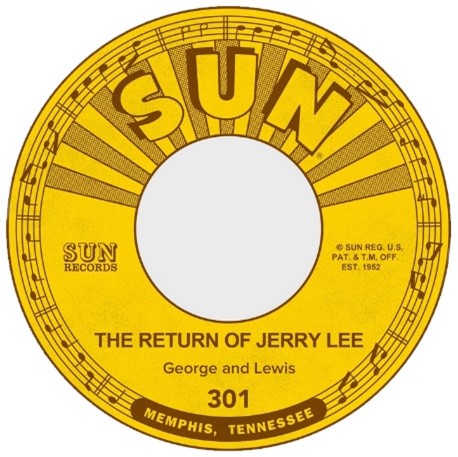
He acts fast, though. Phillips puts his right-hand man, Jerry Lee’s discoverer Jack Clement to work. Within a week, 30 May “The Return Of Jerry Lee” is recorded in his studio and 15 June the single is already on the shelves. Sam makes a few phone calls and on 23 June 1958, i.e. a month after the Heathrow debacle, we read on page 4 of the entertainment industry’s leading newsweekly, The Billboard, an announcement of a “disc for jocks this week”, plus an explanation from the Sun Records boss himself under the heading ‘Return’ Disk Laughs It Off:
“This one has an announcer at Memphis Airport, greeting the chanter on his return from London, with an interview. Lewis’ answers are dubs taken from his past disks. Phillips said: “We think it’s a cute record. It makes light of the whole British episode, which is the way we think the whole thing should be treated anyway.” Phillips added that the disk, now being sampled by various jocks, has met a good early response. At present it’s a one-sider, but if the reception holds up Phillips said, he will issue it commercially with a flip called Jerry Lee’s Boogie.”
Sam Phillips tries to package a scandal uniting paedosexual, incestuous and bigamist unsavouriness as “the British episode”, which, moreover, we should not take too seriously: it should be treated lightly anyway. It fails – obviously – spectacularly. As does the “cute record”, a tantalisingly unfunny pastiche of “interview questions” and snatches of Lewis songs as answers. For example:
Mr. Lewis, I’d like to ask you this question: how do you feel about being back home? Ooh, feels good! [uit “Great Balls Of Fire”]
Well, Jerry, what did you say when the news of your marriage broke over in London? Our news is out
All over town [uit “You Win Again”]
Well, how did you manage to get your marriage license with your wife being so young? I told a little lie [uit “I’m Feeling Sorry”]
Jerry Lee Lewis – The Return of Jerry Lee:
More surprising than the predictable flopping is the artist name under which the single is released: George and Lewis. Chosen because the “interviewer” is voiced by George Patrick Klein. And that, this artist name George and Lewis, seems already a more likely trigger for the name choice “George Lewis” in the opening of “High Water’s” fifth verse than some George Lewes from the nineteenth century or a clarinet-playing George Lewis from New Orleans. At least of Jerry Lee Lewis we know for sure that he is deep under Dylan’s skin – deep enough to be allowed to bounce around in Dylan’s stream of consciousness, anyway.
As early as 1969, Dylan confesses to Jann Wenner that he wrote “To Be Alone With You” for Jerry Lee Lewis; he often mentions him as an admired artist, and in 2006, in the USA Today interview with Edna Gundersen, he even mentions Jerry Lee Lewis as one of the “performers who changed my life”. On this same album “Love And Theft”, we’ve heard Jerry Lee before, by the way; the intro for No 2, “Mississippi”, Dylan copied from The Killer’s awkward ode to JFK, from “Lincoln Limousine” (1966).
Jerry Lee Lewis – Lincoln Limousine:
And a few years hereafter, DJ Dylan, as a radio producer on Theme Time Radio Hour, expresses his love for “the piano pounding madman” often and gladly. No fewer than seven times the DJ finds an occasion to play a Lewis song (putting The Killer in the Top 3 most-played-artists), each time introduced and celebrated with words that show not only love and respect, but also knowledge of the man’s biography. “Let’s talk about the man who argued with Sam Phillips about his eternal soul. Of course I’m talking about the Ferriday Flash, Jerry Lee Lewis,” for example, and the very first time the DJ puts a Jerry Lee single on his turntable, 20 September 2006, Episode 21, School:
“That was Jerry Lee Lewis, “High School Confidential”. If you see it in the movie theatre, with Jerry singing the title song, take a look at the bass player. That’s J.W. Brown. His daughter, Myra Gale, married Jerry Lee. That didn’t go over too good, ’cause she was quite young. Jerry was on tour overseas when news of his marriage came out in the press. “High School Confidential” dropped right out of the charts and Jerry’s career was never the same. I wonder if Myra dropped out of school.”
Content-wise, no links to this fifth verse of “High Water”, of course. At most, the combination of Jerry Lee’s problems with justice and his getting cancelled on the one hand, and “High Sheriff”, the hunt for Charles Darwin and “wanted dead or alive” on the other, may have led to the click in Dylan’s creative flow that then causes “George Lewis” to bubble up – but in the end, that’s as thin as trying to want to hear “George Lewes” and then making the click with Darwin.
No, in the end we will find the strongest candidate closest to home, on the waterfront, in the bulging song treasure of Dylan’s inner jukebox, where we will see an unsteady hanging bridge from one “George Lewis” to “High Water”.
Then again: “None of this has to connect,” as Dylan says to a timid Sam Shepard at their first encounter in 1975. “In fact, it’s better if it doesn’t connect.”
To be continued. Next up High Water (For Charley Patton) part 11: “De ballit I like bes’, though, is de one ’bout po’ Laz-us”
Jochen is a regular reviewer of Dylan’s work on Untold. His books, in English, Dutch and German, are available via Amazon both in paperback and on Kindle:
‘You may buy the ticket because it has Dylan’s name on it; you will leave having seen one of the greatest bands you will ever see live.’ Tim Sommer
“This is the best band I’ve ever been in, I’ve ever had, man for man. They can whip up anything, they even surprise me.” Dylan 2006, Rolling Stone magazine
Since this series is coming to an end, the next post will be the last, I’d like to pause and acknowledge Dylan’s band, surely one of the greatest bands ever to hit the stage. It is the band that has made Dylan’s achievements in the 21st Century possible. They have been the magic in the mix, the foundation on which Dylan could build the sound he needed for his voice and music. They were the wings he needed to fly. Together they could do anything: 1930’s jump jazz; 1940’s big swing, big band; 1950’s rock ‘n roll, Chicago or New Orleans blues; progressive rock and mood jazz – whatever sound the song, and Dylan’s changing conceptions of his songs, needed.
We find Charlie Sexton on guitar, Tony Garnier on bass, George Receli on drums, Stu Kimball on acoustic guitars and Donnie Herron on pedal steel, lap steel, electric mandolin, banjo, and violin.
Let’s start with the longest-standing member Tony Garnier, who joined Dylan in 1988 and stayed with him to the end. He’s rock solid with the beat, whatever the beat, the band’s anchor and leader. The foundation of the rhythm section, able to play bass guitar, and double bass, either plucked or bowed.
‘Bassist Tony Garnier keeps an eye and an ear on every member of the band, and he feels like the bandleader. He plays over, under, on top of and around Receli, Sexton, Herron, and Dylan, but he especially takes out a thick, greasy laundry marker and underlines Sexton’s quick melodic pops, while at the same time bold-typing every one of Receli’s tom hits.’ I can’t write like Tim Sommer but I agree with him.
It’s Garnier and George Receli, who joined the band in 2002, who make the most powerhouse rhythm section, as you’ll hear. Here’s Tim Sommer on Receli: ‘I have almost no hesitation in saying that George Receli is the best drummer I have seen in at least a decade. He is a robust, adept, and joyfully New Orleans-style player, using the kit as an expressive gateway to centuries of rhythm. He relies almost exclusively on the skins, not the cymbals, simultaneously playing light and atomic. He is always rumbling and rolling, moving steadily like a freight train, hovering mysteriously like a pelican, and working his way around the songs like a late-night detective who listens to a lot of WWOZ and surf music. It’s almost like watching Keith Moon if he had been trained on Rampart Street’.
Again, I can’t match Sommer’s prose, but agree. Receli is not a flashy drummer, and his rhythms are more sophisticated and subtle compared to what came before. ‘I like the drummer I have now, he is one of the best around – Bob Dylan Q&A with Bill Flanagan – bobdylan.com 2017.
Receli and Garnier set it up for Charlie Sexton, lead guitarist who rejoined the band in 2009. At talkinbobdylan.blogspot.com, Dylan is asked this question:
‘Charlie Sexton began playing with you for a few years in 1999, and returned to the fold in 2009. What makes him such a special player? It’s as if you can read each other’s minds.’
And Dylan replies: As far as Charlie goes, he can read anybody’s mind … and he can play guitar to beat the band. There aren’t any of my songs that Charlie doesn’t feel part of and he’s always played great with me… He’s not a show-off guitar player, although he can do that if he wants. He’s very restrained in his playing but can be explosive when he wants to be. It’s a classic style of playing. Very old school. He inhabits a song rather than attacking it. He’s always done that with me.
Here’s what Tim Sommers says: ‘‘Sexton, fleet and inventive, changes styles and cultures literally from bar to bar, tossing off insane, hyper-jazz changes, post-punk/pre-Beatles melodic leads, and ripping blues and raunch-hand lines, all without ever making a grimace or stopping for applause. If you want to see someone make a lot of faces and let you know how versatile they are, go see an expert hack like G. E. Smith or Waddy Wachtel. But if you just want to see one of the best electric guitarists in the land inhale everything sweet, spicy, and elegant about American music and exhale it effortlessly, see Charlie Sexton.’ Right on Tim! No rambling solos; very discrete and tasteful.
In 1992 Dylan expanded his band to include a steel guitar, which enabled him to create sounds a four piece band couldn’t. Multi-instrumentalist Donnie Herron took that spot in 2005, and is largely responsible for that orchestral sound that gives the impression of a much bigger band. In the videos you can see Herron sitting behind Dylan, watching Dylan’s every move on the piano like a hawk. A multi-instrumentalist, he plays violin, electric mandolin, viola and banjo, and can turn a rock song into a country song by playing these instruments. Sound textures are his specialty. Here’s a cool story from a Concert review May 3rd 2017 in Dublin.
‘The vibe between Bob and steel guitar player Donnie Herron is obviously very important since the move to the Sinatra songs as Donnie is now a key player in those arrangements, it is also very charming, after one song Donnie applauded Bob and in the dark Bob walked over to him and they shook hands, a truly lovely moment that probably went unnoticed, but it was a moment that displayed the love and respect between the singer and a fabulous band that at times sounded like an orchestra.’
Acoustic guitar player Stu Kimball joined the band in 2004 and stayed until 2018. Kimball is hailed by pre-eminent Dylanologist Peter Stone Brown who says: ‘Stu Kimball is a walking catalogue of great guitar licks… [who] knows when and how to use those licks and use them with taste… I’m going to go out on a limb and say Kimball can take his place as one of the top five guitar players to play on-stage with Bob Dylan — easily.’
Here’s a comment from Kimball’s website: ‘Stu’s soulful guitar playing is exceptional in itself, but his ability to understand another artist’s vision — and then help them bring it to life — truly sets him apart. “I always try to play from the heart, to play with soul and conviction,” he says. “I play for the singer and the song, and to help bring their vision to life…Helping artists give their best performances, regardless of the venue — that’s what I love, and that’s what I feel I was born to do.’
On October 11, 2019, the first show of the North American leg of the tour, Dylan introduced two new members of the touring band: drummer Matt Chamberlain, replacing George Receli, and additional guitarist Bob Britt, who had previously played on Time Out Of Mind. Britt replaced Kimball.
Let’s hear this formidable force in action as we continue with the 2019 Setlist, the final handful of songs. Let’s go to New York (Dec 3rd) to hear this upbeat version of ‘Thunder on the Mountain’ sounding like a cross between a 1950’s rocker and garage-band jazz. The music, it’s all about the music!
Thunder on the mountain, rolling like a drum
Gonna sleep over there, that's where the music coming from
I don't need any guide, I already know the way
Remember this, I'm your servant both night and day
Thunder on the Mountain
That last sentiment, ‘I’m your servant both night and day’ takes us back to the contention of ‘Serve Somebody’ (1979). Doesn’t matter who you are, you end up serving somebody, and it seems to me that Dylan has been serving us, his audience, all the way through. Dylan revamped the lyrics around 2015, which is what we hear on this recording from New York, and fittingly he introduces his band.
Serve Somebody (A)
That’s giving it the old rock ‘n roll treatment. Here it is from Santa Barbara. I think this performance and recording has the edge on New York.
You might even have a name
Or call you nothing at all…
Serve Somebody (B)
Two songs from Tempest (2012) are usually placed near the end of a concert, both complex dramatic monologues, ‘Long and Wasted Years’ and ‘Soon After Midnight.’ The narrator of ‘Long And Wasted Years’ is simultaneously apologetic, wheedling and aggressive. He seems to flirt with the woman while at the same time repudiating her. The narrator of ‘Soon after Midnight’ is revealed to have diabolical intent.
Here’s that song from Santa Barbara, number 16 in the Setlist. A bit of a country feel to this one. Some nice piano work from Bob.
Soon After Midnight
And ‘Long and Wasted Years’ from Irvine. Perfect vocal from Bob. For my ear, this version is sadder, a little more reflective than in previous years, the character a little more sunk in the self-induced nostalgia of the moment. The song is a series of emotional postures created by all the games he’s playing, because of the games he’s playing. Only in the last line, however, is the depth of his underlying bitterness revealed – ‘So much for tears, so much for those long and wasted years.’
Long and Wasted Years
I don’t know how ‘Ballad Of A Thin Man’ somehow migrated to the final song of the night. Perhaps Dylan felt his audience didn’t know what it was that was happening, what the new post-2015 Dylan was all about. Or maybe he wanted to leave his audience with one of his famous mid-sixties rock songs, one of the spookiest of the lot. It’s all about alienation, being where you don’t belong – and being decidedly uncool! Or maybe he wanted a chance for a final blast or two of the harmonica and to go out with a flourish. There are lots of maybes with Dylan. What remains is the song. Still as mysterious and powerful as ever, with the Master of Sarcasm at the wheel.
This one’s from Sao Paulo, and must surely count among the great performances of the song. I’ve lost count of ‘best evers’ but this one’s hard to beat.
Thin Man (A)
Except maybe this one from Muncie does beat it. There’s a different mix in the recording, but more than that, it’s a somewhat harder hitting more ecstatic performance. The Muncie audience is fully riled up.
Thin Man (B)
That’s it for this post, but there’s a song missing – ‘Not Dark Yet.’ To hear four stunning performances of the song from 2019, tune in shortly for the final article in this series which has taken us on such a long journey. Don’t miss the finale!
This series looks at Bob Dylan’s recordings of songs not written by himself. The songs and opening notes are created by Aaron Galbraith (in the USA) and the additional comments are subsequently added by Tony Attwood (in the UK).
Aaron:“Ragged & Dirty” was recorded and improvised by many southern blues artists in the 1920s and 1930s. The first version of the song was recorded by Blind Lemon Jefferson as “Broke & Hungry.”
I'm broke and hungry, ragged and dirty too
I said I'm broke and hungry, ragged and dirty too
Mama, if I clean up, can I go home with you?

I'm motherless, fatherless, sister and brother less too
I said I'm motherless, fatherless, sister and brother less too
Reason I've tried so hard to make this trip with you
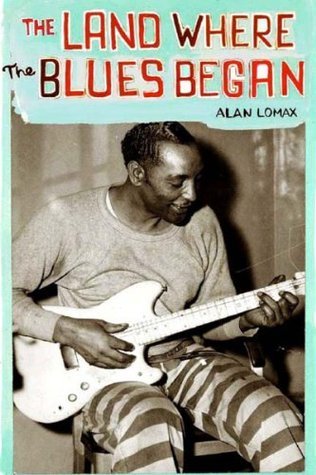
Lomax wrote in his book, “Land Where The Blues Began”, about the time when Willie Brown sang “Ragged & Dirty”, “William Brown began to sing in his sweet, true country voice, poking in delicate guitar passages at every pause, like the guitar was a second voice…”
Tony: This really is the blues as I remember first hearing it in my teenage years. There I was, a white kid from a middle class family that had moved out of north London to the leafy expanses of a Dorset village on the south coast, with a very cheap guitar, learning to play and sing the blues in this style. I think my parents wondered what on earth had happened…
Tony: Everything changes with the addition of a much livelier accompaniment – I think Bob Dylan learned a huge amount from listening to these recordings and appreciating that even with the simplest of songs (as the blues is) just changing the way the guitar is played, can change the whole song.
Aaron: Bob Dylan recorded “Ragged & Dirty” in 1993 for his album, World Gone Wrong. Dylan’s version was mostly influenced by Brown’s version, although the two versions of the song had differences in lyrics. Dylan covered the song with acoustic guitar playing similar to that of Brown.
Tony: So, yes, Bob keeps his voice in line with the desperation of the lyrics but the guitar part takes its lead from the Willie Brown approach. And in fact this idea of a lively accompaniment to the desperation of the blues opens up a thousand possibilities in the way that songs can be changed by alternating what goes on behind the lyrics.
For myself, I think Bob overdoes the monotony and desperation of the lyrics and I wonder how many fans have regularly played this track. For me a few times is enough – although the contrast of lyrics with accompaniment is interesting, once that has been established, I am not sure there is anything more to be appreciated or learned or understood.
So it is one of those tracks I have played a few times, but then just set aside. However I have over time played another version of the song, which I rather like, and since Aaron is on the other side of the ocean and can’t object, I’m going to slip this one in.
Somehow this keeps up my interest far more. Although the bass part is very simple it seems to be a perfect counterpart to the constant repetitiveness of the guitar part, and I must admit I do prefer this style of singing. I’m not sure I’d want to take it on as a double bass player, but for me as a listener, it really does work as a piece of entertainment. Of course, I am not with the lyrics anymore, but sometimes entertainment is just what I need.
And that’s my point here: the feel of the song that this duo get is really something else. It holds my interest, after playing it, it stays in my head, it just feels good. OK that is the opposite of the lyrics, but sometimes that really doesn’t matter. You can find more of their music on Facebook.
(There is also the possibility of course that I like these guys because they are associated with Plymouth, in Devon in the UK, which is not too far from where my family moved to, when we left London, but no, really it is the music… )
The Never Ending Tour Extended: Comparing recordings of Dylan performing his own compositions, across the years.
In this series we look back at recordings presented by Mike Johnson in the Never Ending Tour series of articles (there is an index to that ongoing series here). Links to previous articles in this “Extended” series are given at the end.
Mr Tambourine Man has been performed by Bob Dylan 903 times according to the official site, starting in May 1964 and concluding on 28 June 2010. 46 years and 903 performances! Our recordings don’t take us back to the very start of the Never Ending Tour but there is a video from the Newport Folk Festival in 1964 (from memory I think Bob first appeared in 1962 at the Festival).
The reaction of the crowd shows how over 30 years after its first performance it is still welcomed by one and all. Here Bob has speeded the song up considerably. I always get the feeling with this performance that the speeding up is not because Bob thinks it should go faster throughout, but to enable him to deliver a very unusual guitar solo at around 2’30”. That solo can only make musical sense at this sort of speed, hence the whole piece has to be taken at that higher speed.
And for me, as the vocals return after that break the shock of the extra speed has gone, and this now feels normal – the speed at which the song should be performed. And indeed the speed also allows the second solo to appear and work – even though the harmonica part is highly repetitive. I particularly like the way the harmonica section over what would be the lyrics “following you” is extended and extended, leading to a very unusual coda.
Now we not only have the speed but also occasional changes to the melody. Sometimes I have the feeling that Bob speeds up songs just to get through them – as if a member of team has said “You must sing Tambourine Man – everyone expects it” – but here I feel we don’t have that, but rather the fact that Bob wants to play Tambourine Man because he is excited by the options.
And it turns out with some careful listening and a bit of background research, this isn’t a solo performance after all. Listen carefully and you hear the percussion slip in, and by the instrumental break the percussion has a major part to play (along with the gentleman who felt the need to shout “yeah” multiple times), and there is a second guitar in there too. (We can of course only present the recordings that have been made, and there is of course no editing going on here – what you get is what we heard).
And I am really glad you have made it to this point, just to hear the contrast between those earlier versions and this. This is only episode 16 of this series comparing Dylan’s performances of his own songs across the years, but this surely must be one of the biggest contrasts in arrangements that we have ever heard.
Which raises the question what could Bob do next?
Looking at the articles that Mike Johnson has provided us with over the years I am stunned to find that in 1995 we have four separate versions of this song chosen by Mike. There is an index to the whole of the Never Ending Tour series on this site, so you can go through the pieces and listen to each one if you wish, as I am trying to make these articles accessible, not impossibly overloaded with too many recordings. So for this episode, the final one is from 1995, Part 5: Acoustic wonderland
The crowd love it, I get the feeling that Bob loves it, and listening now 29 years later, I still love it too. And I say Bob loves it, for if not, why would a man of such independence and determination stay with the song, and change it so many times and with such cre and devotion?
Tombstone Blues struck me as one of those songs I was not going to have much luck with in looking for really interesting and different versions of the song. The fast beat of the original tends to mitigate against anyone doing anything else with the piece – or at least that is how it generally seems to me. But I was as ever, wrong…
Tim O’Brien keeps the speed up, but changes the key instrument to a banjo, and adds a second chord to the verse. Then in comes an accomplished violin, and then the chorus has vocal harmonies – and all that before the thrilling instrumental break between the verses.
It’s great fun, and even the double bass player gets into the swing of doing something very different. By the end I’m thinking this is how it ought to be performed.
Tim O’Brien
The illustration of Dylan hanging from the clock for the second cover is arresting, and Winston Apple’s version gives us a bit of bounce and fun – plus enough variation from the original for it all to seem worthy of a mention.
The original version of the picture (here), as you may well know, is Harold Lloyd from the movie Safety Last
Richie Havens
As Jochen pointed out on this site a couple of years ago in the final episode of his 13 part series on the song, “The best-known cover is probably the one by Richie Havens, on the soundtrack of the Dylan film I’m Not There (2007), and rightly so. (There are links to all the episodes of Jochen’s investigation at the end of the article noted above). But even more moving and exciting is the snippet (one minute and seven seconds) in the film itself.
Watkins Family
So is there anywhere else to go? Well yes, the Watkins Family Hour. (I’m not familiar with the band, hence I can only offer a link to their own site.) But I would say I do hope you have time to listen all the way through. They really do keep the essence of the song but add their re-interpretation of the song which is really worth hearing.
Dicte & Hempler
Again I am a bit stuck for information on the band, but I do like this version as it strips the song down, and carefully rebuilds it with limited resources. An excellent re-imagining in my view on what is really a very simple piece of music. It’s over six minutes long, but held my attention to the end.
https://youtu.be/CcOeTnnwqy8
I’ve really enjoyed finding that collection of versions – hope you found something in there which was enjoyable for you. Just as I hope you listened to that last version right up to the last couple of seconds.
Here’s the rest of this series of reviews of Dylan covers in the “Cover a Day” series. Over 150 of them, so not enough to keep you going all year, but still, quite a few.
There is something very curious about Dylan’s music in “Don’t think twice”, and that is that this is a very sad song – and indeed a very bitter song. He’s leaving, and he is not even saying farewell, for he is getting up in the night and sneaking out. And he’s not doing the courteous “it’s not you it’s just me” line, indeed he’s giving no explanation – because he says to the lady, “you’re the reason”.
So it’s a very sad situation indeed. And yet the song is taken at speed. Indeed it is easy to forget just how fast Dylan takes the song in the original recording, which is why I’ve put the link above.
Now normally we associate sad songs with two things: one is a slow speed and the other is a melody and accompaniment that we can immediately associate with a feeling of mourning. But “Don’t think twice” has none of this. It reflects the singer getting up and charging off down the long and lonesome road. He’s sneaking out – and fast.
The singer does, by verse two get to thinking that staying with her could have been better:
But I wish there was somethin' you would do or say
To try and make me change my mind and stay
but this has not happened and now it is far too late, so he’s off. And that music keeps on moving along at a fair old pace. And even in the third verse, he’s not finished lashing out with the blame making it clear beyond any doubt how it was ALL totally her fault.
I give her my heart but she wanted my soul
And notice now, by this point, he is not singing to the lady personally; he’s reduced her to the third person, and that music just keeps moving on at its own speed. He’s not shuffling down the road, he is really moving on. You can’t really do faster faster faster in popular music – there is not enough space – so he’s doing the next best thing. It is all quite fast, and the music has an emphasis on moving, all the time.
And so it moves on and on until those absolutely total killers for the final lines
You just kinda wasted my precious time
But don't think twice, it's all right
Everything in the lyrics suggests that the music should be mournful and sad, but it is not – and we accept it as this, we go along with it, because our identification is totally with him – with the singer. We are with him walking away.
Now of course it is easy for us, for we have no knowledge of their past as a couple, only his word for it. So we accept it, we go with him, and we too are looking forward to the new adventure. We don’t think of the tedious long walk to wherever he is going, we don’t think it might be raining or cold… No we go with him, and we do that primarily because the music continues to move at speed. We move with him, not because he is moving on, but because the music carries is along. If we think of the details at all, it is to hold our breath and hope he gets out before she wakes up.
Thus, a slower song would not have worked – Dylan’s music at speed reflects the urgency in his words. It’s a perfect combination. And it shows once more that from the very start Dylan had an innate awareness of how music and lyrics should work together.
IX I just thought that was the way he spelled his name
Well, George Lewis told the Englishman, the Italian and the Jew
“Don’t open up your mind, boys,
To every conceivable point of view.”
They got Charles Darwin trapped out there on Highway Five
Judge says to the High Sheriff
“I want him dead or alive
Either one, I don’t care.”
High water everywhere
After an exhausting run-up, during which George stood in the long queue for the entrance tickets, then had to wait a long time in the line for the cloakroom to hand over the coats, then another ten minutes at the counter to buy the obligatory tokens of consumption, Lewis and he are finally in the festively decorated ballroom. “I’d fancy a drink,” says Lewis, “do they have punch?” Sighing, George leaves for the bar area – but within a minute he is back, with two glasses. “There’s no punch line!”
An old joke and a bit lame as well. Which, as we all know, rarely stops Dylan. The jokes and puns he occasionally serves from the stage, every now and then in a song and a bit more often as DJ in Theme Time Radio Hour, rarely excel in originality or freshness. And occasionally fall dead too – deliberately, as we know thanks to Larry Charles’ anecdote about his aborted attempt to write a slapstick comedy with Dylan (“what’s so bad about misunderstanding?”). Dylan does like some disruptive absurdism, the confusion that sets in after an incomprehensible metaphor like I can bite like a turkey, an unusual word combination like Anne Frank and Indiana Jones or a joke without a punchline.
It is an effect the poet seems to be aiming for in the first verse line of this fifth stanza. The stanza begins with an opening variation of a classic, corny joke, with an alienating variation on an Englishman, a Scotsman and an Irishman walk into a bar or a Belgian, a Dutchman and a German stand at the gates of heaven. But here they are an Englishman, an Italian and a Jew, and the stooge is not a barman or Peter, but “George Lewis”, with peculiar life advice as an introduction – the advice that you should not be open to every opinion.
It’s a layered, and perhaps somewhat laborious interlude, in this fifth verse of “High Water”. Layered, because Dylan not only messes with the listener’s expectation by incorporating a punchless joke, but also by suggesting depth through the introduction of Charles Darwin and George Lewis. Both names, and especially “George Lewis”, do put Google to work, in any case. And analysing Dylanologists and researching fans then initially have to gulp; the combination George and Lewis gets 328 million hits, the unit “George Lewis” still 1.7 million. Somewhere at the top of the search results, then are – promising – two musical George Lewises; a rather successful jazz clarinetist from New Orleans (1900-1968) and a younger one, a 1952 Chicago-born experimental avant-garde composer and trombonist George Lewis, at least as successful. But alas: apart from living off music, there is no line to Dylan or Dylan’s oeuvre, let alone to Charles Darwin, Highway 5 or being Jewish, Italian or whatnot.
Rather eagerly, therefore, the thesis that Dylan made a spelling mistake and actually means George Lewes is gratefully embraced, a “solution” presumably first offered by Brian Hinton (Bob Dylan Complete Discography, 2006). Lewes, admittedly, indeed is an interesting nineteenth-century man. Philosopher, literary critic and – there’s the bridge – darwinist, but actually better known as the-husband-of; his life partner Mary Ann Evans wrote, under the pen name George Eliot Middlemarch, “the greatest novel in the English language” (according to Martin Amis). Lewes is also mentioned in it, by the way. He is even the first name:
To my dear Husband, George Henry Lewes,
in this nineteenth year of our blessed union
It’s tempting to grant this George Lewes a misspelled name-check in “High Water”, true. But alas, that bridge really is far too shaky. After all, we’ve never been able to catch Dylan on such a mistake tending towards dyslexia. At most, the added g in John Wesley Harding comes close, but no: “I just thought that was the way he spelled his name” (Cameron Crowe Interview for Biograph, 1985). Other spelling errors in Lyrics, such as the apparently ineradicable Pharoah (in “When The Ship Comes In”), seem to be attributable not to Dylan, but to editors or transcribers. And besides: the only remarkable thing about the name George Lewes is that last e – if you’re already prone to spelling mistakes, that attention-grabbing e is precisely the letter you would write. Creative the solution is, though. But also perhaps a little too inviting. Inviting to suppose other spelling mistakes and understand, for instance, “George Louis” (the name of King George I, 1660-1727). Or, why not, “Jorge Luis” (Borges, the literary giant of short stories from Argentina); Gregory Lewis the actor; Jörg Liebenfels, the racist ariosopher and forerunner of Hitler; Gregor Lässer, a lawyer in Austria and so on and so forth… no, maybe it’s not so fruitful after all to take the shortcut, or rather: bypass to supposed spelling mistakes in text analysis and then base vistas on what Dylan “actually meant to write”. And maybe we should stick close to home and invite Jerry Lee Lewis in, for instance. Or even closer to home, to Appalachian folk music.
Comparably cumbersome are the attempts to discern a deeper layer beneath the trio Englishman + Italian + Jew. The Christian faction among the Dylan exegetes – naturally – looks for religious connotations and then finds something like Englishman = Protestant, Italian = Catholic and Jew = Jewish. Which would thus give the subsequent life wisdom of George Lewis a somewhat fundamentalist connotation – after all, his message that you shouldn’t be open to everything then implies that there still is something worthy of your devotion, but othersomethings are not. Frighteningly close to, in fact, the fundamentalist creep who was given a stage some thirty years before “High Water”, in “Precious Angel” (Slow Train Coming, 1979); “Ya either got faith or ya got unbelief and there ain’t no neutral ground.”
Apart from that, it is unlikely that Dylan’s poetic instinct would allow him to combine metaphorical use of “Englishman” and “Italian” with the unequivocal, unambiguous “Jew” – a literary man would then choose “Israeli” or, more likely, George Lewis told the priest, the vicar and the rabbi, something like that anyway. On top of that: if the poet already has the wondrous impulse to integrate universal, religious contemplation into a lyric like “High Water”, Islam would be an inevitable contender. And we had heard something like George Lewis told Harry, Mohammed and Yehudi.
No, all in all, Occam’s razor dictates that we have to accept meaninglessness; we know the poet’s penchant for suggestion and for absurdism, we have heard Dylan’s colleague Larry Charles testify that the writer Dylan has no problem with pointless, alienating inserts, a dose of which we also got two stanzas ago (“I’m no pig without a wig”), and every attempt at contextualization is shipwrecked. At most, locating a source may shed some light. “James Joyce” seems to be a key. The name pops up in the manuscript, in the original third stanza, in which Dylan, in the creation phase, crosses out the second line and writes in big blue letters, partly capitals, a first alternative: “James Joyce just walked in the door like he’d been in a whirlwind”.
Well, not inconceivable. Indeed, there are some more faint echoes from Joyce’s most famous novel, Ulysses (1922), in this verse of Dylan’s song (“High Sheriff”, for instance, and “Charles Darwin”). In the beginning of the novel, on page 17, protagonist Stephen Dedalus says I am a servant of two masters, an English and an Italian, and a third, and explains on the very same page: “The imperial British state, Stephen answered, his colour rising, and the holy Roman catholic and apostolic church.” With which interlocutor Haines is willing to go along, to some extent: “I don’t want to see my country fall into the hands of German jews either. That’s our national problem, I’m afraid, just now.” In itself too thin to qualify for the honourable stamp “Dylan source”, but that James Joyce name-check in the manuscript at the very least does justify the idea that Ulysses is floating around in Dylan’s stream of consciousness at this stage of his creative process, so who knows.
On the other hand: Jerry Lee, no, George Lewis firmly states that we shouldn’t open up our mind to every conceivable point of view, so there’s that.
To be continued. Next up High Water (For Charley Patton) part 10: The Return of Jerry Lee
Jochen is a regular reviewer of Dylan’s work on Untold. His books, in English, Dutch and German, are available via Amazon both in paperback and on Kindle:
Jochen is a regular reviewer of Dylan’s work on Untold. His books, in English, Dutch and German, are available via Amazon both in paperback and on Kindle:
This series looks at Dylan recordings of songs not written by himself. The songs and opening notes are created by Aaron Galbraith and the additional comments are subsequently added by Tony Attwood
Aaron: Mutineer was written by Warren Zevon and was first released in 1995. The album largely consisted of home recordings.
Tony: I first paid attention to Warren Zevon’s work after Jochen mentioned him in his review of “Knockin on Heaven’s Door”. It was just a passing sentence, “Warren Zevon’s subdued adaptation, recorded just before his death, is heartbreaking,” but enough to get me going, leading to the discovery of “Lawyers Guns and Money”, which Dylan later nominated as one of his favourite all time songs. And indeed now one of mine.
Mutineer however is different, it is gentle, and as ever with Warren Zevon the lyrics are repetitive, but oh so powerful when heard with the music…
I was born to rock the boat
Some may sink but we will float
Grab your coat, let's get out of here
You're my witness
I'm your mutineer
I’m not trying to pretend that this is great poetry, but rather that it is moving, especially when heard sung in this way.
Aaron: Bob Dylan released it on the 2004 album Enjoy Every Sandwich
Tony:I think Bob performs it with real feeling, a feeling that so many great artists had for Warren Zevon. I’m really pleased this song has come up in the series not because it is beautiful piece, but because I do hope it encourages you to explore a few more Warren Zevon songs, if you don’t know them all.
Aaron:Jenna Mammina & Matt Rollings
Tony: Jenna worked with the Spinners (now there is something to put on your CV!). I do love this and I would recommend Jenna Mammina’s work for anyone who doesn’t know it. In fact I am going to slip in one more of her songs here, although it is not in Aaron’s original selection and takes us a little off topic…
Now back to the script…
Aaron: David Lindley
Tony: Now that was a surprise. David Lindley sadly died last year – he was one of the early figures in the psychedelic movement and played with Crosby and Nash for a while and is reported to have supported Dylan in some concerts, although I don’t have exact details of that.
But now, since we are back on the subject of Warren Zevon, and since Bob Dylan nominated a Warren Zevon song as one of his favourites, I think that is enough of an reason to re-introduce it (and not, I seem to remember, for the first time).
It turned up in our series on Dylan’s favourite songs so that is all the excuse I need to play it again. Oh why do these guys have to leave us so early?
By Tony Attwood, looking back at recordings presented by Mike Johnson in the Never Ending Tour series of articles. There is an index to that ongoing series here. Links to previous articles in the “Extended” series are given at the end.
—
According to the official site, Bob Dylan has performed “Rainy Day Women” 963 times on the Never Ending Tour, making it the 11th most performed song.
And it is a piece that offers a problem to Bob the musical arranger, because at its very heart is that very distinctive drum rhythm. Take that away and it’s not Rainy Day anymore. Keep it in and it is hard to know what to do with the piece.
However, from 1969 to 2019 the song has been a staple of Dylan’s performances. So it is obviously of interest to those of us who like to see what Bob does with his songs to look across the years.
In fact the changes have been subtle but they have been there, and they really do make for interesting if slight contrasts. If you were to play the first of the eight (yes 8) versions below you’d think that Bob’s just doing what most artists in this genre do – he’s playing his song as it is on the record. But changes do occur, although slowly and subtly.
Of course you can flip through to the conclusion of this little piece to hear where it ended up, but I hope you will stay with me, and at least listen to part of each of these recordings, as they represent a slow but deliberate change to a piece of music, that really, in many regards doesn’t want to be changed.
The real sign of change here comes with the musical interlude after 2’25” in which we move into a 12 bar blues improvisation, just to remind us that although perhaps we don’t think of it as a 12 bar, that’s what Rainy Day is. And as we approach 3’30” we really are starting to move away from the original – it is now a straight 12 bar blues jam. And it goes on, and on…
OK we are still bouncing along and making this a long improvised 12 bar blues – but by now the band are really starting to battle with each other – which is what can happen even to the best musicians when they are asked to play a 12 bar night after night and indeed year after year. To me, it is starting to sound like a bit of a mess.
Dylan is clearly trying to do something a bit different with his voice, but I get the feeling maybe he’s not sure what. The song is now two minutes shorter but it is still a long old jam – although around 3’30” we do actually come back to the origins of the piece and then have a proper and clear ending.
Still that same distinctive percussion opening and a full-blown opening instrumental verse just to make sure we’ve got it. But as Bob starts singing, we realise this is different. He’s got the lyrics the same – but the presentation of the vocals is different, and the band is holding back. And then that first instrumental break – it is actually quieter, more restrained, even, dare I say, more gentle. The slower pace helps this as we move into the 12 bar blues improvisation.
But what is this on five minutes? Bob talking to the audience???!!!! If you would like to listen and produce a transcript of what he is saying, please send it in – I know it’s an introduction to the band, but I can’t catch the details. There’s more instrumental, a return to the origins, and it ends…
I’m getting the feeling by now this is all getting a bit ploddy and repetitive although the cool-down section at around 5’30” is quite jolly and is followed by Bob making a few amendments to the melody – such as it is.
Four years on and there are a few more subtle changes to the melody, but it is still very much “Rainy Day”. He’s holding back the lines a bit, and indeed missing a few out totally. It is as if Bob is saying, “well we have to do this, but really, you’ve all heard it before….”
The length of the piece has come back down again, and the beat is a little faster, but more of the melody has gone. Now at last we have a 21st century Dylan re-working of the song. Not much of a re-working, but still a bit of a re-working, and are those a few changed lines in there too?
And still after all these years that introduction is pretty much the same, but the melody has really gone now, and as far as I can tell, so have some of the lyrics. The key part that we now have is the bounce. But as you are still with me after all this time, do listen particularly to those instrumental breaks, and just how much the accompaniment has been paired back. We’re now relaxed, jolly, happy, ok, old timers back together, thinking of the old days, but more sitting in our rocking chairs than standing out front and shouting.
Particularly have a listen to the instrumental break that starts around 2’11” and goes on for over a minute. It’s relaxed in a way this song never was before. Same with the second break around 3’50” – it’s a sort of “hey come on, let’s have a gentle bop to this.”
Yep – we’ve got stoned, but somehow we managed to come out the other side, still here, still listening, maybe more relaxed, and hopefully a little bit wiser.
Next on the list of Dylan songs (in alphabetical order) which have been covered more than once or twice, we come to “To Ramona”, and somehow I had it in my mind that this hadn’t been covered much – and that perhaps there wasn’t really that much to cover.
But yet another mistake on my part. It has been covered lots, although sadly quite a few of the covers are nothing other than the artist singing the song pretty much as Dylan sang it, and using a very simple accompaniment in the way Dylan did.
And that is pretty inexcusable since Bob has himself played it over 380 times on the Never Ending Tour – and he managed to find a lot to do with the song. This version is from 2015 (NET 2015 part 1). It makes me think we should do a feature on the song in the Tour for the NET Extended series.
But it has been a bit of a struggle to find such variance in the work of other artists. (If only people wanting to cover Dylan would read Mike Johnson’s brilliant series of articles – they would surely get some inspiration and understand: the songs are there to be changed not repeated.)
However this series is committed to covers, and there really are some interesting ones out there aside from all the straight copies, which I am not going to bother with.
Wilko Johnson goes in full burst complete with an accordion doing its accordion thing…
And that’s not really what I was hoping for, because this is not a rock song, so let’s move on.
Leoni Jansen gets the feeling as I think it should be, keeping that singular lilting 6/8 time (which runs 123,123 throughout). And as the accompaniment grows it stays in keeping with the song, and with the chosen approach. I think it’s a marimba that is brought in around 1’23” – and for me although it is repetitive, it is highly effective and totally in keeping.
These United States surprised me because their rhythmic background which is utterly different from anything Dylan imagined. They are back in 4/4 time but with that percussion playing eight beats to the bar behind the vocals.
I love this not just because I find it a great listen, but also because it is so unexpected. Yes, I could imagine one doing this to the song, but I couldn’t imagine it could be made to work (which obviously shows my musical limitations in old age).
The band has given itself a huge problem, in introducing the radically different rhythm from the start, and it is hard to build onto that, but they do it very effectively until suddenly taking us back down at around 2’50” (I’ll forever talk to you).
This is one of those great experiments that against all the odds (as I see them) actually works. As does the sudden stop without the vocalist going over the top for the last line. Unexpected, and superb.
Total contrast is needed and Piers Faccini takes us back to the original but travels in the opposite direction from These United States. There is the occasional extra line of music, but in essence this is a very gentle version of the original, with the concept of that first Dylan version kept in tact. It’s one of those performances that works totally if you are in the mood… but if not, well, it is still beautifully performed – and you can always save it until you are in the mood.
Dylan Revisited had Courtney Marie Andrews sing this song; the harmonies are of course perfect but restrained, the emotion is there but kept under control… it is gorgeous. I would urge that even if you know this version, do listen again and just focus on those lines that have the vocal harmonies in. In a sense they can just pass by as part of the song – but if you can seek them out, they are stunningly done – utterly perfect in every way. Brilliant musicianship all round.
And finally Sinead Lonan. In a sense by this time I was thinking, “is there anything more to add?” but I recalled Jochen picking out this cover – and I can see why. If nothing else just listen to what happens between (and sometimes behind) the vocal lines. It has to be the version to finish with. This is musical reinterpretation at its finest, both from the orchestrator as well as the performers. I am just left thinking, “What a gorgeous song this is.”
Of course I hope one or two people will have read my ramblings and listened to these cover versions, but even if that is not the case, I’ve been brought back to the song, and I’m grateful that has happened. It is a superb song.
Here’s the rest of this series of reviews of Dylan covers in the Cover a Day series. Over 150 of them, so not enough to keep you going all year, but still, quite a few.
“Take pictures or don’t take pictures. We can either play or we can pose. Okay?” Dylan to the audience, Vienna April 16th 2019
After having sampled some of the best 2019 has to offer in part 1, let’s have a closer look at the Setlist for this year. In most respects it’s pretty much the same as the 2018 Setlist, which has its origins back in 2014. There is, however, one significant change. ‘Things Have Changed,’ which has been the opening song since 2014 begins, in 2019, to give way to ‘Beyond Here Lies Nothing,’ a somewhat prescient choice given that this will be the NET’s final year.
While always a peppy number, and a good way for Dylan to announce that he had changed and was not the Dylan of old, by 2019 the song seems to have lost some of its charge and has grown a bit tired. Here it is at the end of the year, New York, Dec 3rd. The arrangement is the same as 2018, with the revamped chord structure. He messes the order of the verses up a bit, and repeats some lines, but it’s a strong vocal performance.
Things Have Changed
We’ll cross to Palo Alto, Oct 14th to catch ‘Beyond Here Lies Nothing.’ I’m always amazed at how, with this song in particular, the guitars can sound like a big band, 1940’s style. I could swear I hear horns blasting away. Donnie Herron’s violin helps give the song that retro feel. My friend, and patient proofreader, Janscie Sharplin, comes from a Buddhist background and finds an encounter with the Void to permeate this song, which takes its sentiment beyond Nihilism. I concur, but can also detect a sexual innuendo as well:
Well, my ship is in the harbor
And the sails are spread
Listen to me, pretty baby
Lay your hand upon my head
Beyond Here Lies Nothing
‘It Ain’t Me, Babe’ consistently follows as number 2 on the Setlist. This is a blast of nostalgia, and an oddly reassuring song for those pining for the Bob of old. The arrangement, jazzy with a twist of bossa nova, will not be so reassuring, however, for those hoping for a reappearance of the 1964 Dylan – it really ain’t him, babe. Nevertheless, it’s a fine performance and excellent recording from Palo Alto.
It Ain’t Me Babe (A)
As with part 1, I like to contrast the Palo Alto performances with those from other concerts, in this case Santa Barbara (Oct 12th) which tend to be rougher and more energetic. I began this practice because I often couldn’t choose between them. What I like about this Santa Barbara recording is the sharpness of the piano, that very jazzy piano.
It Ain’t Me Babe (B)
We skip ‘Highway 61 Rev’ (covered in part 1) to land at ‘A Simple Twist of Fate’ at number 4 on the Setlist, and the first song to feature the harmonica, much to the joy of the audience.
A performance hushed and intimate, given added pathos by the violin. Some of the lyrics have changed a bit – ‘She said put your hand in mine/ ain’t no need to hesitate’ – but the fickle gods still rule our brief meetings. There’s always one that gets away.
The last verse has been reworked to put a new light on the situation:
People tell me it’s a sin
That it’s wrong and its wicked
To delve too far within
I let her get under my skin
Under my skin too late
I had another date
A date that couldn’t wait
Blame it on a simple twist of fate
There’s always a might have been, or could have been – memories to haunt us.
Here’s how it sounded at Palo Alto:
Simple Twist of Fate (A)
We can pick up another excellent performance at Irvine (Oct 11th). This one brings the violin forward. A wonderful audience response.
Simple Twist of Fate (B)
We then skip to number 7 on the Setlist, which was invariably ‘Honest with Me.’ a survivor from Love and Theft. I suspect Dylan still performs the song at this point to offer something a bit faster and with more beat than ‘Simple Twist of Fate.’ It is a hectic, oppressive song. It begins, ‘I’m stranded in the city that never sleeps,’ which makes me wonder what city he’s referring to, a real city or maybe the City of Dis, from Dante’s Inferno, encompassing the sixth through to the ninth circle of hell. It feels a bit that way, with its scattered impressions and desperate jokes. Here, Dylan makes it sound a bit like a 1950’s rocker, with a sharp-edged, feverish guitar riff, fast-rapped lyrics followed by dissonant jazzy chords. An unsettling, edgy song.
Let’s start with Palo Alto again.
Honest With Me (A)
And we’ll go back to Irvine for a follow up:
Honest With Me (B)
There are of course some Setlist variations. The next one up, ‘Tryin’ To Get To Heaven’ was not performed at Irvine, but we can begin at Palo Alto as usual. I’ve always maintained that this is one of Dylan’s major songs with a powerful affective centre. It doesn’t suffer from the kind of scattershot lyrics in some songs from the Love and Theft / Modern Times period, instead focusing on the sense of loss and despair that dogs modern life. We could be back in the realms of Dis, ‘walking through the middle of nowhere,’ and ‘walking that lonesome valley,’ which recalls the ‘vale of tears’ of Christian symbolism, and the valley of the shadow of death (Psalm 23:4).
When you think that you've lost everything
You find out you can always lose a little more
A friend once quoted me these lyrics after he had lost his family to divorce and his job to layoffs. That was the last time I saw him, as he shortly after lost his life in a tragic accident. The lines of course recall the famous, ‘When you’ve got nothing you’ve got nothing to lose,’ but to my mind are more resonant – how do you know when you’ve got nothing more to lose?
It’s a profound song and mood piece. Here it is at Palo Alto. If this isn’t a best ever it must come pretty close. Beautifully orchestrated. This is my go-to performance at the moment. The violin suits it perfectly.
Trying to Get to Heaven (A)
We can return to New York (Dec 3rd) for the follow up. Another outstanding recording. Another best ever! This recording foregrounds Dylan’s voice which is full of mischief and innuendo. Dylan at this late best, friends.
Trying to Get to Heaven (B)
Next stop is the ominous ‘Pay in Blood’ at number 10 or 11 on the Setlist. I must admit I can’t get past the overwhelming arrangement of this song in 2016 (NET 2016 part 1), which has stubbornly remained at the top of my best evers. For me, this softer arrangement, despite its edginess, doesn’t have the same vehemence and sheer spleen of the 2016 version. Maybe I’m just stuck at 2016, for these 2019 versions certainly don’t lack punch; the wall of sound approach has given way to a more unsettling, minimal, jazzy feel. The feeling remains that we couldn’t trust this boastful blowhard of a narrator. A crybully. Not somebody you’d want to mess with.
I got something in my pocket that’ll make your eyeballs spin
I got dogs to tear you limb from limb
Instead of starting at Palo Alto, I think we have a better starting spot for this one from Chicago (Oct 30th)
Pay In Blood (A)
But for sheer vocal virtuosity, you can’t do better than this one from New York. A wonderful character creation in all his petty grandiosity, his triumphant chest-beating. It’s performances like this that confirm Dylan to be the great Voice of our time.
Pay In Blood (B)
At this point, at slot eleven on the Setlist, we encounter an anomaly. ‘Lenny Bruce.’ This song, from ‘Shot of Love’ has been only a very occasional visitor to the NET, and before the dozen or so performances in 2019, had not been seen since 2008. I always felt it was one of the weaker songs of that album, but it is Dylan’s loving tribute to the famous comedian and social commentator who, in the song, becomes one of Dylan’s holy outlaws. Bruce’s sharp, acerbic humour must have appealed to Dylan; it was the humour of protest, stripping pretensions bare:
Never robbed any churches nor cut off any babies’ heads
He just took the folks in high places and he shined a light in their beds
In that phrase, ‘folks in high places’ we get a flash of the old, ‘protest’ Dylan, who shined his own light in their beds – remember ‘Eternal Circle.’ Bruce and Dylan both have a nose for moral corruption.
Again, we can’t do better than start at Palo Alto for this sensitive rendition.
Lenny Bruce (A)
That performance is well matched by this one from Irvine.
Lenny Bruce (B)
We’ll finish with ‘Girl from the North Country’ at number 13/14. Dylan and this early song have travelled a hard road together for some sixty years. It is one of the very few survivors from Dylan’s first, acoustic period, and what a stunning arrangement for it we find in 2019. Slow, meditative, lingering, sumptuously backed by a bowed double bass and violin. It is no longer the song of a young man, fresh from the experience but an old man looking back with tenderness and regret. This is one of Dylan’s greatest love songs, untainted by bitterness, and this is a loving treatment indeed, direct from the shadows of the past. First up, Palo Alto.
Girl from the North Country (A)
A performance once more matched in New York. Here, the ending is the final instrumental, sounding like a medieval madrigal. Magic enough! I won’t even complain about the missing harp break.
Girl from the North Country (B)
I’m happy to have brought you this stunning set of recordings, all the more stunning given the difficult recording circumstances. I think you may agree with me, seeing the musical imagination that has gone into these arrangements, that in the years from 2015 to 2019 some of these songs reached a certain performance perfection not found earlier. Dylan exudes confidence and the band….well! the band will be my focus in the next article, coming up soon.