Other people’s songs: Dylan’s take on “Let it be me”


by Aaron Galbraith and Tony Attwood

Aaron: “Let It Be Me” is a popular song originally published in French in 1955 as “Je t’appartiens”.

Tony: Literally that translates as “I belong to you” and the opening lines run…

Comme l'argile
L'insecte fragile
L'esclave docile
Je t'appartiens

De tout mon être
Tu es le seul maître
Je dois me soumettre
Je t'appartiens

And just for a bit a fun I thought I’d offer a literal translation (rather than the re-write that we all know)

Like clay
The fragile insect
The docile slave
I belong to you

With all my being
You are the only master
I have to submit
I belong to you

“The fragile insect” doesn’t quite have the same ring to it as

I bless the day I found youI wanna stay around youNow and forever, 
let it be me

Don't take this heaven from oneIf you must cling to someoneNow and forever, 
let it be me

And that stuff about “the master” and “I have to submit” doesn’t quite feel right these days!

The original French lyrics were written by Pierre Delanoë and the English lyrics that we now know came from Mann Curtis.  It was apparently originally performed in 1957 by Jill Corey in the television series Climax!

Which is interesting because although Climax! was not a particularly long-running TV series, nor indeed one that anyone other than those who made it, is likely to remember, it does have one claim to fame, and that is that an episode in the first series in 1954 included the first ever appearance on the screen of British agent James Bond, in an adaptation of Casino Royale.  “James” on this occasion became “Jimmy,” and American.

Anyway, back to the plot, Gilbert Bécaud was apparently known as “Monsieur 100,000 Volts” because of his on-stage performances.   Now moving on… I think Jill Corey’s version came next but didn’t add too much to the song…

Aaron: The Everly Brothers popularized the track with an English version in 1959

Tony: As a child, I did like the Everly Brothers, but always preferred the upbeat songs.  And they are of note from our point of view on this site since they did also record a couple of Dylan tracks: “Abandoned Love” and “Lay Lady Lay”.  Here’s the first of these (and sorry Aaron I’m really going off-piste in this one I know, but it’s just what happens – the memories come pouring back in and I can’t resist following them up – even though I know this is a rather uninspiring version).

Aaron: Dylan’s version of “Let it be Me” came from 1970s Self Portrait.

Tony: I think Bob did more for this song than the Everlys did for Bob’s song, although I am not at all happy with the way the vocals and instrumentation clash each time we have the title line, but I really do like Bob’s vocals overall, and the instrumental break.

Aaron: Subsequent versions include Laura Nyro from her 2001 album Angel in the Dark.

Tony: I am always a bit suspicious of people who take songs and then slow them down for vocal flourishes and extra emotion.  I think that a significant part of the song is the continuing rhythm, and here, with the piano accompaniment that doesn’t seem to have too much to do with the varied melody line, it all becomes a bit broken – at least to my ear.

It might work if the lyrics were all about a break up of a relationship, but they are about the opposite: the desire for the relationship, and I don’t think the arrangement gets anywhere near expressing that.

Aaron: Jeff Beck and Johnny Depp from their 2022 album 18

Tony: The electric piano accompaniment of the triplets (1,2,3; 1,2,3) is very hackneyed in that introduction and I wonder why they left it in; after all it vanishes once the voices enter.   In fact that is not the only oddity because halfway through the first verse we have a wow-wow moment from the lead guitar, which later goes completely over the top in the instrumental break.

Of course I am not an arranger, but I really cringed with this version.  I love the vocals with their perfect harmonies, and want to run away and hide from the lead guitar.  I really don’t think the arranger ever once considered the lyrics and their meaning and just thought right, “let’s see what we can throw in here”.  For me the result is a horrible mishmash.

But then, what do I know?

Other people’s songs: the series

  1. Other people’s songs. How Dylan covers the work of other composers
  2. Other People’s songs: Bob and others perform “Froggie went a courtin”
  3. Other people’s songs: They killed him
  4. Other people’s songs: Frankie & Albert
  5. Other people’s songs: Tomorrow Night where the music is always everything
  6. Other people’s songs: from Stack a Lee to Stagger Lee and Hugh Laurie
  7. Other people’s songs: Love Henry
  8. Other people’s songs: Rank Stranger To Me
  9. Other people’s songs: Man of Constant Sorrow
  10. Other people’s songs: Satisfied Mind
  11. Other people’s songs: See that my grave is kept clean
  12. Other people’s songs: Precious moments and some extras
  13. Other people’s songs: You go to my head
  14. Other people’s songs: What’ll I do?
  15. Other people’s songs: Copper Kettle
  16. Other people’s songs: Belle Isle
  17. Other people’s songs: Fixing to Die
  18. Other people’s songs: When did you leave heaven?
  19. Other people’s songs: Sally Sue Brown
  20. Other people’s songs: Ninety miles an hour down a dead end street
  21. Other people’s songs: Step it up and Go
  22. Other people’s songs: Canadee-I-O
  23. Other people’s songs: Arthur McBride
  24. Other people’s songs: Little Sadie
  25. Other people’s songs: Blue Moon, and North London Forever
  26. Other people’s songs: Hard times come again no more
  27. Other people’s songs: You’re no good
  28. Other people’s songs: Lone Pilgrim (and more Crooked Still)
  29. Other people’s songs: Blood in my eyes
  30. Other people’s songs: I forgot more than you’ll ever know
  31.  Other people’s songs: Let’s stick (or maybe work) together.
  32. Other people’s songs: Highway 51
  33. Other people’s songs: Jim Jones
  34. Other people’s songs: Let’s stick (or maybe work) together.
  35. Other people’s songs: Jim Jones
  36. Other people’s songs: Highway 51 Blues
  37. Other people’s songs: Freight Train Blues
  38. Other People’s Songs: The Little Drummer Boy
  39. Other People’s Songs: Must be Santa
  40. Other People’s songs: The Christmas Song
  41. Other People’s songs: Corina Corina
  42. Other People’s Songs: Mr Bojangles
  43. Other People’s Songs: It hurts me too
  44. Other people’s songs: Take a message to Mary
  45. Other people’s songs: House of the Rising Sun
  46. Other people’s songs: “Days of 49”
  47. Other people’s songs: In my time of dying
  48. Other people’s songs: Pretty Peggy O
  49. Other people’s songs: Baby Let me Follow You Down
  50. Other people’s songs: Gospel Plow
  51. Other People’s Songs: Melancholy Mood
  52. Other people’s songs: The Boxer and Big Yellow Taxi
  53. Other people’s songs: Early morning rain
  54. Other people’s Songs: Gotta Travel On
  55. Other people’s songs: “Can’t help falling in love”
  56. Other people’s songs: Lily of the West
  57. Other people’s songs: Alberta
  58. Other people’s songs: Little Maggie
  59. Other people’s songs: Sitting on top of the world
Posted in Uncategorized | 2 Comments

NET 2013 part 2: The art of the Dramatic Monologue

An index to the whole series on the Never Ending Tour can be found here.

By Mike Johnson (Kiwipoet)

In the previous post I covered the songs that were played for the last time in 2013, and we spent some time with those wonderful two Rome concerts. Dylan, however, apart from narrowing his setlists, had new songs lined up for the gaps he was creating, songs from his latest album, Tempest (2012). Tempest appeared too late in 2012 to have a major impact on those setlists, but in 2013 and 2014, before the arrival of Frank Sinatra, these new songs came into their own.

Not so the final song on the album, ‘Roll On John’ which, according to the official Dylan website, was played twice at the end of 2013 in London. I, however, can only find one recording, this one from 26th November. It would never be performed again.

Roll On John

This song has always seemed a little loose and mawkish to me, certainly not the best of the album, and along with others I wondered why Dylan would wait thirty years to write this somewhat awkward tribute to John Lennon. At least, everybody assumes it’s a tribute to John Lennon. The second verse in particular is conclusive:

From the Liverpool docks to the red-light Hamburg streets
Down in the quarry with the Quarry men
Playing to the big crowds, playing to the cheap seats
Another day in the life on your way to your journey's end

But listening to it again now I begin to wonder. In his late songs Dylan sometimes shifts focus, and can hide one thing behind another. I may be drawing a very long bow here, but behind the figure of John Lennon I see another John, John of Patmos, author of the Book of Revelations. Commentators have struggled to apply the rest of the song to John Lennon, or account for the ‘island’ mentioned in the third verse. (Manhattan?) But what if the island was Patmos to which John, John the Revelator, was exiled by the Romans as a result of anti-Christian persecution? This John died in exile, but not a violent death:

Your bones are weary, you’re about to breathe your last
Lord, you know how hard that it can be’

That doesn’t sound like someone dying of a fatal gunshot wound.

The reference to Blake’s Tyger would make more sense if we were thinking of John the Revelator, a spiritual tiger still burning bright. Blake’s interest in the tiger, and maybe Dylan’s too, is as a revelation of god’s power.

Ok, as I said, it’s a hell of a stretch, but you have to stretch those lyrics to fit with John Lennon too. I don’t think it’s a matter of either/or – it seldom is with Dylan, who likes to have his cake and eat it too. Dylan might have had both Johns in his mind when he wrote the song, or maybe John the Revelator ghosting in behind John Lennon. Or maybe I’m just imagining things.

Those looking for a more grounded view of the song are well advised to check out Tony Attwood’s account here.  There is nothing loose or mawkish about ‘Pay in Blood,’ however, which is among the most scary and powerful songs Dylan has ever written. Scary because the persona behind it is a dangerous and violent hypocrite, happy to pay for his crimes with your blood. Good dramatic monologues subtly build a portrait of a character through what they reveal about themselves. What is revealed in this song is a terrifying personality, a dictator in the making, a vampire by inclination, a moral monster.

In ‘Pay In Blood’ we find another version of the unreliable narrator, this time a self-mythologising, self-aggrandising type, a hero (in his own eyes) of Homeric proportions, but underneath it all, another self-serving grifter happy to pay for his crimes with the blood of others. I tried to come to grips with this song here and Tony has had a crack at it here, but like the best Dylan songs it won’t be pinned down easily.

Suiting the subject matter, the music has a militant, ominous feel – expressive of a horrible triumphalism (Trumphalism?) –  and we will get some solid performances of it over the next few years. The music overwhelms you just as the song’s persona would; you have to fight to keep your feet if you don’t want to get swept away by his vile, self-serving rhetoric, delivered to a pounding beat.

The song was performed fifty-eight times over a total of eighty-five concerts. I’ve chosen three, necessary performances, each approaching the song a little differently, with different emphases. The song grew over the year in loudness and confidence.

This first one from Amhurst (6th April), the second concert of the tour, features blues and jazz guitarist Duke Robillard, who played with Dylan until June 30th. There were rumours of clashes between Robillard and Dylan, who would replace him with Colin Linden who would play with Dylan on and off until August 4th. It’s hard to know why Dylan added another guitarist, as he already had Charlie Sexton and Stu Kimball.

I like this one because you can hear Dylan feeling out the song, the clear, sweet piano chords underpinning it. It has not yet become strident, and achieves a certain grim grandeur.

Pay in Blood (A)

The next two are both from November, and show how far the song has come in terms of ominousness. This one’s from London, 27th Nov.

Pay in Blood (B)

This one from Blackpool, 22nd Nov, however, shows the direction it will move in 2014 – louder and more strident.

Pay in Blood (C)

‘Duquesne Whistle,’ co-written with Robert Hunter, kicks off the album. This jaunty song, most certainly playful, takes us back to the early days of jazz and jump jazz, a ‘choo-choo shuffle’ as the Sydney Morning Herald described it, with echoes of Jelly Roll Morton, one of the founders of jazz piano.

‘The song piles up evocations not to invite understanding but to situate the listener. The opening few bars provide misdirection with both sound and tempo, yet they open Dylan’s world and provide just one more indication of where he’s going. Wherever this train track leads, it must be worth going’ “Bob Dylan’s 20 Best Songs of the ’10s and Beyond”. Spectrum Culture. 2021-02-19. 

Tony Attwood has argued, I think persuasively, that the song evokes a tornado: ‘Late in the afternoon of Sunday, May 22, 2011 a huge multiple vortex tornado struck Joplin and Duquesne, Missouri.  It was the third tornado to hit the area since May 1971. It killed 158 people, injured some 1,150 others, and was the deadliest tornado in the US up to that point since 1947 and was (at the time) the costliest single tornado in U.S. history… As for the whistle, tornados are associated with a whistle sound – which comes from the inflowing winds.  Hence ‘Duquesne Whistle’– the opening track of an album called Tempest.’

Not only that, it’s worth pointing out that tornados are often described as sounding like an approaching train, and the idea of a train whistle lurks behind the music and imagery. Again, Dylan gets it both ways, both a tornado and a train.

This song was played at almost every concert in 2013, with little variation in the performances. I’ve chosen just two performances, the first from Stockholm (13th Oct):

Duquesne Whistle (A)

And the second from London, 27th Nov:

Duquesne Whistle (B)

It wasn’t until October that another great dramatic monologue from Tempest, ‘Long and Wasted Years’ was played live. To get behind this song I suggest you imagine a woman being accosted by a barroom drunk, who addresses her as if he knows her, was in fact married to her at one time, but none of that is certain. Maybe he was just a friend of hers, or maybe she’s a complete stranger. What is certain is his bitterness and despair. The song ends with some of the most devastating lines Dylan has written:

I think when my back was turned
The whole world behind me burned
Maybe today, if not today, maybe tomorrow
Maybe there’ll be a limit on all my sorrow

We cried on a cold and frosty morn’
We cried because our souls were torn
So much for tears
So much for those long and wasted years.

At least, those are the lyrics as written on the official Dylan website. But what he sings is:

I think when my back was turned
The whole world behind me burned
It’s been a while
Since we walked down that long, long aisle

which is much more powerful in the context of the imaginings of the persona.

‘Long and Wasted Years’ comes close to being a talking song, driven by the drunken lurch of the music which seems to stagger from verse to verse. In later years Dylan would put on a drunken intonation when singing it, but in 2013 he was still feeling the song out, feeling out the persona behind the song. As in all great dramatic monologues, we have an unreliable narrator who gives himself away at every turn:

I ain’t seen my family in twenty years
That ain’t easy to understand
They may be dead by now
I lost track of them after they lost their land

Hmm… the thought occurs that he lost track of his family because they lost their land, revealing him to be a shallow, venal man. A vengeful man too:

My enemy crashed into the dust
Stopped dead in his tracks and he lost his lust
He was run down hard and he broke apart
He died in shame, he had an iron heart

Hmm… who has the iron heart? There’s little pity in the persona’s heart.

Grotesquely, he wants the woman to dance for him, or perhaps with him, evoking a song made popular by the Beatles in the 1960s.

Shake it up baby, twist and shout
You know what it's all about
What are you doing out there in the sun anyway?
Don't you know, the sun can burn your brains right out

Note that sudden shift after the second line from a leering sexual invitation to nastiness so typical of the drunk. (The extreme heat of the sun may tie in with the line ‘the whole world behind me burned’ offering us a glimpse of an overheated world.)

Then there’s that verse which makes us think of Dylan himself. I would caution against ascribing anything this persona says to Dylan, whoever he may be, but given his early love affair with sunglasses, and his youthful fondness for wearing them at night, this verse is suggestive:

I wear dark glasses to cover my eyes
There are secrets in them that I can't disguise
Come back baby
If I hurt your feelings, I apologise

Again a sudden shift after the first two lines. We’re not sure what he has to apologise for – maybe those ‘secrets’ hidden behind his shades.

Like ‘Pay in Blood’ this song is a masterpiece of character creation. Not pleasant characters at all, either of them, characters full of bile and self-justification. But unlike the dark villain of ‘Pay in Blood,’ the confused drunk of ‘Long and Wasted Years’, wearing his wounded heart on his sleeve, provokes a kind of fascinated pity. If we’ve spent any time in bars at all, or alcohol-fuelled parties, we’ll know that character; we’ll have met somebody like him somewhere back along the line.

I think the song would come into its own in later years, and we can look forward to that. In the meantime I’ve chosen this early performance from Stockholm (22nd Oct) as a fine early example of the song, with hints of how it could develop.

Long and Wasted Years

For those who like to see Dylan in action, there is this cool video spliced cleverly together from three concerts, Stockholm, Copenhagen and Berlin. We see Dylan beginning to act out the song. Note the little stagger at the end. Compelling.

I’ll be back soon with more from 2013.

Until then

Kia Ora


Posted in Uncategorized | 2 Comments

I Contain Multitudes (2020) part 4: Boogaloo dudes carry the news


by Jochen Markhorst

IV         Boogaloo dudes carry the news

A red Cadillac and a black moustache
Rings on my fingers that sparkle and flash
Tell me what’s next - what shall we do
Half my soul baby belongs to you
I rollick and I frolic with all the young dudes . . . 
                         I contain multitudes

 After the obvious tip of the hat to Warren Smith, the ensuing rhyme-find moustache-flash, and the whimsical associations it seems to trigger with his own “She Belongs To Me” and “Señor”, the poet affords himself a small fermata, a small pause to bridge to the varying refrain line. The insipid verse line Tell me what’s next – what shall we do leads to a distorted echo of “She Belongs To Me”, which apparently still reverberates in the creative part of the poet’s brain; Half my soul baby belongs to you and the facile, chewed-out rhyme do-you.

Still, slightly striking is the unusual “half my soul” – after all, in both poetry and song, the narrator always promises his whole soul, and at least as often even heart and soul to the object of desire. A diligent Arts & Culture reviewer finds, via Google Books no doubt, a single parallel in a rather obscure work, in a collection of 150 Jewish-mystical tales: “For in this generation, half of my soul belongs to you and the other half to another, whom you must seek out.” Definitely Dylanesque, yet still a little too obscure (it comes from Gabriel’s Palace: Jewish Mystical Tales, compiled and edited by university professor Howard Schwartz in 1994) to be promoted to purveyor of a Dylan song lyric.

In the canon, we really only know this particular word combination from Shakespeare, from one of his most bloody revenge tragedies, the youthful error Titus Andronicus. The tragedy in which, right from the very first scene of the first act, a son of an enemy king is sacrificed by chopping off all his limbs, after which, up until the last scene of the last act, the blood continues to spatter, heads roll, entrails fly around and skulls are cleaved. Fitting, on reflection, with Dylan’s preoccupation with gory violence since Tempest (2012) and the not yet fading fascination with it here on Rough And Rowdy Ways. This unusual word combination “half my soul” we can hear in the very first minutes of that über-bloody Shakespearean tragedy:

TITUS
Speak thou no more, if all the rest will speed.

MARCUS
Renowned Titus, more than half my soul—

LUCIUS
Dear father, soul and substance of us all—

Far-fetched, but not entirely inconceivable; in the 2015 AARP interview, Dylan reveals a hobby that entertains him during his many gigs in faraway foreign lands too;

“I like to see Shakespeare plays, so I’ll go — I mean, even if it’s in a different language. I don’t care, I just like Shakespeare, you know. I’ve seen Othello and Hamlet and Merchant of Venice over the years, and some versions are better than others. ”

… although Titus Andronicus is – rightly – not performed too often.

More musical and funnier then is the closing line, the varying refrain line – in this stanza I rollick and I frolic with all the young dudes… I contain multitudes. In the 1980s, Dylan once built an entire lyric on frenzied rhymes on the name “Angelina” (concertina, hyena, subpoena), and by now it’s becoming clear that Dylan still finds it a fun finger exercise in 2020. The margin of the first draft of “I Contain Multitudes” is no doubt filled with a good dozen candidates like canned foods, quaaludes and hungry prudes, or something like that anyway, and in the final draft Dylan then chooses blood feuds, painting nudes and now, then, all the young dudes.

It seems obvious that “nice rhyme” was the only argument for using the title of Mott The Hoople’s 1972 world hit. After all, there are not too many tangents between the glam rockers or Bowie’s “All The Young Dudes”, and Dylan’s oeuvre or even just Dylan’s interests. However, there’s still a bit more to it. The song had a generation-splitting impact at the time, at least in the England of the early 1970s, when androgynous appearances like Bowie and The Sweet and Mott The Hoople were actively reviled in opinion-forming gutter magazines like the Daily Mirror. Morrissey illustrates the song’s diverging power with deadpan humour in his successful Autobiography (2013):

“In 1972 I had played All the young dudes by Mott the Hoople to my father, and as it spun innocently before us on orange CBS, he stands to leave. ‘Ooh no, I’m not having that,’ were his words as he vanished in disgust. What exactly he wasn’t having I still do not know. He walks around the house singing Four in the morning by Faron Young, or Scarlet ribbons by somebody else.”

… so the song already should score sympathy points with a cross-thinker like Dylan, of course. Most remarkable, however, is journalist/writer Robert Christgau’s testimony in the Village Voice, 4 August 1975. Christgau was at that famous impromptu Dylan performance at The Other End in Greenwich Village in August ’75, when Dylan climbs onstage at around one o’clock at night and performs still-unknown songs like “Joey” and “Isis” in front of a select audience of musicians, a few journalists and other fortunate lucky devils. Among the musicians present are artists like Patti Smith, Ramblin’ Jack Elliott and Mick Ronson. And…

“Also present was that old Dylan imitator, Ian Hunter, who was having his head blown off — not only had Dylan identified him as a member of Mott the Hoople (which he’s not any more, as if Hunter could care) but he’d known all the tracks on Hunter’s (or was it Mott’s) first album. Unbelievable.”

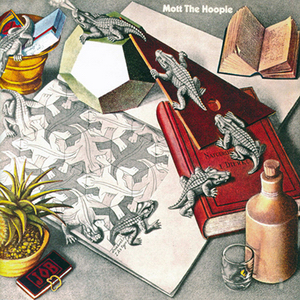
Christgau’s “unbelievable” communicates an understandable surprise; Mott’s unnamed 1969 first album was not very successful (two weeks in the Billboard 200, highest listing 185). But perhaps Dylan was alerted to it because of the album’s Dylanesque nature. No coincidence: legendary producer (and names giver of both Mott The Hoople and Procol Harum) Guy Stevens deliberately wanted to make a Dylan-meets-Rolling Stones album – and succeeds completely. And it’s the album with the cover on which Escher’s lizards rollick and frolic, of course.

In the twenty-first century, the band is still on Dylan’s radar; as a DJ on his Theme Time Radio Hour, he plays the highly infectious rocker “All The Way To Memphis” (episode 31, Memphis, 29 November 2006), introducing it with unmistakable joyful anticipation;

Hoople is an English term for a person on their knees, repenting of their sins. Here’s Mott The Hoople. This song was written by their lead singer Ian Hunter, and a story about being on the road, realising they left their guitars behind. They put this embarrassing song to music, and put it out on their album called Mott. Here’s Mott The Hoople, going All The Way To Memphis.”

… wherein we hear halfway through:

Yeah it's a mighty long way down rock 'n' roll
From the Liverpool docks to the Hollywood bowl
'n you climb up the mountains 'n you fall down the holes
All the way from Memphis

… from which Dylan gratefully copies From the Liverpool docks to the red light Hamburg streets, a few years later, for his Lennon ode “Roll On John”.

“Can you still listen to music passively,” Jeff Slate asks in that Wall Street Journal interview in December 2022, “or are you always assessing what’s special about a song and looking for potential inspiration?”

“That’s exactly what I do,” Dylan says. “I listen for fragments, riffs, chords, even lyrics. Anything that sounds promising.”


To be continued. Next up I Contain Multitudes part 5: All the people on earth… all you


Jochen is a regular reviewer of Dylan’s work on Untold. His books, in English, Dutch and German, are available via Amazon both in paperback and on Kindle:


Posted in Uncategorized | 4 Comments

The Never Ending Tour, the Absolute Highlights: Botony Bay

by Tony Attwood

As Mike Johnson pointed out in his article NET 1993 Part 5 – A series of dreams “In November 1992 Dylan released an album of traditional songs and covers. These were recorded in his own garage with only his producer and sound engineer present. Apparently, he undertook the album because of a contract, not because he wanted to do it. Once he got started, however, the project developed a life of its own as Dylan returned to his folk roots.

“The resulting album, Good as I Been to You, was well received and it was natural that Dylan would air these songs in the following year – 1993. On the album Dylan plays solo acoustic, and on stage he keeps the acoustic feel while bringing in some subtle backing.”

Mike also mentions the particular recording that I am focussing on below and notes that “by taking a bit more time, Dylan can build the song up in a way that didn’t happen on the album.”

And that really is a key point here.  This is, in my view, a terrific interpretation of a song over 150 years old, the performance of which can still be incredibly moving and meaningful.

The live recording is not perfect but it is well worth preserving and hearing again in my view, and this version does add to the notion that Mike put forward that as the project developed Bob realised there was more to it than he had originally thought.

There are a number of Botony Bay songs and the one that Dylan performed in 1993 was “Jim Jones at Botany Bay”.  It appears in The Roud Folk Song Index, an extraordinary  database of around a quarter of a million references to 25,000 songs from the English oral tradition, collected from across the world.   For people interested in where much of the English language’s popular music comes from it is invaluable, and many songs are now known by their “Roud number”.   This is Roud 5478.

The song dates from Australia in the early 19th-century and tells of Jim Jones being found guilty of poaching and transported to New South Wales (an Australian state of particular interest to me in that I have a daughter, son-in-law and granddaughter living there).

In the tale the singer suggests he would sooner have joined the pirates or be drowned rather than going to Botany Bay, and he hopes to join the bushrangers (those convicts who escape) and take revenge on the guards.  It is dated from around 1830, with the oldest version coming from a collection in 1907 – which is how we come to have the song now, and how Dylan was able to sing it.

The music for many of these songs however was not original, and melodies were used and re-used in many different contexts.  Thus the re-writing of the melody and accompaniment is very much part of the tradition of the piece.

In this recording, I really do love the way the accompaniment (including the bass which is played with a real delicacy and understanding of the piece in my view) flows behind the singing without ever intruding but while still giving a sense of the never changing life of those transported to the colony.

There are many different versions of the lyrics, and Dylan seems to use a set of lyrics that come from different sources, but most agree on the first verse…

Come gather round and listen lads, and hear me tell m' tale,
How across the sea from England I was condemned to sail.
The jury found me guilty, and then says the judge, says he,
Oh for life, Jim Jones, I'm sending you across the stormy sea.
But take a tip before you ship to join the iron gang,
Don't get too gay in Botany Bay, or else you'll surely hang.
"Or else you'll surely hang", he says, and after that, Jim Jones,
Way up high upon yon gallows tree, the crows will pick your bones.

The instrumental verse is also beautifully executed in my view containing that mix of the horror of what is being sung and does set us up for the final verse.

Day and night in irons clad we like poor galley slaves
Will toil and toil our lives away to fill dishonored graves
But by and by I'll slip m' chains and to the bush I'll go
And I'll join the brave bushrangers there, Jack Donahue and Co.
And some dark night when everything is quiet in the town,
I'll get the bastards one and all, I'll gun the floggers down.
I'll give them all a little treat, remember what I say
And they'll yet regret they sent Jim Jones in chains to Botany Bay.

The Absolute Highlights series

Posted in Uncategorized | 1 Comment

Dylanesque 2 – There Goes Rhymin’ Dylan

By Aaron Galbraith and Tony Attwood

Previously published: Part 1: Desolation Row

Definition: Dylanesque (comparative more Dylanesque, superlative most Dylanesque.   In the style of, or reminiscent of the music or lyrics of Bob Dylan (born 1941).

Aaron: “Rhyming doesn’t have to be exact anymore,” Bob Dylan told Paul Zollo of American Songwriter magazine in a 2012 interview. “It gives you a thrill to rhyme something and you think, ‘Well, that’s never been rhymed before’. Nobody’s going to care if you rhyme ‘represent’ with ‘ferment’, you know. Nobody’s gonna care.”

Dylan once admitted to Rolling Stone magazine that he stunned himself when he wrote the first two lines of ‘Like a Rolling Stone’ and rhymed “kiddin’ you” with “didn’t you”. “It just about knocked me out,” he said.

Well here is two artists who are also masters of rhyme – one you should know and one you probably don’t.

Bruce Springsteen with Blinded by the Light.

Manfred Mann’s Earth Band had the big hit with it but for me the original was the best. Cash Box said that it was “much like early Dylan, but especially like ‘My Back Pages,'” and that Springsteen “lets loose with a lyrical barrage of images and pictures.”

Tony:  I did spend part of my life away from the influence of western music and indeed western civilisation.  And somehow I’ve never caught up on the music of those missing periods.

So yes, I am going to admit, I don’t know this song.  But actually, for writing not knowing something that one is expected to know, is not a bad thing; coming to a piece of music afresh makes it much easier to write about its impact.   And to experience the “lyrical barrage of images and pictures” out of nowhere is quite an experience.  As with the previous episode of this series, I am coming afresh to the music.

For as it happens I also didn’t know “Thanksgiving Day Parade” from the previous article in this new series, but my goodness I know it now.  I have played the recording each day since you sent it over Aaron, and have also been bashing out my own version on the piano.

Now the point with that is that I could make sense of it immediately and felt part of the music from the first few seconds.   “Blinded by Light” I can relate to at the start and do appreciate how the vocal line, bass and guitar interact.   The lyrics are clear and there’s just enough musical accompaniment to give me the feel of the whole composition.   But then when the whole band comes in, I can’t focus on the lyrics at all; for me (and I really want to stress that this is just my view) there is just too much happening.

So in trying to cope with this overwhelming barrage I’ve had to go and look at the lyrics

Madman drummers bummers
Indians in the summer with a teenage diplomat
In the dumps with the mumps
As the adolescent pumps his way into his hat
With a boulder on my shoulder
Feelin' kinda older
I tripped the merry-go-round

With this very unpleasin'
Sneezin' and wheezin
The calliope crashed to the ground

Now I don’t demand that lyrics mean something for me to be able to listen and enjoy, but I do like them to give me something, but here, for me, that something is just an overwhelming torrent, both in terms of music and lyrics.  The words, the percussion and the sax at times seem to be fighting each other.

Which of course does relate to being blinded by the light, but it doesn’t draw me in.   There is simply too much there my brain can’t decide if it is listening to the rhythm, the accompaniment, the melody or the lyrics.  And when I focus on any of them the focus is ripped away from me because of everything else that is happening.

I think this is an old man’s reaction; I can remember my parents commenting on some of the music I listened to in my teenage years and making giving me their reaction which was not too different from that which I am writing now.  It’s not that “I must be getting old” but rather it seems, “I have got old”.

But I do have an artistic comment as well.  If we look at the lyrics such as

Now Scott with a slingshot (blinded by the light)Finally found a tender spot (revved up like a deuce, 
                         another runner in the night)And throws his lover in the sandAnd some bloodshot forget-me-not (blinded by the light)Said daddy's within earshot (revved up like a deuce, 
                         another runner in the night)Save the buckshot, turn up the band (blinded by the light)

… I can’t get any imagery out of that at all, whereas “My Back Pages” does make sense in that it is a pack of related images to which I can relate – not to make total sense out of it, but to get a feeling about what is being explored.  Rather like an abstract painting will give me feelings also…

Crimson flames tied through my ears, rollin' high and mighty traps
Pounced with fire on flaming roads using ideas as my maps
"We'll meet on edges, soon, " said I, proud 'neath heated brow
Ah, but I was so much older then, I'm younger than that now

Half-wracked prejudice leaped forth, 
         "rip down all hate, " I screamed
Lies that life is black and white spoke from my skull, I dreamed
Romantic facts of musketeers foundationed deep, somehow
Ah, but I was so much older then, I'm younger than that now

Thus for me there is for me a substantial difference in terms of what is being created here, not just by the music but also by the lyrics.  But then “I am so much older” now.

Aaron: Next we have a new artist known simply as Ren. This video has had 14 million views! For me this might be the pinnacle of lyrics, music and performance coming together as one glorious whole. Keep watching after he puts down the guitar as the performance continues. The lyrics are in the comments section under the video if you want to follow along.

Tony: I have come across Ren before, not least because Atwood magazine picked up on him, and he is indeed universally recognised as a unique talent.  His compositions stretch the concept of form to its limits and beyond, which combined with the content of the lyrics and the power of the music itself, make the whole experience difficult to take in – at least for me.

I was able to listen up the around seven and a half minutes when Ren addresses the camera directly, and then had to stop – it was too overwhelming and too overpowering.

Which is not to say that I can’t take art that is overwhelming; I remember staring at Guernica for a hour when I first saw it before my companion dragged me away.


But music is different: it changes across the time of the performance while visual art simply is: we look, don’t look, look again – temporally we are in control.

This performance is utterly challenging and maybe having had my own battle with mental health, and by and large coming out the winner, I am not sure I am ready to re-enter that world: it is simply too overwhelming.  Whereas, on the other hand, I can enter the world of Guernica because I was not there, it is history, it is more abstract, others suffered horrifically, I did not.

Ren’s work is brave and powerful and dominating and hopefully carries to everyone the message of what it is like to have the health issues he has faced.  I utterly and totally admire him for taking up the challenge that his life has presented and fighting his way through, but sometimes being reminded of the horrors of a mental health decline is more than I can take.

I am fine now, I would hasten to add, and would like to think that over time I have done a little to help edge others toward the sort of treatment that helped me revolutionise my life, but in this music I find it hard, for I am reminded for a moment of the worst of times.

Perhaps that is not such a bad thing as it reinforces the strength I subsequently found, but it is still in the end too overwhelming for me to take in.


Posted in Uncategorized | 3 Comments

NET 2013 part 1 – Shedding Old Favourites – A Roman farewell


By Mike Johnson (Kiwipoet)

The Never Ending Tour index to 116 previous articles can be found here.

Moving from 2012 to 2013 it’s hard not to be struck by how much better Dylan sounds. Everything is better, even the recordings sound better; what seemed blurred is now more sharply in focus. For a start, Dylan is really using his voice, really singing. The Frank Sinatra era is still a year or two away, but Dylan must have been listening to Old Blue Eyes because you can hear it in his voice. Dylan, the great mimic, is flexing his vocal chords, trying out extended notes, vibrato, lifting and lowering his voice and beginning to leave the old bark behind. Or turn it into something else.

You can hear it on this performance of ‘She Belongs to Me.’ now fully matured into that pounding beat and rising intensity that is the final arrangement of this song, and the way it would be played for the next few years. Listening to it, you can’t help but think that all the previous arrangements of the song, and there have been many, have inevitably lead to this final form in which the obsessiveness of the lyrics is perfectly reflected in that obsessive beat.

Despite flubbing a line at the beginning – ‘everything she sees’ becomes something else – it’s a powerful vocal performance, with the blues-honed harp clear and insistent. Beautifully staged rising action. (I’m still hunting for the date of this one.)

She belongs to me

Not a loose end anywhere, the whole band sounds tight and in focus. That may be a result of their precision work on Tempest. The setlists in 2013 will feature songs from that album, sometimes three or four songs per concert, pushing other songs off the setlists. Then we have those remarkable two concerts in Rome in which he plays a remarkable ten songs for the last time. Ten songs farewelled over two concerts, there has to be conscious intention here; Dylan was using these Rome concerts for a final performance of these songs, songs that were not peripheral, but bedrock songs and some that have with us from the beginning: ‘Leopard-Skin Pill-Box Hat,’ ‘Every Grain Of Sand,’ ‘Man In The Long Black Coat,’ ‘Positively 4th Street,’ Rollin’ And Tumblin’, ‘When The Deal Goes Down,’ ‘Under the Red Sky,’ ‘Ain’t Talkin’’, ‘Queen Jane Approximately’ and ‘I Don’t Believe You.’

I want to cover most of those performances, because I think they are historic and a vocal Rome audience seems to think so too. This makes these two Rome concerts (6th and 7th Nov) among the most moving of the whole NET. We have to go back to Glasgow, 2004, to encounter this performer-audience rapport. But these were not the only songs dropped in 2013. We have ‘Shooting Star’ (Denver, July 31st), ‘It’s Alright, Ma’ (Stockholm, October 12th) and an outlier, ‘Roll On John’ from Tempest only played twice, both in London at the end of the year.

So let’s settle into the two Rome concerts and bid farewell to some of our old favourites. ‘Leopard Skin Pillbox Hat’ is a good one to start with, as Dylan often opened concerts with this rollicking, irreverent rock song from Blonde on Blonde. Indeed, here it kicks the first Rome concert (6th July).

It’s a piss-take if ever there was one. It’s fun to make fun of fashions, and the people who adopt them. At the same time, we can make fun of those moments when romance fails to flower and absurdity sets in. They say sarcasm is the lowest form of wit, but not where Dylan is concerned; hilarity is never far away:

Well if you, wanna see the sun rise
Honey, I know where
We'll go out and see it sometime
We'll both just sit there and stare
Me with my belt wrapped around my head
And you just sittin' there
In your brand new leopard-skin pill-box hat

This song hasn’t changed that much over the years. It’s an unashamed rocker and has always come with tight jeans and an attitude. And doesn’t the audience love it. Another, tight, uncluttered performance with some very tasteful 1950’s style guitar from Charlie Sexton. Let’s hear it one last time!

Pill box hat

‘I Don’t Believe You (She Acts Like We Never Have Met)’ predates ‘Pillbox Hat’ by two years and has been a survivor from Dylan’s early acoustic years, although he’s played it as a rock song since 1966. It was first performed in 1964.

‘ I Don’t Believe You’ illustrates Dylan’s wonderful ability to turn common experiences into songs. Imagine you meet someone one night, you hit it off, romance flowers, you begin to dream things, then next day that same person ghosts you, walks right past you as if you didn’t exist. It’s okay to feel outraged; being slighted is hard to deal with. Maybe this is what kept Dylan singing this song for so long – it has that universality.

This performance kicks along at a good pace. It might be the last performance, but the song feels very much alive.

I don’t believe you

Over the years we have had some powerful, even extraordinary renditions of ‘Queen Jane Approximately.’ It was played only 76 time during the NET, but the song excels in expressing that world-weariness we can feel in the face of the world’s demand on us, and how, beyond romance, there is a feeling of commonality we can call friendship. There are details in the song which suggest it was written for Joan Baez, but I don’t think it matters. It’s an invitation to an old lover, and that’s what matters.

Now when all the clowns that you have commissioned
Have died in battle or in vain
And you’re sick of all this repetition
Won’t you come see me, Queen Jane?

Another superlative Rome performance to an appreciative audience. The sentiment suits an older, more tired voice.

Queen Jane

We now have to leave the Sixties and jump to 1981, Shot Of Love,’ Dylan’s final gospel album and a song in which faith and doubt hang in the balance – ‘Every Grain of Sand,’ and I’m sure like me you will regret seeing it go. There is a magic to the song hard to pin down. Maybe it’s the way the lyrics work with the sweet melodic line. The lyrics don’t look that marvellous on paper, and yet sung it all works, especially that last verse.

I hear the ancient footsteps like the motion of the sea
Sometimes I turn, there’s someone there, other times it’s only me
I am hanging in the balance of the reality of man
Like every sparrow falling, like every grain of sand

Some time back he changed that second to last line into: ‘I am hanging in the balance of a perfect finished plan’ which I don’t think is much of an improvement.

I’m not surprised to see the re-appearing eight years later to feature in the Rough and Rowdy Way tour that started in 2021 and is still going. The song has featured prominently in the 2023 setlists, but for our purposes it disappears after this performance.

Every Grain of Sand

We jump almost another decade to ‘Man in the Long Black Coat’ from Oh Mercy. There’s no song quite like it for sinister subtly. Based on the ‘Devil at the Dance’ urban myth or folktale which was designed to be a warning to heedless young women, the song becomes an exploration of seduction and fascination, how desire can act like a magic spell. Note that she’s the one who asks him to dance, thus courting her death.

It’s a masterpiece, and was originally spookily atmospheric. These later swing versions may have lost the spookiness somewhat, but not its grip. I’m sad to see this one go.

Man in the Long Black Coat

We now jump forward a couple of years to ‘Under the Red Sky’ from the album with the same name. An underestimated song this one. I have previously explored how the song seems to be about the loss of creativity, which fits as we would wait until 1997 for Time Out of Mind.

This is the key to the kingdom and this is the town
This is the blind horse that leads you around

Let the bird sing, let the bird fly
One day the man in the moon went home and the river went dry

The song has also been the occasion for some memorably melancholic harp playing. Here we only get a taste of that at the beginning; Dylan’s more interested in working with the piano.

‘When The Deal Goes Down’ celebrates the power of love. You want to stick with the one you love right to the very end, to death itself.

Under the Red Sky

‘When The Deal Goes Down’ celebrates the power of love. You want to stick with the one you love right to the very end, to death itself. Love has that time-defying aspect to it. This is a gentle, loving last performance of the song.

When the deal goes down.

Finally from Rome, we have ‘Ain’t Talkin’’ from Modern Times. A relative newcomer first played at the end of 2006 and played only 118 times. We saw some marvellous performances in 2007. It’s an extended masterpiece which expresses the spiritual desolation of modern life. It’s one of my favourite songs from Dylan’s 21st Century output, and while I don’t think later performances touch those 2007 versions, this one comes very close. A grievous loss to the NET.

Ain’t Talkin’

We now leave Rome and skip to Denver (July 31st) to catch the last performance of ‘Shooting Star’ from Oh Mercy. With the loss this one and ‘Man in the Long Black Coat’ that leaves the tour with no surviving songs from that album. More’s the pity, I say.

That shooting star was never just about the brief prospect of earthly love but our equally brief chance of spiritual salvation; as so often in Dylan love and spiritual salvation go hand-in-hand. Like love, we only get one go at it, every moment is the last moment, ‘the last radio playing.’ This song has had some intense performances over the years, with some sustained harp playing, and this one doesn’t disappoint. Dylan doesn’t try to swing it or compromise its intensity. Another sad farewell.

Shooting Star

We’ve got room for one more. A final final, ‘It’s All Right Ma (I’m only bleeding),’ Dylan’s 1964 protest classic, his summation of the spirit of protest, pushing beyond topical songs like ‘Hollis Brown’ to the massive broadside against everything that’s false, phoney and profane in the world, which is just about everything.

Old lady judges watch people in pairs
Limited in sex, they dare
To push fake morals, insult and stare
While money doesn’t talk, it swears
Obscenity, who really cares
Propaganda, all is phoney

Hell, that sounds like 2023, a world riven by false news stories and moral busy-bodies who want to tell us how to live and love. Nothing has changed, it seems, except got worse.

The song is studded with epigrammatic one-liners that have become part of our language: ‘He not busy being born is busy dying,’ ‘Money doesn’t talk, it swears,’ ‘While others say don’t hate nothin’ at all / except hatred.’

Dylan never messed with the lyrics, but the arrangements changed over the years and the song slowed up a bit as Dylan moved away from the rapid-fire delivery of 1964 (You can find a classic early performance of it on YouTube.) This one skips along at a fair pace, the images flashing by as they should, with an interesting descending riff to drive it. Oh no, Bob – how could we possibly lose this one?

It’s all right Ma

But lose it we do. I’ll be back soon to see we’ve gained, and a hello-goodbye to ‘Roll on John’ from Tempest.

Until then

Kia Ora

Posted in Uncategorized | Leave a comment

A Dylan cover a Day: A series of Dreams; no one gets it (except Dylan)

By Tony Attwood

I have always loved this song, not least for the rhythm and the sudden change in the melody line with “comes up to the top” and “series of screams”

Yellowbirds don’t add to much to Bob’s original however apart from a fairly obvious opening using an attempt at abstraction in the music as it builds from silence.  It’s ok, and I imagine if one had not heard Bob’s original version one might be quite intrigued.

And at this point, for once my musical memory failed me, and that is worrying, because I am used to every other aspect of my memory failing me, but NOT my musical memory.  So I had to play Bob’s original version again, and because I want to carry you along on the journey I am following, and because it is just possible you might not have heard it for a while here it is

And I’d like to point out the way that this builds so gradually while that rhythm goes on and on.

Now I obviously don’t know if you ever get that feeling of shivers and temperature change just from listening to a piece of music, but as I write this while I am listening to Bob’s version for the first time in years, I am getting exactly that.

It’s not so much because hearing the music again takes me back to buying the Bootleg 1-3 series, and just wondering what on earth I was going to get, and then finding this track, and thinking that whatever it was I paid for that album, was worth it just for this.

So having established the original, now back to the point of this article: the covers.

I am sorry to say I am not familiar with this band, but I’m informed they are a Belgian indie rock group.  And having reminded myself of every nuance of Bob’s immaculate version this is quite good fun.  The sort of cover that can be enjoyed because of the way they change the original and give new insights and nuances.

It really is a magnificent song!  Bob did play it 10 times in the 1990s, but that low number makes me think that it was there just to help promote the sales of Bootlegs 1-3.

Zita Swoon’s version isn’t one that I want to go back and play again, but a pleasant enough variation on a great original.

Up next came Gallon Drunk, a 1980s English band.  It’s a performance where I think the producer or maybe the band came up with a sound, taking of course the dominance of the percussion from the original, and then see where they can take it.  It’s certainly worth a listen, but in the end, I’m not sure it gives us any further insights into such a brilliant composition.

The song has appeared in languages other than English as well – here is Mimmo Locasciulli – whose “proper job” is as a primary care physician – which I think is what in the UK we call a GP (General Practitioner).  I really must ask my local GP if she’s recorded any Dylan songs.

I utterly love this performance, and although of course it is always possible that I am the only person in the Dylanverse who has not heard this before, maybe if that is not the case this little article can establish this version a little more in the English speaking world.

OK it takes the original in its original form and doesn’t try anything radical, but nevertheless it adds something for me, which makes me want to play it over and over again.

And in fact it is the foreign language versions that I find the most satisfactory perhaps because the performers don’t feel they have to do much to the music because they are translating.   What happens here is that the background is kept where it ought to be.

I really do wish some English or American bands had tried to do this – take it as it is, and add just a little difference rather than a complete re-write.

But more than anything else, on a weekend when I have been screaming at my computer because of a series of failures (which are my own fault for allowing it to become too full, and while I am waiting for the new machine to be fully set up) I take great comfort in going back to this old favourite.

According to the all-seeing Wiki (which I have to use here since I don’t speak Italian) his title in Itlay “Il Principe dei cantautori”  means “The Prince of the singer-songwriters”), and that this comes about because of the “elegance of his lyrics.”  The article adds “He is often referred as singer-songwriter and poet, although he prefers to be identified simply as “artist”.”   If you want to hear more, just let the video above run.  Up next is “I shall be released”.  It is interesting, but doesn’t compare to “Series of Dreams”.

But please don’t leave thinking that anyone can make a decent version of this song because of the excellence of the raw material.  Bobby Sutliff managed to destroy it, and I’m really not going to put a copy of his version here.  If you want more, go back to Bob at the top, and maybe just once when listening, forget Bob himself and listen to the accompaniment.  It is a masterpiece in its own right.  I really cannot explain how much I adore this composition and performance.

The Dylan Cover a Day series

    1. The song with numbers in the title.
    2. Ain’t Talkin
    3. All I really want to do
    4.  Angelina
    5.  Apple Suckling and Are you Ready.
    6. As I went out one morning
    7.  Ballad for a Friend
    8. Ballad in Plain D
    9. Ballad of a thin man
    10.  Frankie Lee and Judas Priest
    11. The ballad of Hollis Brown
    12. Beyond here lies nothing
    13. Blind Willie McTell
    14.  Black Crow Blues (more fun than you might recall)
    15. An unexpected cover of “Black Diamond Bay”
    16. Blowin in the wind as never before
    17. Bob Dylan’s Dream
    18. You will not believe this… 115th Dream revisited
    19. Boots of Spanish leather
    20. Born in Time
    21. Buckets of Rain
    22. Can you please crawl out your window
    23. Can’t wait
    24. Changing of the Guard
    25. Chimes of Freedom
    26. Country Pie
    27.  Crash on the Levee
    28. Dark Eyes
    29. Dear Landlord
    30. Desolation Row as never ever before (twice)
    31. Dignity.
    32. Dirge
    33. Don’t fall apart on me tonight.
    34. Don’t think twice
    35.  Down along the cove
    36. Drifter’s Escape
    37. Duquesne Whistle
    38. Farewell Angelina
    39. Foot of Pride and Forever Young
    40. Fourth Time Around
    41. From a Buick 6
    42. Gates of Eden
    43. Gotta Serve Somebody
    44. Hard Rain’s a-gonna Fall.
    45. Heart of Mine
    46. High Water
    47. Highway 61
    48. Hurricane
    49. I am a lonesome hobo
    50. I believe in you
    51. I contain multitudes
    52. I don’t believe you.
    53. I love you too much
    54. I pity the poor immigrant. 
    55. I shall be released
    56. I threw it all away
    57. I want you
    58. I was young when I left home
    59. I’ll remember you
    60. Idiot Wind and  More idiot wind
    61. If not for you, and a rant against prosody
    62. If you Gotta Go, please go and do something different
    63. If you see her say hello
    64. Dylan cover a day: I’ll be your baby tonight
    65. I’m not there.
    66. In the Summertime, Is your love and an amazing Isis
    67. It ain’t me babe
    68. It takes a lot to laugh
    69. It’s all over now Baby Blue
    70. It’s all right ma
    71. Just Like a Woman
    72. Knocking on Heaven’s Door
    73. Lay down your weary tune
    74. Lay Lady Lay
    75. Lenny Bruce
    76. That brand new leopard skin pill box hat
    77. Lily, Rosemary and the Jack of Hearts
    78. License to kill
    79. Like a Rolling Stone
    80. Love is just a four letter word
    81. Love Sick
    82. Maggies Farm!
    83. Make you feel my love; a performance that made me cry.
    84. Mama you’ve been on my mind
    85. Man in a long black coat.
    86. Masters of War
    87. Meet me in the morning
    88. Million Miles. Listen, and marvel.
    89. Mississippi. Listen, and marvel (again)
    90. Most likely you go your way
    91. Most of the time and a rhythmic thing
    92. Motorpsycho Nitemare
    93. Mozambique
    94. Mr Tambourine Man
    95. My back pages, with a real treat at the end
    96. New Morning
    97. New Pony. Listen where and when appropriate
    98. Nobody Cept You
    99. North Country Blues
    100. No time to think
    101. Obviously Five Believers
    102. Oh Sister
    103. On the road again
    104. One more cup of coffee
    105. (Sooner or later) one of us must know
    106. One too many mornings
    107. Only a hobo
    108. Only a pawn in their game
    109. Outlaw Blues – prepare to be amazed
    110. Oxford Town
    111. Peggy Day and Pledging my time
    112. Please Mrs Henry
    113. Political world
    114. Positively 4th Street
    115. Precious Angel
    116. Property of Jesus
    117. Queen Jane Approximately
    118. Quinn the Eskimo as it should be performed.
    119. Quit your lowdown ways
    120. Rainy Day Women as never before
    121. Restless Farewell. Exquisite arrangements, unbelievable power
    122. A Dylan Cover a Day: Ring them bells in many different ways
    123. A Dylan cover a day: Romance in Durango, covered and re-written
    124. Dylan cover a day: Sad Eyed Lady of Lowlands, like you won’t believe
    125. Sara
    126. Senor

Posted in Uncategorized | 4 Comments

Bob Dylan: The lyrics AND the music. The Drifter’s Escape.


By Tony Attwood

My theme in this little series of articles is that for a fulsome understanding of Dylan’s works we need to consider both the lyrics and the music as one, for if Dylan had no interest in what the music was doing, he’d have contented himself with writing poetry, or simple folk songs.

And yet this obvious fact, most commentators only focus on the lyrics.

In tackling this issue, I am trying to use examples which approach the issue each from a slightly different angle, and my example here (Drifter’s Escape) is a challenging one, because as I have noted in earlier pieces, this is a song with two alternating chords and two short lines of melody, also alternating.

As for the lyrics, the point is that the drifter in the song goes nowhere and does nothing, and judging by the line “my time it isn’t long” he knows he is about to pass away.   But above all, as far as he can see, the world around him is completely out of his control.  He’s like a child at school endlessly being punished for being naughty, without any real grasp of how this keeps on happening.

As a result he can do nothing about the world in which he is stuck, and so the world goes around day after day, and nothing much happens except that he goes through the same cycle of behaviour over and over again.

To symbolise this, Dylan in his own version, makes the song do the same thing; line after line is the same.  Indeed even the introduction is slightly hesitant giving the impression that the guys have been playing this song all along.  As the song progresses musically there is hardly any change – line after line… it is the same.  Yes the harmonica part changes slightly, but not that much, and the overall impression constantly is of the wail of the harmonica, rather than the exact notes.

Indeed it is most curious when considered in this way, given the dramatic events that are portrayed in the song.   The drifter is carried from the court – he doesn’t walk out.  He claims he doesn’t even know what crime he’s committed.  The judge is on the edge of crying; there is a mob waiting outside, and inside the jury starts making a noise; lightning hits the court, the drifter gets away.

This is dramatic, manic, chaotic, crazy, and yet the music just carries on and on, until a final very quick fade out, as if the engineer had just had enough.

Overall it is madness, and yet it is all relayed in these same, never changing lines, and that I think is the key to it all.  The drifter is caught in a world from which he can’t escape, where the same things happen over and over, and the music portrays that concept of being entrapped totally.

Now having a piece of music which does indeed just have one line (with a two chord accompaniment) which goes round and round is a challenge and a half.   In the hands of most composers it would quickly become absolutely boring and dull.   But with Dylan – the chaos of the lyrics keeps us there, in the courtroom, hoping that the drifter can find a way out.

Indeed the music’s repetitiveness is a total reflection of the drifter’s life; no matter what he does he cannot get out of the situation he is in, so he keeps on drifting on.

But there is action; yet it is action that itself creates a problem.  The judge knows there is a miscarriage of justice going on here, as I have pointed out in previous considerations of this song, but is powerless in the face of court process and the law.  The jury reaches its verdict, and he can do nothing about it.

And yes there is action – but it is outside where the crowd is stirring, and the song is really only concerned with what happens inside the court.   So despite the noises off stage, onwards ever onwards goes the song with that same musical line repeating over and over.  Nothing changes now, nothing is ever going to change.

Even when the courthouse is consumed by fire after a bolt a lightning (which is curious because there has been no mention of rain), the music just carries on, as if to say, “stuff happens”.  In this case the courthouse is destroyed, those inside start praying to the Almighty, and off goes the drifter.

It would be funny, except that this music goes on, line after line after line always the same, just like the drifter.  Nothing happens, there is no progress, there is no call for one’s behaviour to change so that one might be redeemed or saved, there is no notion of “work hard to get your rewards,” there is fact nothing.  Life just goes on.  Just like the music.  And that is a total challenge to most people’s notion of life and work.  You work hard, you get your rewards on earth and in heaven.   Except not here.

So, as I have mentioned in a previous note on this song, while Hollis Brown found escape through murder and suicide, for the drifter, even all these crazy happenings in the courtroom mean he still ends up drifting, and so to fit that, the music just goes on and on.

Now this suits Dylan with his original version, and indeed Thea Gilmore who I shall come to (once again!) in a moment.   They both see the essence of the piece.

But there is Hendrix – who with a totally different approach to the accompaniment turns the meaning of the song into something quite different, something which hypes up the chaos, but loses all track of the continuity.  Now it is a background world of total disorder with the pretence of order (in terms of the vocal line) laid over the top.  The repeat of the “cried for more” line adds to the fact that the emphasis has moved away the central theme that Dylan laid down… that everything just plods along, even amidst chaos.

Thea Gilmore, however, does get it right.  Her version of this song is one I have raved about over and over on this site, and accepts the Dylan concept of an ever-repeating world that makes no sense.  For although she adds the vocal harmonies, and in spite of the fact that the accompaniment changes there is still the essence of continuity and unchanging chaos (a contradiction if ever there was one, and which her version pulls off).

Dylan lets the contradictions stay within the lyrics, Thea Gilmore brings them out more clearly in the music, adding a certain uncertainty with that final chord which has nothing to do with the music that has gone before.  It is, for me, the one re-working of the music that works, because it retains the conception of the endlessly repeating world which Dylan lays down in both the music and the lyrics.


Posted in Uncategorized | 1 Comment

I contain multitudes part 3: The thrill of rhyming something that’s never been rhymed before

I Contain Multitudes (2020) part 3

by Jochen Markhorst

III         The thrill of rhyming something that’s never been rhymed before

A red Cadillac and a black moustache
Rings on my fingers that sparkle and flash
Tell me what’s next - what shall we do
Half my soul baby belongs to you
I rollick and I frolic with all the young dudes . . . 
     I contain multitudes

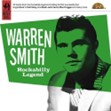
“Warren was an egotist,” DJ Dylan bluntly says in his radio show Theme Time Radio Hour, episode 55 (“Classic Rock”, 17 0ktober 2007). “He wanted recognition. He painted Warren Smith – The Rock ‘n’ Roll Ruby Man on the back of his car. He was good friends with Johnny Cash, and Johnny offered him a slot on his package show. But Warren said no – his plans didn’t include playing second fiddle to anybody. He had a big problem with amphetamines, and in 1965 he barely escaped being one of those tombstones you see every mile.” And two years later, in episode 100 (or 103, if you count the three reruns in Season 3), in the farewell show “Goodbye”, when DJ Dylan plays “So Long, I’m Gone”, the fourth Warren Smith song in the series, he is equally harsh: “Warren had a bit of a temper, and he became angry at Jerry Lee for the rest of his life. Whenever he heard a Jerry Lee Lewis record on the radio, he would smash the radio, and throw any copies of a record he came across out the window.”

But: it’s only love, and that is all. Dylan is a fan, and a true fan is not afraid to name his idol’s human failings. There are plenty of tributes in return. In 2022, in The Philosophy Of Modern Song, Dylan argues that Warren Smith belongs in the Country Music Hall of Fame, in the announcements and concluding remarks around three of the four songs in Theme Time Radio Hour, the offensive asides regarding Warren’s character and behaviour evaporate among all the eulogies. Plus, of course, the ultimate reverence: Dylan covers both “Uranium Rock” (albeit with different lyrics) and “Red Cadillac And A Black Moustache” live on stage (three times in June/July 1986, with Tom Petty’s band), and records Warren Smith’s version of Slim Harpo’s “Got Love If You Want It” during the Down In The Groove sessions in April 1987.

Although… the ultimate reverence is actually Dylan’s contribution to that wondrous tribute project, the album bursting at the seams from all the legendary grandmasters contributing to it: Good Rockin’ Tonight: The Legacy Of Sun Records (2001). Wondrous because, despite Paul McCartney (“That’s All Right”), Van Morrison and Carl Perkins (“Sittin’ On Top Of The World”), Led Zeppelin (“My Bucket’s Got A Hole In It”) and a dozen more rock gods and demigods, it turned out to be an admittedly fun, but definitely not a legendary record – the gods are mostly having unconcerned fun (Elton John, Eric Clapton), the demigods are desperately trying to put classics in a modern, contemporary format (Sheryl Crow, Kid Rock, Live), maybe that’s why.

In fact, only Chris Isaac’s perfect rendition of Hank Williams’ “It Wouldn’t Be The Same Without You” stands out. And Dylan’s contribution, of course, choosing, as befits Dylan’s idiosyncratic style, not one of the many immortal Sun Records classics, but a rather obscure B-side; “Red Cadillac And A Black Moustache”, that is.

… the attractive rockabilly song with the curious main character’s physical description He was long and tall – the male version of Long Tall Sally, apparently.

And in 2020, Dylan then honours Warren Smith with this opening line of the third verse of “I Contain Multitudes”; A red Cadillac and a black moustache. On his radio show, Dylan introduced the song with a declaration of love to the sound of Sun Records:

“Each of those record companies had their own sound. When you dropped the needle on a Specialty Record, you knew it was a Specialty Record; same with Imperial, Chess, King, and a million others. Perhaps the most distinctive were those that came out of the Sam Phillips Memphis Recording Studio and were put out on his Sun Record label.”

… the bridge to the tender announcement of the song itself: “Like this one. Warren Smith’s tale of his girl, cavorting with a mysterious stranger, dining and dancing in the cabaret till the break of day; Red Cadillac And A Black Moustache.”

Warren Smith is, all in all, one of those multitudes that comprise the protagonist of Dylan’s song. Like there always is a Warren Smith simmering somewhere in Dylan himself, we may add after all these decades of overt and not-so-overt tributes. Of which Dylan himself is semi-aware, judging by his self-analysis in that 2020 New York Times interview:

“There are certain public figures that are just in your subconscious for one reason or another. None of those songs with designated names are intentionally written. They just fall down from space. I’m just as bewildered as anybody else as to why I write them.”

Although in this particular case he is talking about “songs with designated names”, referring to songs like “Roll On John” and “Goodbye Jimmy Reed”. But the mechanism by which a complete song title which is “just in your subconscious for one reason or another” just pops up from that subconscious, twirling down onto the writing paper will be identical, we may assume

Something similar seems to happen with the next verse, with Rings on my fingers that sparkle and flash. We know that Dylan is browsing through Juvenal’s Satires in Peter Green’s 1967 translation in these days, thanks to that bizarre The size of your cock won’t get you nowhere quote from “Satire IX” in “Black Rider”, and theoretically Dylan then could also have noticed and stored her bejewelled fingers sparkle from “Satire VI” and a big ring to flash from “Satire VII”. But a mild form of self-plagiarism seems more likely. The opening line is chosen. The poet looks for a rhyme word for “moustache”, and finds “flash” – quite satisfying for a poet who says:

“It’s a game. You know, you sit around… you know, it’s more like, it’s mentally… mentally… it gives you a thrill. It gives you a thrill to rhyme something you might think, well, that’s never been rhymed before.”
(SongTalk interview with Paul Zollo, 1991)

And once that “flash” is chosen, somewhere in the subconscious A gypsy with a broken flag and a flashing ring from 1978’s “Señor” awakens. “Ring” ignites the next link in the chain reaction and triggers She wears an Egyptian ring that sparkles before she speaks from “She Belongs To Me” (1965)et voilà: Rings on my fingers that sparkle and flash.

Not too informed guesswork, of course. By his own admission, even Dylan himself does not know where the words come from. “They just fall down from space,” as he says. But the option that the words do bubble up from his own catalogue is still more appealing than the theory that a ferociously attractive song like “I Contain Multitudes” is made up of scrapped-together space junk.

To be continued. Next up I Contain Multitudes part 4: Boogaloo dudes carry the news


Jochen is a regular reviewer of Dylan’s work on Untold. His books, in English, Dutch and German, are available via Amazon both in paperback and on Kindle:


Posted in Uncategorized | Leave a comment

Dylan’s greatest opening lines (update 3, 8 June 2023)

By Tony Attwood

This idea started quite a long way back, and up an update on the original article appeared a few weeks ago.  Then such was the interest, and because I find it fun anyway, I’ve added some more of the best Dylan opening lines I can find.  And to make the point as before: it’s just my choice, nothing more.

What I have done is reprinted the list that we had before and added a few new ones – which can be readily seen as they are in colour and bold.

And in looking again at Dylan’s opening lines I am struck by the fact that (and of course this is just my opinion) they are not all good.   What about

I got to see you baby, I don’t care
It may be someplace, baby, you say where

I mean, as an opening line, for me that doesn’t actually do anything.   Or what about the opening of “Had a dream about you baby”

If you getcha one girl, better get two
Case you run into Gypsy Lou

Some of Dylan’s songs of course don’t seem to mean too much, at least at first, and that never worries me.  I like the shifting landscapes of the disconnected words.  But other times, it just doesn’t work for me (and again I do emphasise “for me”)

Handy Dandy, controversy surrounds him
He been around the world and back again
Something in the moonlight still hounds him
Handy Dandy, just like sugar and candy

Sometimes also I find that the opening line works absolutely for me, but then the second line destroys it.   “Honest with me” is a very enjoyable song indeed but the opening sets my teeth on edge…

Well, I’m stranded in the city that never sleeps
Some of these women they just give me the creeps

Anyway, in case you haven’t been here before, I’m reproducing the full list – but in case you have been here before and don’t want to plough through it all again, I’ve put the new additions in coloured bold and added a little note where something strikes me as maybe worth pointing out.  Here we go

Dylan’s best opening lines… (continued)

Ain’t it just like the night to play tricks when you’re tryin’ to be so quiet?  (Visions of Johanna)

All the early Roman kings in their sharkskin suits bow ties and buttons high top boots (Early Roman Kings)

All the tired horses in the sun (All the tired horses)

Are you ready, are you ready? (Are you ready?)

As I went out one morning ( As I went out one morning)

As I walked out tonight in the mystic garden, the wounded flowers were dangling from the vines (Ain’t Taking)

At the time of my confession, and the hour of my deepest need (Every grain of sand)

B

Band of the hand (Band of the hand)

Been so long since a strange woman slept in my bed… (I and I)

Beyond the horizon, behind the sun, at the end of the rainbow, life has just begun.  (Beyond the horizon)

Black Rider Black Rider you been livin’ too hard (Black Rider)

Buckets of rain, buckets of tears (Buckets of rain)

Bye and bye, I’m breathin’ a lover’s sigh (Bye and Bye)

C

Come around you rovin’ gamblers, and a story I will tell. (Rambling, Gambling Willie)

Crimson flames tied through my ears, rollin’ high and mighty traps (My back pages)

D

Darkness at the break of noon (It’s all right Ma, I’m only bleeding)

E

Everything went from bad to worse, money never changed a thing (Up to Me)

F

Far between sundown’s finish and midnight’s broken toll  (Chimes of Freedom)

Fat man lookin’ in a blade of steel (Dignity)

G

Go away from my window, leave at your own chosen speed (It Ain’t Me Babe)

God knows you ain’t pretty (God knows).    Those who have analysed the lyrics of what broadly might be called “popular music” invariably conclude that the genre has three prime subjects: love, lost love and dance.   Bob of course goes his own way, but has no problem handling love and lost love songs.  But this as an opening… well, I just don’t think anyone else ever has tried that approach.

God said to Abraham “Kill me a son” (Highway 61 Revisited)

Gon’ walk down that dirt road, ’til someone lets me ride (Dirt Road Blues)

H

He sits in your room, his tomb, with a fist full of tacks (Can you please Crawl out Your Window)

High water risin’—risin’ night and day (High Water)

Hollis Brown he lived on the outside of town (Ballad of Hollis Brown)

Hot chili peppers in the blistering sun  (Romance in Durango)

How many roads must a man walk down before you can call him a man? (Blowing in the wind)

I

I ain’t lookin’ to compete with you (All I really want to do)

I can hear the turning of the key (Abandoned Love)

I crossed the green mountain, I slept by the stream (‘Cross the green mountain)

I hate myself for lovin’ you and the weakness that it showed (Dirge)

I got this graveyard woman, you know she keeps my kid  (From a Buick Six).  I’ve never quite been sure what that means, and to try and help myself I just looked up the topic of women and graveyards, but aside from learning about Islamic rulings on the matter I haven’t found much.  Perhaps it is an American slang expression that has never come to England.  Or maybe it is just something Bob invented.   Whatever the answer, it’s a great line.

I ain’t looking to compete with you (All I really want to do)

I love you more than ever, more than time and more than love (Wedding Song)

I love you pretty baby (Beyond here lies nothing)

I once loved a girl, her skin it was bronze (Balled in Plain D)

I was born in Dixie in a boomer shed (Freight Train Blues).   Again a bit of looking up on my part.  It seems “The Boomer Shed is an inclusive community shed for both men and women over 50 in South Auckland”.   I take it that is in New Zealand.  Has Bob played in New Zealand?  I think I’ve missed something!

I woke in the mornin’, wand’rin’ wasted and worn out (Black crow blues)

If I had wings, like Noah’s dove  (Dink’s Song)

I’m walking through the summer nights, jukebox playing low (Standing in the Doorway)

I’m walkin’ through streets that are dead (Love Sick)

If today was not an endless highway (Tomorrow is a long time)

If you find it in your heart, can I be forgiven?  Guess I owe You some kind of apology  (Saving Grace)

If you see her say hello (If You See Her Say Hello)

If your memory serves you well, we were going to meet again and wait (This wheel’s on fire)

In the lonely night, In the blinking stardust of a pale blue light (Born in Time)

In the time of my confession, in the hour of my deepest need (Every Grain of Sand)

I’ve just reached a place where the willow don’t bend (Going Going Gone)

I was riding on the Mayflower when I thought I spied some land (115th Dream)

I woke in the mornin’, wand’rin’ (Black Crow Blues)

J

Johnny’s in the basement mixing up the medicine, I’m on the pavement talking ’bout the government. (Subterranean Homesick Blues)

K

L

Like a lion tears the flesh off of a man, so can a woman who passes herself off as a male. (Foot of Pride).  Like the lion tears the flesh off of a man, So can a woman who passes herself off as a male (Foot of Pride).    I love Foot of Pride – and the fact that on some computers in some places the Untold article on the song comes up at the top of page one.  I’ve included this before, but I thought it was time to break up my ramblings with a song.

M

Man thinks, cuz he rules the world, he can do with it as he please (Licence to kill)

May God bless and keep you always, may your wishes all come true (Forever Young)

My love she speaks like silence. (Love Minus zero / No Limit)

My name is Donald White, you see (Ballad of Donald White)

N

Nobody feels any pain (Just like a woman)

Now the ragman draws circles up and down the block  (Stuck inside of Mobile with the Memphis Blues Again)

O

Of war and peace the truth just twists, it’s curfew gull it glides (Gates of Eden)

Oh I’m sailing away, my own true love. (Boots of Spanish Leather)

Oh, the benches were stained with tears and perspiration (Day of the Locusts)

Oh, the gentlemen are talking and the midnight moon is on the riverside (Dark Eyes)

Oh, help me in my weakness  (The Drifter’s Escape)

Oh the streets of Rome are filled with rubble, ancient footprints are everywhere. (When I Paint my Masterpiece)

Oh, where have you been, my blue-eyed son?  (Hard Rain)

Old man sailin’ in a dinghy boat (Apple suckling tree)

P

Pistol shots ring out in the barroom night  (Hurricane)

Q

R

Ring them bells ye heathen from the city that dreams (Ring them Bells)

S

Sad I’m a-sittin’ on the railroad track (Ballad for a friend)

Seen the arrow on the doorpost saying this land is condemned (Blind Willie McTell)

Shadows have fallen and I’ve been here all day,  (Not Dark Yet)

She’s got everything she needs she’s an artist she don’t look back (She Belongs to Me)

Sometimes I’m in the mood, I wanna leave my lonesome home (Baby I’m in the mood for you)

Someone’s got it in for me, they’re planting stories in the press.  (Idiot Wind)

Some of us turn off the lights and we live in the moonlight shooting by (Red River Shore)

Something there is about you that strikes a match in me (Something there is About You)

Standing on the waters casting your bread while the eyes of the idol with the iron head are glowing? (Jokerman)

Stake my future on a hell of a past (Silvio)

T

Ten thousand men on a hill (Ten Thousand Men)

The air is gettin’ hotter, there’s a rumblin’ in the sky, (Lucinda Williams Tryin’ to get to Heaven)

The pale moon rose in its glory out on the Western town (Tempest)

The pawnbroker roared also so did the landlord (She’s your lover now)

The river whispers in my ear, I’ve hardly a penny to my name (Tell Ol Bill)

“There must be some way out of here,” said the joker to the thief (All along the Watchtower)

There’s a long-distance train rolling through the rain, tears on the letter I write. (Where are you Tonight?  (Journey through Dark Heat))

There’s guns across the river aimin’ at ya (Billy 1)

They’re selling postcards of the hanging (Desolation Row)

They ask me how I feel
And if my love is real
And how I know I’ll make it through (I believe in you).   Bob’s ability with simple words and turning them into everything you want them to be.

They say everything can be replaced, yet every distance is not near (I Shall be Released)

Today and tomorrow and yesterday too (I contain multitudes).   No opening line could ever be more all-encompassing.

Twas another lifetime, one of toil and blood (Shelter from the Storm)

Twilight on the frozen lake (Never say Goodbye)

U

Up on the white veranda, she wears a necktie and a Panama Hat  (Black Diamond Bay)

V

W

Well, if I had to do it all over again (All over you)

Well, it’s always been my nature to take chances (Angelina)

Well, the Lone Ranger and Tonto they are ridin’ down the line (Bob Dylan’s Blues)

Well, there was this movie I seen one time about a man riding ’cross the desert and it starred Gregory Peck. (Brownsville Girl)

Well, my nerves are exploding and my body’s tense (Til I fell in love with you)

Well, your railroad gate, you know I just can’t jump it (Absolutely Sweet Marie)

What’s the matter with me, I don’t have much to say (Watching the River Flow)

When she said “Don’t waste your words, they’re just lies” I cried she was deaf.
And she worked on my face until breaking my eyes then said, “What else you got left?” (Fourth time around).    I really can’t think of many popular songs of any variety that start with something as powerful as this.   Even now, decades after I first heard it, those opening lines have a real impact.  (And yes I know I am cheating by going for two lines, but its my article so I can.)

When you’re lost in the rain in Juarez and it’s Eastertime too (Just like Tom Thumb’s Blues)

While riding on a train goin’ west I fell asleep for to take my rest (Bob Dylan’s Dream)

William Zanzinger killed poor Hattie Carrol with a cane that he twirled round his diamond ring finger (The Lonesome Death of Hattie Carrol)

X

Y

You been down to the bottom with a bad man, babe  (Baby stop crying)

You may be an ambassador to England or France (Gotta Serve Somebody).   It’s a strange one – as in, well yes I might, but I’m not,  But of course I get the meaning, and even though I profoundly disagree with the notion that I have to serve somebody, I can still appreciate the power.

You walk into the room with your pencil in your hand, you see somebody naked and you say “who is that man?”  (Ballad of a Thin Man)

You got a lot of nerve to say you are my friend (Positively 4th Street)


I suspect I might get one more article from running through these opening lines – and of course as ever these are just personal favourites from a lifetime of listening to Bob Dylan’s music.  It means nothing beyond that.  I just like these lines.

I think perhaps when the final article is done I’ll do a extra final piece without the comments so anyone who wants it can just read the list.

Posted in Uncategorized | 2 Comments

Tell me Moma EP celebrates Dylan in 1966.

By Jeff Symonds with additional material by Tony Attwood

I’m releasing an EP of Dylan covers and Untold Dylan has kindly agreed to help me spread the word.   The album is called Tell Me, Momma and you can hear one track here

For his whole life, Jeff’s been obsessed with music and he comments, “One of my parents’ earliest memories of me is having to hold me up so I could watch the record spin around while listening to it.” That obsession has led him to write, report on, and teach music, to play hundreds of shows for dozens of bands, to put out his own single as a solo artist, and to join the podcast 50 Years of Music with friends Tim Plaehn and Ben Barton.

“The whole idea behind the podcast is to give people a roadmap through the history of the music of our lives. Now that we’ve done around 125 episodes, it felt like a good moment to look back and take a look at the hundreds of songs and bands we’ve championed,” said Symonds.

As a result Jeff chose a series of songs that the podcast has mentioned and that Jeff thought he could give some extra pixie dust. “There’s no need to cover a song unless you have something to say by the way you interpret it,” he said. “Once I put that expectation on it, a couple of dozen songs jumped out of the list.”

To start the series, Jeff headed into the studio with some Bay Area friends—James DePrato, Pie Fiorentino, Michael Romanowski, and Adam Rossi —and cut three of Bob Dylan’s “lost” songs from 1966 all in one day.

As we know 1966 is considered by many to be the peak moment in Dylan’s career.  He wrote 20 songs that year that we know about, and when we consider that the first two were Stuck Inside of Mobile with the Memphis Blues Again and Sad Eyed Lady of the Lowlands   the incredible diversity of his approach is immediately revealed.   The subjects range from the need to move on, to disdain for those around him, from being a rebel and doing the unexpected, to being alone, from a surreal vision of the world depression and being alone.   The full list of songs of that year, can be found on our review of Dylan’s compositions of the 1960s.

As Jeff continues, “Dylan was moving so fast in ‘66 that some incredible songs got forgotten. Because Dylan is such a touchstone for the three of us, I thought it would be fun to start with him as a way to kick off the project. It also allowed me to pay homage to some music that the podcast—which starts in 1969—hasn’t covered. It feels like the perfect beginning for this project.”

The EP, being released on Blonde On Blonde’s original release date, features three Dylan songs, and deliberately highlights songs that even some Dylan fans might have missed. Track one, “Tell Me Momma,” was only performed live in 1966, as the kickoff track of Dylan’s most infamous electric set in England that May. Jeff comments, “It’s a barnburner— no wonder it shocked audiences in ’66. It’s heavier than anything the Beatles or Stones had done to that point.”

Track two is Jeff’s take on “One of Us Must Know (Sooner or Later)” from Blonde on Blonde is that “Dylan’s never played this one live, and I don’t know why. It might be the best song he’s never brought to the stage.”

Wrapping up the EP is “She’s Your Lover Now,” a Blonde On Blonde outtake long treasured by Dylan fanatics. “This song is from the Blonde On Blonde sessions. He never got a complete take—there’s a great version out there that breaks down in the last verse, and I’ve always wanted to hear it finished. So we finished it. For anyone else, it would be a career-crowning achievement.”

In his usual one-man-band fashion, Jeff plays guitars, keys, drums, and sings on the tracks, but the rest of the band took the tracks up a notch. “I’m so lucky to have been in this scene for so long, and to have so many friends to call. Without them, these tracks wouldn’t have the same magic. That these guys answer my calls is just amazing. And we’ve also had the chance to play them live, and they just cook.”

ElectraCast also recently re-released Jeff’s back catalog, including his 2020 album Riverrun. His latest single, “48 Lines About 12 Men,” was released on March 17th. A second solo album is soon to follow. And the 50 Years of Music podcast is approaching its 150th episode. “I have so much music coming, and ECR are the perfect partners. This is shaping up to be a pretty special time for me.”

Contact: press@electracast.com


Posted in Uncategorized | Leave a comment

The tour of Europe: the songs Dylan might play. The final six.


The forthcoming tour of Europe: The songs Dylan might play:  This series looks at 23 songs Dylan could be induced to play, and the reasons why, with musical examples.

by mr tambourine

6. I’d Rather Press On

Exactly, another Lightfoot song. Why?

Lyrically, musically, this one sounds similar to something not only Dylan would sing, but
something that even the Grateful Dead could cover, even though they never did. And
besides, it sounds similar to Dylan’s very own song by the name of “Pressing On”. Dylan
loves to do this kind of song, especially if they sound similar to another song, especially if
it’s a similar title to his own song in a way. Or something along those lines.

Just like he sang in Japan “Only A River” where there are words from the song “Shenandoah”, while Dylan never actually sang “Shenandoah” live in concert. Or the fact that he was performing a standard “I’m A Fool To Want You” instead of “I Want You”.
It’s classic Bob in a way.

5. It’s All Over Now, Baby Blue

That which I wrote about Queen Jane Approximately and the Wicked Messenger can be
applied here as well.  The only difference is, compared to the other two which were last played live in 2013 and 2009, respectively, this one was performed more recently in 2019; not too far back.

And it’s also another song that the Grateful Dead performed multiple times in concert.

4. Rainy Day People

Yes, yet another Lightfoot song. This one is special in a way, because it’s the last song
Lightfoot has ever performed in concert. Yes, the last song on the very last concert of his life.   And it’s kind of a fitting song to close with.

Not only does this one have a similar title to “Rainy Day Women #12 & 35”, but I believe it’s a very suitable song for Bob, lyrically, musically and the band could deliver the solo parts quite well along with Bob who could perfectly pound the piano keys along.

And I can definitely say that this song has a feel that much modern music can’t capture nowadays, along with the current performers out there. The innocence it possesses is rare in today’s world. Which I think would be easy work for Bob to deliver it and showcase the very humanity it possesses within itself. What a tribute that would be.

3. Sierra’s Theme

Didn’t see that one coming, did you?

Could Bob’s current band perform this closing instrumental of Shadow Kingdom in concert, and which part of the show would it fit?

Would it be a good opening instrumental or could it be performed somewhere in between
songs, or simply be a closing instrumental just like in Shadow Kingdom?  Can it fit the show’s program and how?

2. Early Mornin’ Rain

A Lightfoot song Dylan has covered many times over, one time for his Self Portrait album,
and he’s played it live in 1989, 1990 and 1991.

The Grateful Dead have covered this song as well, when they were still called the Warlocks,
and it was also covered by Dylan’s hero Elvis Presley, making it one of the easier choices.

1. Just Like Tom Thumb’s Blues

Now this one fits many of the categories that I have mentioned so far.  It’s not only getting released as a part of Shadow Kingdom on June 2 when the tour began, but it’s a song covered by both Lightfoot and the Grateful Dead, among many others.

It’s also a song that was last done live not too long ago, in 2019, as a closing instrumental on many European shows.

The last singing live version however was in 2014, also in Europe.  In fact, the last 10 singing versions live of the song, 9 of those 10 times the song were performed in Europe. The last time it was performed outside of Europe was in 2012.

If there ever was a script being set up for a song that was destined to return to the set, this
one has so many things in its favor and so many reasons for return.

It’s also hard to believe that since 2021 no songs from Highway 61 Revisited have been
performed, what many consider for him to be his best work in his illustrious career.

Honourable mentions

I guess we have to mention a few other songs from Shadow Kingdom which are yet to be
played live in recent years, most notably I would say particularly Tombstone Blues and What Was It You Wanted, which have suitable arrangements to the rest of the set, with the vibes of Black Rider and maybe even My Own Version of You.

Apart from that, it’s hard to think of a song from such a massive catalogue that would fit the sound of the current shows which sound so unique and rely on such tiny details that can be hard to understand fully at times. So much is thought out carefully, the lyrics and the musical nuances, and it’s become one way a constant process, but also a very steady routine, and very few things are allowed to interrupt or interfere with the routine.

One song, however, from Dylan’s catalogue, I think would fit the overall atmosphere of the
set and of the band. And it’s difficult for any song to fit this vibe and this approach that has
been established.

That song is My Back Pages. From its title, to its lyrics, to its possible musical arrangement, this song might be the only one that could work with the rest of the set. It’s “just right” for this set of songs and this band.

These lyrics just have a Rough and Rowdy Ways album feel to them. It’s like I Contain
Multitudes written in 1964 by Bob Dylan.

The song was last played in 2012, so it hasn’t gotten a chance to be played around with
Dylan’s brand new face discovered somewhere around 2013/14 and perfected nowadays.The fact that it comes from an album “Another Side of Bob Dylan” adds to the multitudes he’s talking about.   Not sure if Bob sees it the same way, but I sure hope he does.

The colourful imagery of the lyrics suits the rest of the images planted in our mind throughout the other songs across the shows.   The language being used is very philosophical and inspiring, especially for the times we live in. And it’ll be great to hear Dylan sing “I was so much older then, I’m younger than that now” one more time.

Posted in Uncategorized | 1 Comment

The tour of Europe: The songs Dylan might play.  Part 4


This series looks at 23 songs Dylan could be induced to play, and the reasons why, with musical examples.

by mr tambourine

    • Part 1 “When I first unto this country”, “Heaven help the devil”, “Ring them bells”.
    • Part 2, Delia, Dark as a Dungeon, New Speedway Boogie, Big River
    • Part 3.  Girl from the North Country, Shadows, Touch of Grey, That Lucky old Sun

12. A Painter Passing Through

Yet another Lightfoot song, but the one Dylan has never performed before.

The reason why I think this is a likely candidate is simply because Dylan seems to be very
interested in painting the last decade or so. Not only are his paintings part of different
exhibitions around the world, but some of the songs of the current set seem to mention
painting, the most obvious one being “When I Paint My Masterpiece” (by the way, a song
covered by the Grateful Dead over the years many times), but also the song “I Contain
Multitudes” features the lyric “I paint landscapes and I paint nudes”.

11. Queen Jane Approximately

With Shadow Kingdom finally getting released on June 2, which was the same date that the European tour kicked off, this song becomes a likely candidate as well. Especially since we know that the Grateful Dead has also covered this song many times over. Not only that, but it must’ve been the Grateful Dead who helped convince Dylan to play this song live in the first place in 1987.

10. Don Quixote

Another Lightfoot song that I’m putting on the list because of a deeper meaning.
Don Quixote is obviously a book by Miguel De Cervantes.  Bob mentioned Don Quixote in his Nobel Prize audio speech, one of many books he brought up or referenced.

Miguel De Cervantes is usually associated with William Shakespeare, which Bob also
references a lot, and is even being compared to most of the time. Obviously, Cervantes and
Shakespeare passed away not only in the same year, but on the very same day. Cervantes,
may I add, passed away in Madrid.

They both passed away in 1616, which was 400 years exactly before Bob won the Nobel
prize.   So a lot of parallels exist here. Not sure if Bob is aware of them and if that is enough for him  to attempt this song at all.

9. Love Minus Zero, No Limit

I simply chose this song because it’s another rare cover of a Dylan song that Lightfoot has
done, and only live, never in the studio, if my research is correct.

Dylan has last performed this song in 2012, the same year he last played Delia and
Shadows, songs I brought up on the list.

8. I’m Not Supposed To Care

Another Lightfoot song, but this is the one that Dylan used to do in 1998 a few times only.
Dylan has even performed this song more recently than even Lightfoot did, as he last played it in 1987.

https://youtu.be/KvAS8f9P0CQ

7. The Wicked Messenger

I mention this one for the exact same reasons I mentioned Queen Jane Approximately. The Grateful Dead helped convinced Bob to play this one in the first place, and it’ll be released on Shadow Kingdom soon.

The final selection will follow shortly.


Posted in Uncategorized | Leave a comment

Other people’s songs: Sitting on top of the world
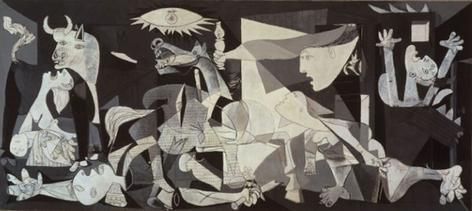
 

By Aaron Galbraith and Tony Attwood

In this series Aaron looks at songs Dylan has sung but which he didn’t write, and Tony (across the Atlantic) adds some thoughts which spring to mind while reading Aaron’s commentary and listening to the music.   Links to previous articles can be found at the end.

Aaron: “Sitting on Top of the World” was written by Walter Vinson and Lonnie Chatmon. They were members of the Mississippi Sheiks, who first recorded it in 1930. It was inducted into the Grammy Hall of Fame in 2008.

Tony: I’m going to add just one thing about Walter Vinson, which like the quotes below that Aaron has found, comes from Wiki.  “Vinson died in Chicago in 1975 at the age of 74.  He was interred at the Holy Sepulchre Cemetery in Alsip, Illinois, in a grave that remained unmarked until 2009.”  It brings home to me (and by no means for the first time) that no matter how wonderfully talented a person might be, that is no guarantee that the world will recognise that talent.   Now we remember him for “The World Is Going Wrong” and “I’ve Got Blood in My Eyes for You” but then…

Aaron: Also from Wikipedia: “As with several songs, it was adapted by rock groups during the 1960s. Some rock-oriented versions showed considerable variation: a version by the Grateful Dead was played at a very fast tempo of 252 beats per minute (bpm), while Cream performed it at a very slow 44 bpm.”

Here’s the Grateful Dead version:

Tony:  I love the way that Wiki can go into technical details about the speed, but without any reference as to why or what this means to the listener – or indeed the musicians.

But of course it is fun with the way it plays with the original, although knowing how the song originated makes it even more fun to listen to, I think.   And I suppose that is the sad side of contemporary music; the origins of a song are often not known by many people listening.     And for me although this is fun, I’m not sure I’m going to go back and play it again.  One thing is for sure, I’m never going to dance for this.   (Actually, that’s a bit of a sore point since last night I picked up an injury on the dance floor, and will be out of action for a while I think.  Ah well, more time to listen to music, I guess).

Aaron: Here’s Cream…

Tony: Very Cream isn’t it?  After playing this I went back and played the Mississippi Sheiks version, and for me there is an elegance in that original version that is not only lost by Cream, but is lost and not replaced by anything else.   And that is interesting because all we have is the incredibly simple guitar part and the violin playing the melody line along with the singer.  Indeed one can’t get simpler than that – and yet it works perfectly and for me outdoes a recording by a supergroup with every resource imaginable avaliable to them.

I guess 99% of people who hear the Cream version don’t know where the song came from, and approach it that way, makes that version ok.  But compared to Walter Vinson and Lonnie Chatmon version, it now seems a poor copy to me.   But as ever that’s just me.

Aaron: Bob’s version was included on his 1992 album Good as I Been to You

Tony: And immediately we can hear that Bob had gone back to the original and is paying a fulsome tribute to the Mississippi Sheiks.  I still prefer their accompaniment but I do enjoy the fact that Bob paid a proper tribute to the originators and their music.

Aaron: Van Morrison & Carl Perkins recorded a version for the ”Good Rockin’ Tonight – The Legacy of Sun Records” tribute album in 2001.

Tony: Now this is interesting because although the rhythmic base of the song has been removed, this version contains enough of the concept of the original to make it recognisable, and so more enjoyable for me.   And as ever I am writing these comments as I work through the selection provided by Aaron, so that’s my immediate reaction.

This is light and bouncy in a way that of course the original is not, but the meaning of the lyrics is retained just enough for it to be the same song, if that makes any sense.

Aaron: Jack White recorded an acoustic version for the soundtrack to the 2003 film Cold Mountain.

Tony: And of course being Jack White this is going to be a fulsome tribute to the original with his own amazing technical ability added.  And what an amazing performer he is!   So glad you put this one in last, Aaron, taking us right back to the start.  All the pain is there, all the irony; which most performers just ignore.  Brilliant ending too.

In fact brilliant all round.   Thanks Aaron.

Other people’s songs: the series

  1. Other people’s songs. How Dylan covers the work of other composers
  2. Other People’s songs: Bob and others perform “Froggie went a courtin”
  3. Other people’s songs: They killed him
  4. Other people’s songs: Frankie & Albert
  5. Other people’s songs: Tomorrow Night where the music is always everything
  6. Other people’s songs: from Stack a Lee to Stagger Lee and Hugh Laurie
  7. Other people’s songs: Love Henry
  8. Other people’s songs: Rank Stranger To Me
  9. Other people’s songs: Man of Constant Sorrow
  10. Other people’s songs: Satisfied Mind
  11. Other people’s songs: See that my grave is kept clean
  12. Other people’s songs: Precious moments and some extras
  13. Other people’s songs: You go to my head
  14. Other people’s songs: What’ll I do?
  15. Other people’s songs: Copper Kettle
  16. Other people’s songs: Belle Isle
  17. Other people’s songs: Fixing to Die
  18. Other people’s songs: When did you leave heaven?
  19. Other people’s songs: Sally Sue Brown
  20. Other people’s songs: Ninety miles an hour down a dead end street
  21. Other people’s songs: Step it up and Go
  22. Other people’s songs: Canadee-I-O
  23. Other people’s songs: Arthur McBride
  24. Other people’s songs: Little Sadie
  25. Other people’s songs: Blue Moon, and North London Forever
  26. Other people’s songs: Hard times come again no more
  27. Other people’s songs: You’re no good
  28. Other people’s songs: Lone Pilgrim (and more Crooked Still)
  29. Other people’s songs: Blood in my eyes
  30. Other people’s songs: I forgot more than you’ll ever know
  31.  Other people’s songs: Let’s stick (or maybe work) together.
  32. Other people’s songs: Highway 51
  33. Other people’s songs: Jim Jones
  34. Other people’s songs: Let’s stick (or maybe work) together.
  35. Other people’s songs: Jim Jones
  36. Other people’s songs: Highway 51 Blues
  37. Other people’s songs: Freight Train Blues
  38. Other People’s Songs: The Little Drummer Boy
  39. Other People’s Songs: Must be Santa
  40. Other People’s songs: The Christmas Song
  41. Other People’s songs: Corina Corina
  42. Other People’s Songs: Mr Bojangles
  43. Other People’s Songs: It hurts me too
  44. Other people’s songs: Take a message to Mary
  45. Other people’s songs: House of the Rising Sun
  46. Other people’s songs: “Days of 49”
  47. Other people’s songs: In my time of dying
  48. Other people’s songs: Pretty Peggy O
  49. Other people’s songs: Baby Let me Follow You Down
  50. Other people’s songs: Gospel Plow
  51. Other People’s Songs: Melancholy Mood
  52. Other people’s songs: The Boxer and Big Yellow Taxi
  53. Other people’s songs: Early morning rain
  54. Other people’s Songs: Gotta Travel On
  55. Other people’s songs: “Can’t help falling in love”
  56. Other people’s songs: Lily of the West
  57. Other people’s songs: Alberta
  58. Other people’s songs: Little Maggie
Posted in Uncategorized | Leave a comment

I Contain Multitudes: II: To the buried that repose around us


by Jochen Markhorst

II          To the buried that repose around us

Gotta tell tale heart like Mr. Poe
Got skeletons in the walls of people you know
I’ll drink to the truth of things that we said
I’ll drink to the man that shares your bed
I paint landscapes - I paint nudes . . . I contain multitudes

It is his secret project, Alan Parsons and his first LP Tales Of Mystery And Imagination – Edgar Allan Poe (1976). Why he keeps it so secret is not entirely clear. Parsons already has a solid reputation and, young as he is at this point (he is 27 when he records the album), already has a dream career; first as sound engineer for Abbey Road, Let It Be, McCartney’s solo albums and Dark Side Of The Moon, then as producer for highly successful records by Pilot, The Hollies, John Miles and Steve Harley’s Cockney Rebel. Alan Parsons, in short, has long since had the stature and authority to do as he pleases, right there at his workplace at Abbey Road Studios.

But the songs he is writing with Eric Woolfson for the themed project on Poe’s oeuvre are being secretly recorded in between, with the help of musicians who are not allowed to know exactly what they are collaborating on either. Only the flamboyant fool Arthur Brown (of “Fire”, and The Crazy World of Arthur Brown) seems to suspect something:

“For instance, “The Cask Of Amontillado” we titled “Bristol Cream”. It was just the first idea that came into our head, just to keep the whole thing a secret. I think Arthur Brown had an inkling of what was happening. Because the lyrics alone were enough to give it away. When he first came into the studio he was very subdued, you know. We ran through it. He was humming the tune, listening to the melody. But when we went into the studio, the whole thing changed. He started leaping around, yelling and screaming – which was just the job for “The Tell-Tale Heart” on the album. ”
(1976 interview with Parsons, bonus track on the 2007 deluxe edition of the album).

Dylan has been allowing Poe into his catalogue for some sixty years, but until now much more indirectly than Alan Parsons. A paraphrase here, a borrowed metre there, a meaningless wink like Rue Morgue Avenue in “Just Like Tom Thumb’s Blues”… it isn’t until 2020, until “I Contain Multitudes”, that Dylan finally unabashedly, loud and clear, name-checks Poe and his work in a song.

And apart from explicitly, “The Tell-Tale Heart” in line 1 that is, also indirectly the plot of “The Cask Of Amontillado” in line 2, the short story in monologue form in which a Signor Montresor recounts in an antique, Venice-like setting how, fifty years ago, he immured the kind Fortunato alive downstairs in his huge wine cellar. As revenge for an unspecified, and presumably imaginary insult. Compositionally, therefore, very similar to “The Tell-Tale Heart”; again the dramatic monologue of an apparently mentally disturbed murderer, also driven by a macabre kind of paranoia, who confesses in a long monologue, and in vain tries to gain understanding for his atrocity.

Interesting, as it offers some insight into Dylan’s creative process. He analyses himself, and credibly, that the one line I contain multitudes opened the floodgates to “trance writing”, that this one Walt Whitman line, which, incidentally, we also heard him quote in Martin Scorcese’s Rolling Thunder Revue: A Bob Dylan Story (2019), is the catalyst, “the kind of thing where you pile up stream-of-consciousness verses.”

So, Dylan appears to associate “having multitudes” with an archetype from distinctive Poe stories. To some extent recognisable; in 2004, Dylan tries to express to interviewer Ed Bradley in the interview for the CBS “60 Minutes” special the unease with his 1960s image:

EB: What was the image that people had of you? And what was the reality?
BD: The image of me was certainly not a songwriter or a singer. It was more like some kind of a threat to society in some kind of way.
EB: What was the toughest part for you personally?
BD: It was like being in an Edgar Allan Poe story. And you’re just not that person everybody thinks you are, though they call you that all the time. ‘You’re the prophet.’ ‘You’re the savior.’ I never wanted to be a prophet or savior.

Dylan uses “like being in an Edgar Allan Poe story” as a metaphor for some kind of schizophrenia; a rather radical clash of a self-image with the outside world’s perception – which makes the associative leap from I contain multitudes to precisely these two Poe stories more insightful.

The stream-of-consciousness, then, seems to meander on through Montresor’s wine cellar cum catacombs, through the skeleton-decorated setting of The Cask of Amontillado‘s gruesome finale;

“Drink,” I said, presenting him the wine.
He raised it to his lips with a leer. He paused and nodded to me 
familiarly, while his bells jingled.
“I drink,” he said, “to the buried that repose around us.”
“And I to your long life.”
He again took my arm, and we proceeded.

At least, it seems that Dylan’s follow-up line, I’ll drink to the truth of things that we said, is an echo of Montresor’s cynical drinking salute, minutes before he fetters and immures the perplexed, half-drunk Fortunato. How the meandering current then arrives at I’ll drink to the man that shares your bed is probably as puzzling to Dylan himself as it is to his audience. “I’m just as bewildered as anybody else,” as Dylan says in that same New York Times interview. Who knows, perhaps the river bed takes him via Alan Parsons to Gram Parsons to The Flying Burrito Brothers to:

He was gone in the early morning
And he said he wouldn't be long
But that was spring and now 
That the leaves have all turned brown
She only shares her bed with 
The loneliness she has found

… the heartbreaking country-tearjerker “All Alone” from the 1971 album The Flying Burrito Bros, the somewhat underrated album featuring Gene Clark’s “Tried So Hard”, Merle Haggard’s “White Line Fever” and the gorgeous cover of Dylan’s “To Ramona”. After all, “all these songs are connected,”, as the master argued with academic seriousness, at his MusiCares speech in February 2015.

To be continued. Next up I Contain Multitudes part 3: The thrill of rhyming something that’s never been rhymed before.

———-

Jochen is a regular reviewer of Dylan’s work on Untold. His books, in English, Dutch and German, are available via Amazon both in paperback and on Kindle:


Posted in Uncategorized | 17 Comments

A Dylan cover a Day: Senor


By Tony Attwood

Technical note: this article was first published on 1 June 2023, but for reasons totally beyond my grasp, did not appear on the indexes; hence its republication on 2 June.

Somehow “Senor” has never been one of the Dylan compositions that has particularly grabbed me – but it obviously appealed to Bob having been performed 265 times between 1978 and 2011.

And it appeals to those who like to cover Bob’s work, and while many do take the song and simply add an accompaniment in their own preferred style, a few have explored where else the song might lead.

I’m really taken by the first example today – the Bob Porter Project.   The guys manage to pack all the regret that is expressed in the lyrics, into the music, not least by varying the timing of the lyrics slightly, to add to that feeling.    I love this version – and even if it doesn’t appeal to you, please do hold on to the short instrumental break.  These guys know when not to play as much as how to play.   They are described as “An Americana band from Stroud, Gloucestershire, UK …a fine blend of mellow Alt Country and gritty.”  I last saw them play in Northampton (I think – it was a while back) with my pal Pat and the gang.  A great evening out.

Diva de Lai are described as Bob Dylan at the Opera, although to be clear the accompaniment is straight rock; it is the vocals that are operatic.   It’s an interesting approach in my opinion, but having heard a couple of verses, I was not sure I was wanting to go much further.

Dierks Bentley on the other hand is a country singer, and he gives us a country version exactly as Diva de Lai offer an operatic version; which is to say “This is our style and we’ere seeing it through to the end, no matter what.”   It’s inevitably much lighter with the banjo, violin and close harmonies.  I’m not a country fan any more than an opera buff, but I did enjoy this.  I could almost believe this is how was originally intended to be performed.

Willie Nelson however took the song as one of sadness and depression and then just in case this were not enough, took it into the double extra negative side of those emotions.   Having heard the upbeat versions, I am not sure I really want this, although the brass accompaniment works rather well.

Richard Shindell

I must admit that by the time I got to number five on the list I think I had had enough Senors.  It almost seems as if the artists too often get to the song thinking “ok this is all about pleading, so I have to fill my vocals with pleading.”  And then the producer asks them to add some sadness.

Yes that is true in the lyrics, but sometimes it is enough to have that emotional message in the lyrics – putting it in the music as well can, on occasion, be overkill.

Which is a shame for this recording because there are some fine moments in the performance… but then with the instrumental break I am just left thinking someone involved in the recording was just trying to go too far to make this sound different.

In the end I felt the need to go back and play the Dierks Bentley version again, just to make sure I didn’t spend the rest of the day full of regret at something or other that happened sometime or other, to someone else.

Perhaps that is the problem.  Maybe it is a song to be listened to at night, not at 9.30am.  Perhaps it should come with a warning to that effect on the label.  Except I suspect the Bentley version will work any time of day you want it.

Posted in Uncategorized | 1 Comment

The forthcoming tour of Europe: The songs Dylan might play part 3


The forthcoming tour of Europe: The songs Dylan might play:  This series looks at 23 songs Dylan could be induced to play, and the reasons why, with musical examples.

by mr tambourine

  • Part 1 “When I first unto this country”, “Heaven help the devil”, “Ring them bells”.
  • Part 2, Delia, Dark as a Dungeon, New Speedway Boogie, Big River

16. Girl From The North Country

This is one of those Dylan songs that wasn’t played too long ago, in 2019 as a matter of fact.   This is also one of the rare songs of Dylan that Lightfoot has covered, not in studio though, but live, and maybe only once, according to setlist.fm.

https://youtu.be/DoTORXZUqqk

Not only that, but Dylan covered this song along with Johnny Cash for Nashville Skyline.

Also, Dylan admitted that he loves Conor McPherson’s musical of the same name, which
adds more reasons for him to still consider playing this one at least one more time soon.

15. Shadows

Another Gordon Lightfoot song that Dylan has covered only once in 2012 live.   Usually, Lightfoot tributes live by Dylan happened in Canada, so it’s hard to say whether it’s
possible for some of them to happen in Europe this time around. But since these’ll be the
first concerts by Dylan after Gordon’s death, the possibility of that happening definitely
exist.

14. Touch Of Grey

This run of tributes to the Grateful Dead is not gonna last forever. If Dylan was gonna do his “last ever” Dead cover, he might want to make it special. This is the one suitable to close out with.

This song has been performed during Dylan shows in 1987, but were never actually sang by Dylan to my knowledge. Which would make it special if he did.

13. That Lucky Old Sun

Along with the Grateful Dead covers, the covers of the Great American Songbook aren’t
gonna last forever either. It’s just a matter of time before Dylan takes yet another artistic
direction.

If he was to perform his last ever standard, might as well be this one, a song he’s been doing occasionally in 1985, 1986, 1991, 1992, 1995, 2000, 2015, 2016, 2017.   On one of those rare instances where he played it in 1995, it was a very special concert, first
since Jerry Garcia’s passing, which makes it a likely candidate.

Posted in Uncategorized | 1 Comment

NET 2012 Part 4 New wine in old bottles (continued)


By Mike Johnson (Kiwipoet)

The Never Ending Tour index to 116 previous articles can be found here. The most recent articles covering 2012 are…

NET 2012 Part 4 New wine in old bottles (continued)

In 1962, when Dylan wrote ‘Hard Rain,’ he adopted the persona of the innocent young man who’d been out into the world and witnessed many horrors which he was reporting to his mother. By the time we got to ‘Visions of Johanna’ in 1966, the horrors had become internalized. The apocalypse, the end of things, was now projected from the psyche onto the dying phases of a drug party:

And Madonna, she still has not showed
We see this empty cage now corrode
Where her cape of the stage once had flowed
The fiddler, he now steps to the road
He writes ev'rything's been returned which was owed
On the back of the fish truck that loads
While my conscience explodes
The harmonicas play the skeleton keys and the rain
And these visions of Johanna are now all that remain

I have argued in these articles that the post-1966 performances of ‘Visions of Johanna’ mostly fail to convey the song’s bleak grandeur. Dylan performed the song twenty-eight times in 2012, and these performances have not convinced me to change my mind. Nevertheless, I’m glad he didn’t abandon what may be his greatest-ever song. This one from Toronto, with strong support from the piano, is as good as they get; perhaps it’s that hint of the dumpty-dum with the over-emphatic vocal that gets to me.

Visions of Johanna.

This internalizing of the apocalypse is evident in the great sister song to ‘Visions,’ ‘Desolation Row’ from 1965. It’s easy to grasp why Dylan is considered to be the quintessential songwriter of his time when you listen to these two songs side by side; there is no greater achievement in modern songwriting. Despite dropping a verse or two, ‘Desolation Row’ has fared better than ‘Visions’ in post 1960s performances. We have seen some powerful performances along the way, especially in 2000 and 2003. It never fails to weave its magic. This one from Winnipeg continues the tradition. Sit back and enjoy the circus. I particularly like the piano accompaniment here; it’s both strong and tasteful.

Desolation Row

‘All along the Watchtower,’ for many years Dylan’s favourite closing song, is another vision of the apocalypse, both personal and universal. The ‘two riders approaching’ at the end of the song are not bringing good news. War and death are subtly implied – ‘the wind began to howl.’

At Washington (20th Nov), Dylan played the song second to last, leaving the last slot for ‘Blowin in the Wind.’ Over the years performances of this song have grown more spare and less guitar-heavy without losing any of its menace.

This is certainly not the greatest performance of the song. Dylan’s rushed, emphatic vocal that heavily hits the beat, doesn’t to my mind capture the rather lonely pathos of the song.

Watchtower

Love and desire can wipe us out as effectively as any plague or atomic blast. ‘Can’t Wait’ is about the kind of love that can drive us to the very edge of our beings and leave us with nothing.

It’s mighty funny, the end of time has just begun
Oh, honey, after all these years you’re still the one
While I’m strolling through the lonely graveyard of my mind
I left my life with you somewhere back there along the line
I thought somehow that I would be spared this fate
But I don’t know how much longer I can wait

In this song, love is its own variety of the apocalypse. To my mind the 2010 performance has not yet been bettered for sheer prowling menace.

Those who have followed the various approaches to this song on ‘Tell Tale Signs’ will recognize this performance from Chester as returning to one of the slower, spookier conceptions of the song. From 2003 to 2005 the song was performed with a restless, descending bass line, and we get an echo of that here, although much slowed down. Perhaps there is no ‘perfect’ or ideal arrangement for this song; all of these different approaches sound wonderful in their own right, each presenting us with a different conception or facet of the song.

Can’t Wait

Brief sexual encounters can haunt us as much as a sustained love affair. That is the insight that lies behind ‘A Simple Twist of Fate.’

He woke up, the room was bare
He didn't see her anywhere
He told himself he didn't care
Pushed the window open wide
Felt an emptiness inside
To which he just could not relate
Brought on by a simple twist of fate

This experience is common enough, I suspect, for most of us to relate to. Fate can bring us together, and pull us apart again; we are but playthings of the gods. Dylan has not dropped this song, it was last performed in 2021, and we have had many exciting performances of it over the years. I don’t think this one from Barlo (16th July) is the best by any means, but what’s interesting is that Dylan forsakes the piano and plays guitar – these strange, angular notes you hear are Dylan.

Simple Twist of Fate

Dylan’s on the guitar also for this ‘It Ain’t Me Babe’ from Winnipeg, another song that will stay until 2019. This famous renunciation with its repeated ‘No no no!’ is said to be a sling off the Beatles’ ‘Yeah yeah yeah.’ The song shows that we often have to resist the projections people put onto us. If you project your view of a person, and your expectations of them, onto that person, you end up in relationship to your projection rather than the person themself who, at that point, you can no longer see. Dylan was having none of it; he was no hippy flower child.

A strong vocal from Dylan here.

It Ain’t Me Babe

Back on the piano, Dylan has fun with ‘Summer Days’ from Washington. There’s crazy stuff going on, and maybe the apocalypse is kept at bay for a while, but there is no escape from the soul-shaking presence of the divine.

Standing by God’s river, my soul is beginnin’ to shake
I’m countin’ on you love, to give me a break

When the song first appeared in 2001 we were treated to some loud, brassy performances that took us back to the big band heyday of the 1940s. Here (Washington), in keeping with his latest style, the brassiness is stripped out of the song which is carried by drum and bass. A minimal, boogie grove, but it sure does rock along.

Summer Days

Last but not least, we have the gentle ‘This Dream Of You’ from Together Through Life (Winnepeg). It’s my last look at 2012, and also Dylan’s final performance of the song. I regret its passing. It was only ever performed twelve times, having a short life-span in the NET. Perhaps it fails to generate the powerful emotional charge that we find with ‘Forgetful Heart’ from the same album, and yet it gently opens the door to the ineffable, that which keeps us alive while always being just out of reach.

I look away, but I keep seeing it
I don't want to believe, but I keep believing it
Shadows dance upon the wall
Shadows that seem to know it all

Am I too blind to see?
Is my heart playing tricks on me?
Too late to stop now even though all my friends are gone
All I have and all I know
Is this dream of you
Which keeps me living on

This Dream of You

So that’s 2012. I think we can see it, with all its faults, as the beginning of the next, and last, movement of the NET. We are at the beginning of a new rising curve.

I used the term rising curve to describe the progression of the NET from 1991/2 through to 2001. 2012 reminds me of 1992. Dylan had just added steel guitar and dobro to his lineup, and was very much feeling his way forward in the post GE Smith lead guitar era. He was also having trouble with his voice.

In 2012 Dylan begins to explore a new sound, and feel for new arrangements of the songs. It’s a foundational year, and when we come to 2013, we will see how Dylan builds on that foundation and takes a big step forward in terms of the quality of his performances.

All the best until next time and

Kia Ora


Posted in Uncategorized | Leave a comment

Dylanesque: songs that are comparable to Dylan. Part 1: Desolation Row


By Aaron Galbraith and Tony Attwood

Aaron: As we’ve come to the end of the series about Dylan’s favorite songs (the last episode being here, with an index to the full series) I put my thinking cap on to come up with something else we could do.

And I thought a nice way to piggy back off that series would be to look at songs that were inspired by Dylan. Hence I came up with this series which I have called Dylanesque (I stole the title from the Bryan Ferry album). Sometimes the songs will be ones we know and love and others will be new.

In fact, there is even a Wikipedia page devoted to the term Dylanesque and it describes it as:

Dylanesque (comparative more Dylanesque, superlative most Dylanesque)

  1. In the style of, or reminiscent of the music or lyrics of Bob Dylan (born 1941).

So I thought we could do the usual format: I will find a couple of songs that I feel were inspired by Dylan and send them over to you for your comments. Does that sound good?

Tony: Absolutely.  I know I’ll enjoy it, and I am hopeful that some of the three quarters of a million or so visits we get each year on the site will be directed to reading it.  And might I also extend a thought to everyone who ever takes a look at Untold Dylan – if you have an article, or just an idea for an article, and you think it might fit in with Untold, please do send in your thoughts to Tony@schools.co.uk

Aaron: OK, then let’s begin!

Here are a couple of songs I always got a Desolation Row vibe from… what do you think?

First is Joe Strummer with Ramshackle Day Parade from his 2003 posthumous album Streetcore

Tony: As I understand this is a song about or perhaps I should say, a remembrance of the terrorist attacks on 11 September 2001; he was one of the original members of the Clash, and as such one of the heroes of my pal who I go to football matches with and indeed who I spent much of yesterday with.

I read a comment that said that the lyrics don’t point the blame at anyone; no one knows or can say how it has all gone wrong, but it all has.  And that feels right to me…

The lyrics start

Muffle the drums
The hope of a new century comes
Was it all the amphetamine presidents
And their busy wives
Or did Manhattan crumble
The day Marlyn died

So while Dylan takes a single graphic image (postcards of the hanging) and (most certainly on the original recording) a very gentle relaxed musical style in contrast to the lyrics, Strummer uses multiple images and music that at times seems to strive to represent the chaos and catastrophe of everything.

Yet to my mind (and as ever of course this is just me) the images that Dylan utilises have an extra strength somehow.  “And the riot squad they’re restless, they need somewhere to go,” sung in such a gentle non-rioting way, always signifies to me that once the state creates the mechanisms of repression it has to use them, but also try to keep them under cover  – which I think is absolutely true.

But I find

Bring out the banners of Stalingrad
Here come the marching band

much more confusing.  And because the music at times seems to be falling over itself (which is of course an excellent notion if the music is to represent September 11) it becomes too much for me to take.   Dylan, by making the music so simple, allows me to feel the horrors of what was happening in the story he re-tells.  I don’t find that so much with the Clash.

Aaron: Next we have Dan Bern with Thanksgiving Day Parade from has 2001 album “New American Language.”

Tony: Technical note – it is one of those links which works for Aaron in the USA, but not for me in the UK.  I’ve added a second link below that works for me – hopefully one of these will work for you.


Tony (continuing): And I am overwhelmed.  Just as I was when you presented us with “Lawyers, guns and money”.   This is just such overwhelming fun, in the sense that it presents everything that can happen at a party, in a parade, in a holiday celebration, in everything, it can all just explode in this colourful overwhelming adventure of ideas, sounds, people, places…

As I have often mentioned my response to music is a mix of pure emotion (in which the sound knocks me out even before I know anything of the lyrics), plus then either the meaning or the fun of the words, and then finally the music, in which I often go in my own direction, having worked as a musician in the early part of my life.

And because this is a combination of various emotional rather than logical responses, it is often hard to understand and hard to express verbally.  And my responses are always related to where I am emotionally as I listen.

Now today (the morning of a public holiday in England) I’m still on a high because yesterday I drove to London (about 80 miles from my home) to the house of my best pal, and from there we went to our favourite pub and then on to watch the football team we both support.  The team won magnificently, it was the last game of the season and there was an overwhelming outpouring of emotion from the crowd of 60,000. not least when the coach came onto the pitch at the end and made a speech thanking us all for our support.

So I am still buzzing from that day out, and now I get to hear this song which I didn’t know, and which relates to yesterday, and to going to the Isle of Wight concert in my youth, all at once.

I don’t know if this is great music and I have my doubts about some of the lyrics, but it is above everything overwhelming fun, on the morning after a day of overwhelming fun.  I can only hope that you, dear reader, will be able to join in the fun at bit as well.

The link with Desolation Row of course is the chaos, but here the chaos is being celebrated.  But song appreciation is also always personal, and I’m suddenly jerked out of just bouncing along and enjoying the piece when I hear

And we slowly started dancing
And began slowly to heal

And if you have read my ramblings across the years you may have picked up somewhere that even at my advanced age I still indulge in my lifelong hobby of jiving (although these days it is modern jive, which is safer for us oldies, and more like swing), and I am out five nights a week dancing away – as a way of overcoming a day spent typing away on the computer.

But I guess this is my point: responses to music and lyrics are personal.  No one can outdo Dylan’s “Desolation Row” but here we have two approaches to the same subject: one is harsh and focuses on the horrors, one is fun, and says even in a world such as this where such awful things happen, we can, and indeed I think we must, on occasion find ways to release and let go.  And today, after a great day out with my pal, that’s where I want to be.

I’m going to publish all the lyrics, because I think if you like the music, you’ll enjoy it even more next time through with the words made a little clearer.

Everybody was ecstatic
‘Bout the light show on the farm
And everyone got crazy
And nobody got harmed
And the five televisions
Huge upon the stage
Had come to pay their union dues
And make a living wage
And the bathroom was the clubhouse
Where the colors all got made
And plans were cast in feathers
For the Thanksgiving Day Parade

And the DJ spins his records
From here out to the sun
And he flings them through a big hole
In the ozone one by one
And somewhere beyond Mercury
The wax begins to melt
And we touched a perfect stranger
And we loved the way it felt
And we all hung together
In our crew cuts and our braids
Floating down Broadway
Above the Thanksgiving Day Parade

And you and I were discussing Natalie
As you poised to thrust above her
And I told you how I admire her
And will always need to love her
But I told you how I lost
My best friend Mr. Neill
And we slowly started dancing
And began slowly to heal
And then we all held hands
And no one was afraid
On our way to sell our sculptures
At the Thanksgiving Day Parade

And Michelangelo finally came down
After 4 years on the ceiling
He said he’d lost his funding
And the paint had started peeling
And he told us that his patron
His Holiness, the Pope
Was demanding productivity
With which our friend just couldn’t cope
And he rode off on his skateboard
With his brushes and his blade
Muttering something ’bout some food
And the Thanksgiving Day Parade

And we who were born in one millennium
And will die in the next
Are slightly underappreciated
And slightly oversexed
And as the seconds and the minutes
Start to vanish one by one
I’m watching more cartoons
As I get my toenails done
And we went downtown to deliver
Turkeys to people with AIDS
And then we headed uptown
To the Thanksgiving Day Parade

And the music keeps on grinding
And the electrophonic crunch
And my father’s hair is thinning
And my mom ate some for lunch
And you, you were my babysitter
And you let me break my tooth
And we sit here tied together
In a bar in the back booth
And the band is in an uproar
Only the drum machine’s been paid
And we’ll have to bring our own tunes
To the Thanksgiving Day Parade

Australians are the coolest
People in the world
Let’s all go down under
With strings of colored pearls
And lay them at the feet
Of the heirs of English crime
And listen to old Men At Work
And have a real good time
And we dug until we hit the rocks
Then we threw away the spade
And built a platform to get a better view
Of the Thanksgiving Day Parade

And I love whoever’s next to me
I love them so, so much
They let me lean against them
Like a beautiful crutch
And everyone should come up
On the stage and grab the mike
And tell us one by one
Who they are and what they like
And the babies are the only ones
To have lately gotten laid
And I’m feeling young and eager
For the Thanksgiving Day Parade

And you explained to me that without your fans
You’d be back out on the street
With nothing but chitlins on your plate
And splinters in your feet
And if you die, you’re gone you said
And your friends are left behind
And you’ll be a statistic
And we’ll be deaf and blind
And darkness is a virtue
And molasses is not afraid
To slow down the countdown
To the Thanksgiving Day Parade

And somewhere in the distance
An orchestra shows its face
With Natalie on the oboe
Ty on double bass
John plays the viola
Slik the tenor sax
James he blows harmonica
In vanilla skintight slacks
Hugo oozes alto sax
Ivory the trombone
Masuda squawks the trumpet
Andre xylophone
Ron he shreds the violin
In a green Italian suit
Mike talks on the telephone
On a tape with an endless loop
Geoff he blows the clarinet
With an old-time rockin’ feel
Charlie dings the triangle
Dave the glockenspiel
Chris puffs on the tuba
H a big bass drum
Alfonso throbs the cello
Like he would a woman, with his thumb
And high up on the podium
In tails with his baton poised
Banksy leads the orchestra
In a glorious, awful noise
And on a float of dripping oil paint
The orchestra, it played
Kissing the whole universe
In the Thanksgiving Day Parade

And life is like a fairy tale
Every step feels like a dream
That keeps on getting nearer
And more and more extreme
And we just got switched with Venus
And we’re closer to the sun
And I got no problem with it
Nor should anyone
And the cops just blew on in here
And we’re in some kind of raid
I just hope they will release us
For the Thanksgiving Day Parade

If you have enjoyed this song one tenth as much as I have while writing this, then, just take care as you come down from the ceiling.

Untold Dylan – the current series

Posted in Uncategorized | Leave a comment

I Contain Multitudes (2020) part 1: Two Irish counties at odds


by Jochen Markhorst

I           Two Irish counties at odds

Today and tomorrow and yesterday too
The flowers are dying like all things do
Follow me close - I’m going to Bally-Na-Lee
I’ll lose my mind if you don’t come with me
I fuss with my hair and I fight blood feuds... I contain multitudes

 The tesseract in Christopher Nolan’s smashing pièce de résistance Interstellar (2014) is the backdrop for the climax, and one of many breathtaking scenes. On an intellectual level as well; the scene accomplishes the impossible feat of using a four-dimensional object (the tesseract is actually a four-dimensional hypercube) to explain how protagonist Cooper can experience a fifth dimension.

Just to be sure, Cooper’s companion, the robot TARS, simplifies it again for Cooper and for us, the audience: “You’ve seen that time is represented here as a physical dimension.” In his fascinating 2014 book The Science of Interstellar the film’s scientific consultant Kip Thorne, the later winner of the Nobel Prize in Physics (2017), devotes over 2,700 words to explaining the scientifically sound way that Cooper, in his tesseract, can see today and tomorrow and yesterday too, and with the help of gravity can even manipulate them.

Professor Thorne has an admirable talent for explaining baffling phenomena like wormholes and event horizons, and complex, perplexing theories about space, motion and time to non-scientists, but at the conclusion of “The Tesseract” chapter, he nevertheless gives the floor back to the scriptwriters, through Amelia Brand, the character played by the ever-enchanting Anne Hathaway: “To Them, time may be just another physical dimension. To Them the past might be a canyon they can climb into and the future a mountain they can climb up. But to us it’s not. Okay?”

The opening line of “I Contain Multitudes”, thus also of Rough And Rowdy Ways, plus the key line from the fourth verse, Everything’s flowin’ all at the same time, which is already pre-empted by this opening line, introduce a leitmotif of the album, and in fact of Dylan’s entire oeuvre: Time. And especially the notion that Time is non-linear, or indeed an illusion. We have seen the fascination for it, for how we experience Time and what we do with it, since The Freewheelin, and explicitly Dylan names it in 1985, in the interview with Bill Flanagan, when Flanagan asks about Dylan’s lyric revisions of “Tangled Up In Blue”. Dylan’s answer has since been widely quoted:

“I wanted to defy time, so that the story took place in the present and past at the same time. When you look at a painting, you can see any part of it or see all of it together. I wanted that song to be like a painting.”

everything flowing all at the same time, in other words. And when Dylan immediately afterwards tries to explain that he also wanted to apply this concept to “Idiot Wind” and, in fact, to the whole Blood On The Tracks album, we hear the words that will echo 45 years later in the opening of Rough And Rowdy Ways:

“It was just a concept of putting in images that defy time – yesterday, today, and tomorrow. I wanted to make them all connect in some kind of a strange way.”

Time, or the illusion thereof, remains a motif on the album after this opening – there is a hint of it in every song (as the ensuing “False Prophet” opens with “Another day that don’t end”, for example), most prominently in Side C’s prize track, “Crossing The Rubicon”, in which between the first and last lines it is both morning and evening, and it is both Indian summer, spring, autumn and also winter.

The motif for this particular song was presumably prompted by the recurring refrain line I contain multitudes, the line that Dylan, after all, says gave birth to the song, and to which all the verse lines then work towards (“Obviously, the catalyst for the song is the title line,” New York Times, June 2020). And the “trance writing”, as Dylan qualifies the rest of the lyrics, then takes him to Ireland via his Eternal Theme Time:

But when ye come, and all the flowers are dying,
If I am dead, as dead I well may be,
Ye'll come and find the place where I am lying,
And kneel and say an Avé there for me.

… first to the dying flowers from “Danny Boy”, that is, and then surprisingly to Bally-Na-Lee – which causes quite a stir among our Irish friends.

The song is released on 17 April 2020, and after a day of squabbling over what Dylan sings there (the tautological “Balian Bali” is initially the most popular candidate), the consensus is pretty soon: the Irish town of Ballinalee. Or Ballylee? Complete consensus has not been reached yet – is Dylan now referring to the better-known Ballylee, County Galway, or the obscure Ballinalee, County Longford?

To Dylan himself, who undoubtedly was guided by sound and rhythm when writing this particular word combination, the question is probably in the Department of Big Deals. At least: it is quite unlikely that he made any tourism-promoting, cultural-historical or geographical considerations in choosing Bally-Na-Lee (as the spelling on Dylan’s official site is).  Still, eventually, most fingers are pointing to “The Lass from Ballynalee” by Irish poet Antoine Ó Raifteirí (or Anthony Raftery), a blind Irish poet who lived from 1779 to 1835.

Granted, that is a charming poem, which indeed has a recognisable, folky Dylan vibe;

On my way to Mass
To say a prayer,
The wind was high
Sowing rain,

I met a maid
With wind-wild hair
And madly fell
In love again.

… is the – translated from the Irish – beginning, in which we effortlessly recognise the tone and content of early Dylan songs like, say, “Percy’s Song” and “Girl From The North Country”. And the closing verse is equally charming;

A table with glasses
And drink was set
And then says the lassie,
Turning to me:

‘You are welcome, Raftery,
So drink a wet
To love’s demands
In Bally-na-Lee.’

For most Dylanologists, that pretty much ends the matter, but in Ireland it is, understandably, still simmering for a while. The Longford Leader places a proud notice on its front page on 24 April. A Galway faction tries to draw the discussion back to Ballylee via a Yeats poem (pointing out how his famous epic poem “Meditations in Time of Civil War” has Thoor Ballylee as its setting).

The Irish Times devotes a whole page to the Ballylee/Ballinalee controversy on 1 May (“How a new Bob Dylan song has set two Irish counties at odds”). And theories about how Dylan might then have come into contact with the not-too-familiar Rafterty are occupying minds as well. Pogues singer Shane MacGowan, who spent a pleasant evening with Dylan in Ireland at a table full of bottles and glasses in 2017, is finally identified as the supplier. Without Shane’s agreement by the way, who of course has no memory of that alcohol-soaked evening. In short, “I Contain Multitudes” impresses all over the world, but most of all, with our Irish friends.

The Ballynalee question is completely irrelevant to the song itself, obviously. Indeed, Dylan himself has long since deleted the words and instead sings the rather vacuous variant Follow me close – just as close as can be these days. The squabbling of Irish fans may surprise him, and at best mildly amuse. It doesn’t matter, after all. It’s today and tomorrow and yesterday too, it’s Ballylee, Ballinalee and Bally-Na-Lee too. It’s just which side you happen to be looking at, from your tesseract.

To be continued. Next up I Contain Multitudes part 2: To the buried that repose around us

————–

Jochen is a regular reviewer of Dylan’s work on Untold. His books, in English, Dutch and German, are available via Amazon both in paperback and on Kindle:


Posted in Uncategorized | 8 Comments