Why do I love “Oh Mercy” so much? So many reasons, but above all it was the production values Daniel Lanois brought to the recordings. For the first time in years, Dylan had a producer who understood what he was trying to achieve, even if the two argued, sometimes violently. Our problem was recreating the entire album live.
After years of deliberately not covering Dylan and doing my own material, I had this mad dream of covering a complete album with a band of buddies and fellow travellers. The album in the dream? “Oh Mercy,” the one so meticulously chronicled in, amongst other places, Dylan’s “Chronicles, Volume One.” and Lanois’ memoir…
New Orleans … mostly at night … crickets … cemeteries with names like Lafayette Number One … giant, gaunt cats going toe to toe with you on sidewalk walls. The fever in the streets such that a sober Canadian could smash a dobro in a fit of anger.
Kind of difficult to reproduce in an Edinburgh art school performance space in July – even on a (hopefully) hot July night with Greyfriars churchyard a bone’s throw away.
Let’s start with the guitars. Lanois, in his account, has Dylan playing the rhythm parts on a butterscotch (‘52) Telecaster. My Harley Benton black-and-white is decidedly non-vintage, but pushed through a Fender amp with the reverb on 11, it provides that shimmering curtain of sound you’ll recognise even if you have no idea what I’m talking about when I talk about guitars.
That’s where the similarity ends, really, at least instrument-wise. We decided early on that we had no desire to turn into a Dylan tribute act, wigs and all. Nothing wrong with them, of course, but we wanted to see if these songs would take the treatment we gave them: which, of course, they did.
So the line up’s two guitars, bass, drums, keys and four of us taking turns at the vocals. We haven’t messed with the arrangements in the sense of changing the key instrument, though – so “Ring Them Bells” and “Disease of Conceit” are very much led by the piano; “Political World” comes straight out of the traps with the guitars.
Everything, of course, in the service of the song. “What Was It You Wanted?” sung by our keyboard player, James, is a particular favourite so far in rehearsal: that three-chord sequence that hovers briefly at the start before the vocals is never repeated, and yet sets the mood for what we’ve constructed as a slow-build, doom-filled version.
Others take inspiration from elsewhere. Emma, for example, who takes lead vocals on “Man in the Long Black Coat,” was inspired by the Joan Osborne cover of it, so we’ve run with the spirit of that.
In general, the songs are pretty conventional, structure and chord progression-wise. The devil is in the detail – where to stick with the original in terms of intros and outros, where not to – where a guitar fill works, and where the keyboard should come to the fore. We’ve had lots of fun experimenting with different treatments.
The trickiest thing? The words. There’s a reason we’ve shared the vocal duties around. Partly it’s just the sheer volume, and sometimes the phrasing can get tricky – try fitting “Guess it’s too late to say the things to you that you needed to hear me say,” (from “Shooting Star”) into the space the music allows you – but, also, it’s the number of list songs on the album.
Instead of a direct line narrative, Dylan builds a picture with lists of things: “Everything Is Broken” is the most obvious example, but even something like “Disease of Conceit” has two lines of ways people are affected by conceit, followed by two ways conceit can affect you (ultimately, of course, fatally). It’s not obvious at first which halves of verses fit together.
Dylan teasingly writes about this in “Chronicles, Volume One,” giving us some frankly terrible lines that dropped out at the editing stage. The ones he left in, of course, are superb, but with four rehearsals to go, while we’re not quite note-perfect, the thing we’re most needing to work on is being word perfect.
After all, no self-respecting Dylan fan would want to mangle the great man’s lyrics!
However, we aren’t stopping at performing the songs: we have also recruited a writer, Kevin Crowe. Taking his inspiration in part from “Chronicles Volume One,” he has written ten pieces of flash fiction, to read as part of the concert. Kevin has described this as one of the most exciting projects he has been involved in for a long time.
You can hear the result through this link: “Shooting Star,” performed by the band
When I started this little series dedicated to considering Dylan’s songs from the point of view of the music and the lyrics together (rather than, as many people do, just focussing on the lyrics) it was to put forward the idea that the music of Dylan is of as much importance in many cases as the lyrics.
What I hadn’t really thought about was the fact that sometimes Bob has created a song with the most astounding lyrics but with music that doesn’t explore the full potential of the lyrics.
So to be clear this is not to put forward the argument that sometimes Dylan’s music making is no good – rather than on at least this one occasion (Chimes of Freedom) – he simply didn’t see the potential within the music of the song, and instead focussed mostly on the lyrics.
True he did perform Chimes 47 times (according to SetList– for some reason I can’t get onto the official Dylan site today to check that number but I guess it is right) but others have performed it more. And if we take this version below, with the Grateful Dead, we can hear that at this point Dylan seems actually to be reducing the musical content of the song rather than exploring it and developing it.
And yet when others have taken up the song they’ve had no difficulty in understanding its musical possibilities far more than Dylan. And so in this article I want to present three other versions of the song which I have brought forth before, to show just how much musical potential the composition has.
If we go back to the original we can hear that there is of course a melody that is part of the song, although there is also quite an emphasis on the same note sung over and over, as with such lines as
An' midnights broken toll We ducked inside the doorway,

Struck shadows in the sound Seeming to be the chimes

An' for each an' every underdog soldier
Each of those lines is fundamentally sung on one note, and since the song is strophic – which is to say it is verse, verse, verse without any break for a chorus or middle 8, we get that repeated one note pattern in each of the six verses, which of course means 18 times. 18 lines of just one note – which really is quite a lot.
Now this is not to suggest the song is imperfect – the one note lines make for a powerful message, and that I think was clearly Dylan’s intention as the solo folk singer he then was.
But the interesting thing from a musical point of view is what happened when others got hold of the song. And I write “others” deliberately because if we listen to Dylan playing the song much later with the Dead, although the melody is changed, it is still not developed. Rather the song becomes a declamation of the lyrics.
Now what I am going to do below is set out three versions of the song which I have cited before – so if you have been kind enough to read my “cover a day” reviews (and rather amazingly, remember the series) I am sorry, I’m repeating my examples, but I feel I need to do this to make the point. And I chose those examples then, because in my view they are the best covers. Or at least the best of those I can remember.
So, I think Dylan himself focussed on the lyrics – and indeed he has every reason to do so, because they are brilliant and forceful. But in doing this he has not realised just how much potential those lyrics, combined with his chord sequence, actually offer. And I believe this happens because having composed those lyrics, he would have known he had created a masterpiece. Plus since he probably had several other masterpieces bubbling away inside him at the time, why spend hours thereafter on a melody, when it was clear that the song was one that already had enough in it to be remembered?
To back that point up, we might recall that the song was written at the start of 1964. In 1963 he had written 31 songs (an astounding feat in itself) including multiple masterpieces from Masters of War to Restless Farewell. In 1964 there were 20 compositions, of which this was the second. It was followed by Mr Tambourine Man, another masterpiece of course, but also one which is a much more melodic song.
So the masterpieces were pouring out of Dylan one after the other, and there’s nothing in the rulebook that says each one should have a stunning melody, or indeed realise the potential of every element within it. All I am trying to point out is that Dylan chose at this point to let the lyrics do all the talking, and leave the melody stark.
And yet, and yet… as I think can be seen in retrospect, all that potential was there. And indeed I guess this is why I have so happily plodded along with the Dylan Cover a Day series (there’s a list of the songs covered at the end of each article), which I started to write during the covid lockdown when the regulations where I live were that there could be no gathering of people together (except as it turns out, parties for members of the government – but that’s a different matter). So the series helped me pass the time of day.
Thus I presented these three cover versions of Chimes of Freedom. I’m offering them here again to make the point that the potential of a really interesting melody often exists within Dylan’s songs, even when he does not choose to explore it in his own original recordings – or indeed with later re-workings on stage.
So here we go, one more time… each is very different so if you play one and it is not to your taste, I would beg you, please do go on and try the others, if you don’t know them already.
Starry-eyed and laughing as I recall when we were caught
Trapped by no track of hours for they hanged suspended
As we listened one last time and we watched with one last look
Spellbound and swallowed ’til the tolling ended
Tolling for the aching ones whose wounds cannot be nursed
For the countless confused, accused, misused,
                                 strung-out ones an’ worse
And for every hung-up person in the whole wide universe
And we gazed upon the chimes of freedom flashing
“Silvio” is one of those songs that sounds to me as if it ought to make a great cover version, and yet, somehow no one has managed to break away from the boundary that Dylan himself placed around the song.
That boundary is the constantly repeated chord sequence with its inherent rhythm. For what we get are the chords, G F C G, G F C G, over and over and over again. It is in effect a straight jacket from which no one has truly managed to break free.
But perhaps the best attempt is from Grayson Capps who manages to replace the dominance of that chord sequence by giving the percussion a major part to play. Indeed most of the time the sequence is no more than hinted at – and so we really do get a new version, rather than just a re-run of the original.
For me this really works, and truly did deserve its place on the Dylan in the 80s collection. I do hope you have time to play it through to the end – the last 20 seconds are unexpected and a nice bit of fun.
Shane Howard however takes us back to that dominant bass and the chords that it demands. The harmonica helps, but so determined is the bass that there can be no escape from the song’s origins. It’s a nice listen, but as much as the band works, and as much as a bass player adds in some decent improvisations, and again as much as the harmonica player works, it is still that same chord sequence, over and over.
Suicide Seven however let their bass player go for a meander and add a whole raft of effects and variations. As a result I guess this is very much a matter of taste. Although they do have some fun, as suddenly the guitarist stops half way through a verse and then comes back again – all for reasons I can’t really discern. And maybe that’s the point: there doesn’t have to be a reason.
But I’m not really sure I can understand where all this is going, or come to that where it has come from, as the Dylan original gets more and more lost inside the variations, sudden changes, variations on the variations, and well, just about anything. It’s one of those versions that I am glad I have listened to, for the experience, but I really have no desire to listen to again,
And just in case you are wondering, yes, it does finish just after three minutes, as far as I know. After that it is another song.
Pasaria Colibri is the name of the band, “Oameni buni” is Romanian for “folks” (according to the online dictionary). According to Wiki Pasărea Colibri means “The Humingbird”. And they are a Romanian folk supergroup. “Aside from typical Romanian folk instruments and acoustic/electric guitars, the band also made use of digital and analogue synthesizers, pedal steel guitars, and fretless bass.”
I don’t really know, but it’s a bit of fun, and quite likable as least for one play through. Not sure I would want to go back. But then I’m not Romanian, so that’s probably very unfair.
“Frank sang to you, not at you, like so many pop singers today. Even singers of standards. I never wanted to be a singer that sings at somebody. I’ve always wanted to sing to somebody. I would have gotten that subliminally from Frank many years ago. Hank Williams did that, too. He sang to you.” Bob Dylan
Commentators agree that 2015 was an outstanding year for the NET. I would go a step further and suggest that it was, just possibly, the best ever year for the NET. That’s a big claim, and I might not be able to prove it to your satisfaction, but you’re in for a fun ride watching me try over these next few posts.
It’s all about Dylan’s voice – and an impeccable band. It’s not just that Dylan can hit the high notes, but the consummate ease with which he does so. His voice soars as if on wings of its own. We’ve got to go back to the 1970s to hear anything like it. Maybe that peak year 1981.
Frank Sinatra was a good influence on Dylan. The way Sinatra can glide from line to line (he makes it sound so easy!) and the way he can swing is a perfect antidote for Dylan’s tendency to fall into musical rigidity, into what I have called the dumpty-dum. But there are similarities too in their vocal styles, they are both baritones, which suggest a broad compatibility. Consider this comment on Sinatra’s style:
“His phrasing is final, absolute, definitive. So logically and inevitably do the phrases follow each other that, after hearing him sing a song, that song never sounds quite right sung by anyone else. He phrases more as if he is speaking to someone: the intervals, word stresses, note values and rhythms are changed to fit more with the cadences of colloquial speech. Add the breath control, the slurs, chopped notes, grace notes and held notes that have been his trademarks … and you have the basic ingredients that give that natural, effortless credibility to every word he sings.”
Now couldn’t those comments equally apply to Bob Dylan? Pitch and phrasing mark Dylan out as one of the great singers of our time. The way he can hold back on a vocal line, or anticipate it, and how he can capture ‘the cadences of colloquial speech.’
‘He knew where to lean on a word, where to back off and ghost, where to bend the vocal around the word, and where to reach deep inside himself to embrace a phrase with an emotion he had felt somewhere in his life, whether touching, sad or exuberant.’
All this grows out of jazz. Sinatra learned how to sing by listening to band leader Tommy Dorsey play the trombone. He imitated Dorsey’s breathing and phrasing. Jazz musicians felt that Sinatra’s voice was his instrument, and you can find sax solos that pick up on his phrasing, although Sinatra himself said that his instrument was not his voice but the microphone.
‘What made crooning possible was the microphone. In his 1984 book “Sinatra”, John Rockwell wrote: “Crooners didn’t have to belt out their voices in order to reach the rafters. A microphone allowed them to float the sound easily on the breath, articulating consonants clearly and naturally… Nelson Riddle, one of Sinatra’s great arrangers, said once that the early Sinatra, from the Columbia days, sounded like a violin but the later one, which emerged at Capitol, sounded like a viola.’
Where Nelson Riddle heard strings, Quincy Jones heard reeds: “Like Billie Holiday and Louis Armstrong, who he loved, Sinatra grew up singing with big bands and learning how to sound like a horn, so he knew exactly where the beat was at all times.”
When Dylan released his first American Standards compilation, Shadows in the Night in February 2015, it was immediately seen as an album of Frank Sinatra covers, but many artists had sung these songs, which was why they were called standards. Sinatra, however, loomed behind them all. Dylan explains it like this: “You know, when you start doing these songs, Frank’s got to be on your mind. Because he is the mountain. That’s the mountain you have to climb even if you only get part of the way there. And it’s hard to find a song he did not do. He’d be the guy you got to check with.”
In other words, Dylan had met his match.
It’s time we broke off this discussion to hear a couple of performances. ‘Come Rain or Come Shine’ written by Harold Alrlen and Johnny Mercer for the 1947 Broadway musical St Louis Woman, is a good place to start. You can find excellent performances not just by Sinatra but Nora Jones and Ray Charles on You Tube. Dylan, who of course doesn’t have a big orchestra behind him, delivers a no-frills, no jazzy adornments, no musical interludes, performance; it is the song laid bare, which is what Dylan did with his own songs from 2008 – 2011. An uncover. (Basel, Nov 14th)
“I don’t see myself as covering these songs in any way. They’ve been covered enough. Buried, as a matter of fact. What me and my band are basically doing is uncovering them. Lifting them out of the grave and bringing them into the light of day”.
Come Rain or Come Shine
Let’s try something a little faster. ‘Full Moon and Empty Arms’ is a sad, dreamy song written by Ted Mossman and Buddy Kaye based on a theme from Rachmaninoff’s piano Concerto No. 2. Dylan’s voice is like a wind sighing through the reeds of a marsh. This breathy melancholy not even Sinatra can match with his confident young voice in 1945. It takes a Dylan in his mid-seventies, well steeped in the varieties of lost love, to uncover the heartbreak, to sing to us from the weariness of his years. (London, 22nd Oct, the second of a five night gig).
Full Moon and Empty Arms
The songs Dylan chose from ‘The Great American Songbook’ were all of a similar melancholy cast:
‘Their lyrical tone is usually remorseful and lovelorn – ‘The Night We Called It a Day,’ ‘What’ll I Do,’ ‘Full Moon and Empty Arms’ – and even when it isn’t, it ends up sounding that way because of Dylan’s delivery. His version of Rodgers and Hammerstein’s ‘Some Enchanted Evening’ takes a song about a burgeoning romance and ferrets out the misery buried in the lyrics. “Fly to her side and make her your own / Or all through your life you may dream all alone,” he sings, but there’s a rueful quality to his voice that undercuts the carpe diem sentiment and a song cautioning the listener not to miss their chances suddenly becomes a song about missed chances.’ (The Guardian)
Dylan didn’t perform ‘Some Enchanted Evening’ but we do have ‘The Night We Called It a Day,’ written by Matt Dennis and Tom Adair in 1941. In Dylan’s voice there is all the experience and wisdom of a well-aged single malt whisky. What does a tear-jerker sound like when all the tears have long been shed?
The Night We Called It a Day
Singing like this, reaching for notes, holding notes, swooping and gliding like Ol’ Blue Eyes himself, was to have a deep impact on the way in which Dylan approached his old songs. He started to sing them as if they were American Standards, almost as if they were someone else’s songs. A good example is this performance of ‘To Ramona’ (Tübingen, Germany, June 21st). Dylan counterbalances the inherent rigidity of the waltz, which can get very dumpty-dum, with a light, airy delivery which has us swooping from line to line of a song no longer filled with heavy-handed accusations (‘I can see that your head has been twisted and fed/with meaningless foam from the mouth’) but rather a gentle regret. There’s a touch of Mexican spice in the melody line to pull it away from the dumpty-dum and into a gentle swing. Get out from under your sombreros and dance!
To Ramona
A most beguiling performance.
The Sinatra effect is not so evident in all the songs, but it is there and underlies Dylan’s vocal fluidity and breathy confidence.
The cheery ‘I’ll Be Your Baby Tonight’ may be a fitting candidate for being considered an American Standard. It wouldn’t have been that much out of place on a Sinatra album from the mid 1950s, although Sinatra would never have countrified it the way Dylan does. One of the least melancholic of Dylan’s songs, it’s a welcome ray of light in this twilit field. (Locarno, July 15th)
I’ll Be Your Baby Tonight
If it’s a melancholy mood you’re looking for, you can’t go past ‘Forgetful Heart.’ This song fits so well with the Sinatra uncovers, it’s tempting to see it as a precursor to Dylan’s crooning. I’m not so sure, Dylan has played around with crooning many times, especially in the early 1970s, but there’s no doubt this is one of his finest mood pieces in terms of performance. I still claim that the song peaked in 2011, but I’m happy to add this one from Bamberg (June 23rd) as a contender. An exquisite vocal. And heart-rending harmonica.
Forgetful Heart (A)
That was so good we’d better hear another one, just to make sure. This one’s from Cordoba (July 9th) with beautifully understated harmonica.
Forgetful Heart (B)
I’m running out of space here, but I’ll be continuing this line of approach in the next post, seeing how Dylan handles Sinatra, testing whether or not 2015 is really the best NET year ever.
Let’s finish then with ‘Melancholy Mood’ written by Walter Schumann and Vick Knight in 1939. It is likely that Dylan would have heard Bing Crosby’s version from 1939. Also in 1939 the song was covered by Harry James and his Orchestra featuring a new young singer called Frank Sinatra. Dylan clearly likes the song as it will become a performance favourite. It’s a gentle song, pensive and sorrowful. Another impeccable vocal performance. (Manchester, Oct 28th)
One of the great problems with the 12 bar blues – the classic format on which well over half of all blues-orientated songs are based – is that the foundations of both the style and the format are so clear that everyone knows what it is all about. So how can an artist do anything new or interesting with that old 12 bars?
One technique that has often been used has been to expand the piece, so effectively it is no longer 12 bars long, but is in fact 24 bars long, but that to me always seems a bit like cheating. No, the real artist who really understands the format sticks to the 12 bars, and of course, we would expect Dylan to do this more often than not.
But then the question still is there. What is one to do with this standard format which everyone knows so well, be the person musician or not?
The chord sequence is always the same …
G
If it keep on rainin' the levee gonna break
C                                     G
If it keep on rainin' the levee gonna break
D                                                   G                                                G
Everybody saying this is a day only the Lord could make
Sometimes the answer as to what to do with such a song, comes from the lyrics, but the lyrics Bob uses here are really hardly revolutionary, and really hardly enough to keep one’s attention. If you saw them without actually knowing the music, you would, I’d guess, be unlikely to say to a pal, “hey you’ve really got to listen to the lyrics.”
So, standard format, standard lyrics, and yet, and yet, I find this version of this song a really enjoyable, outstanding performance.
I think the clue to what Bob has found is the bounce of the rhythm, and counteracting bounce in his voice. Also, he’s dropped the emphasis that the lead guitar had on the recording with the two notes at the end of each line. Instead, we get a guitar pattern, but then in the non-vocal verses, it is played against that repeated short pattern that we know from the recording. It’s a variation that makes the whole thing extra interesting, extra fun and ever more enjoyable.
In fact what we have above everything is a bounce that drives the whole performance forward. And when we get to the instrumental break, we get other musical treats added – there’s a nice effect from the bass at one stage for example, which would be a pain if it kept turning up, but it is just there for one verse so it is a good variant.
But what we are predominantly left with is the bounce – it becomes a song that one that those interested in dance would very much want to get up and dance to. But even if not it surely must make your body move – at least just a bit.
And the reason that it has worked is that above all else, all the band have grasped what this new version means – just listen to those instrumental verses – this is how it used to be; long 12 bar songs with interesting instrumental breaks played by supremely talented musicians.
Now of course, without such talent, what many bands faced with this type of song will do is retreat into the simplicity of a quiet verse and then come back with the full force of the whole band “fortississimo” for the ending, but Bob has none of this. He keeps it interesting from a musical point of view all the way through – especially with that long instrumental break lasting several verses about three quarters of the way through the performance, with the instrumentalists playing counter melodies with each other.
It’s not profound, and it’s not something that will get into a Hall of Fame, but as a way of handling the old 12-bar blues, I think it is totally remarkable. It is in fact counter-intuitive. 99.99% of performers would never do this with the 12 bar format. It took Bob to find a way through.
As I am trying to suggest, it is not world changing. But it is such great fun. This recording is from 2014, and was one of the last outings for the song.
Pink pedal pushers and red blue jeans
All the pretty maids and all the old queens
All the old queens from all my past lives
I carry four pistols and two large knives
I’m a man of contradictions and a man of many moods . . .
                  I contain multitudes
Tom Waits is a lot more principled than Dylan on that front. “Things Have Changed” for Chrysler, “Love Sick” for Victoria’s Secret, IBM, Google, Apple, “I Want You” in a yoghurt commercial, Pepsi (“Forever Young”), Cadillac… and those are just a few of the US takers. Worldwide, the use of Dylan’s songs in commercials is – of course – a multiple of these eight examples, and since 2020, since Dylan sold his copyrights to Universal, it is only increasing. Tom Waits, on the other hand, fiercely opposes any commercial use of his work. One company after another is taken to court whenever a song of his pops up in a commercial, and if an advertiser tries to take a shortcut by using a soundalike (like Salsa Rio Doritos in 1988), Waits lashes out just as fiercely. He always wins. Even against Really Big Guns like Volkswagen-Audi in 2000. And as in the 1990s against Levi’s for using Screamin’ Jay Hawkins’ cover of “Heartattack And Vine” – fairly classy actually – in a jeans advert.
The commercial aired in Europe with great regularity in 17 countries during the first six months of 1993, both on television and in cinema. And is, like all Levi’s commercials in the 1990s, popular. In countries like the UK, the Netherlands, Germany and Austria, there is a successful spin-off; compilation CDs featuring the music used in the commercials (The Clash, Muddy Waters, Steve Miller Band) hit the charts. And, even more positively, unknown bands like Stiltskin, Babylon Zoo and Smoke City suddenly storm the top of the charts thanks to a Levi’s commercial (Stiltskin’s “Inside” even reaches No 1 – mainly on the strength of the song, of course, but the commercial, Creek, is quite brilliant too).
None of it softens Tom Waits though. Not at all, in fact. It is of course fine if a great like Screamin’ Jay Hawkins covers one of his songs, but not if his song is then used for advertising purposes. He goes to court again, in September 1994, and is once again vindicated. The $20,000 in damages he is awarded is not very much, compared to similar lawsuits in the US, awarding him from $500,000 up to 1 million dollars (in Europe, compensation for damages is usually less hysterical, which probably doesn’t bother him at all). And perhaps Waits’ outrage is finally tempered for good by the utterly elegant apology that Levi’s publishes full-page on page 8 of Billboard Magazine 23 December 1995, so almost three years after the fact:
“Tom Waits is opposed to his music, voice, name or picture being used in commercials. We at Levi Strauss & Co. have long admired Mr. Waits’ work and respect his artistic integrity including his heartfelt views on the use of his music in commercials. From January to June 1993 Levi Strauss Europe authorized broadcasting in 17 countries a commercial for Levi’s 501 jeans called “Procession”. This commercial featured Tom Waits’ song “Heart Attack and Vine” performed by Screamin’ Jay Hawkins. We obtained the rights in good faith and were unaware of Mr. Waits’ objections to such usage of his composition. We meant no offense to Mr. Waits and regret that “Heart Attack and Vine” was used against his wishes and that the commercial caused him embarrassment.”
The “damage” has, of course, long since been done by then. Millions of people in Europe have been touched by the extraordinary beauty of the song “Heartattack And Vine” and, as a side benefit, learned what “pedal pushers” are;
See that little Jersey girl in the see-through top
With the pedal pushers, sucking on a soda pop
Well, I bet she's still a virgin,
                 but it's only twenty-five till nine
You can see a million of 'em on Heartattack and Vine
… not something like shoes or perhaps boots stepping on a gas pedal, as had been a general assumption until then, but trousers. Calf trousers, or capris, to be precise. Popular in the 1950s and early 1960s, especially among teenage girls, and called “pedal pushers” because cyclists rolled up the trouser legs to prevent the trouser leg from getting caught in the bicycle chain.
Whether Dylan knows this trivial fact is unclear. But it seems as if he also thinks they are shoes. Of course, he has known the term “pedal pushers” for much longer; after all, in this first line of the fifth verse, he winks at one of his great heroes, Carl Perkins, who recorded “Pink Pedal Pushers” in 1958. Released on single as well, not very successful (No 91 in Billboard Hot 100, No 17 in the C&W charts). Still, in this song it is not too obvious either that we are talking about trousers;
She goes drivin' down the street in her brand new car
The cats started gazin' from near and far
She don't cause commotion till she steps outside
The cats get hip and holler, ooh-ooh man alive
She's wearin' pink pedal pushers, pink pedal pushers
Pink pedal pushers has made her the queen of them all
She drives a car, gets out of the car, and only then we are able to see her pedal pushers… Plus, this is a song by the man who shortly before had his world hit with “Blue Suede Shoes”, and the hit single hereafter is called “Pointed Toe Shoes”; Perkins does seem to cultivate an innocent form of shoe fetishism. It is at the very least conceivable that Dylan, whom we have never been able to catch at fashion savviness, thinks he is actually describing an ensemble – an ensemble of pink shoes + red trousers, worn by some female passer-by, when opening this verse with the line Pink pedal pushers and red blue jeans.
Which ultimately, like the Ballylee, Ballinalee or Bally-Na-Lee question, also should be categorised in the Department of Big Deals, section “Who Cares?” After all, the word combination pink pedal pushers has long since dissociated itself from its actual meaning – Dylan, like the listener, is touched by the music-historical connotations, and the euphony of the simple p-p-p alliteration plus the irresistible ingrained rhythm. He loves, as we all know, to rollick and to frolic.
But don’t you step on my pink pedal pushers.
To be continued. Next up I Contain Multitudes part 11: She’s the queen of all the teens
Jochen is a regular reviewer of Dylan’s work on Untold. His books, in English, Dutch and German, are available via Amazon both in paperback and on Kindle:
As we all know, Bob was never satisfied with Caribbean Wind. It got one public outing in November 1980 and that was it. It turned up on Biograph, and a recording of the live version have circulated.
I’ll put the live version at the end, but here’s the one other version we have
I’ve quoted this comment from Dylan before on the song, but it is worth repeating…
“I couldn’t quite grasp what [‘Caribbean Wind’] was about, after I finished it. Sometimes you write something to be very inspired, and you won’t quite finish it for one reason or another. Then you’ll go back and try and pick it up, and the inspiration is just gone. Either you get it all, and you can leave a few little pieces to fill in, or you’re trying always to finish it off. Then it’s a struggle. The inspiration’s gone and you can’t remember why you started it in the first place. Frustration sets in.”
– Bob Dylan (to Cameron Crowe)
I get the impression from that quote that it is the lyrics that have disturbed him, not the music. And of course he is the composer so he knows what’s what. But I do think that if we consider the music and the lyrics together the song moves toward being a composition that can be seen as an absolute masterpiece. The problem with it (and I do agree there is a problem) is the instrumental break between the verses – and possibly the unexpected A minor chord at the end of the chorus – of which more in a moment.
So, there are two musical structures in the song: the verse which musically is repeated four times and the chorus which starts “And them Caribbean winds still blow”.
What distinguishes one from the other is the music rather than the lyrics because, and so I am on dangerous ground now, because I am saying Bob got it wrong. The lyrics are wonderful; it is the music at the end of the chorus that goes wrong.
Of course we take Bob’s word for how he felt, but for ourselves as outsiders, listening in to the finished song and focussing on music AND lyrics there is something very special here – and the problem with it becomes clear because that section of the music that is wrong is the section that removes itself totally from the lyrics.
The point is that the lyrics are phenomenally complicated – so complex indeed that Bob himself doesn’t know what the piece is about. But the music is simple in structure (standard chords in the key of G for example as shown below taken from Dylan Chords).
So in the verse, there are no unexpected chords, no blues chords (such as F or Bb – chords which are not part of the classical structure of a song in G), and a musical presentation which again is a fairly standard approach for a song. It is in the classic 4/4 time that almost all popular songs use. It has a descending bass line in the third line which Dylan loves to do (think “Sad Eyed Lady” for example), but the whole verse is bought to the fore by the way the standard chords are mixed in the opening lines, followed by the more classical use of the chords in the chorus.
But there is that very strange instrumental section after each verse, which comes after the very fluid and classic blues construction, which starts with “nearer to the fire” which itself is slightly odd, as it leads into the next verse. It is a section which is very unDylan and completely unexpected. Indeed even after listening to the song multiple times, that instrumental section still sounds very odd and indeed ill-fitting after the perfectly constructed chorus.
So I am arguing that the bits between the verses are completely ill at ease with the rest of the song and I suspect that if Bob had ever returned to the piece he might have dealt with the last line of the chorus and ditched the instrumental section.
So what makes the song so interesting is the combination of the music and the lyrics. The lyrics are indeed mysterious throughout, but the music bounces us along using standard chords, but has a real distinction between the two parts in the structure.
The verse runs
G  Bm
Em  C
G  Bm Em D C (F C)
While the chorus runs
F  C  C  G
F  C  C  G
F  C  C  G
F  C  Am
and everything is fine until theAm.
What is Dylan trying to signify between the verses? Mystery? Strangeness? We don’t need it, in my view, because we already have that in the lyrics. Why do we need a break at all between the verses? Bob isn’t saying, and I’ve got no idea.
And indeed I would, with temerity, argue that Bob has made a mistake. What he has is a song with hard-to-comprehend lyrics against a fine melody and two chord structures (one for the verse and one for the chorus) which fit perfectly together, but each signify their own part of the structure of the song. The musical intermission between each verse is, in my view as a listener, just not needed. I am fascinated enough by the atmospheric lyrics, the gorgeous musical and lyrical contrast between verse and chorus, plus the interesting melody line.
So why did Bob not think of making any changes later, as he clearly thought there was something wrong. I suspect he may have tried to fix it by the instrumental section at the end of each verse, and the contrast between verse and chorus. But for me, he doesn’t need to do anything. We don’t need to be taken to another world by the instrumental section because the lyrics have already taken us there.
In short, the contrast between verse and chorus is already perfect – it is just that strange instrumental section that makes the whole thing fall apart.
Possibly because of my own musical background I can play the song in my head without that interim musical part (although I find it so jarring it is hard to get it out of my head) which I can also perform with myself singing and on piano (although you will be relieved to know I am not going to force that upon you). So I have got my version of the song, with the changes that I think Bob would have made if there had not been another song heading into his mind, immediately behind.
Here are two more versions. The first is a cover, which changes the inter-verse solo, as I’ve argued should happen, and the second is Dylan’s live version.
For the live version the music starts around 2 minutes 30 seconds.
My original commentary, should anyone be interested, is here. If you have been, thank you for reading.
There is an index to the most recent series on Untold Dylan on the home page.
By Tony Attwood, based on the research by Mike Johnson in The Never Ending Tour series.
“Tony quotes Mike quoting Heylin” – not something you’ll often find here, but it all starts in the notes below, taken from Never Ending Tour 1995, the Prague Revalation and other astonishments.
‘Dylan opens the year with one of the most remarkable performances of the “Never Ending Tour,” despite still visibly suffering the after-effects of the bug (at several points he sits on the drum rise, scrunched up in some discomfort)… the shock of the evening is not in his song selection.. but the fact that he performs almost the entire show without a guitar.. harmonica in hand, making strange shadow-boxing movements, cupping the harmonica to his mouth on nearly every song, blowing his sweetest harp breaks in years.’
Clinton Heylin (Bob Dylan: A Life in Stolen Moments Day by Day 1941-1995)
‘Anyone who has watched a sunrise over the ancient city of Prague will feel they have visited a city of magic & wonder. Anyone who has heard Dylan’s performance on the 11th will have felt a similar sense of awe.’
Andrew Muir (One More Night: Bob Dylan’s Never Ending Tour)
And of course from Untold Dylan: On March 11, 1995, Dylan descended on Prague to kick off the year’s tour with a sizzling three night stand. These concerts would astonish and tame a pretty unruly audience with a series of masterful performances that have gone down in NET history. (The Prague Revolution, Sugar for Sugar)
Here then is Spanish Boots, across two versions. Mike with his usual absolute honesty admits he is unsure which date each of these two comes from – both are apparently dated from 13 March, but one must be the 12th. But really it doesn’t matter… Except that not only is the approach different – but so is the key. I’ve never known, or perhaps I should say never noticed this before. We’re told Dylan was ill at the time, and maybe that caused him to change the key to help his voice.
Whatever the reason, the first of these two offered below is my utter favourite. The softness and gentleness of the singing and the accompaniment is, for me, utterly in keeping with the entire essence of the song. It doesn’t that we can’t understand the lyrics here, for surely we all know them off by heart. But what this first version delivers is a perfect delicacy, and that is maintained and indeed even enhanced as the double bass comes in for the instrumental break.
And if you want convincing just listen to the way Bob comes in after the instrumental break with the “lonesome day” verse – and then takes us into a second instrumental verse that builds up just a little on the previous break.
The magic of this is not only the accompaniment but the way Dylan takes the melody. If you didn’t know the lyrics it wouldn’t matter – you’d know what he was saying. And then there is the arrival of the harmonica, so controlled, so delicate, so in keeping with “So take heed, take heed of the western wind, Take heed of the stormy weather”, and yet we are still there for that absolutely overpowering ending
And yes, there’s something you can send back to me
Spanish boots of Spanish leather
With these recordings we obviously take whatever quality we are offered, and quite honestly with performances like these I don’t mind one bit. The first of these two recordings is, for me, the way Boots of Spanish Leather was always meant to be, even though no one knew it, until this day in 1995, in Prague.
Dylanesque: “In the style of, or reminiscent of the music or lyrics of Bob Dylan (born 1941).”
By Aaron Galbraith and Tony Attwood
Aaron:For Part 5 of the Dylanesque series I thought we could start looking at the albums that spun out of the Rolling Thunder Revue. There are several albums that had their genesis during the tour. The artists would write their songs backstage, on tour buses and in hotel rooms. Songs were written about things that happened during the tour, relationships formed and broken and about people they met along the way. Several of the albums share musicians, producers and/or songwriters.
So if Tony is up for this we can dedicate the next few entries in this series to working through the Rolling Thunder albums. [Whatever you say Aaron; you’re the boss – TA]
For this first entry I have chosen Gulf Winds by Joan Baez to listen to. I am a big fan and this is my favorite album by her. Baez stated in her autobiography, “And a Voice to Sing With” that most of the songs were written while on tour with the Rolling Thunder Revue. It is the only Baez album where each song was written by Baez herself.
Here are just a few songs, but I would recommend, if you haven’t already, to check out the album in its entirety.
Sweeter for Me
Tony:I think there are only about a dozen songs that are in the public domain which were written by Joan Baez including the utterly magnificent Diamonds and Rust in the mid 70s. And I wonder why. There is so much overwhelming talent on show, and although the argument could be made on occasion that some of the pieces are derivative in terms of odd musical phrase here and there, I just wonder. I mean, a phrase being derivative turns up in everyone’s songwriting.
There was an article in Vulture about five years ago saying that although she had not written a song in 20 odd years she was now writing again. Maybe I’ll discover something here. [Dear Reader, to explain, in case you haven’t read any of these Aaron/Tony pieces before, Aaron sends me his notes and I add my thoughts while listening to the music. There’s no reflection and research, it is just about instant reactions and memories.]
That’s a beautiful song, with a meandering sense in the music. And that chorus line, “You suffered sweeter for me; Than anyone I’ve ever known” is extraordinary. Completely overwhelming.
O Brother!
Tony: Now this one I do know and I love it and there are lines that even though I’ve not heard the song that often, stay with me. Lines such as, “You’ve got eyes like Jesus But you speak with a viper’s tongue.”
And that verse (and here I have broken the rules and looked it up as my memory is these days far from perfect)….
You've done dirt to lifelong friends
With little or no excuses
Who endowed you with the crown
To hand out these abuses?
Your lady knows about these things
But they don't put her under
Me, I know about them, too
And I react like thunder
Wow… what power to put in a rock song that moves at this speed. I think for most writers the inclination with lyrics like that would be to take them at a much slower speed – but because Joan does the opposite, I find myself just knocked over. At the end of the song I am sitting here looking at my garden with all the trees of different sizes, (my eternal companion as I write each day) just thinking “wow” – which is hardly profound, but that’s how it is.
Time Is Passing Us By
Tony: Of course there is always a temptation to hear these lyrics as all directed at Bob Dylan, but that can’t be true. She’s had a totally full life and although Dylan was part of it, he wasn’t the only part.
And there is one great couplet however that stays with me; it is simple but very effective.
And we haven't got too much in common
Except that we're so much alike
Aaron:Gulf Winds. From Wikipedia: “On the title song, a ten-minute long autobiographical recollection of her childhood, Baez accompanies herself only with her own acoustic guitar (the rest of the album features standard mid-1970s pop/rock backup), creating a sound reminiscent of her earliest pure folk recordings.”
Tony:This is another one of those tracks for which the link that Aaron has found in the US won’t play in the UK, so I’ve included his original link, with one that I have found in the UK that does work here. Hopefully wherever you are one of these two will work.
Tony:Gulf Winds was the album made up of Joan’s own songs and the album that I was fascinated with when it was released as I really wanted to know what she could write and why she didn’t write more. This is the title song, and as I recall the last one on the album.
There is so much in this song, I found it overwhelming then, and overwhelming now. I have, in accordance with the arrangement with Aaron resisted the temptation to study it in more details – but the comments in the song of her father leaving for India, as I recall, reasons she didn’t understand, takes me back to my father, who passed away so many years ago, and how much I wish he could have seen what happened; my daughters and my grandchildren… Yes, such irrational thoughts are still there.
It is in fact a song that just sends my thoughts off in multiple directions, no matter how much I want to listen to it. I haven’t heard it for years; thank you Aaron for taking me back to it. It brought tears to my eyes, but emotions such as these are always worth it. And I’ve cheated again by way of conclusion because I wanted to quote the ending correctly so I’ve looked that up.
And gulf winds bring me flying fish that shine in the crescent moon
Show me the horizon where the dawn will break anew
And cool me here on this lonely pier where the heron are flying low
Echo the songs my father knew in the towns of Mexico
A very emotional ride for me. But that is what music is meant to be.
You might recall how, in 2013, Dylan abandoned his setlist for two concerts in Rome in which he caught up with his old favourites, and gave a number of them wonderful farewell performances. Something similar happens in 2014 at a series of concerts on the Scandinavian leg of the tour. That Setlist, which was becoming set in concrete, was thrown out except the two encores, ‘Watchtower’ and ‘Blowin’ in the Wind.’
Luckily we have one decent recording, from Gothenburg, June 15th, so we’ll stick to that one and work through this alternate setlist
The concert kicks off with an upbeat old familiar, ‘Watching the River Flow,’ a song he won’t play again on the NET, although it will reappear in 2021 for the Rough and Rowdy Ways tour. This at Gothenburg is its final NET performance.
Watching the River Flow
Number two on the Gothenburg setlist is the even more familiar ‘Don’t Think Twice,’ one of the earliest songs still surviving on the NET. This bitter-sweet little ballad is an eternal favourite.
Don’t Think Twice
Dylan would continue playing ‘Don’t Think Twice’ through to 2019, but not so ‘Just Like Tom Thumb’s Blues.’ This is another farewell performance. I’m sorry to see it go. It’s a cry of desperation. I nicknamed it ‘Junky’s Lament’ and it is as heavy as any song Dylan has written with the exception of ‘Visions of Johanna.’ Look at these lines:
Now if you see Saint Annie
Please tell her thanks a lot
I cannot move
My fingers are all in a knot
I don’t have the strength
To get up and take another shot
And my best friend, my doctor
Won’t even say what it is I’ve got
So here it is one last time.
Tom Thumb’s Blues
Next up, number 4 at Gothenburg is ‘To Ramona,’ another oldie from Dylan’s early acoustic period. This one’s on its way out. We get a couple of performances in 2015, it won’t be played in 2016, and it gets a final airing in 2017. It remains a lilting waltz, but to my ear it’s becoming a bit tired.
To Ramona
‘The Levee’s Gonna Break’ is also on its way out. It will be played a couple of times in 2015 and then be gone. It’s not the greatest song off Modern Times perhaps, but a fine chuggy urban blues. Some critics chided Dylan for writing ‘unoriginal’ blues songs like this. When was the blues ever original? I have to ask. And who can match Dylan in the way he can shift from the personal to the political, from love to catastrophe, from one verse to the next? Casual mastery:
When I'm with you I forget I was ever blue
When I'm with you I forget I was ever blue
Without you there's no meaning in anything I do

Some people on the road carrying everything that they own
Some people on the road carrying everything that they own
Some people got barely enough skin to cover their bones
It’s a little too easy, perhaps, to miss the epigrammatic profundity of ‘I look into your eyes and I see nobody other than me.’ Is that all love really is?
This is a relaxed and assured performance.
The Levee’s Gonna Break
Next up, number 6 on the Gothenburg setlist is ‘Shelter from the Storm.’ Some readers might be familiar with the urgent, sharp-edged performances from The Rolling Thunder Tour, 1976. What a contrast to this slow, soft version. He’s abandoned the sprightly tempo that has driven this song and turned it into a gentle, thoughtful ballad. Once more, the experience has been marinated in time and distance. Readers looking for a ‘best ever’ performance should check out NET 2005 part 1 as a contrast to this one which is full of weariness and wisdom.
Regretfully, it’s another song on the way out. There were a few performances in Scandinavia in 2014, a few in 2015 before the song vanishes. How could he bear to lose it?
Shelter from the Storm.
‘Cry A While’ will have an unusual history. It looks like it’s fading out as it gets only one performance in 2015 and disappears…only to reappear with a completely different arrangement in 2018 and flourish until the end of the NET in 2019. I think I can see why Dylan likes the song – it’s about a shadowy underworld of wheeling and dealing and has its own noir humour:
Last night ’cross the alley there was a pounding on the walls
It must have been Don Pasqualli makin’ a two A.M. booty call
(The spelling Don Pasqualli is from the official Dylan website, but I assume it should be Don Pasquale, the hapless hero of a comic opera of the same name written in 1810).
Dylan tries out many arrangements for this song, abandoning the tempo switches of the album version, leaning it more towards rock than jazz. This performance, however, turns the song into a lazy 3 a.m. late 1940’s mood piece, jazzy to the core. Slip into your favourite dive and dig it. A little gem this one.
Cry a While
We return to Dylan’s earliest acoustic period for number 8 on the Gothenburg setlist, ‘Girl from the North Country,’ a song full of tender memories without the usual Dylan backhanders. No problem with an aged voice singing this one. Dylan sounded old and wise when he first recorded the song as a twenty-three year old; now he sounds older and wiser. As with ‘Shelter from the Storm’ Dylan has slowed this one right down to stunning effect.
Girl from the North Country
At number 9 on the setlist, ‘Summer Days’ is a jivey, upbeat song to follow a slow one. It is, however the softest version we have yet heard. Not quite the bone-rattling performances we had in 2005 but it rocks none the less. Get ready for some serious foot-tapping.
Summer Days
I sure am glad to see ‘Desolation Row’ hanging in there at setlist number 10. It’s one of my favourite Dylan songs next to ‘Visions of Johanna’ and ‘Tell Ol Bill.’ There is a lyrical beauty in its melodic structure which creates an elegiac, doomed quality for the visionary lyrics. We watch a parade of circus characters passing through, and it ends with a confession of soul sickness. For you younger readers, imagine how this song blew people away when first performed as a solo acoustic back in 1965. Nobody knew what the hell had struck them.
The song would be played consistently through to 2018.
Desolation Row
‘Tweedle Dee & Tweedle Dum,’ at number 11, has also been slowed right down, maybe to give the complex lyrics a chance to shine. Personally, I still don’t ‘get’ the song, or understand quite what drives it, but this is certainly the most interesting arrangement we’ve yet heard. Whatever is in there, Dylan is working hard, using all the resources of his ‘new’ voice, to get it across. It too has a strange history. It will get played a few times in 2015 and then vanish from the NET… only to reappear in the Rough and Rowdy Ways tour this year, 2023.
Tweedle Dee and Tweedle Dum
For setlist number 12 we stay in the 21st Century for ‘Lonesome Day Blues.’ Another one of those ‘unoriginal’ twelve bar urban blues, another ‘sad and lonesome day’ for the blues journeyman on his way to the proposition that ‘you can’t make love all by yourself.’ He gets lost in memories, but something else shows through, a different kind of voice. These lines anticipate the despotic ruler who will emerge more fully in ‘Pay in Blood’ twelve years later.
I’m gonna spare the defeated—I’m gonna speak to the crowd
I’m gonna spare the defeated, boys, I’m going to speak to the crowd
I am goin’ to teach peace to the conquered
I’m gonna tame the proud
Lonesome Day Blues
I’m just as pleased to see ‘A Hard Rain’s A-Gonna Fall’ as I was to see ‘Desolation Row’; it’s another kind of desolation, I guess. However, I’m sad to see that it is on its way out. It will only be performed twice more, once in 2015 and once in 2017. Another acoustic song, it was early evidence that Dylan could sustain a long, visionary song. In that respect it laid the foundation for ‘Desolation Row’ and ‘Visions of Johanna.’
It hasn’t always come across well in Dylan’s keyboard versions, and has suffered from the dumpty-dum effect. We get a little bit of that in this performance, mainly from Dylan’s piano, but in the main the dumpty-dum has been converted successfully into a gentle swing. There’s a strangeness here too – Dylan seems to sing every line in a different voice.
Hard Rain
It’s an old trick of Dylan’s to put ‘Thunder on the Mountain’ near the end of a concert, as an energiser. Here it’s number 14. The song is filled with the verve of early jazz and even in this comparatively laid-back version, it still kicks along, images flashing by if you’re quick enough to catch them. I usually listen to this song with the lyrics in front of me. It helps.
Thunder on the Mountain
Finally, before ‘Watchtower’ and ‘Blowin’ In The Wind,’ we get ‘Ballad of a Thin Man.’ I’m happy to relate that this song is not fading out. It will drop to four performances in 2015 but will come back strongly in 2016 right through to 2019. It’s the original freak-out song, and we’d hate to be without it. And yet, as so often with Dylan, a common enough experience lies behind it. How many of us, after a crazy night out, have not wondered exactly what we will say when we get home? Choose your own nightmare. In this case you have a snarky voice following you about wherever you go, jeering at you, reminding you that you don’t have a clue what’s going on.
Ballad of a Thin Man
Since we’ve heard the encores already, that concludes our run through Gothenburg and our tour of 2014. There’s an air of excitement, and a rising curve. Dylan’s in good voice and good heart. He’s all tonsilled up and ready to take on perhaps the greatest popular vocalist of all time: Frank Sinatra.
I sing the songs of experience like William Blake
I have no apologies to make
Everything’s flowin’ all at the same time
I live on the boulevard of crime
I drive fast cars and I eat fast foods . . . I contain multitudes
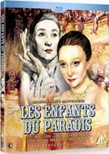
“Watching it, I am amazed at how much I’ve stolen from it. I think I have to admit to my guilt.” The contagious, enthusiastic introduction spoken by Terry Gilliam for the wonderful “Janus Films Director Introduction Series” has been added to the 2002 DVD release of the 1945 French classic Les Enfants du Paradis. Gilliam, the American member of Monty Python and director of such masterpieces as Brazil, The Fisher King and 12 Monkeys, is an unconditional fan and knows how to poetically articulate his admiration for the film. With words that provide insight into why the film also made such a lasting impact on Bob Dylan;
“The light in the film is very important. Right from the beginning, there seems to be a glow about it, a luminescence, that I don’t see in modern film. It’s almost as if the moon is lighting it, even in full sunlight. It’s a silvery, soft light that infuses everything. That’s why the film is like a dream,”
… for example. Hitting remarkably close to the words Dylan chooses when, in 1978, in that famous Playboy interview with Ron Rosenbaum, he tries to describe the perfect sound, and then choosing the much-quoted, now proverbial colour-and-metal metaphors (“It’s that thin, that wild mercury sound. It’s metallic and bright gold with whatever that conjures up”). When Rosenbaum gets a call from the German newspaper Süddeutsche Zeitung in 2001 asking if they can translate and publish that old interview on the occasion of Dylan’s 60th birthday, he dives back into his archives and memories, and finds the parts he did not publish at the time. Among them:
“It was the sound of the streets,” he said. “That ethereal twilight light, you know. It’s the sound of the street with the sunrays, the light shining down at a particular time, on a particular type of building. A particular type of people on a particular type of street. It’s an outdoor sound that drifts even into open windows …. The sound of bells and distant railroad trains and arguments in apartments and the clinking of silverware and knives and forks … usually it’s the crack of dawn. Music filters out to me in the crack of dawn.”
(The Observer, 28 May 2001)
Apart from giving us an almost soberingly clear explanation of what the jingle jangle morning from “Mr. Tambourine Man” is, we also see here, for all its synesthesia, an identical fascination with the particular light that so touches Gilliam in Les Enfants du Paradis: “That ethereal twilight light, the street with the sunrays.” Just as the second part of Gilliam’s declaration of love, “the film is like a dream”, explains Dylan’s receptivity to it; dreams, unreal realities are a constancy in his oeuvre. “The only truly natural things,” as the Dylan incarnation “Artur Rimbaud” says in the Dylan film I’m Not There (Todd Haynes, 2007), “are dreams, which nature cannot touch with decay.” With which, incidentally, scriptwriters Haynes and Moverman are indeed quoting almost verbatim from a 1960s Dylan quote (as penned by Robert Shelton in No Direction Home, 1986).
[Please note if the following video is unavailable in your location try this link]
And one of the channels for expressing dreams and dreamlike atmospheric descriptions, dialogues and settings are the Enfants du Paradis references and borrowings, which we see recurring throughout Dylan’s oeuvre as well. Quite lavishly, even. The entire lyrics of “Most Likely You Go Your Way (and I’ll Go Mine)”, for instance, are built on that one quote from the very first scene of the film, when Fréderic Lemaître sees the beautiful Garance (Arletty) walking by on the busy Boulevard du Crime, and immediately tries to hit on her;
“Où allons-nous? – Where shall we go, ” he asks, as he forces his arm on her.
Garance is not the least bit intimidated, nor overly impressed, and waves him off with a beaming smile, as she calmly loosens her arm again:
“C’est tout simple. Vous allez de votre côté, moi du mien – That’s very simple. You go your way, I’ll go mine.” (If this video does not work in your area, please try this link)
We can’t really blame Frédéric for his pushiness though; even Marlon Brando, another fan (“Maybe the best movie ever made”) falls head over heels for Garance:
“You know, that’s the only time I ever fell in love with an actress, somebody on the screen. I was mad about Arletty. I mean, I was really in love with her. My first trip to Paris, the thing I did right away, I asked to meet Arletty. I went to see her as though I were going to a shrine. My ideal woman. Wow!”
(interview with Truman Capote, New Yorker, 9 November 1957)
That encounter, by the way, was a major disappointment (“Was that a mistake, was that a disillusionment! She was a tough article”).
But meanwhile, Dylan has read You go your way, I’ll go mine in the subtitles. The street scene itself, with all those frenzied characters, chaotic alternation of scenes and exotic side characters, has a strong “Ballad Of A Thin Man”/”Desolation Row” vibe, and further on in the film we do encounter more verse lines. “Love is so simple” is said no less than three times, for example – enough to get a place in the Dylan song in which the bard quite explicitly says he is not making it up himself: Love is so simple, to quote a phrase (“You’re A Big Girl Now”).
The culmination of that fascination with Les Enfants du Paradis is then Dylan’s marathon film Renaldo & Clara, the chaotic mosaic that he spins together while improvising at the Rolling Thunder Revue (1975), shortly after recording “You’re A Big Girl Now”. The film’s influence is evident in such small, ambiguous details as Dylan’s white-painted face (as is the face of protagonist Baptiste Deburau, the tragic mime, and the name of the character played by Joan Baez: “The Woman In White”. After all, the second part of the two-part French classic is called “L’Homme Blanc – The Man In White”).
Decidedly no coincidence, we know thanks to Sam Shepard’s 1977 Rolling Thunder Logbook. Shepard is in California and, to his own surprise, gets a last-minute call from someone speaking on Dylan’s behalf asking if he can come to New York right away to join Dylan on a “secret tour in the Northeast”. Dylan wants to make “a movie of the tour” and wants to have a writer for “providing dialogue”. When Shepard first speaks to Dylan a week later, the first thing Dylan says is, “We don’t have to make any connections.” Shepard isn’t sure if Dylan means that he and Dylan don’t need to make any connections on a personal level, but no, Dylan skips the small talk and started talking about the film right away; “None of this has to connect. In fact, it’s better if it doesn’t connect”. Shepard cannot think of anything to say, mainly because he is still quite overwhelmed of being in Dylan’s presence, and Dylan goes on, clarifying:
“Did you ever see Children of Paradise?” he says. I admit I have but a long time ago. I saw it with a girl who cried all the way through so it’s hard to relate my exact impressions. “How about Shoot the Piano Player?”
“Yeah, I saw that one too. Is that the kind of movie you want to make?”
“Something like that.”
Forty-five years after this conversation, fifty-five years after Dylan incorporated the first Enfants du Paradis references into his oeuvre, the magic of the film has apparently not yet worn off. The setting, also the title of the first part, provides the address of the narrator of “I Contain Multitudes”: I live on the boulevard of crime – not just the setting of the street scenes, but also the name of Part 1 of the two-part film.
No relation to the surrounding lines of this fourth stanza, of course, let alone to any other verse of the song. It’s better if it doesn’t connect, after all.
To be continued. Next up I Contain Multitudes part 10: Don’t you step on my pink pedal pushers
Jochen is a regular reviewer of Dylan’s work on Untold. His books, in English, Dutch and German, are available via Amazon both in paperback and on Kindle:
It appears that Dylan has never performed “Sign on the window” in any concert – at least according to the official site. (My guess that could in part be because of the key change in the middle – and I approached this little review wondering how each artist was going to cope).
And yet despite Dylan’s non-performance, and its notorious modulation, it has not escaped the attention of the cover artists.
Melanie starts with an emphasis on the plaintive with a simple accompaniment, but her voice gets forced, and then suddenly, well, everything changes, except then it changes back again. And I am left thinking, “why?” I suspect the answer was that they couldn’t think of much else to do, except tell each musician to do his/her thing. And they do, but not to much effect in my view. Except strangely in the last repeated line, which made me think – that could have been the starting point for something quite enjoyable. So not for me…
On the other hand, many of the cover versions of this song just perform it straight, adding little of their own input, which always makes me wonder what the point is. I might not always like the way other artists treat Dylan’s song, but at least by reinterpreting the song they do give us a chance of new insight, even if as with Melanie there’s nothing there for me.
But, fear not and read on, for things are about to start happening…
Al Tuck and No Action (great name!) really do take the song somewhere else – and particularly makes sense of the key change into the middle eight.
That change of key which runs D, C#minor, B (just about the most incomprehensible chord sequence ever in terms of a song which is actually in F#) has never made any sense at all – until here, where it works. (Interestingly, so weird is this song that the unbeatable, definitive Dylan Chords website actually refuses to write out the song in F sharp and instead transposes it to E even though Eyolf Østrem knows everything about everything in terms of chords and Dylan, and so normally reproduces the music as is.)
But back to this cover – the rhythmic change is superb, as are the harmonies (which is what in part makes the “looks like nothing but rain” line work here, in a way that no one else seems able to do. (And that includes Bob).
Sarah Jarosz has a voice just made for this song, and very sensibly lets her voice drive the song, accompanying the vocals with herself on guitar plus a softly played double bass. She again also manages that key change with a very effective slide up through the chords. Really after the previous version and this one, I am warming to this song for the first time ever. This lady not only knows how to play, she also knows to keep it simple – and believe me keeping it simple while making it interesting and beautiful, is much harder than throwing the kitchen sink into the mix and hoping something comes out. Superb – well may she smile at the end.
So having found myself a couple of covers that I really like I was about to stop when I happened upon a version in Sicilian. Just the one guitar and a language of which I don’t know a word (although I do remember being told that each town has its own variant of the language, so perhaps I should say I don’t know a word of any of them). But I can still appreciate this. Which is interesting, because before I started this article, I would have said this was a song of Dylan’s I really had no feelings for at all.
Which I suppose just goes to show us the value of covers.
As far as the official Dylan site shows, this song was played lived just once (1 October 1965) and appeared first as a single and then 20 years later on Biograph.
It has always felt to me as one of the most, if not the most, awkward of Dylan songs – a song for which the overwhelming emotion seems to be nastiness. And not necessarily wanting to focus on that, I have just had a look around to see if I could find some new insights into the piece. Hence a search on the computer for “Meaning of please crawl out your window” on Google, only to find my review on this site (published in 2013 and I notice twice updated thereafter) comes out on top. That may not be what happens on your computer of course, but it does suggest other people struggle as much as I did to explain this song.
And I’m mentioning this point because the re-write of this song gives us a perfect example of just how the music can change the meaning of song. Here is the version that really generates a reflective song that says, just get away from this guy’s influence… As you can see it is take 17 – which is a very high number of takes for a musician who at the time was famed for getting each song down in one or two takes.
And now below we have the single version
Now the history of the development of the song is covered excellently by Jochen in his review, but here I want to touch a little more on the musical difference between these two versions.
Jochen points out that Dylan’s concern was that the initial version sounded too much like “Like a Rolling Stone” and so needs redevelopment, and that is what it gets.
Personally, I don’t have a problem with the music in the original version because it seems in keeping with the notion of a person who on the surface can seem a very decent individual, but who underneath is controlling and nasty. But there had at the time been talk of several Dylan songs sounding too much like earlier compositions, and so I guess Dylan’s desire to be traveling in all directions at once was a dominant factor here. And of course, by now he was officially the man in charge, so what he says goes. The music changes.
What we get with the final, released version, is music that is very much in keeping with the horrible edginess of a relationship in which one person wants to control another. Here’s the opening, just in case you can’t call it to mind immediately:
He sits in your room, his tomb, with a fist full of tacks
Preoccupied with his vengeance
Cursing the dead that can’t answer him back
I’m sure that he has no intentions
Of looking your way, unless it’s to say
That he needs you to test his inventions
And all that is before we get to the most troubling title line, “Can you please crawl out your window?”
But if we listen to the Cutting Edge version, the music is gentle, almost serene. There is a twinkly side to it as well, an effect delivered by the celesta – a keyboard instrument which is played like a piano but in which the mechanism is that of the glockenspiel. (I just wonder how they came to use that instrument – they are not that common – did the studio just happen to have one lying around? It seems such an unlikely instrument.)
And the point is that the celesta gives a twinkly sound which is not related to the lyrics, and as a result the whole atmosphere of the song loses its edge.
Thus lines such as “Use your arms and legs it won’t ruin you” which are really quite insulting if taken on their own, have far less meaning and impact. As for lines such as
“With his businesslike anger and his bloodhounds that kneel, If he needs a third eye he just grows it” – the contrast between the music in this version and the lyrics, is so profound that all we can do is focus on one or the other, or take in the whole sound and feel very uneasy.
So what we have is a situation in which the melody and lyrics have not changed but the accompaniment has changed between the two versions. And yet as a result the entire meaning of the song has changed.
Of course with the Cutting Edge version we can still focus on the lyrics and find them pretty disturbing throughout, from the childishness of ,”He just needs you to talk or to hand him his chalk Or pick it up after he throws it” through to the horrors of deceit, control, appalling associates, and denigration of women all of which are packed into four lines
While his genocide fools and his friends rearrange
Their religion of the little tin women
That backs up their views but your face is so bruised
Come on out the dark is beginning
And in that regard that version works because of the contrast: it says that behind the doors of normality the most appalling crimes are taking place by people whose one desire is to control.
What happens in the version released as a single is that the very unusual and unexpected chord sequence becomes more emphasized and the accompaniment is now much more in tune with the words. So we have a straight image of the awfulness of the attitude that is portrayed here, but with less emphasis on the fact that it is covered up by the veil of normality.
In effect, the normality of the original musical accompaniment stops us from focusing so much on the horrors within the meaning of the lyrics. And thus, it is for me a perfect example of just how important is the way the music is written. It can change our entire perception of what the words mean.
By giving us the released version of the song Dylan made the lyrics and music portray the same message, and clearly it was a message that many in the record buying public did not want. It was too much edginess all at once. Too brutal, too honest, and possibly for some, far too close to home. We were not yet ready for the pop song as a portrayal of control and abusiveness. Love, lost love and dance: that is what pop deals with.
Article collaboration by Denise Konkal and “I’m first among equals” Youtube channel. A set of nine recordings of Dylan’s covers of other people’s songs appears at the end of the article.
PART 1 (November 2, 2021, to July 9, 2023)
FALL 2021 (Nov. 2 – Dec. 2)
“Melancholy Mood” – Milwaukee – Nov. 2/21 thru to Washington D.C. Dec. 2/21
SPRING – SUMMER 2022 (March 3 – July 6)
“Melancholy Mood”- Phoenix March 3/22 thru to Denver July 5/22
“Friend Of The Devil” – Oakland CA June 11,14, &15/22
“Brokedown Palace” & “That Old Black Magic” – Nagoya April 18
“Not Fade Away” – Nagoya April 19
“Truckin'” & “Only A River” – Nagoya April 20
“Not Fade Away” – Lisbon June 4
“Not Fade Away” – Lisbon June 5
“Not Fade Away” – Madrid June 7
“Tweedle Dum And Tweedle Dum” Madrid June 8
“Into The Mystic” – Alicante June 15
“Stella Blue” – Barcelona June 23
“Not Fade Away” – Barcelona June 24
“That Old Black Magic” – Carcassonne, FRA. June 26
“West L. A. Fadeaway” – Aix-en-Provence, FRA June 27
“West L. A. Fadeaway” – Lyon FRA June 29
“West L. A. Fadeaway” – Lyon FRA June 30
“Not Fade Away” – Montreux, Switzerland July 1
“Bad Actor” & “Not Fade Away” – Milan Italy July 3
“Brokedown Palace” (complete) & “That Old Black Magic” – Milan July 4
“West LA Fadeaway” – Lucca Italy July 6
“That Old Black Magic” – Perugia Italy July 7
“That Old Black Magic”, “Only A River”, & “Truckin'”- Rome July 9
A few extra notables:
Bob has played 138 concerts since this tour began and one cancellation due to extreme weather which is not included in that number. So far he has played all his songs from his “Rough And Rowdy Ways” album except for “Murder Most Foul”. He also has performed some of his older songs, some that he had done for his “Shadow Kingdom” recording. He changed out a few of them and some remained constant such as:
“Watching The River Flow”
“Most Likely You Go Your Way (and I’ll Go Mine)”
“I’ll Be Your Baby Tonight”
“Gotta Serve Somebody”
“To Be Alone With You”
Other older songs he kept for a while or changed them right away. For instance, when he started in 2021, he sang “Simple Twist Of Fate” and “Soon After Midnight” at the first concert only. Along with those songs listed above he also sang: “Early Roman Kings”, “Love Sick”, “To Be Alone With You”, and “It Takes A Lot To Laugh It Takes A Train To Cry”.
At his second concert he added, “When I Paint My Masterpiece”. In his third concert, Bob dropped “Love Sick” and “It Takes A Lot To Laugh, It Takes A Train To Cry” and added “Every Grain of Sand” which has stayed throughout except for three consecutive nights in June 2022 when he covered “Friend Of the Devil”. On the second of those three nights, Bob ended the song by playing guitar while seated at the piano.
On June 8, 2023, Bob played his song “Tweedle Dee & Tweedle Dum” for the first time and in the following two concerts and again on June 21, 2023. It is exciting to wonder what other cover songs and older songs Bob may do during when his tour resumes.
Along with changing set lists there have been several arrangement and instrument changes to both his “Rough and Rowdy Ways” repertoire and his older songs. Many of his songs have taken on more blues and jazz styles and others rock. Bob played guitar for the beginning of “Watching The River Flow” on June 7, 2022, at Redding California till Sept. 25, 2022, at Oslo Norway. He has also played harmonica intermittently at the end of “When I Paint My Masterpiece”, “Every Grain Of Sand” and “I’ll Be Your Baby Tonight” October 11, 2022.
Multi-instrumentalist Donnie Herron has changed what he plays in certain songs throughout this tour as Bob develops new arrangements. For example, during part of the first leg he played accordion for some of the “Key West ” renditions, but further into the tour he played wonderful violin accompaniment in various songs. Playing effortlessly, Tony Garnier, fluctuates between his bass guitar and stand-up bass. Guitarists Bob Britt and Doug Lancio have developed some wonderful riffs and rhythms that complement the songs. Bob’s band members underwent one change when the drummer Charley Drayton left the tour at the end of 2022 and Jerry Pentecost took over drums when the tour resumed in 2023.
It is hard to say what changes could occur when Bob returns to his tour (likely, late summer or fall). Where it will recommence is still a mystery, but I think he will probably end this tour on his home turf and that might not be till 2024. It has been amazing to follow along devotedly watching and/or listening to Bob’s LIVE performances and reading so many reviews, comments, and reactions. When this tour ends, we hope to submit a follow up to this article.
Wishing and praying the best for Bob to continue with his creative journey in good health and happiness.
Thank you to the channels that are featured with this article. Thank you to my collaborator for this article from “I’m First Among Equals” Y.T. channel. Thank you of course to Tony Attwood at “Untold Dylan” Website for graciously publishing this article.
This series reconsiders the 1000+ recordings that Mike Johnson has given us through his magnificent series: The Never Ending Tour, and gives me the chance to pick out a few absolute personal favourites.
There is a full list of my previous choices below (this is number 27 in the series), and this recording of “Love Minus Zero” comes from 1992 in Sydney.
In his review of this part of the Tour, Mike included three different recordings of this song and of course you can go back and choose your own favourite of the three – but really I found that quite difficult, and ultimately it is a totally personal choice anyway.
Mike, in considering the three separate recordings of this song he nominated, wrote, “Sigh! Sometimes it’s great when Dylan just plays Dylan, no tricks, no great baroque extensions. Just Bob and his genius. Blink for a moment and you’re back in the 1960s.”
And I really, really would agree with that. For me there is something so utterly simple and elegant about this version… and indeed as Mike further adds, “Masterful vocal. Wonderful to sense a respectful audience.”
But I would (inevitably) add a little more. The tour consists mostly of songs that we all know, and Bob has always changed the songs as he goes along. Here it is the melody that is different from the original recorded version from the second line onward, and it works perfectly. It doesn’t sound like the piece has been changed for the sake of change: if this had been the original version, we would surely all have marveled about it just as many of us did with the version delivered on the LP.
However, this goes further. For there is such a delicate plaintiveness in this recording from first to last and that amended second line really does sound as if this is the way it has always meant to be sung.
I just wonder sometimes, when sitting alone, what it could possibly be like to have a lover who writes a song for you which begins
My love she speaks like silence,
Without ideals or violence,
She doesn't have to say she's faithful,
Yet she's true, like ice, like fire.
People carry roses,
Make promises by the hours,
My love she laughs like the flowers,
Valentines can't buy her.
That surely must be one of the great and utterly overwhelming emotional moments of one’s life. No such comparable event has ever happened to me but I can still imagine what it must be like.
By the end of the last post we’d reached halfway through Dylan’s 2014 Setlist; he pretty much delivered the same concert at every venue, same songs in the same order: the Concert. Number 9 on the Setlist was ‘Love Sick,’ covered in the previous post, and now we move on to number 10: ‘High Water (for Charlie Patton).’ We’ve had some rocking versions of this Love and Theft song and this is no exception. I’ve always loved Herron’s banjo work on this one. It gives the song its driving force and country feel.
We’re back in Minneapolis (Nov 5th) for this one. I believe the opening slow guitar section is by Stu Kimball. It’s there, not as part of the song, but to signal the beginning of the second half of the Concert.
High Water (A)
Wind back the clock to the beginning of the year and we land in Tokyo (31st March) for this one. It feels a little softer, Dylan’s voice smoother, but really there’s hardly any difference. I’m including these second performances just for the hell of it.
High Water (B)
With ten songs down and only one from the 1970s, the audiences must have been happy to hear ‘Simple Twist of Fate’ at slot eleven. I’m always in awe at the subtlety of this song, how it captures the feeling of being caught between desire and fate. ‘Another blind man at the gate,’ that’s us whatever gender we might be.
This marvelous version, with Dylan’s voice soft and rich with warmth and sadness, is from Zwickau (Germany), 3rd July. I don’t know about ‘best ever’ any more, I’ve lost count, but I do know this one is hard to match. And it’s good to hear the harp lending its sharp edge to this gentle reminiscence. While the album performance suggests that this incident has recently happened, the singer still stung by it, here in 2014 it could have happened many years in the past, it might be buried deep in layers of memory. Quite sumptuous. And note the lyrics change as I can best make it out.
…a note she’d left behind
What’d it say?
‘You should have met me back in ‘58
And we’d have avoided that simple twist of fate.’
There’s humour in that, and reinforces the sense that this might now be a distant memory.
Simple Twist of Fate (A)
Hard to match or not, here’s the Tokyo version. Yes, exactly the same.
Simple Twist of Fate (B)
At slot 12 we find ‘Early Roman Kings’ driven by a Muddy Waters style urban blues riff. On the musical level, the song comes over as a tribute to Chicago blues.
These early Roman kings however are a conundrum. Nobody’s quite sure what he’s referring to. Our Editor Tony Attwood gets a mention in the Wikipedia entry on this song: ‘Dylan scholar Tony Attwood has observed that the song seems to simultaneously reference the Roman Kings, who were a Bronx-based street gang in the 1960s and 1970s, as well as the Kings of Ancient Rome (who preceded the Roman Republic and the Roman Empire).’
I’m not sure where this takes us. We know how Dylan loves to subvert the literal mind. I see these early Roman kings as a metaphor for arbitrary and absolute power. On one hand they ‘come down the mountain, distributing the corn’ and on the other ‘they’ll destroy your city, they’ll destroy you as well.’
Here’s Wikipedia again: ‘ Lyrically, (Lloyd) Fonvielle sees the song as “a kind of road map to the apocalyptic landscape of the album as a whole. The ‘early Roman kings’ seem to be symbols of the wicked men ruling America today. They are vicious, supernaturally powerful, bent on domination and horrific violence.”
Like the narrator of ‘Pay In Blood’ in fact. By the way, eminent Dylan writer Greil Marcus sees the song as ‘hilarious.’
Here’s Dylan belting it out at the first of a five-night gig in New York City with which he finished the year. (28th Nov)
Early Roman Kings
Let’s move right along to number 13 on the Setlist, ‘Forgetful Heart.’ I’m glad to see the song still there. 2015 will be its final year. When writing about 2011, I looked at five different performances of this song, all with different nuances. This performance from Washington (25th Nov) matches the passion of those 2011 performances. It’s a wonderful mood piece, with some of the most piercingly sad harp Dylan ever blew.
Forgetful Heart (A)
Here’s how it sounds in Tokyo. A little dreamier, methinks.
Forgetful Heart (B)
Number 14 on the Setlist is ‘Spirit on the Water’ that gentle-sounding ballad, one of those long, wide-ranging songs from Modern Times. There are religious tints here,
Now your sweet voice
Calls out from some old familiar shrine
but the overall mood is regretful. In a fallen world, the whore and murderer are not likely to find redemption.
This swinging performance is from Tokyo, the backing sounding suitably archaic, the sound of the 1930s. This one’s a real pleasure.
Spirit on the Water
Next up, number 15 on the Setlist, comes that brooding ballad ‘Scarlet Town’ with its resonances in both English and American folk music history. Critics speculate that the Scarlet Town, the subject of the song, is located in both an imaginary early America and the Rome of classical times, but efforts to tame the song into expository prose leave its essential mystery untouched. I find in the last verse a vision of compassion and racial harmony, but I seem to be alone in that one. Here is what Greil Marcus says, ‘He’s talking about what it would be like to grow up in a town where that horror overshadows absolutely everything. It has an allure, maybe a kind of beckoning toward your own annihilation, or an allure of romance that, along with the ugliness and fear and terror, makes it a place that’s impossible ever to forget.’
This is my best-ever performance of the song, and I’m annoyed that I’ve lost the date of such a close and intimate performance. What a spellbinder!
Scarlet Town (A)
But this one from Denver is almost as good:
Scarlet Town (B)
That’s followed, at number 16 on the Setlist, by ‘Soon After Midnight’ also from Tempest, a song which misdirects us with its gentleness until we hit the killing floor. A beauty here from Minneapolis (6th Nov)
Soon After Midnight
Third in a row from Tempest we have that great monologue ‘Long and Wasted Years,’ a beautifully assertive and angry vocal; there’s a touch of hysteria in the rendering of this unpleasant character in a blistering performance in New York City, Nov 28th. There is a sharp, cutting edge here. Note some lyrical changes. As with ‘Scarlet Town,’ this song breaks new ground for Dylan; before Tempest he’d never written anything like this.
What a way to finish a concert!
Long and Wasted Years
Now we get one or two encores. Mostly just ‘Blowin’ in the Wind’ but sometimes ‘All Along the Watchtower’ as well.
Here’s ‘Watchtower’ from Tokyo, a solid beatey version, Dylan’s voice rich with insinuation. Pity about those determined hand-clappers.
Watchtower
And here’s ‘Blowin’ in the Wind,’ the last song of the night and a blast of the ‘original’ Dylan, the young acoustic, protest Bob from the early 1960s, still there, somewhere, waving us goodbye for the night. We’re back in Minneapolis for this little swing back through the years. And aren’t the crowd ecstatic! It’s a touch too dumpty-dum for me in the instrumental break, but then I must be getting hard to please.
Blowin in the wind
But wait! It’s not quite over. Towards the end of the year, and after the shared nostalgia of ‘Blowin in the Wind,’ something strange begins to happen. What’s Dylan doing? He’s come back for another song, but what is it? Only a few, I suspect, recognize it. It’s another kind of nostalgia, an American Standard called ‘Stay With Me,’ written by Carolyn Leigh and Jerome Moross – and was first recorded in 1963 by a Mister Frank Sinatra.
Ol’ Blue Eyes had arrived on Bob Dylan’s stage. (Toronto Nov 17th )
Stay With Me
That would be it for me for 2014 except for one concert in which Dylan threw the Setlist to the winds and treated his audience to a set of golden oldies. We’ll look at that next time.
I sing the songs of experience like William Blake
I have no apologies to make
Everything’s flowin’ all at the same time
I live on the boulevard of crime
I drive fast cars and I eat fast foods . . . I contain multitudes
Dylan is interviewed twice for Rolling Stone in a relatively short space of time; in 2009 by Mikael Gilmore, in 2012 by Douglas Brinkley. And both times the name Marcus Aurelius comes up, the last of the Five Good Emperors, who became immortal mainly because of his Meditations, the self-exploratory and philosophical notes that the wise emperor jotted down between 161 and 180 just for himself. Apparently, he is also on a pedestal with Dylan; in 2009, Dylan cites him as an example of the Antique writers he keeps re-reading, writers like Plutarch, Cicero and Tacitus, because “I like the morality thing”. And then Marcus Aurelius is your man alright. Three years later, in 2012, Dylan has found even more depth, saying:
“There’s truth in all books. In some kind of way. Confucius, Sun Tzu, Marcus Aurelius, the Koran, the Torah, the New Testament, the Buddhist sutras, the Bhagavad-Gita, the Egyptian Book of the Dead, and many thousands more.”
Dylan articulates the insight that most of us do reach, sooner or later: that the Great Truths of all religions, cultures and times overlap. We hear an expression of that insight here, in the key line of the fourth verse, also one of Dylan’s Eternal Themes: Everything’s flowin’ all at the same time. A Great Truth that we encounter often enough among Buddhists anyway, and is also expressed quite literally that way in the narrative that, at least in the Western world, is the most popular and widely read Buddha story, in Hermann Hesse’s Siddharta (1922):
“The river is everywhere at once, at its source and at its mouth, at the waterfall, at the ferry, at the rapids, in the sea, in the mountains, everywhere at once, and only the present exists for it, and not the shadow of the future.”
… a wisdom with which Dylan’s song already opens (“Today and tomorrow and yesterday too”), which is a common thread throughout the album Rough And Rowdy Ways, and throughout all of Dylan’s oeuvre, of course. And in some kind of way Dylan finds that insight in all those books he lists there, and in many thousands more. In the Torah as in the Bhagavad-Gita – a title that stands out rather undylanesque in that list. But indeed, Dylan finds confirmation there too. In Chapter 10, Vibhuti Yoga, “The Yoga of Divine Splendour”, in Verse 33, for example:
“Of letters I am the letter A. Amongst compound words I am the dual. I alone am the eternal flow of the time factor and I am the Creator, who gazes in all directions.”
… spoken by the being who in a more literal sense than Whitman’s Myself contains multitudes, by Krishna, the Creator who gazes in all directions.
And refreshed it is, at least so it seems, by the only author he lists as a signpost in both 2009 and 2012, by Marcus Aurelius. No doubt Dylan had several aha-moments when reading Meditations, but a checkmark in the margin he will have made at Meditation 43, “Time is a river, a violent torrent of events coming into being; and as soon as it has appeared, each one is swept off and disappears, and another follows, which is swept away in its turn”, and if not, at Meditation 37:
“If you’ve seen the present, then you’ve seen everything — as it’s been since the beginning, as it will be forever. The same substance, the same form. All of it.”
But surely the direct trigger for this one verse will again be the same as the trigger for the whole song at all: Walt Whitman’s “Song Of Myself”. Most clearly, of course, in Whitman’s identical denial of a linear passage of time, in Section 23: “Here or henceforward it is all the same to me, I accept Time absolutely”. Which in “Song Of Myself”, as in Dylan’s oeuvre, is a refrain, by the way. “A few quadrillions of eras,” Whitman composes a little further on, “they are but parts, any thing is but a part”, for example, and six lines before the I contain multitudes quote in Section 51:
The past and present wilt—I have fill’d them, emptied them,
And proceed to fill my next fold of the future.
… and what has rarely been so beautifully visualised as by Christopher Nolan in Interstellar, in that psychedelic, poignant tesseract scene towards the end of the film. In which the robot Tars has to explain to the bewildered Cooper that he is indeed seeing what he is seeing: everything’s flowing all at the same time.
TARS (over radio) I don’t know, but they constructed this three-dimensional space inside their five-dimensional reality to allow you to understand it …
COOPER
It isn’t working -!
TARS (over radio) Yes, it is. You’ve seen that time is represented here as a physical dimension – you even worked out that you can exert a force across spacetime –
COOPER (realizing) Gravity. To send a message … Cooper looks around the infinite tunnel, infinite Coopers. COOPER
Gravity crosses the dimensions – including time –
Which is clever thinking on Cooper’s part. “Poetry” would have been a nicer dimension-crossing option, of course, but gravity might be a bit more practical in this case to get to the film’s denouement.
Anyway: the Bhagavad Gita from the third century BC (supposedly), Marcus Aurelius from the second century AD, Whitman in the nineteenth and Hesse in the twentieth and Interstellar in the twenty-first… reasoning circularly, with that one phrase Everything’s flowin’ all at the same time Dylan demonstrates how at least poetry has the power to transcend Time.
————–
To be continued. Next up I Contain Multitudes part 9: None of this has to connect
Jochen is a regular reviewer of Dylan’s work on Untold. His books, in English, Dutch and German, are available via Amazon both in paperback and on Kindle:
In this series (of which there is a full index at the end) Aaron selects a song that Dylan has recorded but which he did not write, and looks at the Dylan version and other artists’ versions of the song. Tony (on the other side of the Atlantic) then adds his comments.
Aaron:“A Fool Such As I” is a song written by Bill Trader and released in 1952 as “(Now and Then There’s) A Fool Such as I”.
Tony: According to the tales told (and I have no idea if this is apocryphal or true) Bill Trader was musically illiterate and so when he composed a song he would then take the new song to a friend who would write out the music for him. Bill would then take the song to Nashville and try to sell it. I can’t find any details as to whether Bill Trader kept the rights or sold them on, but as far as I can tell it was his one giant hit, and possibly his only hit. If you have more information on Bill Trader and any other successful songs he wrote I’d be very grateful if you could write in, as I’d love to add to my knowledge.
Aaron: Elvis Presley’s 1958 version, which reached No. 2 in the US and went platinum, could have served as Dylan’s inspiration.
Tony: One of the things that most people who were around in the 50s and listening to popular music remember from this version is the deep bass vocal which comes in at the start and one or two places thereafter. It was sung on this recording by Ray Walker who had just recently been hired as the bass singer for the Jordanaires. The story is that Ray Walker taught Elvis (who was musically illiterate) the song.
In fact the arranger of the accompaniment must have realised just how powerful that single line from Ray Walker was, as it ends the instrumental break with telling effect. To the best of my knowledge, Ray Walker is (at the moment I write this in July 2023) still with us, aged 89.
It is reported (and obviously I can’t verify this, what with being in the UK) that between the 1960s and the turn of the century he was constantly recording songs for his and other churches, alongside his work with the Jordanaires, and quite a few people seem to suggest that his was the most recorded voice in the history of music! Of course no way to verify that, but Mr Walker certainly did record a lot of songs for the benefit of his church. It is reported in some quarters that he is still a minister of the Waverly Church of Christ in Tennessee.
Aaron:Dylan’s version came from the 1973 album Dylan.
Tony: So Bob has put in a totally different accompaniment – and I have a problem with this. Some total reworkings of a piece can indeed offer a new insight, but if they don’t quite work, then there is the sort of problem I have here (and of course this is just a problem for me). The fact is I know the Elvis version too well, which makes this reworking sound a bit odd and forced. Now that is not to say that the original version of any song is always the best one – of course not as Bob himself has proven so many times. But when making a cover that is utterly different from the original, the new version has to offer something new: a new insight or feeling for example. But here the only newness for me is that it is not the original, which runs really smoothly and beautifully. Unlike so many re-workings by Bob of his own material, which seem to offer new insights, I am not at all sure I get anything at all new out of this reworking.
Aaron: Dylan originally recorded this song in 1967 during the sessions for “The Basement Tapes”. That version remained (officially) unreleased until 2014.
Tony: Now this is really interesting, as obviously from the opening it is clear that Bob has not prepared what he is going to do, as he is unsure of what key to work in. But when he gets going he retains the essence of the original song. I do however cringe at the spoken verse – and not just here but virtually every time I hear one of these. I never quite understand the point, and it always just sounds so horribly forced as lyrics which are written to be sung are spoken in a slow drawn out way (as is necessary to stay in time with the accompaniment. However that is, as usual, just my response.
Overall though I do wish Bob had left it there with the Basement recording.
Aaron: A version by Steve Goodman was included on his Grammy award-winning second posthumous album Unfinished Business in 1989.
Tony: Now I do like this because it retains the whole self-deprecating notion of the title in the way that the song is sung. It is just relaxing, and I think for the first time in all the examples here, believable. In case you don’t know Steve Goodman’s work as a composer and would like to here is just one more:
Aaron:Jason Donovan included on his version on his 1991 Greatest Hits album. Here is the rather hilarious video for the song
Back around 2020, The Bob Dylan Showcase was introduced on this site as a place where readers of Untold Dylan could either add their own music to lyrics for which Bob Dylan did not write any music, or reinterpret Dylan songs.
We haven’t had any new entries for several years, but recently Jemmy Joe offered us his version of “Dark Eyes”, and now has forwarded his version of “She Belongs To Me” which made me think it is time to bring the old series back.
So if you or your band, or your friend’s band has recorded a Dylan song and you’d like it to be featured here, please send a YouTube recording or as an MP3 or MP4 audio file, along with any commentary you wish to add, to Tony@schools.co.uk
An index to previously published songs in the series is given at the foot of this article.
For our re-launch the song selected is She Belongs to Me. It is on Spotify here. And here’s the Youtube version by Jemmy Joe with the Pine Hearts
Commentary from Jemmy Joe
Recently I came across a Spotify playlist of folk music love songs. On that list was Bob Dylan’s 1965 song “She Belongs To Me”. I thought “Anyone who thinks that this is a love song would benefit from a shrink!” I believe in modern therapy circles they’d say this is a classic avoidant personality attracting anxious attachment types. Good luck with that!
Taken at face value, “She Belongs To Me” is a character sketch. There is a woman. She is a transformative artist, turning the day into night. She’ll change you too! She is self-possessed and meticulous, if not out of nature than out of necessity. She is mysterious, and powerful and if she sees you at all, it’s from a vantage point of control. This is not a relationship between equals.
The title of the song seems to be in contrast of everything the singer says about her: she belongs to herself. Let us note that the singer does not seem to be in a relationship with her at all. There is a description of her for someone else’s benefit. Our narrator tells this person that they should come forth to her with deference and with gifts. Maybe that’s the poor sop who thinks this is a love song.
Whatever the singers think of her, they are keeping their cards close to their chest. But to have such a nuanced and subtle description of this woman infers some real interest and attention. We do not dig too deep into the hearts of people we have no reaction to. This is not one man moving his hands in the shape of the ideal woman’s body to amuse another man. There is no “hubba hubba” here. There is sympathy, understanding, caution, flattery and enough fascination to have been able to paint the picture at all. Our singer sees her, but for whatever reasons moves no closer and leaves her to be pursued by other.
When writing or talking about Bob Dylan, I am always quick to dismiss any explanation of his work that dips into his public personal life. I believe it devalues this song to suggest who it is “about”. Firstly, unless we know this particular person, declaring who the song’s subject isn’t a good use of art. Maybe you’re neighbors with, I don’t know, Joan Baez. This song could help you get along better with her. That’s useful! For the rest of us, it doesn’t matter.
Secondly, celebrities’ personal lives have always been a part of the draw in paying attention to them. I get that. Sure. Cheap fun attached to their work. Whatever. But for goodness sake: this is Bob Dylan! He’s supposed to be a sophisticated artist with a surprising, nuanced take on life and the world. We are not taking him at his best when they put him into gossip rags.
Lastly, one day Bob Dylan will die. Then the people who were alive when he was alive will die. It’s easy to imagine that Bob Dylan will be remembered a few hundred years from now, but Suze Rotolo won’t be. The future fans of the songs of Bob Dylan will have no idea who Edie Sedgwick was. If it is revealed the solo inspiration of this song was Bob Dylan’s middle school math teacher, the people in the days to come won’t care. All will matter is the song. If you know nothing of the 1960’s and all the characters who inhabited the social media of the time, if know nothing of Bob Dylan himself, will this song have something to say that will capture the interest of an audience?
I say yes. This song was always about the narrator and the audience. Can you see yourself or someone you know here? Is there something you want in the work? It is feasible to imagine some kin of mine, not yet born, hearing this song and saying “Yes, I want to meet someone like this woman! That sounds like who I’d fall I love with.” (The poor sop.) Or it could have been heard by someone a hundred years ago who’d have said, “Yes! That’s who I am! These niños who vie for my attention haven’t got a clue.” This is a story about fascination that could have been painted on the walls of the private bedrooms of ancient Babylonian royals and its a song that could be dreamt of a thousand years from now in the dorms of future art school students. Its a world view and character archetype all in one. Bob Dylan’s romantic life has no place in it. Since it is so good, Bob Dylan has no place in it. If this song were merely an obscured diary entry, it would not be sung today.
Musical Analysis:
This song was written in a classic blues form. A line is sung under a dominant seventh chord twice and then the line is responded to with a chord change. The verses are related, but they could be rearranged in any order or could have different verses from similar songs popped in for equal effect. It’s not hard to imagine this character-sketch-song has a hundred different verses and has never stopped being sung in the hearts of the people who know our character, each imagining this untamed woman belongs to them. There is no conclusion to this song. The guy doesn’t get the girl, the tragic heroine doesn’t die at the end and no one learns a lesson that bookmarks the end of a tale. It’s a blues song: there is no end, no beginning, you can sing the phone book if it has the right rhythm and it’d work.
In a super nerdy, music theory geek side note, the chord change for the third line is major 2nd chord, not the standard 4th or 5th chord. Even the diatonic minor 2nd would have more precedent. Going from a C dominant 7 and then going to a D dominant 7 is not standard. It’s not completely without precedent, having been used a few times by a famous British group that Bob Dylan was a contemporary of. But rather than suggesting that there was influence, I prefer to think that the popular minds at the time simply wanted to hear something new and different. Why not go to an undiotonic chord, one just a step up for the one and only section change of a song? It’s the 1960’s, baby! Anything goes!
Cover Song Explanation:
My cover of this song was started as a ukulele strumming exercise. The Figure Eight. You start the strum going down at the bridge of the instrument, go up over the sound hole and back down up towards the neck. Go back the opposite way you came and then repeat. It’s a neat little strum rhythm that creates movement in a four-bar loop, but takes some practice to get it up to speed. The key of C has a lot of open strings on the ukulele and for this particular strumming technique, open strings work best.
Not having any songs of my own in the key of C, I just went to Bob Dylan’s catalog and found “She Belongs To Me” was in C. It didn’t have too many chord changes and the ones that happened had those same open strings. And that’s why I developed this song. This sort of explanation of how art is created should be more openly documented. A song can be created from the practice of a geeky new style on the ukulele. That’s how art can be made.
I am lucky to live in a small college town. In every small college town there are people who fled from their hometown because they were the weirdest people in their graduating class. They came to a new town and let their freak flag fly high. Good times are had by all. Some then graduate and move to the big city to make it big in the improv comedy scene. Some move back to their hometown and have a ton of kids. But some of these weirdoes stay in that small college town and eventually find themselves drawn into the local folk music scene.
It’s a story as old as time: punk artsy kid finds a banjo in their neighbors trash and ends up as a serious bluegrass musician in their adulthood. For Olympia Washington, one of these bands is The Pine Hearts, who contributed their skill to my recording. My connection to the band is personal. Watching my own video I filmed for the song with Joey Capoccia of the band, I saw quite visibly that I am good friends with this man. I knew that, obviously, but did not know it was so obvious.
It was a treat to have him and his fellow bandmates contribute to the song because honestly, their skill is what made it even worth releasing. I was just strumming on the uke. That’s fine around the yard, but not Spotify-worthy. Whenever I meet a young musician who wants to make good music, my only advice is to be friends with other musicians. Some of them will be better than you and take you along for the ride. Every member of The Pine Hearts is five times the musician I am.
There were a few takes needed in the recording of their parts. They listened to what I was doing, asked for a basic direction on what I wanted and then played perfectly. We recorded two or three takes, mostly just for me to have options in editing in post. There are leads and shiny parts, but more than anything there is the ability to hear what a song feels like and support that. If you like this song at all, you’ll love The Pine Hearts and I strongly recommend you listen to their music or see than at one of the many West Coast folk festivals they play at. Thanks again, guys.
—————————
And previously… Here are some of the entries for Showcase that we gathered when the series was running in 2020, first as “Help complete a Dylan song” and then “Readers’ covers”.
A strange moment to be writing this: despite this being a mid-morning in July and thus the English summer, there is a huge storm raging and the rain is teaming down. Rather appropriate in a way. Thunder rolls in the background, but the temperature is pleasantly warm.
And I choose (by chance) this moment to comment upon one of Bob’s simplest songs in a musical sense but one with complex entwined lyrics (what are we to make of “the deputy walks on hard nails and the preacher rides a mount”?), that can be easily overlooked because of that repetitive simplicity within the music…
'Twas in another lifetime, one of toil and blood
When blackness was a virtue the road was full of mud
I came in from the wilderness, a creature void of form
"Come in," she said, "I'll give ya shelter from the storm"
The rhymes are simple (blood/mud; form/storm) the construction is simple, the accompaniment is simple; the meaning is, well, possibly very simple, the meaning is increasingly obscure. What is the cover artist to do with this complex simplicity?
Cassandra Wilson and the production team add to the accompaniment while keeping the idea of openness and she manipulates the melody beautifully and elegantly with the occasional but appropriate pauses. Even when she adds extra emphasis it stays within the context, and keeps within the bounds of the song.
We also get some interesting manipulations of the chordal background especially in the inter-verse pauses. Of course one can be critical of some of the variations, but if there are no variations at all then what is the point of doing a cover?
Personally, I am not sure about the coda and fade out, but then, it’s her production…
Rodney Crowell has taken us further back to the basics with the two-person harmonies from the off, and I think they have made the right decision by not overplaying the part. We can get used to the way the whole piece is worked through before they unexpectedly change key for the female vocalists. But what really makes this work is that everything is under control. OK the return to the original key when the male vocal returns is obvious and expected, but this is a simple song with its repeated line at the end of each verse. The expected is fine.
Personally, I think the song can live without extra guitar effects, but this is a delicate version of a beautiful song that we all know intimately. And for me it really works.
The only bit I am really going to complain about is the spoken verse. Lots of singers try it, but (once again, for me) it never ever works. Maybe that’s just me, but really, it is a song, not a recitation.
The song in fact is so simple that listening to lots of covers it is clear that many performers and arrangers don’t quite know which way to look.
The notion of slowing the whole thing right down as per Steve Adey, is interesting, but I think the problem is that I know the song so well, it is now too much to take. Maybe if I were just sitting at home with nothing to do and wanted to drift into another place this would work, but in the morning at home, watching the rain pour down, it still seems to have gone too far.
If I had just come across Barb Jungr without reference to any of the above I am not sure what I would have made of this version, but this is now interesting…. I particularly like the “I was burned out from exhaustion, buried in the hail, Poisoned in the bushes an’ blown out on the trail” verse.
But way beyond everything above the version by Tom Lum Forest (of whom I know nothing) is just out on its own. Everything is perfect – accompaniment, vocals, harmonies, the progress of the music through the whole piece…
Jochenn’s review is of course still on this site and he notes, “The approval of the master himself only Cassandra Wilson receives, even before he has heard her version. In the Time Magazine interview with John Farley, September 2001, Dylan sings, unrequited, her qualities:
“Among the few contemporary acts that excite him is jazz singer Cassandra Wilson. ‘She is one of my favorite singers today,’ says Dylan. ‘I heard her version of Death Letter Blues—gave me the chills. I love everything she does.’ He says he would like to see her cover some of his songs.
Cassandra does not give him a chance to change his mind. Immediately on her next album, Belly Of The Sun (2002), she performs a chillingly beautiful version of “Shelter From The Storm”, full of pent-up suspense, a slightly hoarse, muffled and most of all sensitive, lyrical execution.
And really I can’t argue with that. although maybe on my desert island, I’d still take Tom Lum Forest. But I’m willing to try Cassandra again.